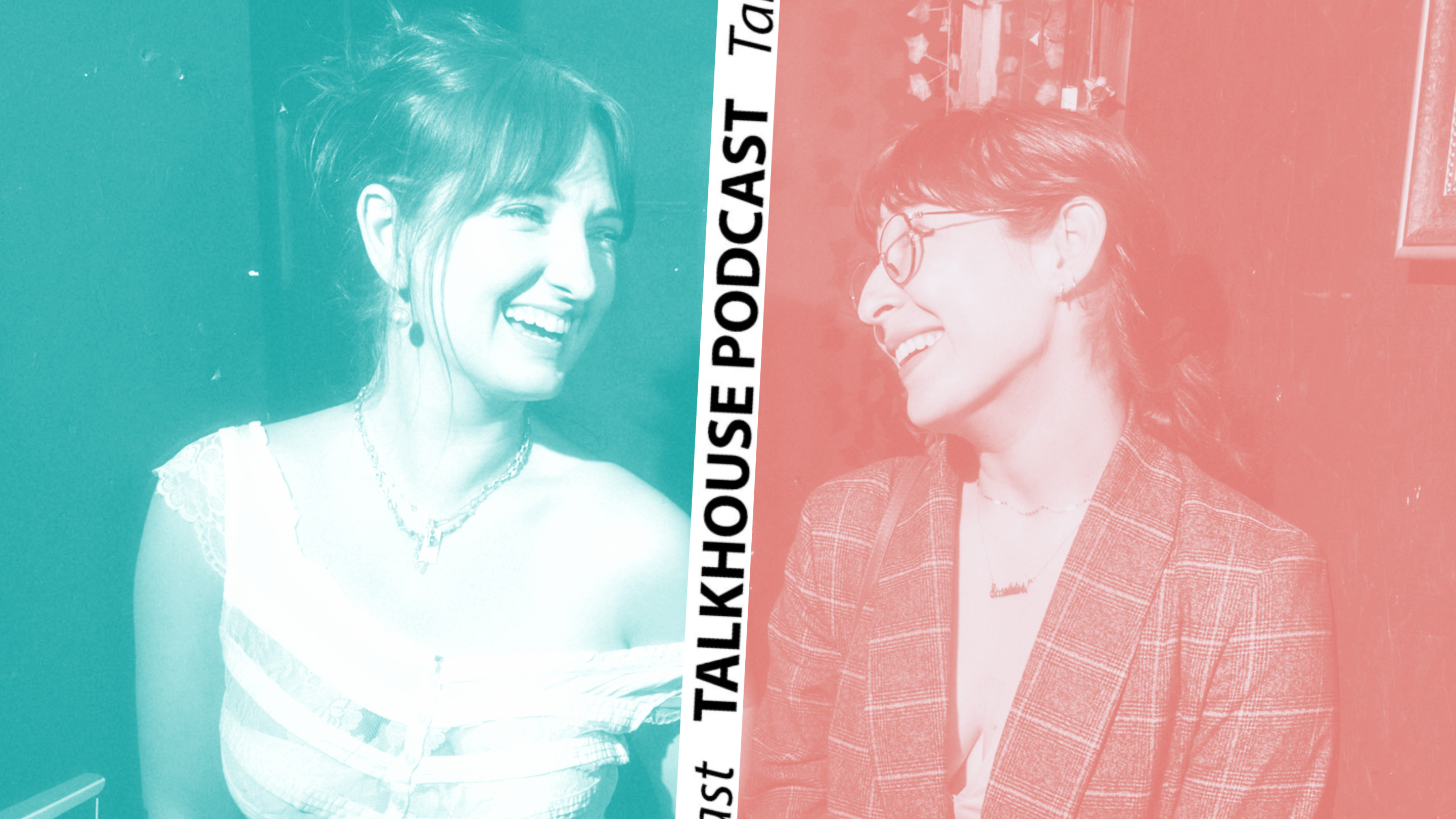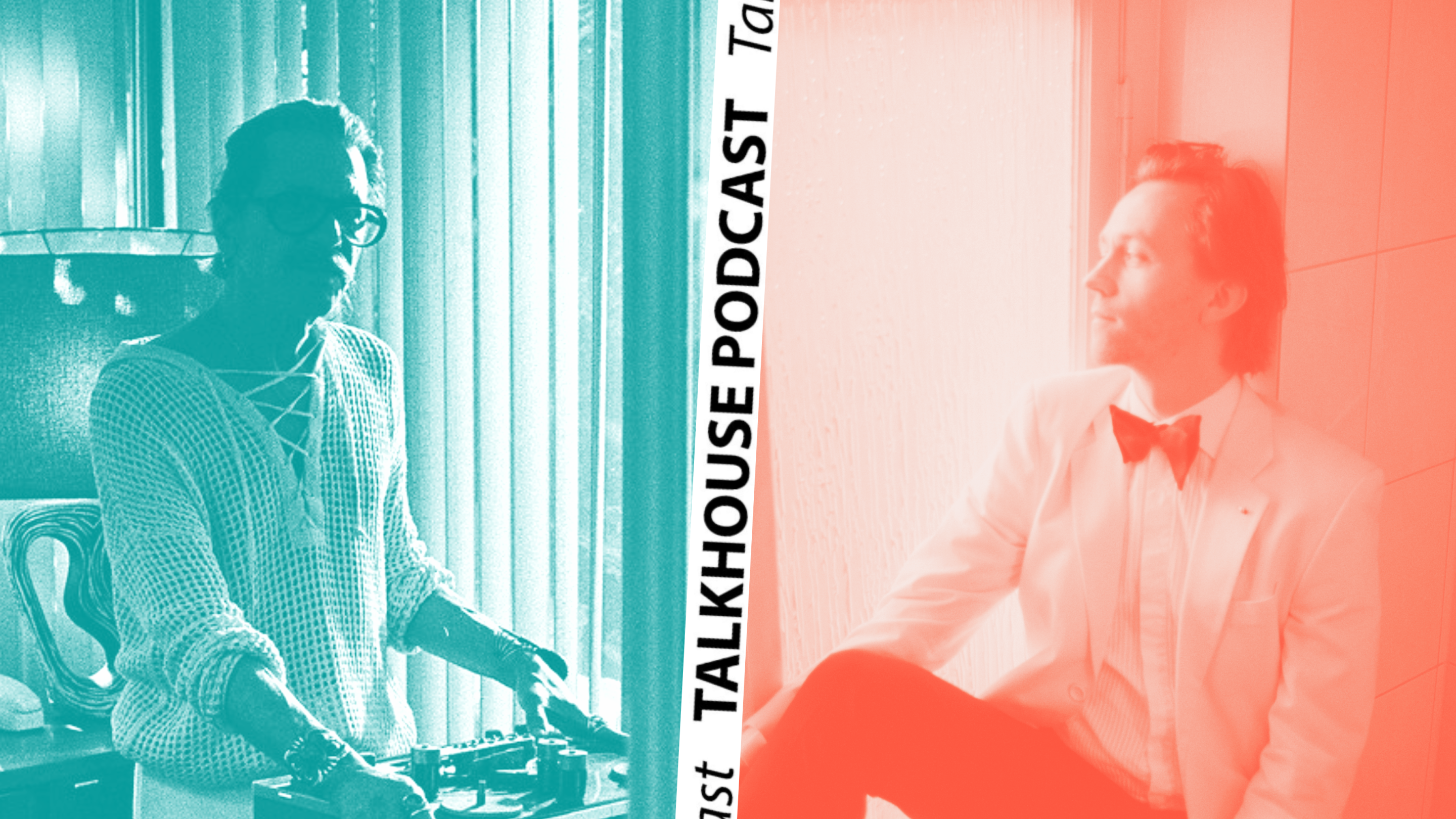
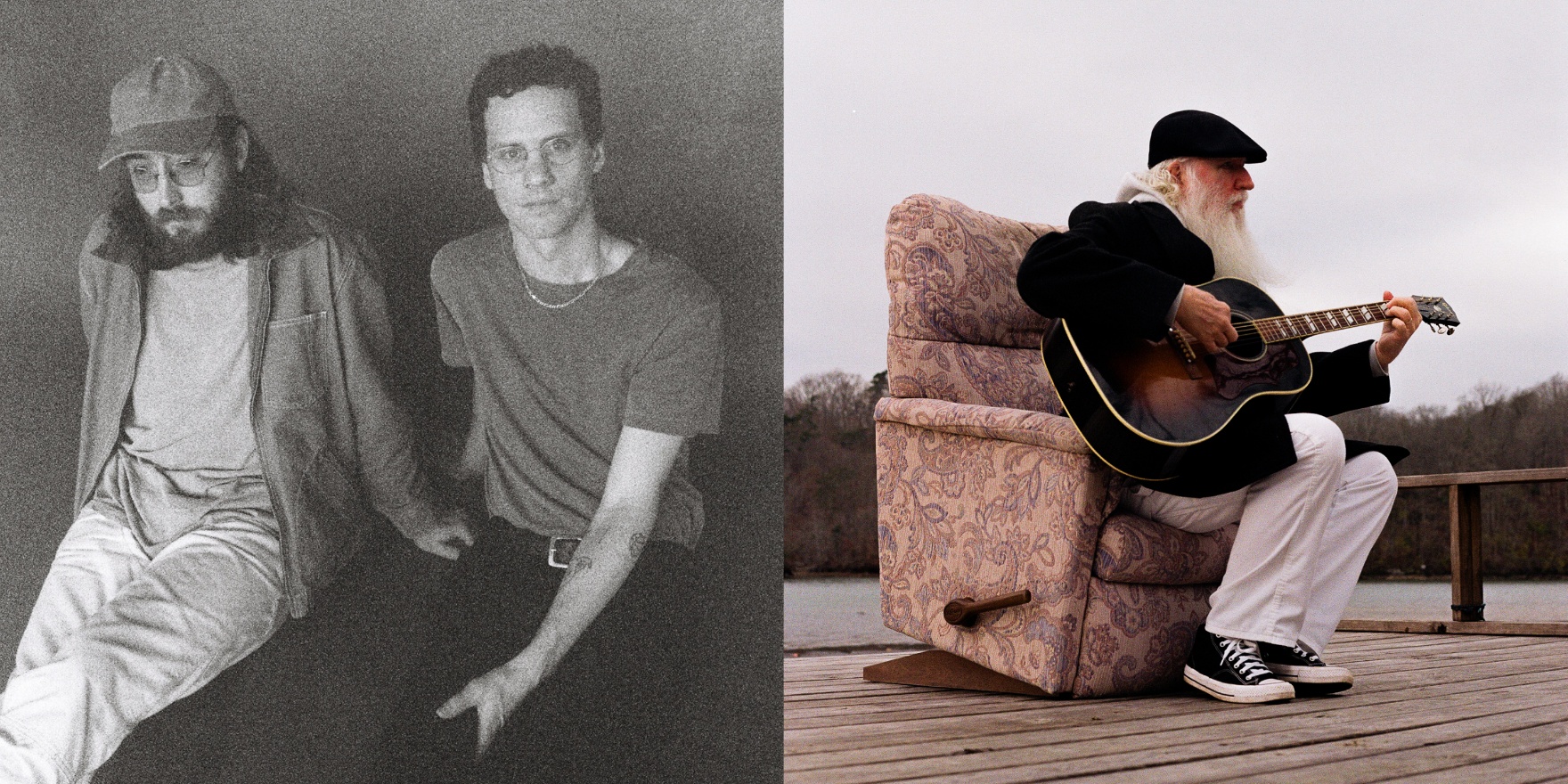
Julien Ehrlich and Max Kakacek are the Chicago-based band Whitney; Robert Lester Folsom is a singer-songwriter from Georgia, and now based in Jacksonville, Florida. Whitney just put out a cover of Robert’s song “See You Later, I’m Gone,” and to celebrate, the three got on a Zoom call to chat about it.
— Annie Fell, Editor-in-chief, Talkhouse Music
Julien Ehrlich: Where are you at right now?
Robert Lester Folsom: I'm at home in Jacksonville. Northeast Florida on the Atlantic Ocean, just below the Georgia line.
Julien: With the Jaguars hat. [Laughs.] How's it going?
Robert: It's going really good. Since I'm leaving for tour tomorrow, to Phoenix, my wife and I celebrated Cinco de Mayo last night. So I might be a little, uh…
Max Kakacek: What did y'all do?
Robert: I ain't tellin’. [Laughs.] Well, we had some margaritas.
Max: As you should… We feel absolutely honored to be talking to you.
Robert: Well, I'm honored that you're covering my song. That's a songwriter's dream, I think, to have people do their songs.
Max: Yeah, I agree. It's happened to us once or twice.
Robert: And I heard your cover and it's really good.
Max: Appreciate that.
Julien: It means the world.
Max: Are you still recording on tape? I read about how you have this affinity for a two-track tape machine that you started demoing on a long time ago. Are you still recording that way?
Robert: No, after Music and Dreams, in the studio, the tape recorder was like, OK, that's kind of ancient. I'm not going to do that anymore. But I truly wish that I could get the same reel-to-reel and start over right now. I think it would be a wonderful journey.
Max: Something that I was curious about with especially those recordings, and the recording of “See You Later, I'm Gone” is it has such a specific sound of a home recording that you can only recreate once. And once you go into the studio, that charm is a lot of times lost. I think now in 2026, there's a lot of digital tools to recreate an old tape machine. Do you have any of those things? Do you think they bring the same process along? Or do you think the limitation of figuring out a two-track tape machine in your house is the best way to do that?
Robert: I think having the actual machine is the best way because that's part of the creative process, pushing the buttons and stuff. I don't think you get the same feel. They're both good. But what I used to do with the reel-to-reel was — at the time, I thought it was all I had, and it's just what I had to work with. It was that and an older SS55, like the Elvis Presley kind of thing. I can't believe how well it recorded everything, considering what it was, how it picked up the separation. It was not like we specifically did things a certain way. It's just we used what we had. And we would record bass, guitar, vocal on the left side and then add lead guitar, vocal on the right, and somehow it would blend. Magic. It had a certain feel. We thought we were the Beatles or something. We thought we were good. We were in our own little world.
Julien: You were good. And you remain friends with some of the some of the people that you used to play with, right?
Robert: Oh, absolutely. My lead guitarist, Hans VanBrackle, joined us in Houston in March. That was fun. My bass player and drummer came to our show in Pensacola, Florida, which was fun. They didn't play, but they enjoyed being there. The guys I play with are in their 20s and 30s, and it was as if they were meeting the Rolling Stones or something. They were just psyched. “We're meeting a legend here!”
Julien: That’s cool. Do you remember anything specifically about writing “See You Later, I'm Gone”?
Robert: Oh, yeah. I was in my first year of college at South Georgia College. My grades were awful. I had just lost a girlfriend — she just drifted away, I didn't understand it. I was miserable. And to me, the best thing to do was to go home. It was like I told all those other things, “See you later, I'm gone.” I went home for the summer, hooked up with my friends that I had made music with, and we started doing more reel-to-reel recordings. I did go back to school and formed a band, and I used some of my hometown friends with some college friends. That band was called Abacus. But “See You Later, I'm Gone” — I listened to it this morning, and it really brings out a lot about the feeling of being homesick or wanting something that you've left behind. Usually that happens in the fall for me. “The summer leaves are turning brown.” Also, it can be a reflection on the fall of your life, that time of year you're approaching in older age, which I have achieved. You start thinking about the past and how you just want to go back to simplicity.
Max: Absolutely. Also, I feel like in our brief time as songwriters so far, tackling something like seasons changing and your life changing is so ubiquitous in the songwriting canon, to do it in a way that's unique and actually meaningful is the hard part. “See You Later, I'm Gone” is one of those songs that achieves using this subject matter that songwriters and poets have used for the longest of times in a very meaningful, emotional way. So I think that's one of the things that drew me to that song specifically.
Julien: Was there ever another recording of “See You Later, I'm Gone”? Because my other favorite song of yours is “Show Me to the Window,” and there's the version on the Rainy Day comp and then there's the version on Music and Dreams. The difference between those — I don't know which one's my favorite. Obviously the one on the comp feels more like a demo, or just a bit more lo-fi, and I think we're typically attracted to versions like that. I just wonder if there was ever a more polished, or any sort of different recording…
Robert: Yeah, I recorded “See You Later, I'm Gone” at a friend's studio here in Jacksonville, and it's a little more slick and not as loose sounding. I even added a bridge, because I did this songwriters night thing and the guy kept saying, “That's a good song, but you need a bridge.” Then I talked to some other friends, “You think the song needs a bridge? And they said, “Hm, it could.” So the newer recording has the bridge, kind of near the end, and it's really good. But we just did a tour last year with Babehoven, and the guy in Babehoven goes, “Why did you add the bridge?” [Laughs.] So I guess you can't please everybody. But, yes, there is a newer recording. But the older has soul to it.
Max: When did you make the newer recording?
Robert: It was about three or four years ago. I have it on CD and it's probably on Spotify. And you mentioned “Show Me to the Window” — I like the Music and Dreams version because it has the string sound and it's very polished. But in the demo version, the reel-to-reel, you can hear my voice break just perfectly. Not so much where you want to go back and redo it; it breaks in a way that the feel of the song is there. And I think a lot of people like that version better for that reason.
Max: Speaking of vocals, when you were tracking on your reel-to-reel, were you doubling or were you somehow recording your vocals a few times?
Robert: Yeah, the recorder I had was a very simple Sears recorder, and I would record on the left side and then sing along with myself on the right side. That doubled the vocals.
Max: I feel like that was one of the things that also drew us to that song, the way that the vocals sound perfectly doubled, and we were trying to recreate that in our recording. It was fun to kind of engineer it.
Robert: Even when I record now in a studio, it's pretty easy to double just by me doing it. Whereas they could push a button — they could make 500 of me probably. But there's something about the almost getting it right, but not, that makes it better.
Julien: With that song, it just feels so devastating, the vocal performances, especially when they don't line up. It's beautiful.
Robert: Thank you. You guys have great vocals, by the way.
Julien: Thank you. That means a lot.
Robert: I used to sing because I was the only one that would. My band now, like I said, they're in their 20s and they're great. They sing wonderfully. Individually, they're better singers than me. But they're not me. [Laughs.] And I say that humbly, but…
Max: [Laughs.] The first time I heard [Music and Dreams], I think I was 18 or 19, my friend had an original pressing and played it for me before the reissue came out. That was the first time I'd heard your music, right out of high school. It was pretty cool.
Julien: We're just hugely inspired by you, honestly.
Robert: Thank you for saying that.
Julien: And when we were starting our band, it was at the time Light in the Attic and Numero Group were reissuing all these old records like Jim Ford, Ted Lucas, and yours. I mean, we had heard yours before, but it really started to be pulled towards our soul. It was just very formative for us as a project, and we thank you so much for taking the time to talk to us today.
Robert: It's my pleasure. That's one of the greatest rewards to know that you've inspired someone. In our show, before I sing “Music and Dreams,” I tell everyone to follow their dream. Forget that backup plan. Dive right into it. Do it, give it your heart. Just go all the way. And if it doesn't work out, then at least you can say you gave it your all. Of course, I took a big break and I got a second chance. I'm very grateful and I don't take it for granted.
Max: Just one last quick question: In your experience writing, is there a specific instrument that you like to write on? Is there a guitar that you've written on for a long time or one that you always come back to?
Robert: Well, in the early days I had an Ovation Balladeer. These days, I have a triple-O Martin, I have a few guitars, but it's always on acoustic guitar. Back in the day, I did more keyboard stuff than I do now, but it was always acoustic guitar.
Julien: Yeah. And 12-strings — there's a lot of photos of you playing 12-strings back in the day. And you can hear it, obviously.
Robert: Yeah, I had an old Epiphone 12-string that had the smallest neck and I loved it. But the neck started going, and there was no hope for it. Now I have a Martin. It's a very thin body, but it's got a smaller neck than normal. And it's not a real old guitar, it's about three years old. It's a really nice guitar and if I ever need to add 12-string parts, I use that. I always like using the acoustic 12-string because it gives sort of a natural chorus effect.
Julien: Well, you're great at it.
Robert: Well, thanks. I use the chorus pedal more now. [Laughs.] We didn't have those back then!
I appreciate you guys doing what you’re doing. Thank you.
Julien: Thank you so much for taking the time, Lester.
Robert: Oh, it's my pleasure. Maybe we'll get together down the road.
(Photo Credit: left, Maren McGuire)