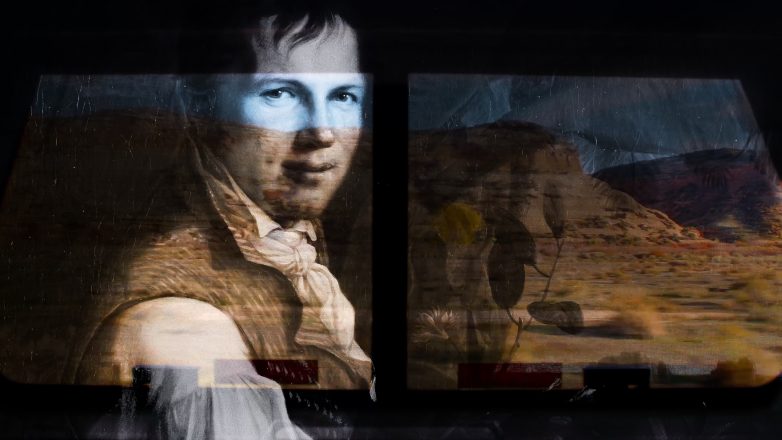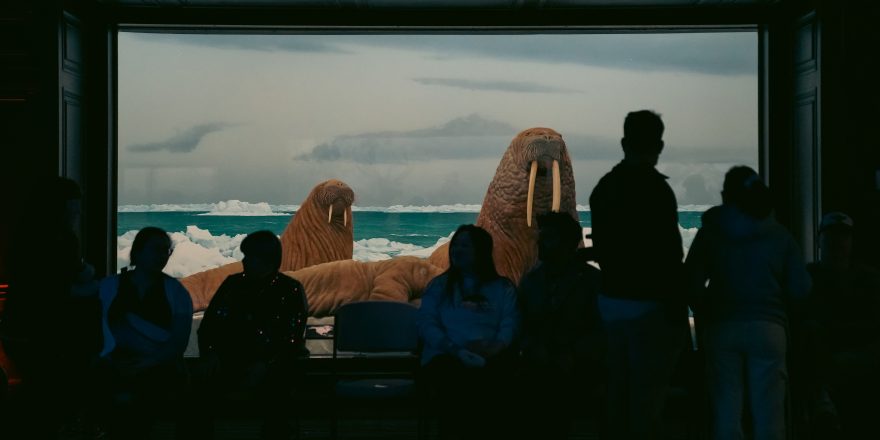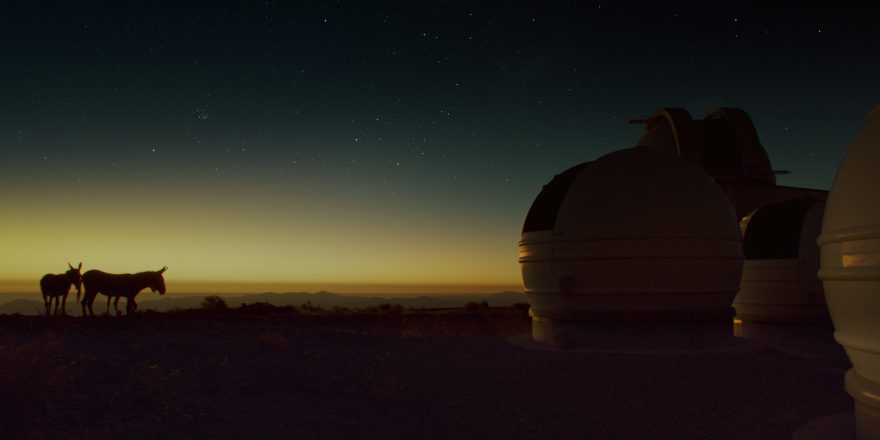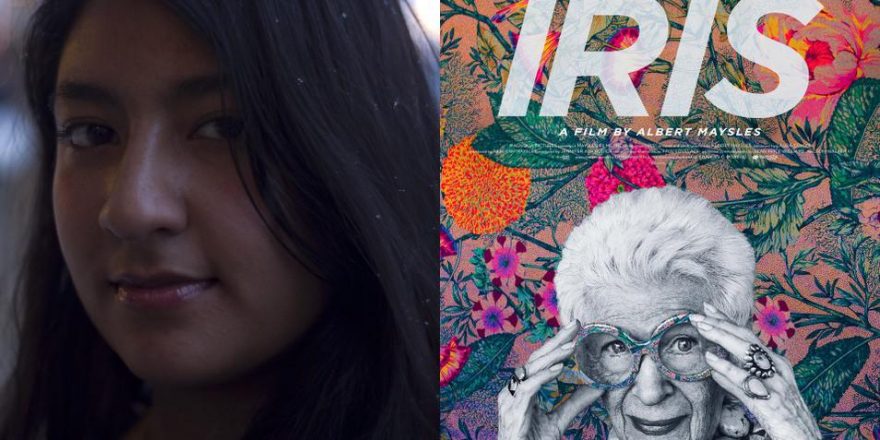


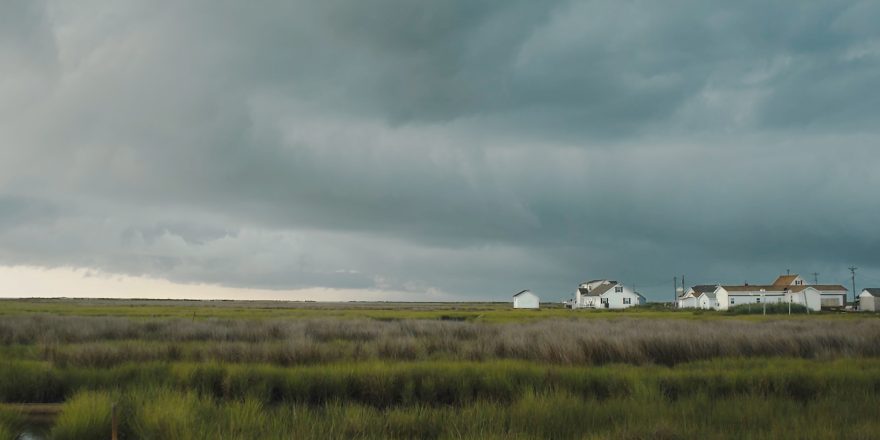

David Usui’s latest documentary, Been Here Stay Here, about a close-knit Christian community contending with the heartbreaking reality of losing their home to rising seas, opens in theaters on May 15 (The Quad in New York City) and May 27 (Laemmle Theatres in Los Angeles). David’s work as a director and cinematographer has been featured on PBS, ITVS, The New York Times, The New Yorker, The Atlantic and VICE. His collaboration with the legendary director Albert Maysles on In Transit, a contemplative exploration of life on Amtrak’s Empire Builder, premiered at Tribeca Film Festival, where it earned the Special Jury Prize for Best Feature Documentary. In 2009, David co-founded Lost & Found Films, a production company creating documentary and commercial content for brands, NGOs, and broadcasters.
Lately there’s been a lot of talk about boredom. We’re trying to reclaim it, defend it, even build it back into our lives as a way of protest against phones, feeds and the constant hum of distraction. The boredom I worry about is creative. The fear of making something that moves quietly and gets dismissed as dull or uneventful. There are real forces working against slower forms of attention.
We’re trained to expect momentum, instant stakes, clear signals about why something matters. Anything subtler can feel exposed. Making work that might possibly be called boring requires a certain kind of risk. It means trusting that what seems uneventful may hold its own drama. Which is another way of talking about attention and about the conditions attention now has to survive inside.
By now, we all know the basic rules of modern media: speed wins. Outrage travels fast. Certainty gets rewarded. Ambiguity usually gets buried.
But what does that do to us after a while, and what we want to do about it?
At first, we resist it. Then we adapt. We get frustrated, then numb. A constant flow of distortion, simplification and performance starts to feel ordinary. And it doesn’t just shape what we consume, it also shapes how we think, how we see one another and how quickly we decide who people are before any real exchange has happened. It influences what gets made, what gets attention and which stories do – or do not – get the time or space to find their full shape.
Nuance, contradiction and patience have a hard time. Anything that asks us to linger, reconsider or stay with complexity is working uphill.
So, for anyone trying to challenge those pressures, the task now may be quieter than it sounds. It may be to resist those habits in small ways. To slow down enough to notice what speed erases. To make work that asks more of people. To create room for the kinds of values we claim to want, but rarely design for.
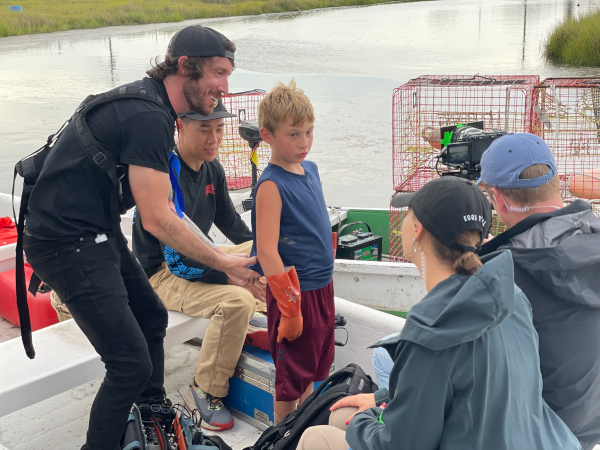
Work made in that spirit becomes a small vote for the kind of culture we want more of. It begins with looking closely, listening deeply, and taking the risk of staying open when certainty would be easier. There is always some exposure in working this way, a need to stick your neck out without knowing what will come back. Albert Maysles used to say that if you come back with the film you intended to make, you probably missed something along the way.
That was my experience making my new documentary, Been Here Stay Here.
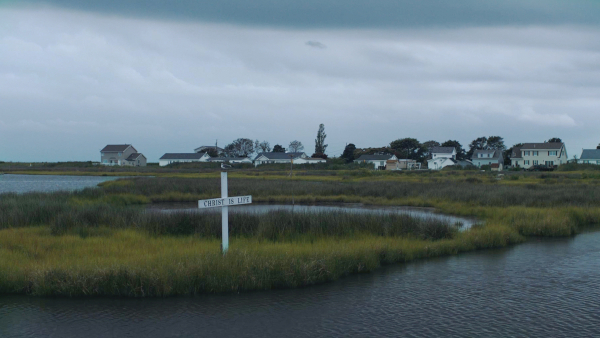
The film takes place on Tangier Island, a small, centuries-old fishing community in the Chesapeake Bay. It moves at its own pace and on its own terms. It carries its own sense of time. It doesn’t particularly care what you came for. If you want to understand anything there, you have to slow down first.
That was clear from the start. I wasn’t going to get anywhere by observing from the outside. I had to stay long enough that people stopped adjusting to me and long enough that I stopped needing them to.
I was an outsider. Tangier is private in a way that’s hard to explain to people used to cities. Not suspicious, exactly. More self-contained. There’s no real way to blend in. I was coming from New York City and people could make quick assumptions about who I was and what I believed. Politics, worldview, whatever.
You feel it in small ways. Conversations that are a little distant. People are polite but not especially open. Sitting in church, I was hyperaware of myself, how I looked, how that looking might be read. I didn’t grow up going to church and that was hard to hide.
There was also a long history there. Other people with cameras had come through Tangier before. They took what they needed, then left. Stories get simplified that way. Places get mined for content, then reduced into symbols. Residents knew that pattern and had their guard up. Their skepticism wasn’t paranoia. It was memory.
One of the first things you notice there is how people speak. The accent is thick. You can’t catch everything at first. You have to listen carefully. But if you stay with it, you begin to hear something else. There’s rhythm in it. Precision.
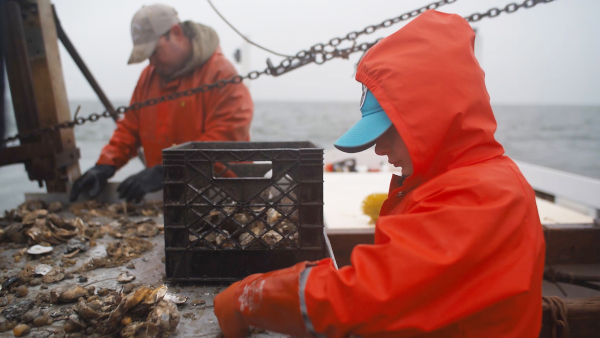
Their language has been shaped over generations of people mostly speaking to each other. It folds in on itself. It carries jokes, inversions, codes. Someone might say, “She ain’t perty none,” as a beautiful woman walks by. If you take it literally, you miss the point. Which turns out to be true of many things.
Inside that language is also a theory of belonging. They have three terms. Come here. Been here. Stay here.
A come here is obvious, someone from somewhere else.
A been here has been around long enough to count. A generation, maybe two.
A stay here means something deeper. It means inheritance. Continuity. A life that doesn’t simply happen in a place, but extends through it.
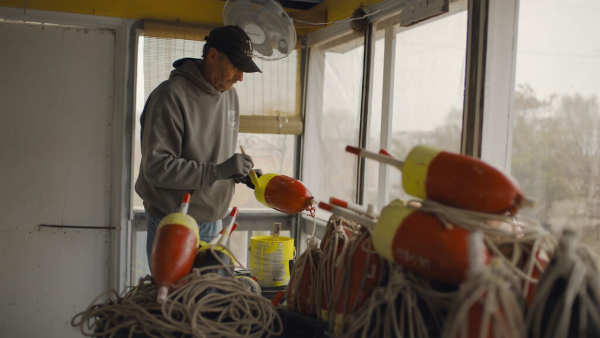
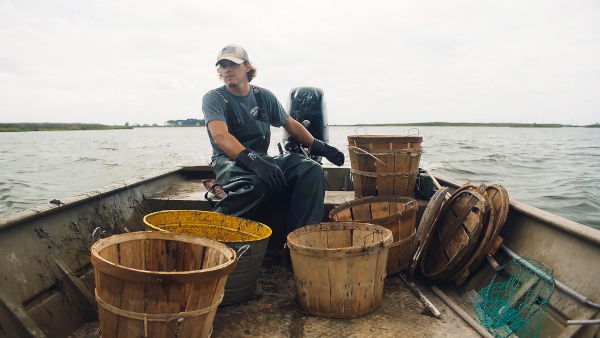
Tangier’s mayor, Ooker Eskridge, is a stay here. You feel that before you can explain it. In the way he moves. In how he reads the water. In how he relates to everything around him.
There’s a moment in the film with a Laughing Gull he calls Summertime. He wasn’t part of the plan. He just appeared and then kept appearing. If I told you a man and a bird became one of the most meaningful parts of making the film, it might sound sentimental. That’s our training talking. We’ve been taught to value the loud, the scalable, the instantly legible. But often the small thing is carrying a larger truth.
Every year, he comes back. No fanfare. No buildup. He just returns. Last month made 10 years. Once he’s there, he stays close. He follows Ooker out onto the water. Drifts alongside him as he works. At first it feels unusual. Then, after a while, it feels completely normal.
To Ooker, the gull was simply part of the texture of his life. One more relationship in a world built through repetition and attention.
There’s something deeply moving in that. No language. No explanation. Just two lives crossing again and again over time. It made me think about how quickly we rush to define things, to make them usable by making them legible. But some truths don’t arrive on demand. Some things only reveal themselves after your need to explain them has worn out.
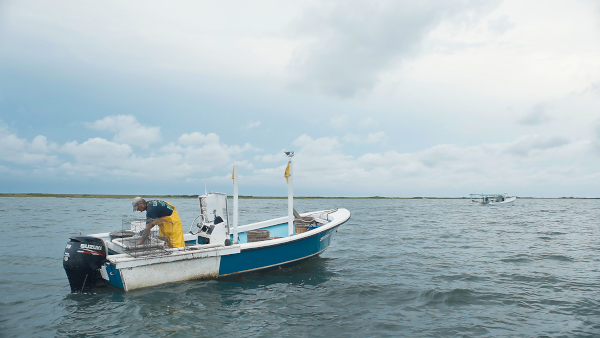
By the time I first heard about Tangier, it had already been defined from the outside. In 2017, CNN aired a segment with Ooker at the center. Near the end, he was asked what he’d say to Donald Trump. He said they needed a sea wall.
Somehow that message made it to the White House. The next week, Ooker was out on his boat when his son came to get him. Said he needed to come back. The President was about to call. Over the following months, the story spread everywhere. The New York Times, the Washington Post, the Atlantic, NPR. Segments on CBS News, MSNBC, PBS NewsHour. Ooker told me there have been close to 70 stories since that first one aired.
I took my first trip around that same time. On the ferry over, there were several other journalists onboard too.
Watching those stories appear in real time taught me something useful about media. Once a place enters circulation, a few details quickly begin to stand in for everything else. The same quotes. The same images. The same narrative copied from outlet to outlet. Because the system rewards efficiency.
What gets lost are usually the slower truths. Contradictions. Texture. Humor. Grace. The things that don’t line up neatly.
What’s left tends to fit the frameworks we already recognize. Red state. Blue state. Victim. Villain. Climate symbol. Trump voter. Exotic holdout. And once those frames harden, the human being inside them gets harder to see.
That pattern is not limited to Tangier. It’s everywhere. It’s part of why so many people feel alienated, why young men drift toward grievance ecosystems, why loneliness rises, why trust collapses, why politics feels increasingly theatrical and less human. When every person becomes a brand, every story becomes a weapon, and every emotion becomes monetizable, something essential gets stripped out.
What I found on Tangier instead felt more human and honestly more interesting.
People trying to make a life.
People carrying obligations, grief, loyalty, hope, routine.
People dealing with tradeoffs they did not design.
That changed how I think about storytelling. It made me less interested in locking things down and more interested in what remains unresolved. In letting moments stay open a little longer. In trusting that meaning doesn’t always show up on schedule.
The difference between a come here and a stay here began to feel like the difference between touching a place and being shaped by it. Most of us don’t move through the world that way. We keep distance. We observe. Categorize. Manage. Then wonder why everything feels so thin. We also forget something basic. Before people are avatars of a position, they are people. Before they are useful to an argument, they are lives in progress.
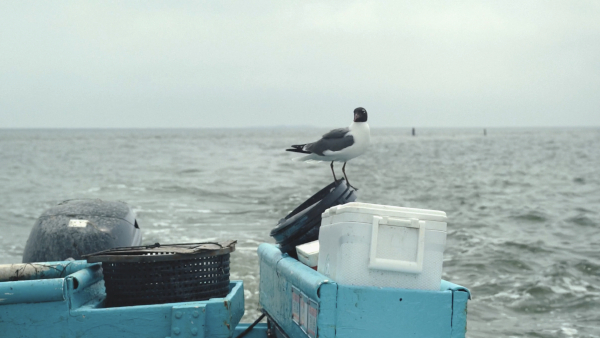
Watching Ooker and the gull reminded me of that. Not through rhetoric, but through presence. It asked for a different kind of attention. Not to decode. Just to notice.
There’s always more happening than we register. Usually it lives in the smaller moments, the ones that don’t announce themselves. For me, filmmaking has increasingly become the practice of staying with those moments long enough for them to breathe.
Tangier Island has been seen a lot. I’m less sure it’s been felt. Not in a way that leaves room for a bird that returns every year. For a man who notices him. For a language shaped over generations. For lives shaped by faith and community. For a place that keeps much of its meaning close.
Sometimes it’s enough to let a place be what it is. Sometimes it’s enough to let our work have a little space and breath. And if we stay with it, really stay, something can begin to shift. The distance softens. We start to sense that attention itself can be a form of care. Maybe that’s where understanding begins.