

Raised in the Austrian Alps, Brooklyn-based filmmaker G. Anthony Svatek crafts films that probe humanity’s fractured relationship with the natural world. Specializing in documentary and experimental film, Svatek’s work has screened at the New York Film Festival, International Film Festival Rotterdam, Visions du Réel, DOC NYC, and beyond. His debut feature, Humboldt USA (2026), plays at First Look at the Museum of the Moving Image on May 2. His other work includes Testudo Hermanni (2023, sixpackfilm), and Some Thoughts on the Common Toad (2023), narrated by Tilda Swinton, and .TV (2018). He has also collaborated as editor on Contractions (2024, New York Times OpDocs, dir. Lynne Sachs) and as associate producer on Little, Big, and Far (2025, New York Film Festival, dir. Jem Cohen). Working under his production company Kulturfolger Productions, Svatek has directed and produced commissions for BBC World News, New York Magazine, and the New York State Parks Department. He serves on the Advisory Council at UnionDocs in Brooklyn.
Many of my films are a variation on a theme – the way that technology changes our relationship to the natural world. My 2015 short Orange Trill is a 16mm dance film, processed and filtered through many layers of CRT monitors disintegrating the dancer’s body. .TV is a 2018 found-footage essay about the environmentally contentious Pacific island nation Tuvalu and its lucrative online domain extension. Some Thoughts on the Common Toad (2023) is an archival-collage film, defending love of nature in times of war and technological disruption. And my debut feature, Humboldt USA (which just premiered at Visions du Réel), critically looks at what “interconnectedness” means amid environmental alienation in America today.
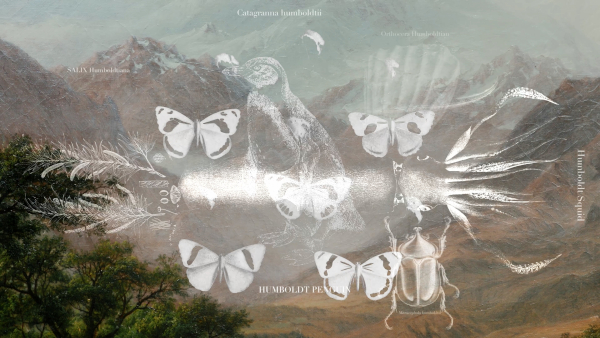
To me, the process of making films often mirrors this theme: by the end of a long day clipping and trimming and rearranging sequences, I’m not only editing in Premiere Pro, it seems like I live in Premiere Pro. I feel totally disconnected from the footage, my surroundings and my fellow humans. In that state, every edit decision becomes intangible to the point where I am completely lost in the digital workspace, and my communication skills break down (just ask my dear and patient partner, Zach). That’s when I push myself away from the computer desk, turn my chair 180 degrees and shift over to my collaging table.
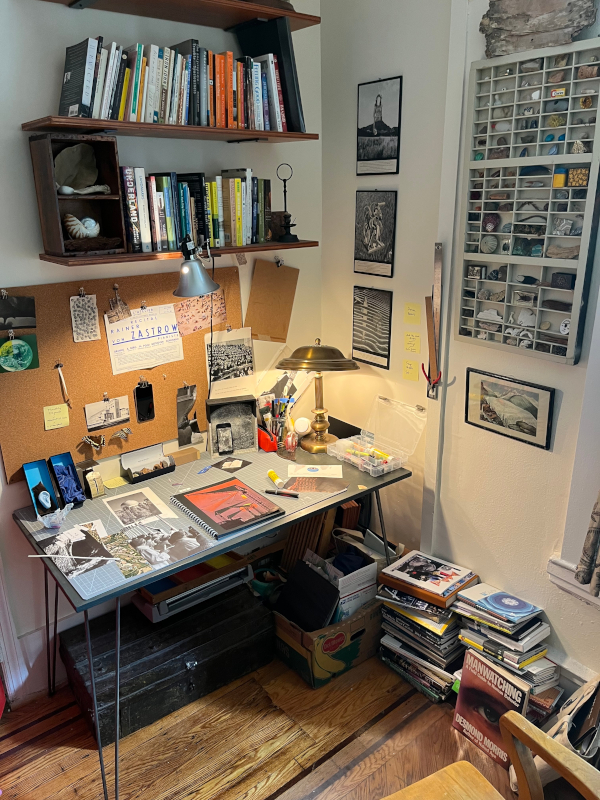
Here is a perpetual mess of scraps from magazines and science books, glue sticks and X-Acto knives, strewn across a large grey self-healing pad. A tangible manifestation of an editing project, but intentionally left chaotic.
Collaging is a hobby which I began about 12 years ago, around the time I made my first films, and it has since become an ancillary practice. I am hardly the first filmmaker to do this: visionaries like Bruce Conner and Joseph Cornell seamlessly moved between the mediums; artists Michael Robinson and Janie Geiser are some of my contemporary role models. It’s easy to discern the parallels between filmmaking and collaging, practically and linguistically: collected materials are transformed, cut, assembled, and pasted. In both practices, I’m drawn to images of nature, whether it’s filming landscapes, or leafing through old issues of National Geographic. But because I’ve professionalized myself as a filmmaker, collaging is a respite for three reasons:
1. It’s a good excuse to continue my light hoarding tendencies;
2. Unlike filmmaking, I have nothing to prove to anyone and no deadlines and expectations to meet;
and
3. In contrast to computer work, I use my hands and fingers to actually touch the materials directly.
I love making films, but I worry that my day-to-day life with digital cameras, remote work and cloud computing is literally making me lose touch with the very things I care about the most.
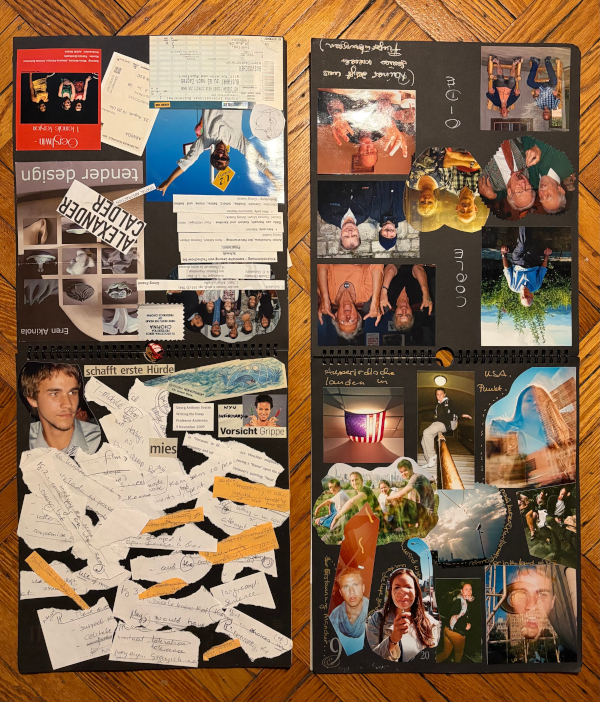
My retired parents are both skilled with their hands. My father is a master violinmaker, a stoic Austrian with a meticulousness surpassing even the most stereotypical Germanic person. His leathery fingertips are hardened by decades of working with fine woods and polishing instruments. (Call me a weirdo, but I love smelling his fingers – imagine a mix of resin, wax, and linseed oil.) He’s great at fixing appliances, bicycles (and lately my pet tortoise Tony’s outside pen). My mother is a self-taught artist who plays the piano and paints watercolors of my niblings’ favorite toys. Growing up, she created the first artistic assemblages I ever saw; every Christmas, each family member was gifted a personalized calendar – a scrapbook of photo cutouts, newspaper clippings, ticket stubs, and other ephemera. Her juxtapositions were funny, highly specific and often snarky – a loving way to tease us and make sure we knew she’d been paying close attention. Lines, arrows, phrases and words – drawn in silver or golden ink – turned each month’s page into a mini collage documentary about the person’s life. Recently, I rediscovered these collage-calendars and was struck by the amount of nature imagery in them. Snow-covered glaciers, lush fields with buzzing insects, and clear summer lakes – all of which have changed dramatically even in the 17 years since I swapped the Austrian Alps for Manhattan’s skyscrapers.
My parents come from a time without touchscreens, where slowness, patience and diligence are necessary to get anything done right. A time when daily work and creative output often meant making irreversible decisions with tangible things in your hands. A time before Command Z.
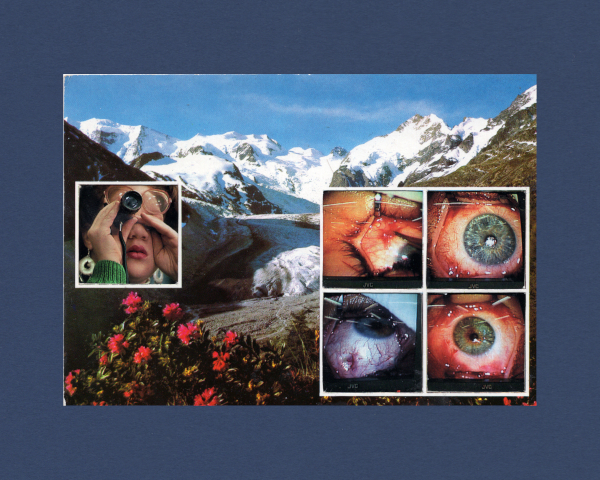
I yearn for that courage in my own work, but the overwhelming flexibility of digital filmmaking and editing often (pardon the pun) renders me unsettled and disrupted – much like the films’ subject matters. This is where making collages comes in: I get to fuck up and reassemble images irreversibly and with my fingers. When I collage, I experience the same creative dilemma as I do while editing, but with zero stakes. One of my favorite exercises when I get stuck in Premiere Pro world again is to turn to my collaging table, set my phone timer to 10 minutes, scavenge images from the piles of magazines and papers (did I mention I was a bit of a hoarder?), and make a mini collage. They mostly turn out pretty awful – which is kind of the point. Sometimes, for a higher dosage of adrenaline, I turn to my folder of images I particularly love, pick one, and slice it with my X-Acto knife. Yes, it might be dramatic to call this “painful” – but it helps jog the inertia I feel editing my film’s very real subjects and environments, reduced to 0s and 1s on my editing hard drives.
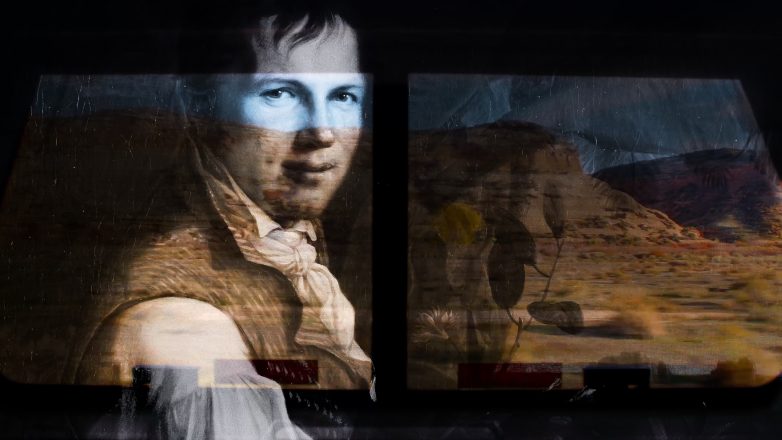
It’s not surprising that I chose 19th-century queer naturalist Alexander von Humboldt – the so-called “grandfather of ecology” – as the focus of my feature film Humboldt USA. Humboldt broke from convention at the time, wanting to experience the world away from the “scientific ivory tower.” His visionary quest was to combine disparate scientific facts with personal impressions on his extremely physically demanding travels around the world. This led him to conclude that “everything is interconnectedness” – a collage of science, art, and history – just at the cusp of the Industrial Revolution that turned nature into an abstract mediated “other.” While assembling the film (with co-editor and fellow collagist Kaija Siirala), I collaged almost every evening, helping to sustain joy and sanity while puzzling together the film’s three disparate storylines – very much in Alexander von Humboldt’s spirit.
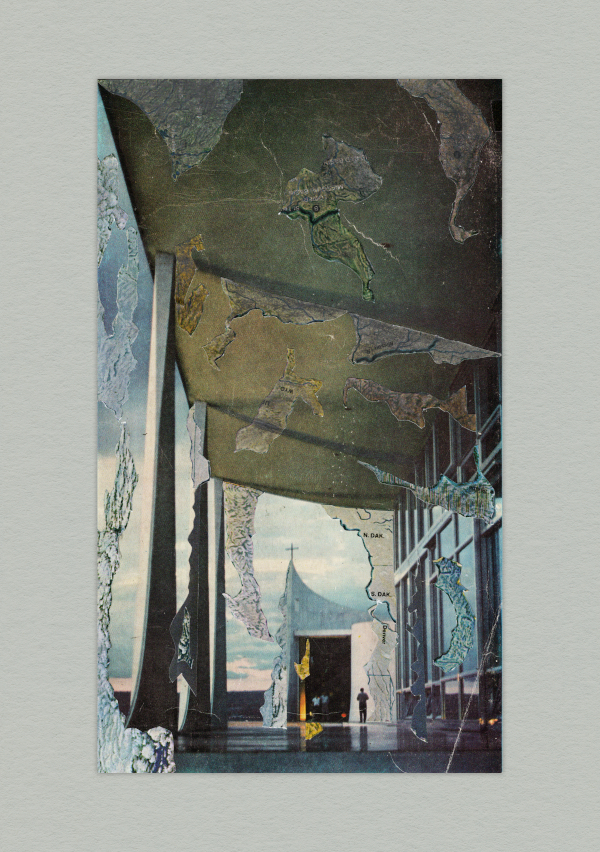
Of course, there are artistic hobbies and creative professions that are far more “tactile.” But I will never become a field scientist or painter – let alone a master violin-maker. I’ve made my professional bed, and I’m extremely fortunate that filmmaking has become my bread and butter. Even if that means spending many hours in the digital world, where I’m seemingly many layers and distances removed from ecological breakdown and climate collapse. While collaging, I tear up landscapes, animals, societies and histories without the possibility to undo – and I remember that, no matter the medium, I am that disruptive force myself.
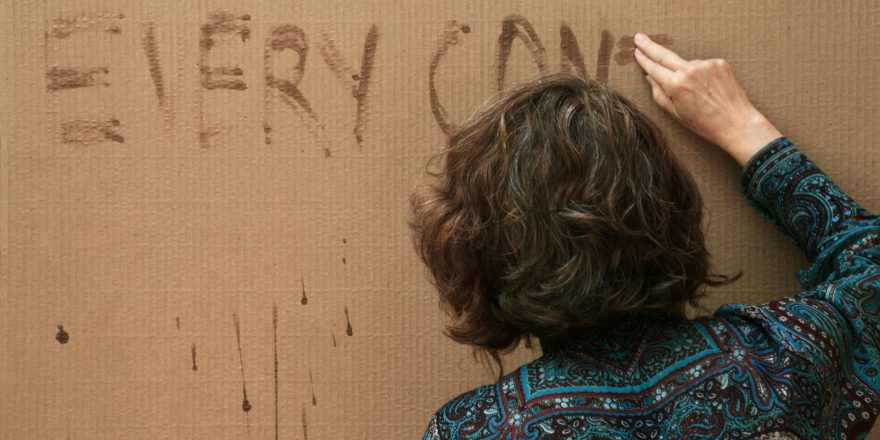
Featured image is a still from G. Anthony Svatek’s Humboldt USA; all images courtesy G. Anthony Svatek.