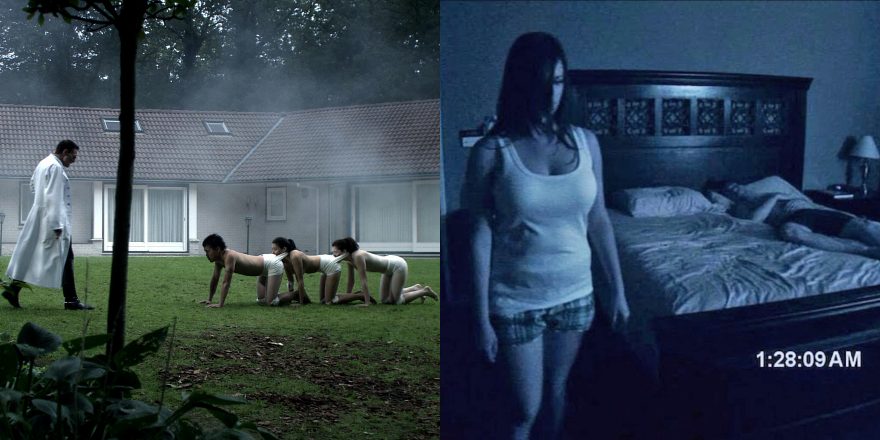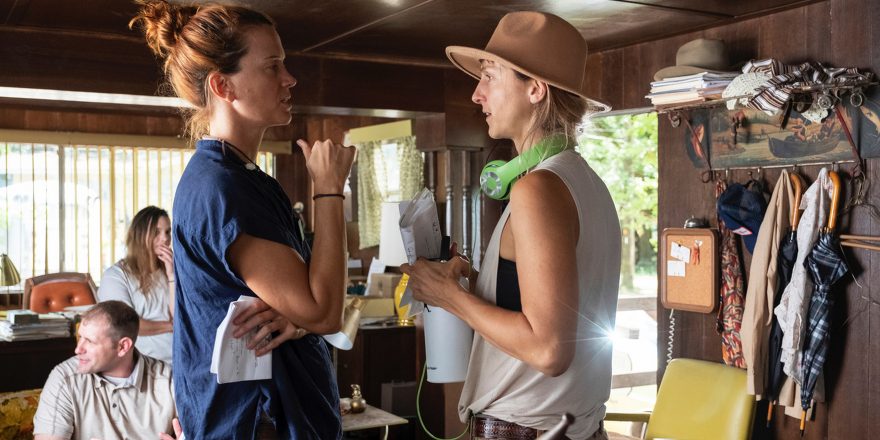



Delilah Napier and Lucy Powers are a writing/filmmaking team, who have made four films together under Drama House Pictures. Their first feature film, Voyeur, which they made for $4,000 while undergraduates at Yale, is now on Amazon Prime and won Best US Feature and Audience Award at the 2020 SoHo International Film Festival. Their short film The Compound won the Special Jury Prize at the Chelsea Film Festival in 2021 and their comedy pilot, Victor Versus the Metaverse, won Best TV Pilot at the Rhode Island International Film Festival. Their second feature, Floating Carousel will have its world premiere at the Woodstock Film Festival on October 17. They are represented by UTA and currently developing a feature with Star Thrower Entertainment (King Richard, The Post, Ingrid Goes West).
Whenever one of us has an awkward encounter, we like to write it as a scene and share it. This way, at least it provides some funny content and a form of cathartic release. As artists, we’ve been unable to resist the temptation of dramatizing our own experiences.
As Fellini says, “All art is autobiographical; the pearl is the oyster’s autobiography.”
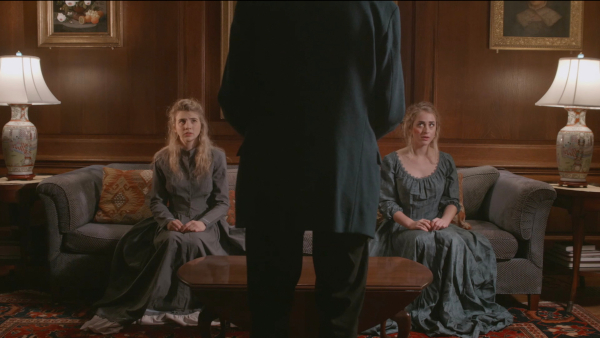
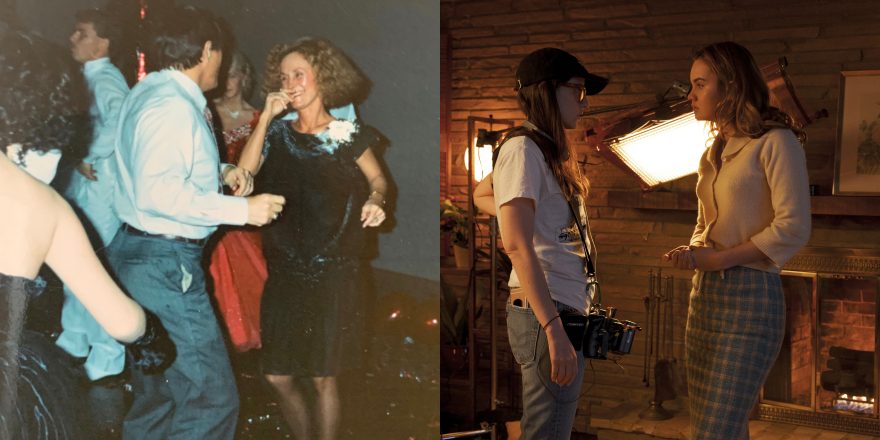
Drawing from our own lives has always been intrinsic to our filmmaking process. Our first feature, Voyeur – that we made for $4,000 while we were still undergraduates at Yale – pulled directly from a story we heard in our first year seminar on “theatrical naturalism.” A student production attempted to stage an “actually naturalistic” production of Miss Julie. If you know the play, you’ll understand how easily this would spiral: the students wanted to use open flames, have actual sex, and yes, kill a live bird every night. That’s when the department head ultimately stepped in and squashed their vision. Inspired by this, we wanted to make a film where no one came in to say “no.” We claimed Voyeur was a roast of overly competitive theater students at Yale; however, as we were making it, we became those crazy students: we were housing canaries, eating kidneys, and making a feature film while being full-time students. The line between art and life disappeared until the art became life itself.
In the fall of 2021 – after a year of pandemic hibernation – we both moved to New York City. Now away from gothic towers, libraries and dark academia, we entered a new world: the New York City dating scene. The shock of the pandemic was still brewing culturally, but we were recent college graduates excited to date, find romance and touch people again, after a year of quite literal social isolation.
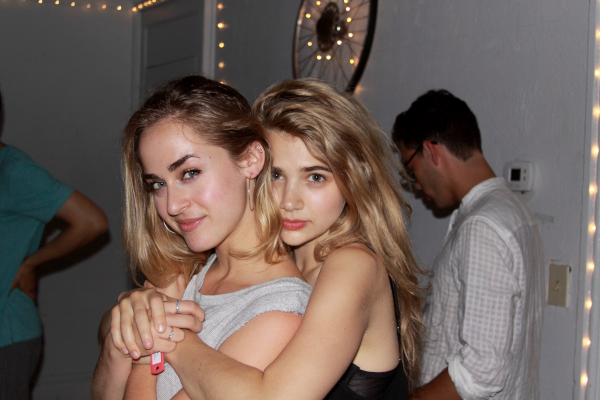
The advice from everyone: Hinge. Get Hinge. So we both downloaded the app, and in a freakish coincidence, had our first dates with the exact same man four days apart.
The guy was a sad recent Wharton grad (whose profile pics were too kind) who sent us each the same exact message: “Hey. You seem super cool and I hate the Hinge small talk. Wanna get a drink [insert day]?”
At the time, both of us agreed to our dates. And were excited, even. And how nice not to have to spend time in the app, answering questions like “How are you?” from a complete stranger.
For both of us, he picked a fancy rooftop to watch the sunset. But exactly 37 minutes before the date, he pushed it an hour later and changed the location to a cafe on the Lower East Side. At the time, neither of us thought much about this small detail. A work thing came up. We wanted to respect this stranger’s schedule.
But shortly after arriving at the bar, it was suddently last call. Even though the drinks were half full, he ordered another round. And then, he asked his perennial question: “What’s your favorite type of wine?”
Lucy said Pinot Grigio. Four days later, Delilah said Malbec. And no matter what wine we each said, he had the best bottle back at his apartment.
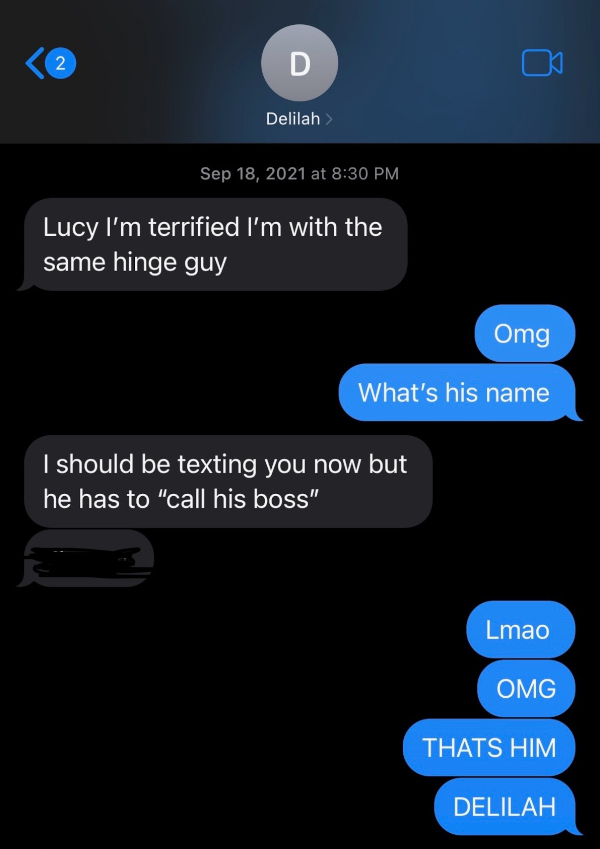
We left. He, of course, lived in the same building as the cafe. We both went up. (Questionable choice, but we’d come all this way. And the date had only lasted an hour.)
But once inside, he didn’t have a wine opener. Strange. But in lieu of wine, he offered to make his “mean cucumber cocktail.”
This is where Delilah began putting the pieces together. Lucy had described him as rude, sexually aggressive and violent. Lucy had also been served the cucumber drink. So as he emerged with his signature cocktail and the line, “I have a thing for blondes,” Delilah knew to leave.
He didn’t drug the drink. He wasn’t a rapist. But his behavior was so strangely calculated that – to us – it verged on psychopathy. And, of course, in this city of millions, both of us had our first dates with him.
Part of us wanted to enact some sort of comeuppance for this man. We imagined him with his rotating carousel of blondes. In that same cafe. We fantasized about crashing a date, but then we just let it go and said it would make a great film someday.
In 2023, we got representation as a writing team at UTA and flew out to Los Angeles for meetings about a pilot we had made that satirized the NFT world, Victor Versus the Metaverse. However, while we were there, the writer’s strike started and all our meetings were cancelled. There was momentum, and then suddenly there was none … So we were thinking of ways to stay busy. Another indie? Which brought us back to our Hinge story.
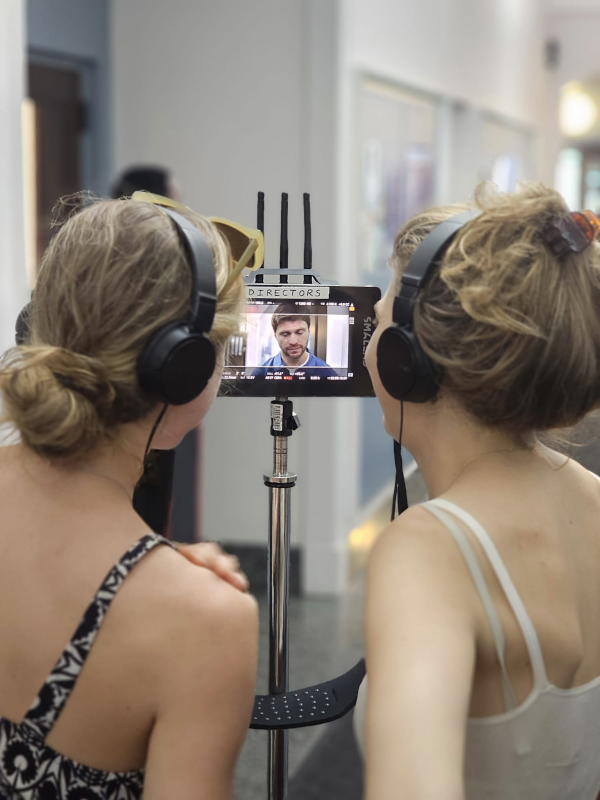
By then, we’d both experienced many other paramours, both dystopic and not. But this one always stood out. So we hypothesized starting a YouTube channel – “Love in the Time of What the Fuck” – and wanted to start with three shorts based on real dating stories. We told a few friends about the idea, and then they’d chime in with their own crazy dating story. The more we talked to people, the more we realized a dating dystopia was becoming endemic.
It wasn’t love in the air, it was something else. Trash? Nihilism? More and more people were choosing to remain single. The New York Times was publishing articles called “Men, Where Have You Gone? Please Come Back.” Soho House was giving workshops on how to survive the trauma of being ghosted.
There was something about this time period that was heightening an anti-romantic experience. The rom-coms of the early 2000s felt more and more like a fantastical dream. We wanted to capture what was actually going on behind apartment doors today, a time that’s been called by some “the loneliest century.” Sociologist Noreena Hertz writes about older women in Japan who are committing petty crimes just so they can go to prison and have a community. The U.K. recently introduced a Minister for Loneliness. Around the world, people can now rent intimacy, from professional cuddlers to fake family members. Intimacies have become transactionalized. It’s not even necessarily sexual, it’s just people who want company. The malaise seems universal.
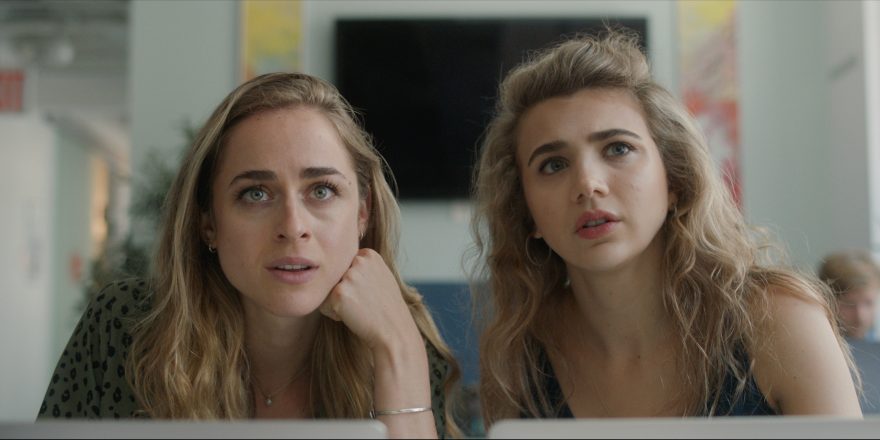
We decided we wanted to turn our disparate dystopic dating scenes into a feature. And that’s how we came up with Floating Carousel, a dark comedy about dating that’s an apocalypse film from the start.
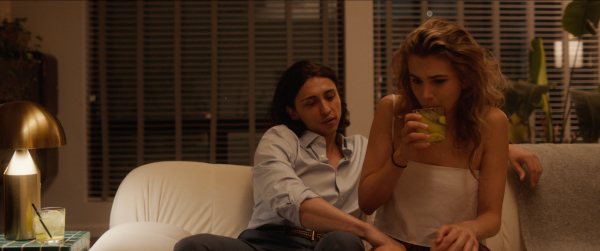
We wanted to use New York City as a metaphor for the carousel itself – a device that keeps shuffling and spinning the characters into different pairings. Everyone’s circling past each other in this absurd way, but they are all too scared to get off the carousel. The city becomes a cyclical loop that can be fun, but also makes the characters dizzy until they spin out. There’s an unhinged and unmoored quality to New York that’s always been there, but what’s different now is that people are more socially isolated even though the city now contains more than eight million people.
Like a carousel, the relationships we see in the film are clearly going nowhere—they’re for temporary amusement. And over time, how does this affect us as humans?
Ultimately, we wanted to make a piece that lives in the gray areas – when people don’t do something explicitly “wrong” and yet you leave feeling like the social contract is definitely off – and what happens when, after enough of these moments, people finally lose it.
But, one of the best aspects of being an artist is that you can take all the things that make you frustrated, sad and angry, and put them into your work. You can make your life a humorous, cathartic release. You can take power back, write in all the things you wished you’d said, and change the ending. In laughing at ourselves, we hope people can reflect on why society is where it is, and what we want to change.