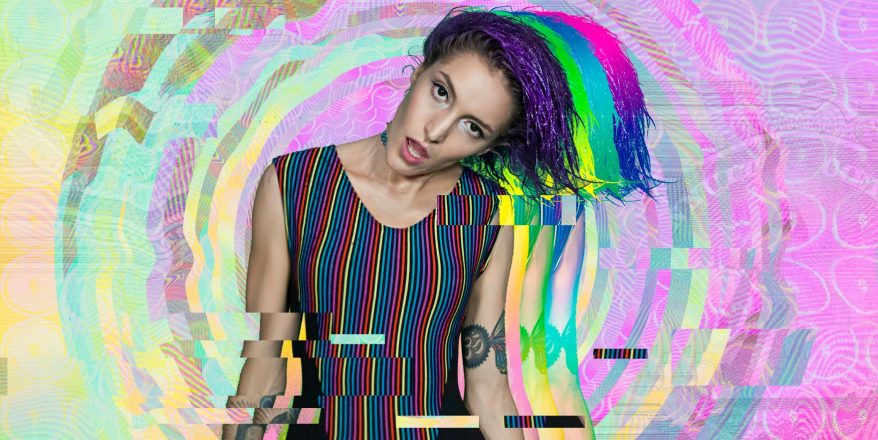


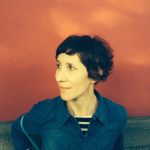
Marie Losier’s latest documentary, Peaches Goes Bananas, about the singular artist and musician Peaches, is out now in theaters through Film Movement. She has worked in New York City for 23 years, making film portraits on avant-garde directors, musicians and composers, such as the Kuchar brothers, Guy Maddin, Richard Foreman, Tony Conrad, Genesis P-Orridge, Alan Vega, Peter Hristoff and Felix Kubin. Whimsical, poetic, dreamlike and unconventional, her films explore the life and work of these artists. Losier’s films have been shown at the Cannes Film Festival, the Berlinale, Rotterdam Film Festival, IDFA, the Tate Modern, Le Palais de Tokyo and Le Centre Georges Pompidou. She had a retrospective of her films at the Museum of Modern Art in New York City in 2018, and a retrospective at Le Jeu De Paume, the Museum of Contemporary Art in Paris in 2019. (Photo by Antoine Barraud.)
I was asked to write something for Talkhouse, but I am afraid of writing!!! I prefer to draw or make films, rather than write (or talk), but I am going to give it a go!
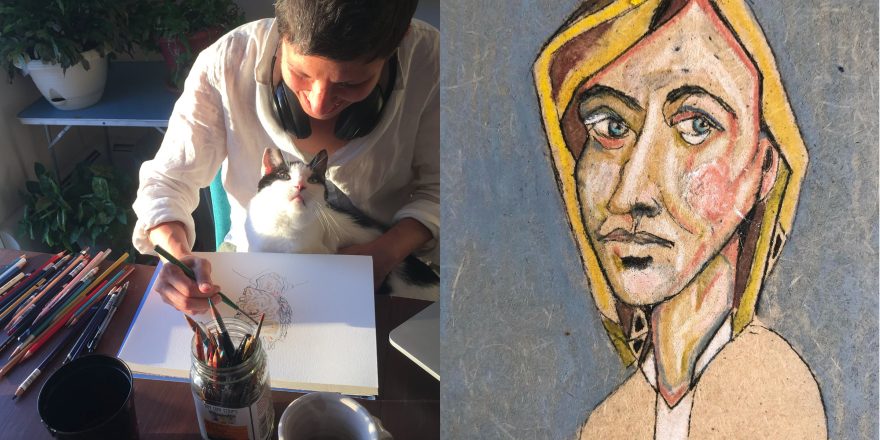
I wanted to share the other “me,” outside of making films. Whenever I’m not behind the camera or eating chocolate, I am always drawing. Yet, for some reason, not a lot of people know about this. While working on a film (which always takes me many years), I love to draw and make ceramics, as it is direct and physical, there are almost immediate results, and I get to use my hands and be messy.
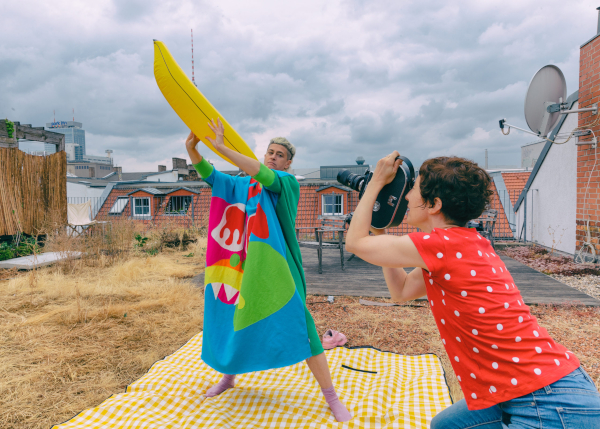
When I came to New York City in 1994, I was studying for an MFA in painting at Hunter College, without knowing how to paint – and with no idea that one day I would make films and be an artist. I also had no idea that I would stay in New York for 23 years, but quickly found that filmmaking was a way to connect with other people in this new city and build a chosen family.
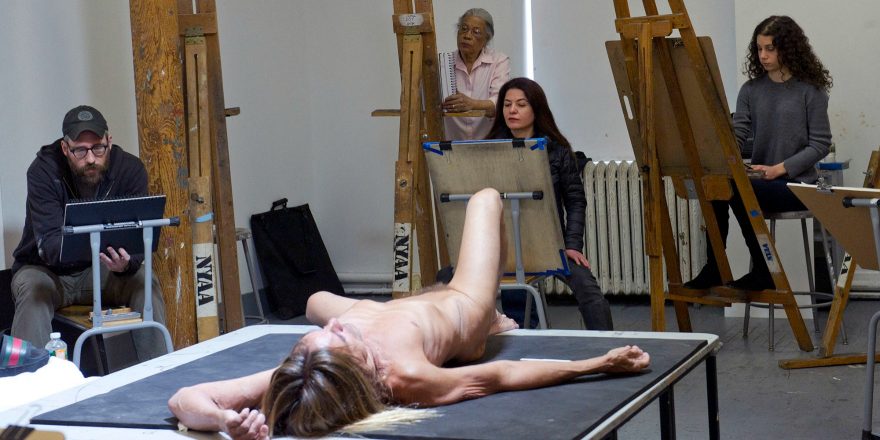
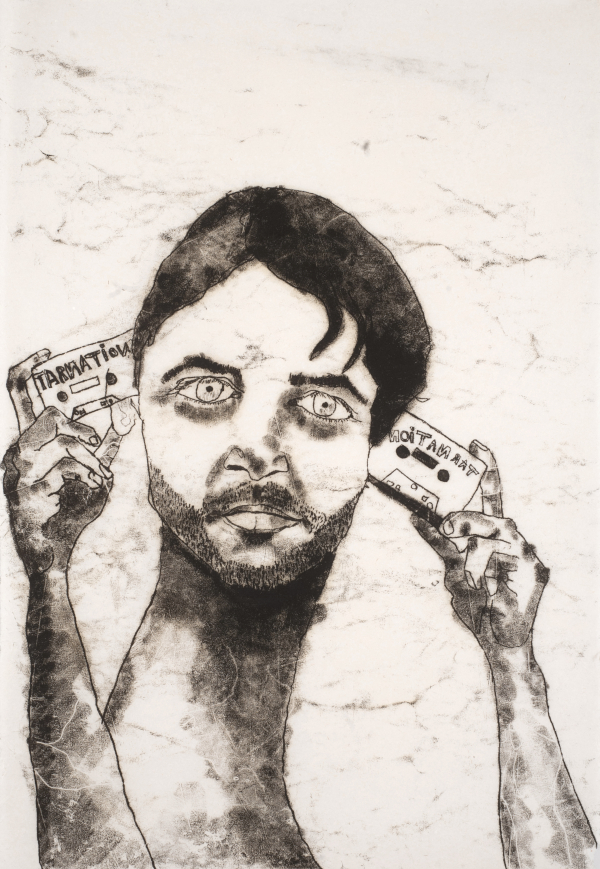
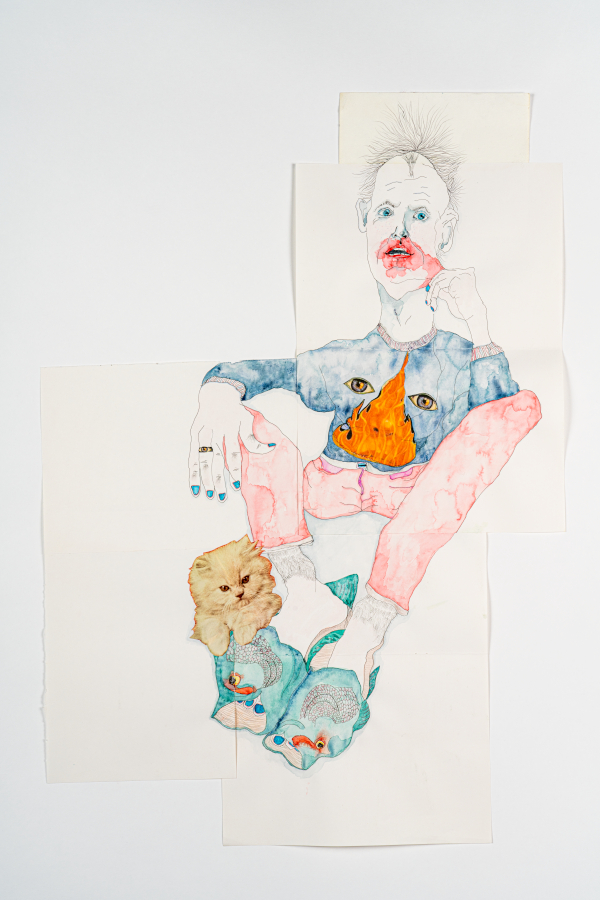
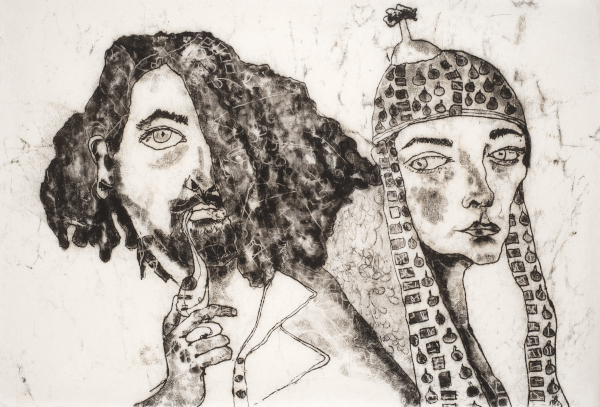
Thanks to one particular encounter, life smiled on me: I met Peter Hristoff, a painter who became a mentor and very close friend. Peter is a wonderful painter and is a filmmaker in spirit, who took me into his observational drawing class as his “French cousin.” The class was like a movie set in motion, with props and scenery. He would bring in four or five actors in costume, who would perform a story with symbolic gestures. They would change positions every three minutes, so it was like a dance. I found myself drawing movements and mise en scène without any technical knowledge, but I didn’t care. I just drew without knowing I could and did a series of monotypes; they were and still are portraits.
At the same time, I discovered new kinds of films and filmmaking when I landed at Anthology Film Archives, while working next door for the late Richard Foreman. Magic came to me and as soon as I got hold of a Bolex camera, I started filming and never stopped. Through this process, over the years I have lovingly made many film portraits of NYC avant-garde artists.
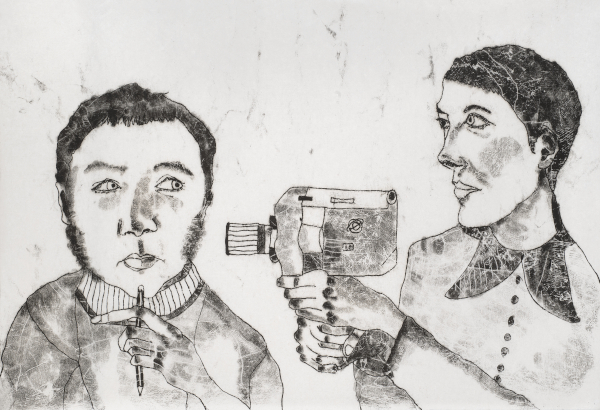
The way I draw people is very similar to the way I make portraits of the close friends around me as a documentary filmmaker. It is a ritual. It’s about setting up a playground where everything and everyone can become free. It works this way:
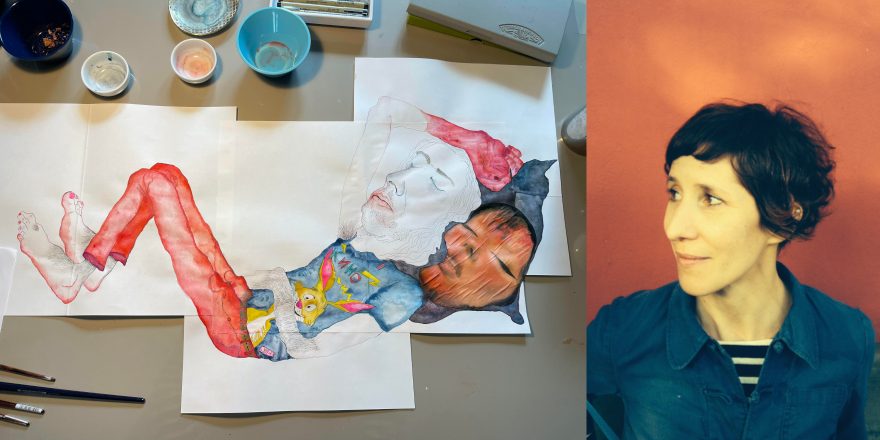
They come to my studio and bring with them some personal objects, whether big or small, that are precious and special to them and that define them in some way. It’s like sharing a secret. What they bring is always a surprise to me, which is fun for both of us. When they are at my studio, we also share food and spend time together. Time and food are essential to connect and have pleasure. Then I have them pose with their objects, finding a pose they can hold for a while. This often means they get very comfortable and sometimes even fall asleep after a while!
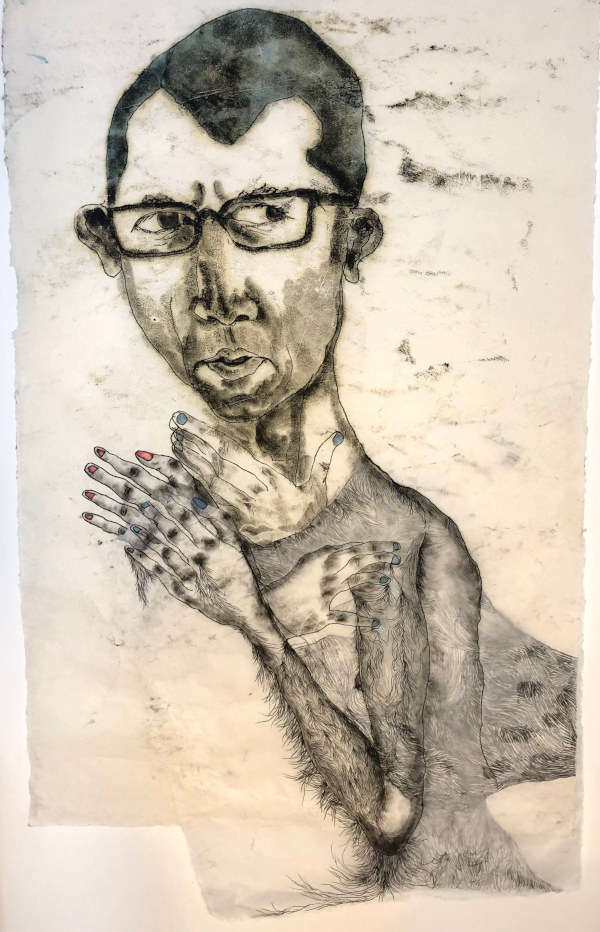
When they are with me, I capture them in outline, and later, when they are gone, over time I add a world that is mine, a world that I imagine them in. It becomes very playful when I’m inventing that world, and I love to surprise them and myself with what comes to my imagination. The process is similar to when I’m making a documentary portrait, as I always capture images and sound separately, so I create the portrait while editing in an imaginary world that’s different from when image and sound are in sync. I adore that part – it is so vibrant and inventive, like a game with the subjects and myself, with filmmaking, and with the rules. It’s similarly playful when I set up a scene to film which is more of a tableau vivant, a mise en scène in which I place the subject I am filming. The set, props and scene are also a playground in which to perform, be free and try to find something deep, while the process remains light.
Here are a series of portraits made with dear friends, who visited and played the game with delight: Ben Russell, João Pedro Rodrigues, David Legrand, Rachael and Gabriel Guma, Elina Löwensohn and Bertrand Mandico, Jonathan Caouette… The portraits always reveal something about the subjects, their soul, their humor, and their process of creating.
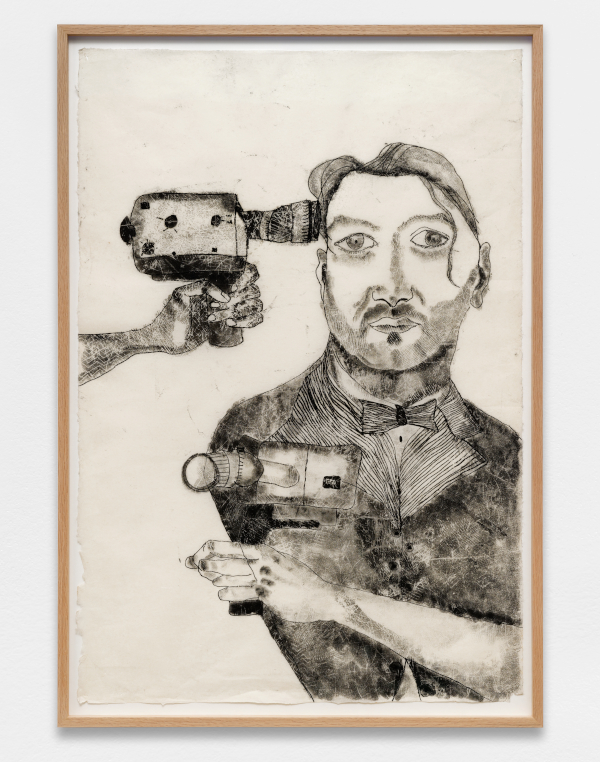
Below are some of my ceramics, which are often linked to my obsession with filming and always being with a camera, with the objects of cinema through which the magic is created. In my drawings and sculptures, the camera becomes a gun, a carnivorous prop. Cameras are spitting, shitting and giving birth to other images, objects, body parts, languages. The cameras have human-animal attributes; they metamorphose, walk, run, dance and love.
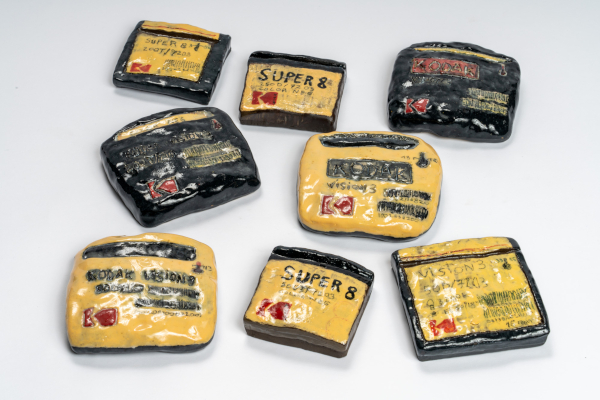
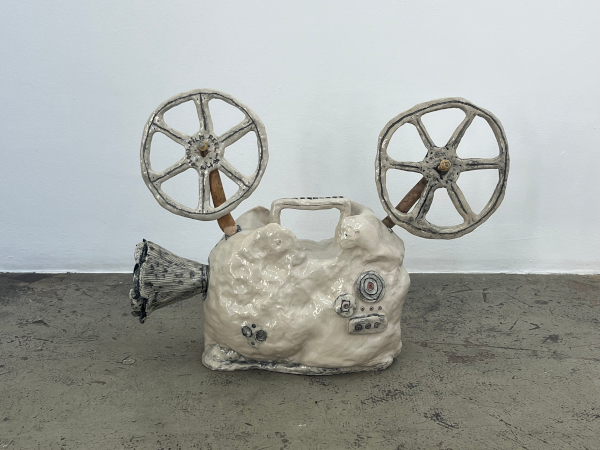
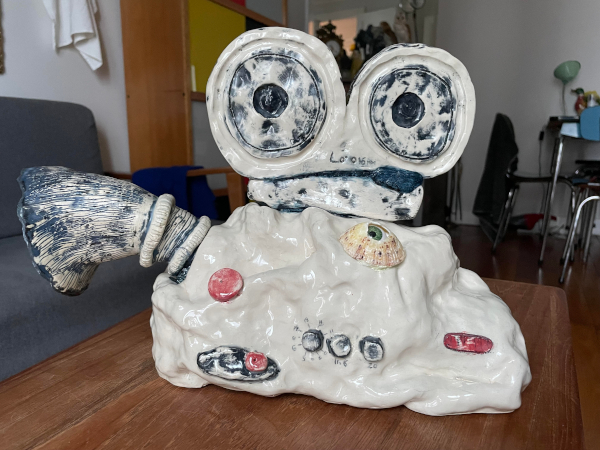
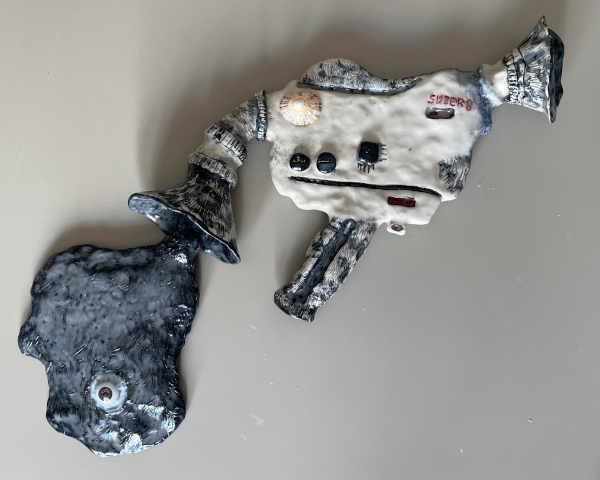
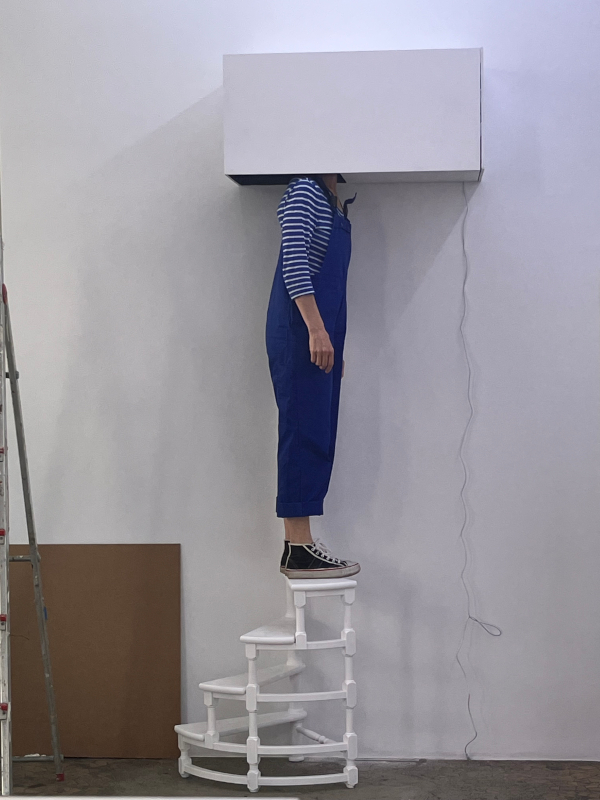
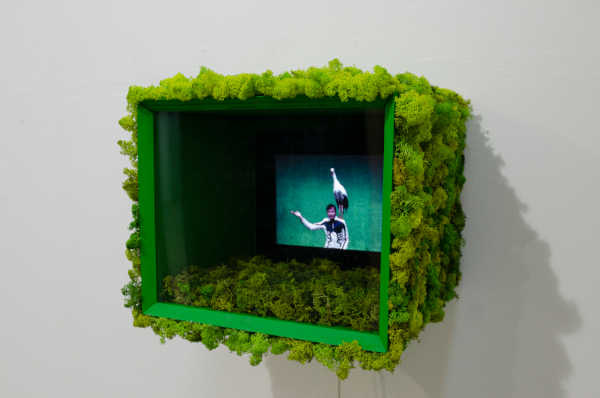
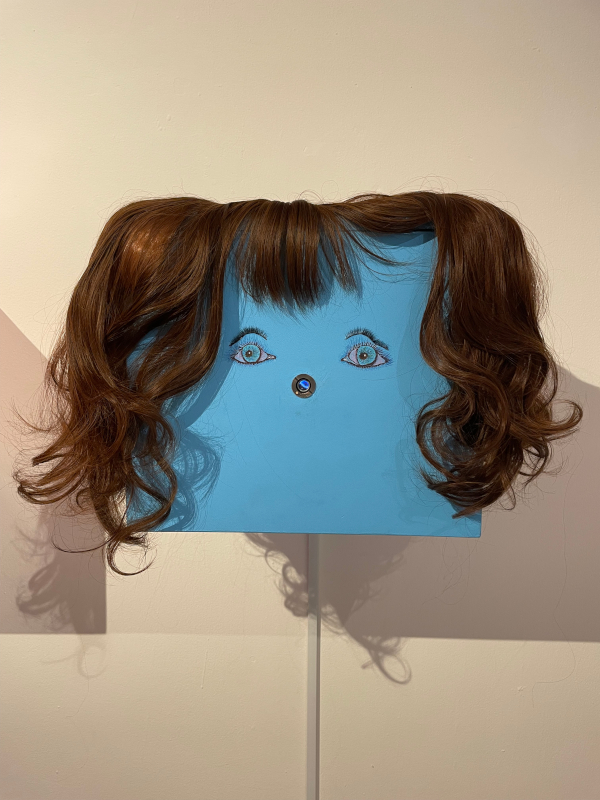
My film boxes are miniature private cinemas for a single person to view the outtakes that live within the box. You can have a peep at the forgotten, discarded rushes of films. Each film box is also dressed as a portrait for the film subject itself. The film boxes preserve the artist, the friend, the portrait.
I guess I always feel that whether the moments they capture are good or bad, joyous or hilarious, these are objects of celebration, a celebration of being so alive.
The movie box of Peaches is a movie loop of discarded footage from my new film Peaches Goes Bananas that I loved and wanted to preserve in another manner. You go up some stairs and stick your head into the movie box and there are mirrors inside the box that multiply the film images in many endless screens.
The green hairy box of Felix Kubin is made with outtakes where Felix is playing a music conductor for birds and animals, who are not following his instructions at all. I wanted an orchestra of animals for Felix, and yet when I met with a movie animal trainer, he told me it would be very, very costly and that it would take months to train even one animal for this film. I had no money and no time, but he let me film all of his pet animals for free, even though none of them did anything that we wanted! It became a cacophonous scene, made up of magic and laughs, but it did not fit within the feature film I edited, Felix in Wonderland, so now it exists in this movie box.
The movie box with my head is a portrait to hold the first film I ever made, Lunch Break on the Xerox Machine.
Featured image shows Marie Losier and her portrait of Dima Dubson; all images courtesy Marie Losier.