


Alex Schmider is an award-winning producer who also serves as Senior Director of Entertainment at GLAAD, known for helping shape authentic LGBTQ+ storytelling through acclaimed film, TV and documentary projects including Disclosure (Netflix), Changing the Game (Hulu), Stay on Board: The Leo Baker Story (Netflix), Framing Agnes (Kino Lorber) and Chasing Chasing Amy (Level 33 Entertainment). Schmider was honored as part of this year’s OUT100 as he continues to push representation in film and TV forward by amplifying LGBTQ+ stories. His latest project, KICK, is at DOC NYC this year as part of the festival’s PRO Pitch Day on November 13th. Alex was recently named one of DOC NYC’s 40 Under 40.
For those of us who’ve spent a lifetime being underestimated, sports documentaries aren’t just films – they’re proof that belief, persistence and teamwork define greatness.
When I was much younger, I was the smallest kid on my softball team – and not by a little. Every time I stepped into the batter’s box, you could see the outfield shift inward like a slow wave. Gloves dropped, stances loosened.
They didn’t expect much. Neither did most of the spectators.
But what they didn’t know was that, despite my frame, I am extremely well-coordinated, disciplined in my practice with teammates and have a strong understanding of the game. There are benefits to being short, even if they are not immediately obvious. I have an unshakeable center of balance and good body control, because I only have so much real estate to manage.
So when the pitches came, I would crack the bat. I watched the outfielders backpedal too late as the ball sailed over their heads, clearing the bases.
This would happen nearly every time we had a game, and at some point, it became a genuine source of pride to consistently confound people’s expectations. This also happened in tennis, golf, volleyball and even pick-up basketball.
Through everything I’ve done since – first as an athlete, and now as a producer – these past experiences are why sport is a theme that resonates so personally for me, and one I know is understood widely by many. Because for every person, there’s a familiar kind of dejection that comes from being overlooked and disregarded. But there’s also a powerful vindication and gratification in defying the uninformed expectations of others.
As I’ve grown older, I’ve stopped competing in sports (with the exception of fantasy football), but I haven’t stopped fighting against the expectations that are consistently imposed on me, the projects I’m producing or the teams I’m on.
To me, the best sports documentaries are portraits in resilience and belief that show what it means to work without recognition and to bet on yourself when it seems no one else will. They capture the incredible fortitude of real people who are counted out and dismissed, yet rise in the face of the preconceptions others place on them, be it on their identity or ability.
When I was young, I didn’t see stories in the media of trans people growing up and getting older, let alone living full and fulfilling lives. The absence of this representation left me without much ability to imagine or envision a future for myself, which TV and film can help illuminate for us when we see ourselves reflected on screen. I couldn’t conceive that I would grow older, because I couldn’t see that possibility. I also couldn’t conceive of producing because I didn’t know 1) what it was or 2) trans people could also do it.
Producing is all the behind-the-scenes preparation, training, grinding, putting work in with your team for game time. It’s all the usually unseen labor that goes into what ultimately becomes seen.
The documentaries I’ve produced about sports aren’t really about winning. They’re all about becoming. Those are the stories I’ve always been drawn to tell – not just in sports, but also in life.
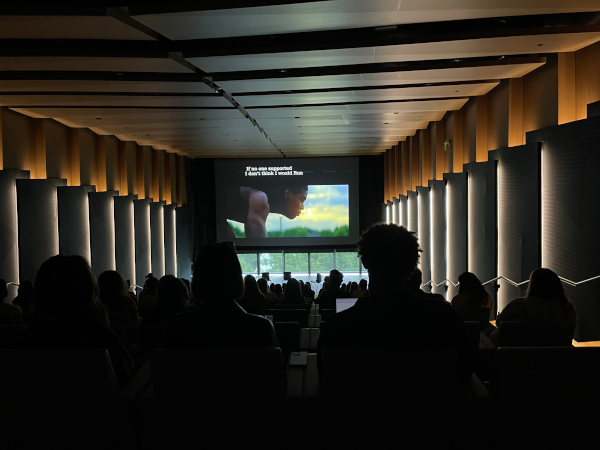
Changing the Game about three trans student athletes facing unprecedented cultural backlash for simply being themselves – finding each of their individual voices against the deafening noise of blistering hatred. Stay on Board: The Leo Baker Story, co-directed by Nicola Marsh and Giovanni Reda, follows skateboarder Leo Baker as he contends with the evolution of skateboarding into the mainstream, with his identity and the sport’s own at the crux.
A throughline in these stories is the immense courage each of these protagonists shares, to be themselves, and, on top of it, do so on a grand stage with competitors and adversaries, institutional, interpersonal and even internal.
Each of these films, in their own way, has at their core the same truth: that we are all desperate to see stories of persistence and tenacity, over and over again, to prove our belief in the possibility of the impossible. Making an independent film, after all, each time feels a little like the same. They’re miracles of a team’s hard work manifested, so often against stacked odds and obstacles, of markets, money, and unspoken mandates.
Being underestimated teaches you how to build quietly, how to outwork other people’s judgment or lack of belief, how to make something undeniable. You learn to draw motivation from critics, to treat every setback as a dare. You have to believe more than anyone else in yourself, your team and what you’ve got to give – with marathon endurance.
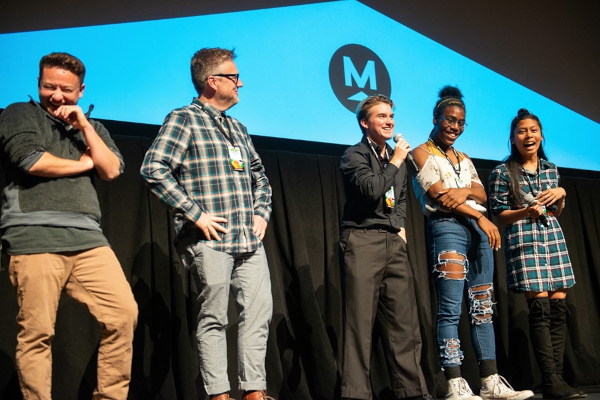
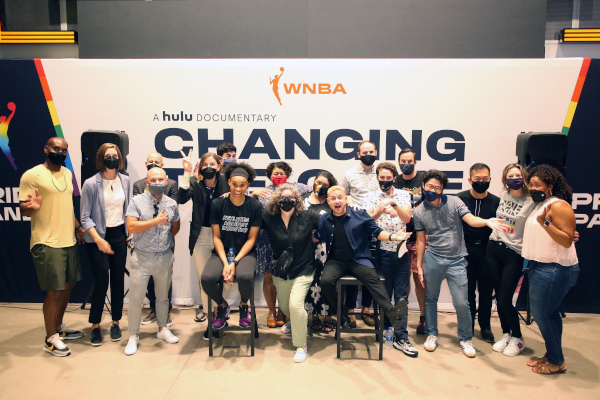
We premiered Changing the Game in 2019 at Tribeca Film Festival. We struggled to get press at first, but we kept pitching – believing that our persistence would pay off, because we knew the film we had. We went to every festival we could that booked us, and outside of festivals, produced more than 80 virtual and in-person screenings and conversations, with more than 10,000 attendees in under a year. We hired an impact campaign producer, Shane Diamond (who I paid with my savings), who found ways to show the film to the largest sports institutions and leagues, among them the WNBA and the NFL. We wrote an educational curriculum to accompany the film for Frameline’s Youth in Motion program to distribute across the country to 1,500 schools, reaching 30,000 students. We screened Docs for Schools, through Hot Docs, offering free access to the film for educators and students across Canada. We paid the participants for every screening and talkback they did by creating a screening fee structure that rewarded the film’s protagonists who had entrusted us to share their stories. We showed up. Consistently. And each of these would have been win enough for the impact they’ve had on audiences.
In 2022, our little film that could earned nominations for a Primetime Emmy for Exceptional Merit in Documentary Filmmaking and a Critics Choice Award for Best Sports Documentary, and received a Rotten Tomatoes Certified Fresh designation, all of which stemmed from team work at at time when a single review wasn’t guaranteed, much less anything else.
That team work began with the herculean efforts of director Michael Barnett and producer Clare Tucker in prep and production, fighting fearlessly and tirelessly to deliver a film that all of us and all of the protagonists would be proud of. We ended up in a place that would have seemed unimaginable at the start of that arduous seven-year journey – to anyone but us.
Filmmaking is a fucking team sport, if there ever was one. I’m so grateful to have been a part of this one, and all of the ones thus far.
Sports documentaries show and remind us that success isn’t born under bright lights and in front of big crowds; it’s forged in early mornings, on empty fields, in the mundane moments of perfecting the art of persistence, in the face of heartbreak, resistance and exhaustion. These films allow us to see what effort really looks like – and how none of it, even in individual sports, is a solo undertaking.
For those of us who’ve been doubted, these stories aren’t just entertainment. They’re a mirror.
The latest film I’ve joined as a producer, alongside Zackary Drucker, Samantha Bloom and Grace Zahrah, is KICK, Julia Schwalb’s directorial debut which follows Nikki Hiltz, the trans nonbinary 1500 meter runner in relentless pursuit of a lifelong dream to make it to the Olympic Games. But KICK isn’t just about making it to the top of one’s sport, it’s also about the invisible hurdles that some athletes must face.
In a time when instant success is being advertised at scale, the sports stories I’m passionate about telling remind us that the journey itself can be the most rewarding – of doing, trying, failing, getting back up, and having the nerve to keep going. Through stories like these, I’m interested in helping illuminate how self-belief isn’t a finish line you cross once; it’s a race you run every single day and, in the best cases, with your coaches as teammates and teammates as coaches. I’ve been incredibly lucky to have both.
Sports documentaries, and sports, generally, as a form of unscripted entertainment, endure because they speak to something universal. They show us that greatness isn’t always defined by records or medals, but by the beautiful act of believing in yourself when belief feels like the hardest thing to hold onto. And that’s why, for me, these films and this kind of storytelling will never lose popularity or relevance.
Every project I sign on to produce keeps the underdog spirit alive through the people whose fight is both reflected in the filmmaking process and the film itself. For me, as that kid who was always underestimated, telling these stories isn’t just my work, it’s my way of staying in the game and proving, over and over again, that we are not to be counted out.
We might as well leave it all on the field when we have the chance, and that’s what I intend to keep doing as a producer.
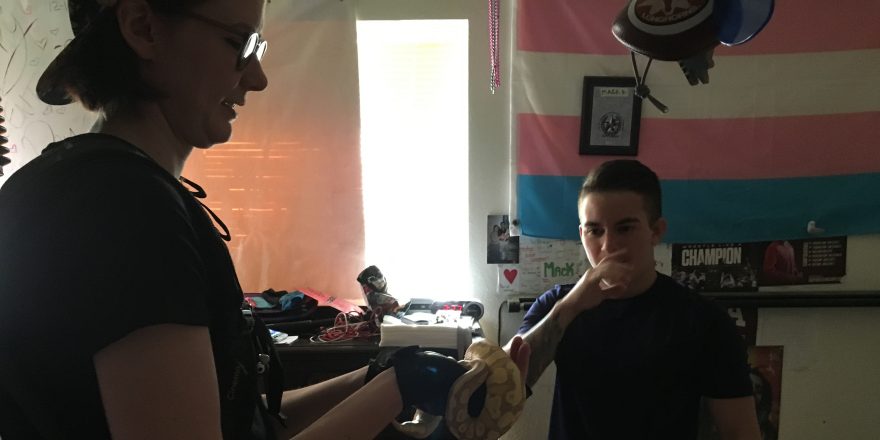
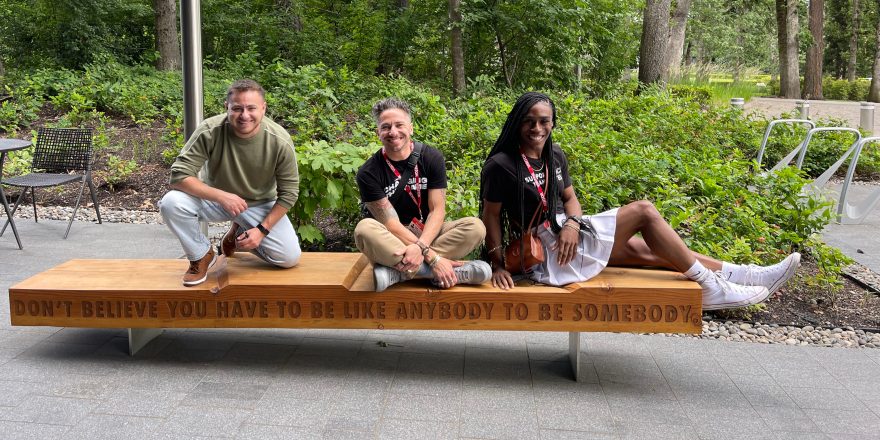
Featured image shows producer Alex Schmider with Changing the Game’s impact producer Shane Diamond and subject Andraya Yearwood. All images courtesy Alex Schmider.