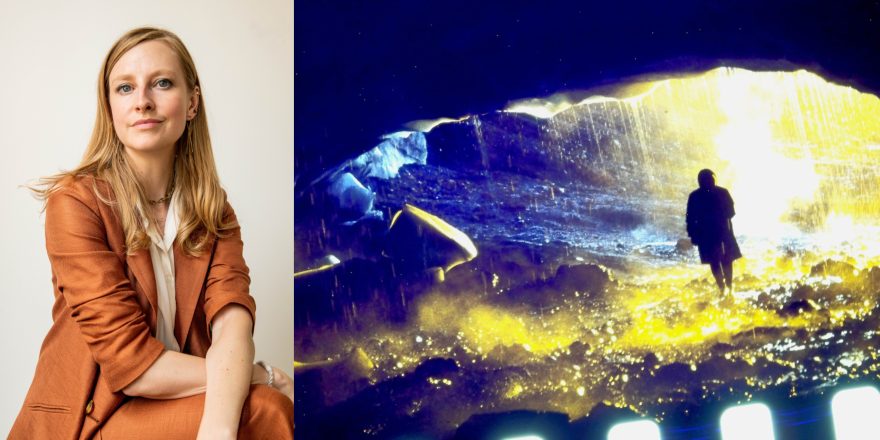


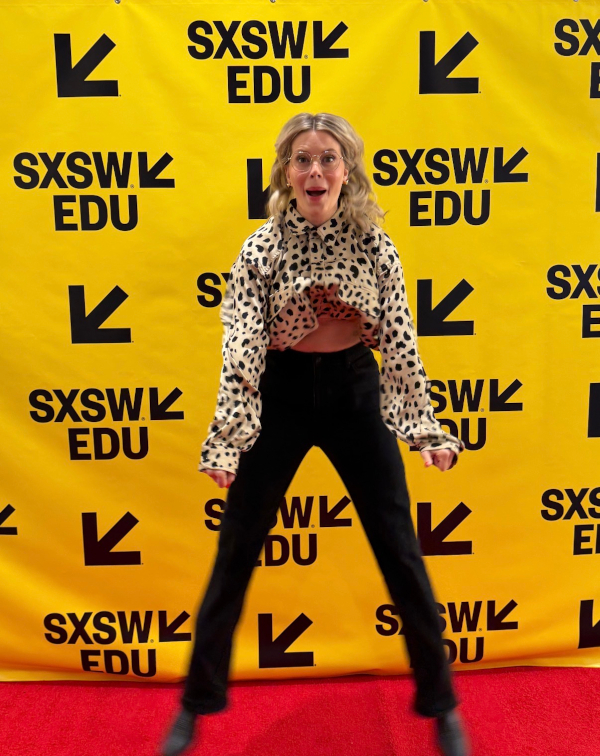
Drew Denny’s new feature documentary, Second Nature, narrated by Elliot Page, proves there’s nothing “inferior” about being female and nothing “unnatural” about being queer. The film played recently at SXSW EDU and will next play on April 24 at the Reel Wild Film Festival in New York City, where the film was awarded the special jury award. Harper’s Bazaar called Drew’s one-woman show turned Academy Award nominated podcast Asking For It “a Fleabag fix in a post-Fleabag world,” and her first feature film The Most Fun I’ve Ever Had With My Pants On won Best Feature, Best First Feature and Best Cinematography in its 50-festival run, earning her a spot in The Advocate’s “40 Under 40” list, where she was named “an auteur to watch.” She is a 2025 recipient of the Chicken and Egg Development Grant for her film Inhabit, a collaboration with Chase Joynt. Her forthcoming feature film, Love and Chaos, stars Lux Pascal, Bebe Wood and Christine Taylor. She moonlights in a band called HIPS and runs the non profit Allies in Arts, which has supported over 14,000 artists who identify as women, BIPOC and/or LGBTQ+ since she founded the organization in 2015. (Photo by Benjamin Trivett /Shutterstock.)
My heart was racing. I couldn’t stop clenching my jaw. I was surrounded by grizzly bears, timber wolves, and a particularly sneaky looking cougar.
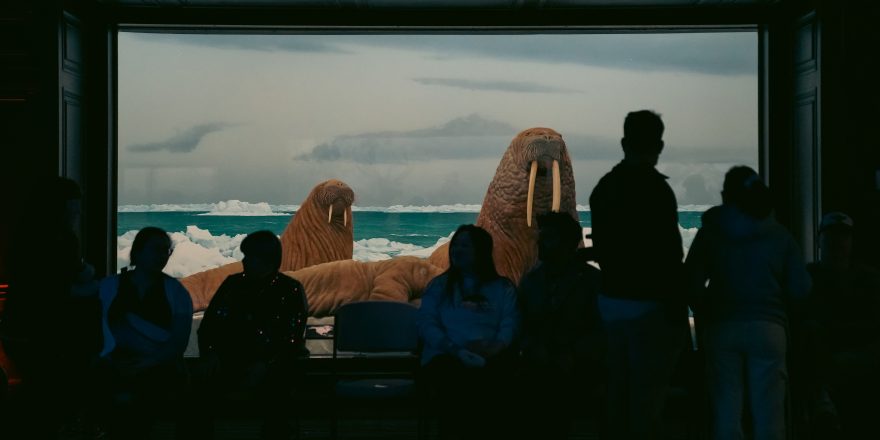
It’s always scary to show a new film to an audience for the first time, but I’d never done a public work-in-progress screening before. I’d already been making Second Nature for almost 10 years when we first shared an unfinished version at the Natural History Museum of Los Angeles to test how it was landing with audiences. They projected the film in the North American Mammal Hall, so the audience was surrounded by dioramas of taxidermied predators and prey, each contained in their own glass box, separated and safe from one another and from us. But still vulnerable, somehow, frozen in time for our inspection.
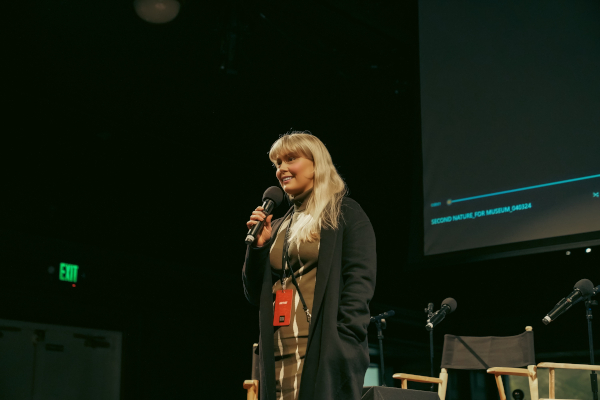
I felt like the bighorn sheep. Destined to be climbing up a craggy cliff for all eternity, with horns I’d grown over 10 years of butting heads to get this film made. I worried these horns had become blinders, keeping me from knowing whether or not anybody actually cared to see the work I’d dedicated myself to for a decade. This was April 5, 2024.
When I first began pitching Second Nature back in 2015, I told prospective buyers that we needed to act fast, because stories of queer and matriarchal animals were going viral on social media. Surely, we were on the precipice of the true diversity of the natural world becoming common knowledge – which would solve sexism, homophobia and transphobia by demonstrating that there was nothing inferior about being feminine and that we all belong here on Earth. This would, of course, be amazing! And it would make obsolete any film that broached the topic. Why would anybody want to watch a movie about something that everybody already knows so deeply that they take it for granted? In 2015, I thought a global understanding of not just the existence of female agency and queerness in nature but also their evolutionary benefit was inevitable and imminent, I felt we would soon be entering an era of equity, and that I needed to make Second Nature before the subject matter became completely irrelevant.
I guess I called that one wrong.
If you don’t make independent films, you might ask, “Why would anyone work on a film for 10 years?” One of the answers is that people kept telling me not to make it.
In 2015, I was told that we didn’t “need this film anymore,” because gay marriage had passed, and “the fight for queer rights was over – we won!” After the 2016 election, I was told that the topic was simply “too frivolous.” We had “bigger things to worry about!” In 2020, people were talking about something else. And then I was told it was too “divisive.” If you are a rational person, you might ask, “Why keep trying?” To answer that, I’m gonna do a quick trigger warning here:
Trigger Warning: Texas.
So, a) I’m from Texas, and b) I was never the “right” kind of girl. I was the girl asked out by the cute guy as a joke or invited to the slumber party just so the cool girls could play pranks on me. I started running away at 13 to escape an unsafe home, only to find other unsafe situations. I came out as a bisexual, atheist, vegan* – which was devastating to my conservative, Catholic, dairy farming family. I met my first girlfriend, did pretty much everything I was told not to do, and was promptly expelled from my religious school. That cycle repeated a few times, until I found myself in biology class in a public high school in Texas, where my teacher was encouraging students to walk out of class if they were upset or offended by the theory of evolution – they would not be tested on the material, and there would be no consequence for their decision not to learn it.
No teachers asked if the girls at my school were offended or upset by the relentless harassment and assaults we experienced at the hands of our straight cis male peers. No administrators ever asked if us queer kids were offended or upset by the rampant homophobic bullying we faced.
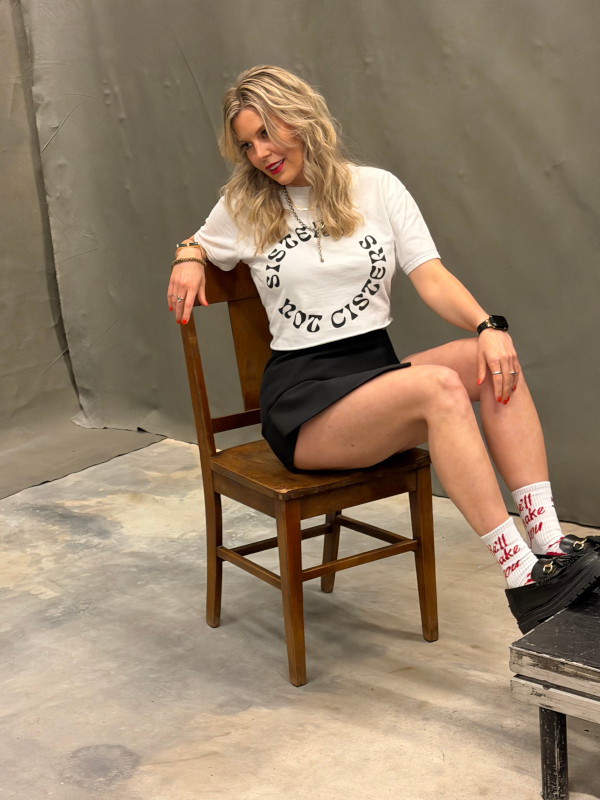
It wasn’t until I left Texas, moved to California, finished film school, made films following NASA scientists in Greenland, climate change refugees in the Maldives and abortion care providers in Poland that I was gifted a copy of Dr. Joan Roughgarden’s book Evolution’s Rainbow. From that book, I learned about thousands of animals who have same-sex relationships, parent in same sex-pairs, form matriarchies, change sex (sometimes back and forth throughout their lives!), inhabit more than two genders, more than two sexes, species in which males do the parenting and females have harems – disproving everything I’d been taught about females being “naturally inferior” to males, “naturally submissive,” “uninterested in sex outside of procreation,” and, of course, everything I was taught about queerness being simply “unnatural.” I read Joan’s book cover to cover as quickly as I could and for the first time thought: Wait a second, there’s nothing wrong with me?!
I mean, there’s a lot wrong with me – but, like, There’s nothing inferior about being a girl? And there’s nothing unnatural about being queer?!?!
I felt so much relief. I was like, HOLD ON – is this what straight people feel like all the time?! No wonder they invented LIVE LAUGH LOVE! I get it now.
My next feeling was… rage.
Why didn’t anyone tell me this before? I went to SO MUCH SCHOOL! Someone should have taught me this. I could’ve fought back against my bullies, and I could’ve used this information to defend other kids who were getting picked on. I could’ve avoided so many dangerous relationships because I wouldn’t have been willing to survive off scraps if I had known all along that I belong here on Earth, just like anybody else – which might even mean that I deserve love and safety, too.
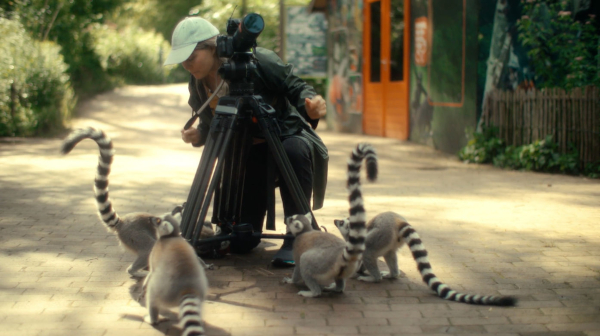
If you’re a filmmaker, you know the stages of grief – denial, bargaining, rage … pre-production.
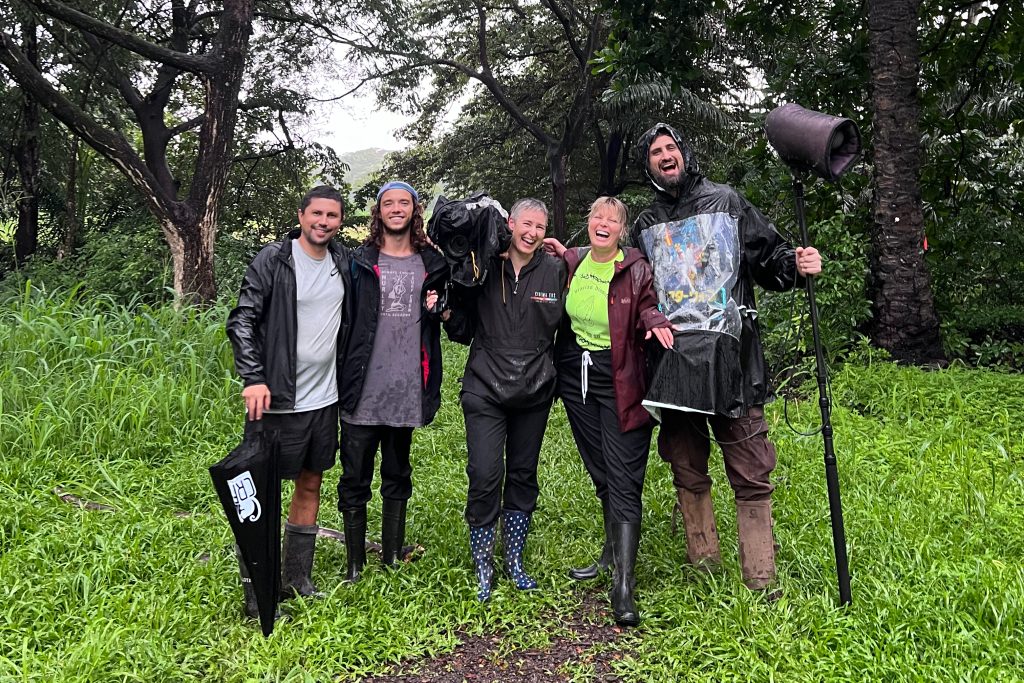
After six years of pitching, pre-interviews, research and writing, Second Nature earned a Documentary Fund Development Grant from the Sundance Institute and Sandbox Films, our executive producer Megan Ellison supported us creatively and financially from the very first shoot in 2021 through the finish line in 2025 (not to mention her relentless and fearless advocacy as the first person to take a risk for this film), and we were awarded finishing funds from Frameline Festival and Chimaera. We followed our scientists from Hawaii to the Netherlands to Costa Rica to film with bonobos, chimpanzees, capuchins and underwater with wild sharks. The world’s leading experts on our closest primate relatives taught us about how our species came to be, and we interwove their incredibly powerful stories that systematically debunk the most harmful myths we are taught about what’s “natural.” The greatest gift of all came when one of the most talented actors on the planet – who also happens to be one of the most sincerely dedicated and caring voices speaking up for the most vulnerable in our era – signed on to be our narrator. Elliot Page completed our team and, without him, our film would not exist.
Back to April, 2024: Having been told so many times that Second Nature was “unnecessary” and even incendiary, I was nervous to share it with strangers after 10 years of labor and care – What if it was all for nothing?!
But when I turned from the diorama of the bighorn sheep to face the audience, I saw that every seat was full. Not only that, people were sitting on the floor. People were leaning on the metal bar protecting the glass wall dioramas. There was a line out the door and down the hall and down the steps.
Our screening was more than full. It was overflowing.
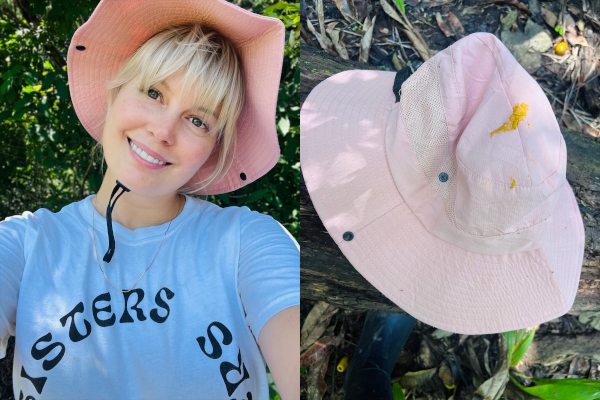
The film wasn’t even finished! It was only 52 minutes long and we hadn’t yet filmed in Costa Rica – which is some of our most cinematic original footage … I was in absolute shock, which turned quickly to a steely resolve to finish the feature and get it in front of audiences again as soon as I could.
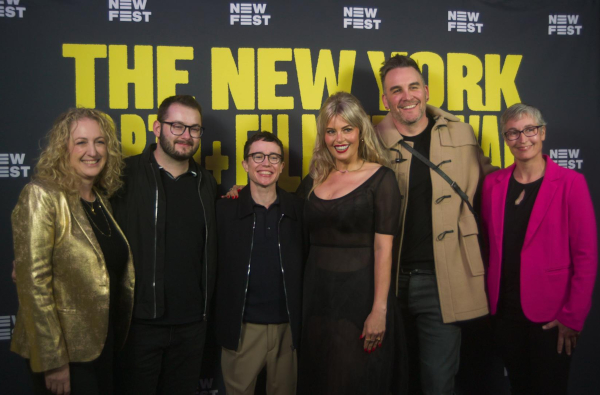
When we premiered the completed film at NewFest in October 2025, I worried that a Friday night in New York would offer so many activities that surely our audience would be limited. Our theater was packed. When we screened at SXSW EDU, I worried that no one would come at 9 a.m. to find us in a hotel ballroom, rather than in a movie theater. Our screening was full. Our Dutch premiere was sold out. Our Australian premiere was packed – and apparently 80 percent of the audience rated us 10/10! All over our planet, the reactions have been the same:
Delight! (Lots of laughs)
Relief! (Lots of tears)
And hunger. (Lots and LOTS of requests to watch the movie again, to share it with friends, family, colleagues, students, congregations, communities …)
After this decade that has felt like a hundred years, it conjures a particularly painful irony when I look back on the time when I thought I had to work fast, lest this information become so well-known as to be boring. These past 10 years have seen ever more insidious campaigns being waged against women, girls and queer folks in schools, libraries, healthcare, politics and everywhere else. As we watch evidence pile up about the abuses of young girls perpetrated by men in power, we are being told that trans athletes are the ones endangering girls’ safety. As we watch a girls’ school being bombed in yet another needless war, we are being told that drag queens are the real criminals. The hope I felt when I first started this project feels like a naive fever dream, but then I remember what we learn from the baboons …
One of my favorite stories in the film is about a troupe of baboons who forged a new society with less violence, no sexual coercion, and thus less stress and more cooperation. I know it’s possible for people to change, because I have lived it – not by moving from Texas to California, but by unlearning the dangerous myths Texas taught me and learning to believe that I am just as worthy of love and a good, happy life as anybody else. I see it in our audiences every time we share the film – people crack up throughout the movie, then come up to me crying, saying this was the film they needed when they were a kid. Data demonstrates that teaching young people about the existence of diversity in nature reduces self-harm, suicidal ideation and suicide attempts. I want to move from a world in which half of queer youth contemplate suicide and 10 percent attempt it (statistics courtesy of the Trevor Project) to a world where every kid knows they deserve to be here – and that nobody can expel them from planet Earth.
So that’s why I spent 10 years making Second Nature. Despite all the reasons I was told I shouldn’t – or couldn’t. And while I’m horrified about how wrong I was about the acceptance I assumed queer folks would be enjoying by now, I’m only more galvanized to share the film as it becomes, tragically, only more necessary. Anyone who claims to care about the well-being of young people should be advocating for this information to be readily available, but we are living in an era of book bans, educational censorship, and the rescindment of funding for anything remotely related to “females,” “LGBTQ+,” or “diversity.”
In Second Nature, Dr. Joseph Graves teaches his students that, when Darwin’s On the Origin of Species was first published, no professor could teach the theory that all humans descended from a common ancestor. As the first African-American evolutionary biologist, this isn’t history for Dr. Graves – he fights racism in science and in the world each day. (And if you haven’t yet, read everything he’s ever written right now, please.) I listen to him when he says we have fought these battles before, and that we only win – or even survive – when we refuse to back down from our beliefs and cooperate across movements.
So we are partnering with theaters, schools, LGBTQ+ organizations, mental health and suicide prevention programs, legal advocates and more to share Second Nature with as many people as possible – in the hopes that everyone can feel the sense of relief I felt when I read Joan’s book. If you’d like to watch Second Nature, just request a screening, and we will work with you – whether your audience is 2,000 or 10.
As I prepare to bring our bonobos back to New York City (for yet another Friday night screening!), I still feel the worry that no one will come. (Will that ever go away?!)
But I also feel something new … An evidence-based conviction that when we stand up for the stories we believe in, audiences will stand up for us. They might even stand at the very back of the room for the entire duration of the film and the Q&A that follows. They might even stand in line for another half hour after that just to tell you, “Thank you. I needed that.” And that first “thank you” proves that all those 10 years were worth it.
*While bisexuality, atheism and veganism are all valid identities, none of these terms still applies to me.