


Evan Mathis’ short film The Hemingway, which he co-directed with Patrick Sean O’Brien, is currently playing at film festivals. Mathis is a three-time Emmy-winning multi-disciplinary creative whose passion for making things fuels his award-winning work. He has built a career weaving his diverse passions into projects honored by One Show, Clios, Promax BDA, the Emmys and more and his work has been featured in outlets including Adweek, Ad Age, Variety and Sports Illustrated. Evan has shared his expertise by speaking at design conferences worldwide, and takes pride in collaborating with a lot of remarkable people at leading companies across the entertainment and advertising industries.
A couple of years ago, I got an email from my old friend Patrick O’Brien. It was brief. The kind of pitch I love to get: “Hey do you want to direct a film with me?” The script was attached.
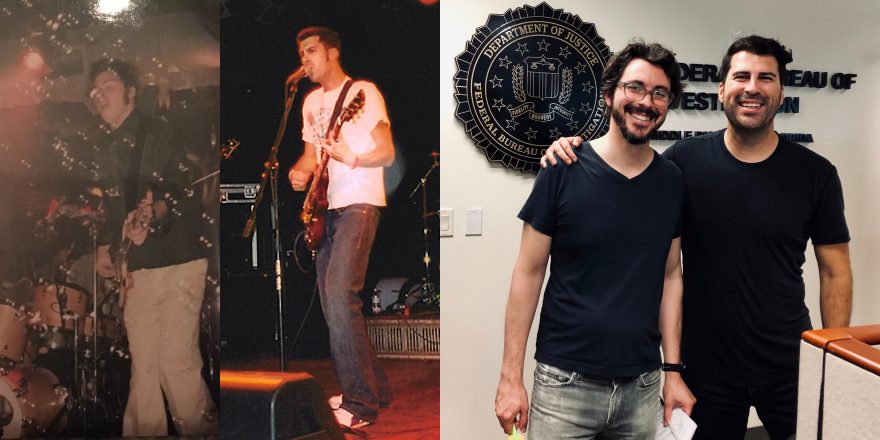
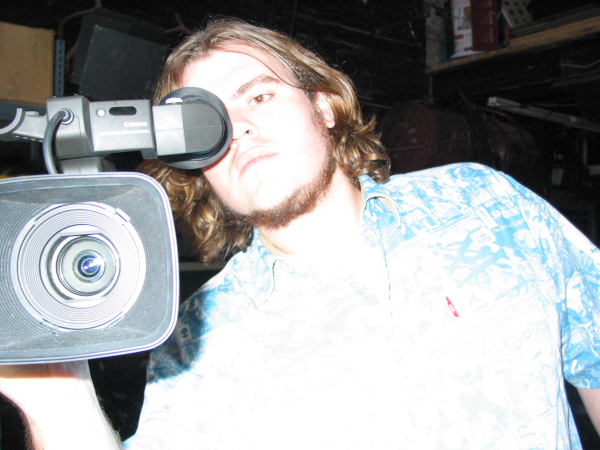
Patrick and I have known each other since the late 1990s. We were both aspiring directors coming up in New York City at the turn of the millennium, back when digital video was democratizing filmmaking and anything felt possible.
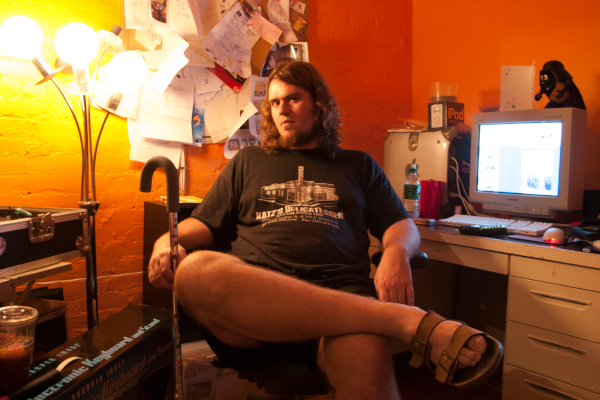
Then in 2005, Patrick was diagnosed with ALS. His prognosis was that he’d be lucky to survive another three years. Five at most.
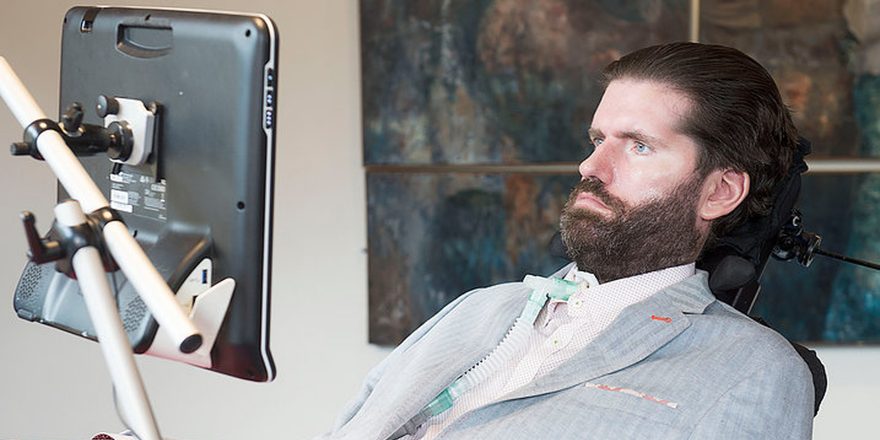
Spoiler alert – Patrick has not only lived for two decades with the disease, but he has continued to make films. Our friendship and creative collaboration have continued, even as everything around us changed. I moved to Los Angeles, started a family, built a career in advertising and directing commercials. Patrick’s journey led him to the Leonard Florence Center for Living in Chelsea, Massachusetts, but not before losing the ability to walk, to use his hands, to speak, to even breathe without assistance. He never lost his dark sense of humor, though. I still remember when he lost the use of his upper body and first needed to use the eye writer, he made a Facebook post about it entitled “A Farewell to Arms.”
Along the way, he made his acclaimed film TransFatty Lives, documenting his journey into ALS with unflinching honesty and dark humor. We stayed in touch. Here and there, we’d email about projects, about ideas, about weird stuff we wanted to make next. I’d always make a point to visit whenever I was in Boston, if only to help him sneak some THC into his coffee.
So when I got his email, of course I read the attached script. It had so many moving, compelling elements: a man dealing with the immediate physical reality of his condition, a fallen comrade, universal regrets, the extraordinary horror and beauty of being trapped in a body that won’t do what its brain commands.
We would hear what Patrick’s “voice” sounded like, but would transition to his internal narrative to begin the journey inward… It was sharp, funny, and dark, contrasted against the silent, painstaking reality of communicating through an eye-tracker.
Oh, and a significant portion of the film would be about taking a shit.
I said yes pretty much instantly.
There were no thoughts about festival strategy or distribution or whether this would “work” for my reel. After 20 years of friendship, the answer to “Do you want to make another bonkers project?” was pretty much always going to be yes.
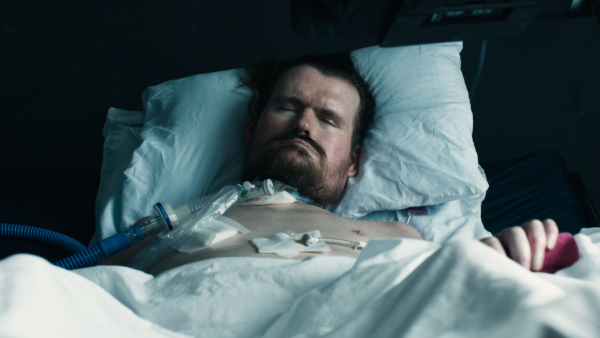
Of course, the practical questions came later. How could we make a film about someone trying to shit that isn’t absolutely revolting? How could we balance the sacred and the mundane, the internal and external worlds, without sentimentalizing disability or wallowing in darkness? How could we safely film in an ALS facility, where even a slight cold can be life-threatening?
I didn’t have good answers to any of these questions when I said yes. But that’s kind of the point.
Let’s be clear: no one makes money on a nine-minute short film. Not us, not the crew, not the cast. If you’re looking at this as a business proposition, you’d run the other direction. The economics are completely insane.
But that’s exactly why we could make what we made the way we did.
I’ve spent most of my career in advertising and entertainment, where every creative decision gets stress-tested against market research, client feedback, demographic targets and executive whims. You’re always selling something (mostly your soul), even when you’re outwardly proclaiming that you make art. It’s not bad, it’s just the reality of commercial work.
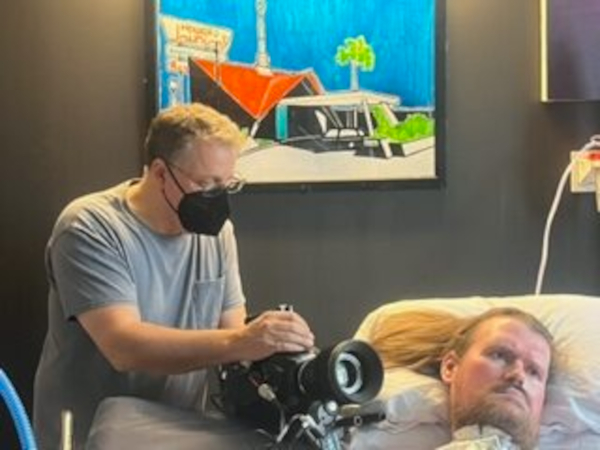
This was different. We made The Hemingway because we wanted to. That gave us the freedom to stop second-guessing. To trust the weird choices. To follow the creative thread wherever it leads, even if it leads to a film that opens with a man in bed, unable to move, needing to shit.
The unsexy truth is that overnight success often takes 20 years. The making of The Hemingway is not exactly a scrappy underdog story about two outsiders who came out of nowhere. The film exists because of two-plus decades of hard work from everyone involved.
Patrick had already established himself as a filmmaker who refused to let a fatal disease silence him. TransFatty Lives proved he could tell his story with humor and guts and zero sentimentality.
I’d been making commercials in advertising for years, meeting the folks that would help me throughout my career, learning the craft, occasionally winning an Emmy or three. I’d collaborated with super talented people across the industry. I’d earned a reputation, hopefully, as someone who shows up and does the work. But I’d never made “a film.”
The crew was an all-star cast of its own: Doug Pray, the legendary documentarian and editor; John Sawyer, our DP who was already a long time collaborator; Jeff Roenning, our sound recordist; Darin Hallinan, audio engineer from Dolby Labs; and the hardest colorist to book in the world, Tom Poole at Company 3. Every single person donated their time. Not because they thought this would be a hit, but because they believed in what we were trying to make.
You can’t manufacture that kind of support. You can’t buy it or strategize your way into it. You can only earn it over time by putting in the work, being a decent collaborator, and building real trust.
We finished The Hemingway and started submitting to festivals without any real expectations. We hoped it would play a few places. We thought some people might connect with it.
Then we got into Slamdance. Then we won Best Short Film at the London Independent Film Awards. Then we won Most Inspiring Short Film at WSXA Barcelona. Then Seattle, then Venice Beach, then CREDO 23. And the San Francisco Film Festival, where we won the Golden Gate Award …
At which point, somehow, impossibly, our film became Oscar-qualified.
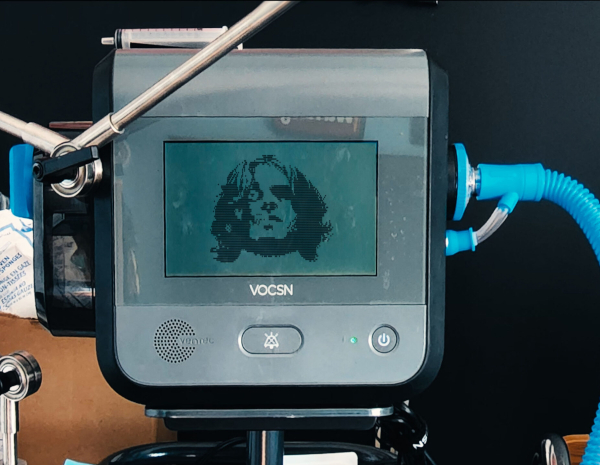
None of this was the plan. Sure, the plan was to make a good film. The plan was to tell Patrick’s story and find the balance between life’s beauty, dark humor and heartfelt revelation. The plan was never to win awards or qualify for the Oscars or write articles about how that all happened.
There’s a strange feeling that comes when something made purely for creative reasons finds an audience. It’s validating, but also slightly surreal. Maybe because the film is honest. Maybe because we didn’t try to make it palatable or safe.
Not every yes leads here. Most don’t. Most of the weird projects you say yes to will be forgotten, or will fail. But they will always teach you something. That’s fine. That’s how it works.
You need to make stuff that pushes you out of your comfort zone.
The work is the point. Everything else – the festivals, the awards, the recognition – is just what sometimes happens if you’ve put in the effort. But the actual making of the thing … that’s what you show up for.
Patrick is still here, still creating, 20 years into a disease that usually takes people a helluva lot quicker. I believe a huge reason why is because he has something to live for. He still has creative output that most people would let slip away once in the grasp of ALS. His creativity isn’t just what he does with his spare time, it’s what keeps him alive.
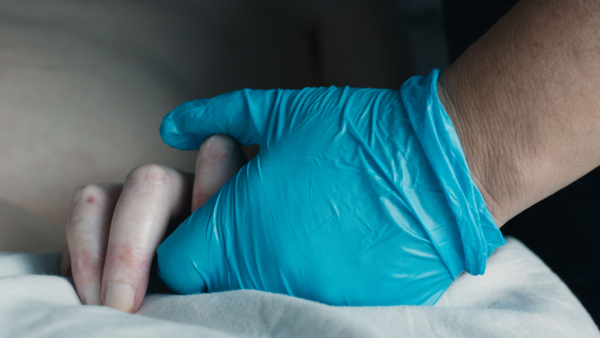
And maybe that’s the most important thing about saying yes: you never know what it might mean to someone else. A reason to keep making, to keep pushing, to keep believing your voice matters.
So say yes to the weird email. Say yes to the impossible project. Say yes to your collaborators, especially the ones who challenge you, especially the ones you know and trust and who trust you. Build relationships that matter. Make things for no good reason.
And if someone sends you a script about life, death and shit? Read it.
Then figure out how to make shit happen.
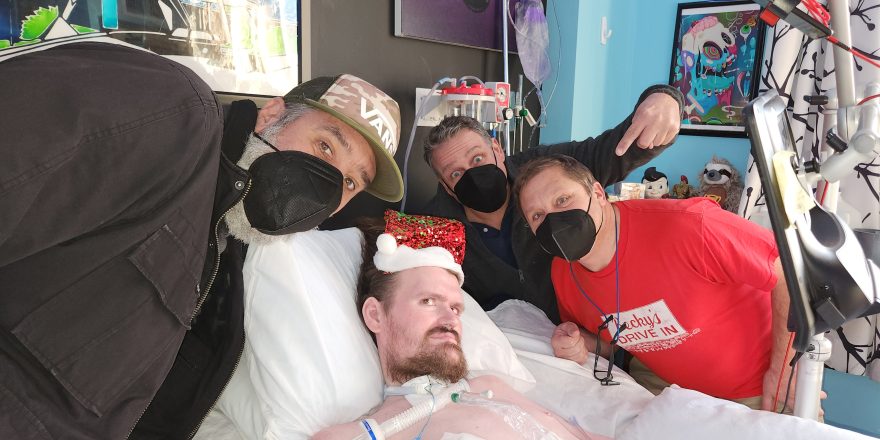
Featured image shows Evan Mathis, Patrick Sean O’Brien, audio recordist Jeff Roenning and cinematographer John Sawyer on the day they wrapped physical production on The Hemingway; all images courtesy Evan Mathis.