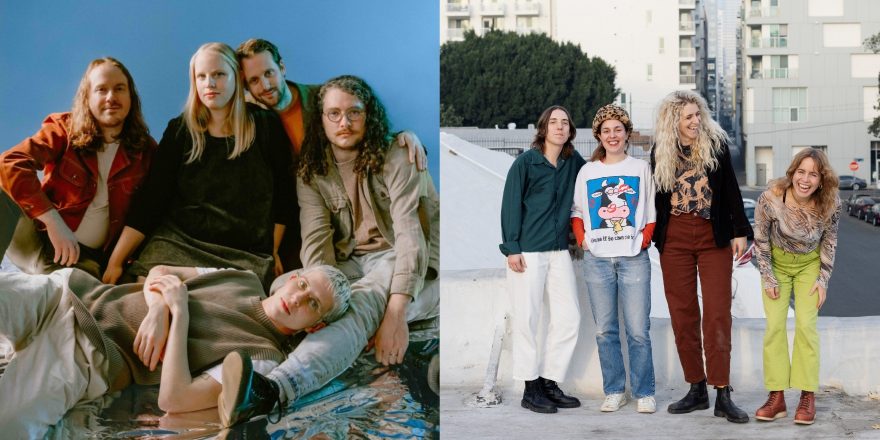


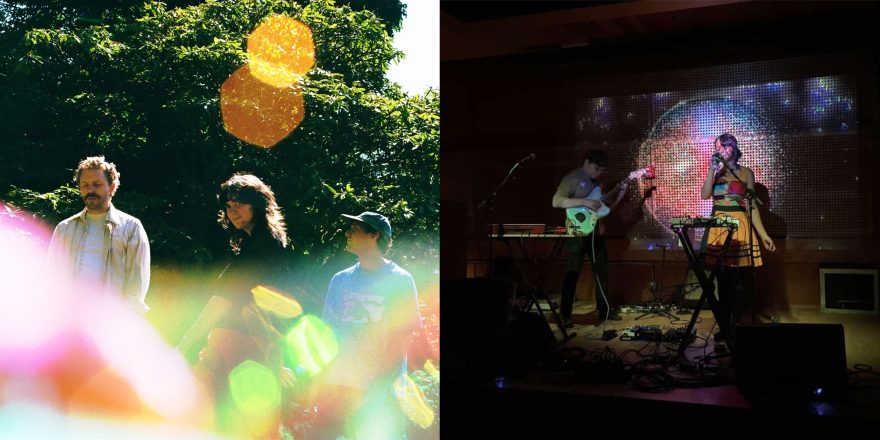
Coral Grief is a dream pop band from Seattle. Their debut full-length record, Air Between Us, is out now.
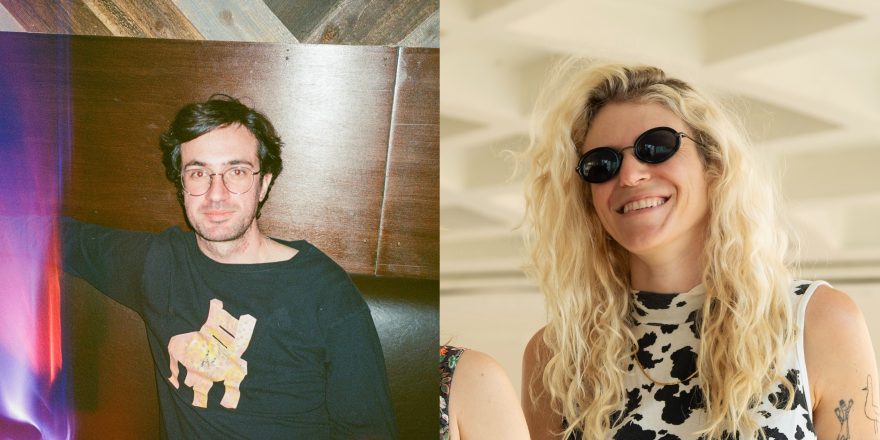
Lena Farr-Morrissey fronts the Seattle dream pop band Coral Grief; Natasha El-Sergany is a songwriter and multi-instrumentalist who fronts the group somesurprises, also based in Seattle. The debut full-length Coral Grief record, Air Between Us, is out now, and to celebrate, the friends got together to chat about it, and much more.
— Annie Fell, Editor-in-chief, Talkhouse Music
Lena Farr-Morrissey: One thing I wanted to start with talking about: we both took a class with Brian Eno this January. It was a songwriting class with School of Song, which is this really cool organization that you can do online classes with all these different musicians. You showed me this one and were like, “We have to take it.”
Natasha El-Sergany: I don’t even remember how I found it, but I saw it in December and I was like, OK, that’s how I want to start my year. And then I sent it around to a few friends, and a lot of people in Seattle took it, actually. It was weekly lectures for two to three hours with lots of fun visuals and Brian Eno-isms, and then he would do a separate Q&A on Wednesday. And every week there was a little assignment.
Lena: I honestly was a bad student with the assignments. I feel like you were really good at it.
Natasha: I was a nerd about it.
Lena: That’s the way to do it. It felt so good to be in a class environment, but for creative stuff. There’s so much knowledge you can glean from somebody like that, who’s specifically signing up to show you, so that’s good that you were taking advantage of it.
Natasha: It was great. I don’t know if I did all of them, but I tried to do them. They reminded me of when I took poetry workshops in college. Did you ever take a poetry writing class where you get an assignment and your poem has to include, like, six random things?
Lena: Yeah.
Natasha: Or be a certain structure, and that would be how you start. And then after you do that first assignment, everyone reviews it, and in editing, you can do whatever you want. I feel like he kind of had the same model, where if you have some rules they can actually be liberating, because it takes that initial decision-making away. I think our first assignment was like, “Go sit somewhere and paint the scene with your music, and write the lyrics separately before you start the music.”
Lena: Yeah, it was something like that. It was like, “Just write what you observe instead of trying to capture an emotion necessarily. Which I really appreciated. And I totally know what you mean about when you create limits for a creative project, it actually opens up so many more options. It gives you a really good starting place, but it can be a little bit playful too. I think another assignment was from his Spanish immersion book, and you had to only use words from this [certain] paragraph. It gets the gears turning in ways that, I guess we’re all capable of doing on our own, but when you’re in a setting like that, it gives you more confidence.
Natasha: Yeah, definitely. And then to know that everyone was doing the same challenge was kind of fun, and the vastly different results that people would get — did you go to any of the song share things?
Lena: That’s what I was going to ask you because, no, I got way too scared to go.
Natasha: I went to two of them, and then I got scared to go again.
Lena: Was it productive talking with other people, or did it feel a little awkward?
Natasha: It was a little awkward, for sure. But then because you’re all on the same page, I just got into nerd mode, and I was like, We’re in school so everyone has to contribute.
Lena: Well, that was the nice part about it feeling really intentional and like everyone’s here to be a nerd about it and learn from this incredible person. I feel like he honestly exceeded my expectations of the amount of nuggets of advice. He was focusing so much on archive and remembering everything and not trying to judge things that you make. Instead of saying, “Oh, this is bad, I’m gonna throw it away,” just being like, “OK, it might not be a project for now,” and set it aside into some folder of your brain that you could then visit later. I feel like that’s a really kind way to treat music, because it can be so hard to find that confidence sometimes. I feel like it’s helped me in writing new stuff. I’m like, Oh, actually, I have a lot of things I’ve already written. Maybe I’ll go back and see if I like any of it, and trying not to throw things away prematurely. It’s hard though.
Natasha: Yeah. I haven’t gotten to the stage of organizing an archive, but I have used that just going back through old voice memos and being like, I should learn how to play that again. I don’t write anything down.
Lena: I know, same. You just record a little minute long thing and then I’m like, Wait, I like that, but I don’t even know how to play it. I don’t know how to organize that stuff either. I got really inspired after the class, and I made a folder on my computer that was like, “ARCHIVE.” But then I put, like, three memes in it and that’s all that’s there.
Natasha: That’s your next album.
Lena: Just a meme album. Honestly, that’s where my brain is at right now.
Natasha: Sometimes if I’m on a plane and I didn’t download any exciting music to listen to, I’ll just go through and put titles on voice memos.
Lena: That’s so smart.
Natasha: That kind of can help, because having a working title makes it into a real thing sometimes.
Lena: Yeah, even if the titles are bad, just naming it something as opposed to it being “New Recording” — this podcast is “New Recording 101.” That means I have 100 voice memos that have been unnamed. That’s embarrassing.
Natasha: That’s a good plane project.
Lena: Or a weekend project, if I want to avoid doing something. But, yeah, we already have all the tools to do that stuff, but being motivated to do it and finding time…
Natasha: Well, it gives you gives you a break from trying to be creative, but still working on stuff. You’re still working on it, but you don’t use the same part of your brain that’s like, I have to be inspired to make some sounds. Categorizing can help you move forward in ways that just pushing yourself over and over again might not help you get there.
Lena: Your most recent EP, I don’t know when you recorded those songs, but—
Natasha: One of them was a Brian Eno assignment.
Lena: That’s what I thought! I was listening to them earlier, and they truly reminded me of that class. It just felt very, I don’t know, non-judgmental, and just laying things out as they are. Remind me of the lyrics — something to do with clouds?
Natasha: Was it “Year Without Spring”?
Lena: Yeah, maybe.
Natasha: There were also clouds in “Endless.” There might be multiple clouds in there…
Lena: Well, regardless, I felt like the lyrics really lined up with how he was like, “We don’t need another love song, I just want to beautiful description of how things are.” And those words really resonated with me in that way, even though I can’t remember the exact words.
Natasha: It might be the “floating on clouds” one. That one is called “Lush.” It’s the first song.
Lena: Yeah, it was “Lush”! Was it fun to release an EP after putting out such a big album?
Natasha: It was so fun. It’s eight minutes long and it’s mostly self-recorded. And then we recorded some overdubs and mixed with our friend Evan [Hashi], who played a little bit. Josh [Medina] played on it and I played on it. It was two songs that I’d recorded on a little solo residency three years prior. I was like, I really need to clear the cache and get these songs done. And we wanted to do a little digital only release that could be really satisfying to just finish and release it — no looking for a label, no physical media.
Lena: That’s so nice.
Natasha: So it was really fun. And then Josh and I were able to relearn how to perform those songs live, and we were asked to play this Ground Home Festival, which is an ambient festival. It was our first time playing as a duo in a really long time with all new songs, so I was nervous, but it was really fun. And the lineup was just crazy. It was really good.
Lena: Was that in Seattle?
Natasha: Yeah, it was at Washington Hall. It’s totally DIY run. The organizers — it’s a labor of love all around. They just want to support artists.
Lena: That festival looked so cool. I feel like that ethos is what you want to align with when you’re doing music stuff. Like, everyone’s coming together and you’re not doing it for any vanity project or to even get anywhere. It’s just a community based thing.
Natasha: Yeah, just to be together. I really appreciate that those things still exist.
Lena: It feels harder and harder to find spaces to cultivate that. I have this lifelong dream of wanting to start a DIY venue, and I’m just getting so frustrated with how to make that kind of thing happen, because it’s so hard to find spaces that are accessible in that way. It’s hard to know where to get the ball rolling.
Natasha: Yeah. Well, I gotta ask you, how does it feel to have your debut record out? It’s completely beautiful — and also lots of nature imagery, kind of getting out of the love song box. It sounds like floating through summer and still feeling maybe lost, but full of different kinds of thoughts. I love the part on “Latitude” where it goes into that change, and it’s just so gorgeous. How is that feeling landing for you?
Lena: Well, thank you. That’s really, really nice. It feels really good to have the album out. I feel like I was in such business mode with it for so long, I kind of detached myself from the songs, or was trying to create a narrative just to make it seem cohesive. But then I think that working through that, it did kind of come to be… I think you’re totally right, it’s like feeling lost, but learning to be OK with that. Nature is super grounding for me, for sure, and wanting to capture that sonically was a really fun experiment. The recording process was super cohesive and fun. We did it all in one go — I think we did one or two more days later on, but it was very intensive, all 12 songs during one session. That was really immersive and intense. We had never really done anything like that before, which was super fun. But then it was almost hard to tap back into that zone afterwards. I was like, “How do we move into the next stages of the album?” Because there’s the music, and then there’s all the other stuff. You want to bring people into the music, but not take away from it. It’s a balance, but I’m really happy with how things turned out. I think now that it’s been a little bit of time since it came out, I feel like I’ve gotten more distance from it in a good way and can appreciate all the work we put into it. Whereas in the moment I was just like, “OK, what do we have to do next?”
Natasha: So much preparation. And you all were able to tour and play some of the new songs right before you recorded even?
Lena: Yeah, I think we played “Rockhounds” at our EP release show. So we were already working on it.
Natasha: Oh, wow! That was, what, March 2022?
Lena: Yeah, something like that. That’s the funny thing with music and albums and timing, because this is coming out now, but we recorded it a year ago and we’re already in a different place getting excited about other stuff. But it’s cool to be able to juggle all of that and reflect on how far you’ve come with your music, but then also to have the new songs in your secret little bubble and be excited to develop those.
But, yeah, I felt honestly exhausted from it — but in a good way, ike we’re pursuing something and it means a lot to me. It’s hard to talk to other people about it, sometimes, that don’t get the music thing. Like, I can talk with you super transparently about it, but people are like, “Oh, how’s your music?” And I’m like, Oh, god. “It’s fine!” But it’s torturing me inside.
Natasha: I relate to all of that so much. It’s a lot of work and there’s a lot of highs and lows, and there’s sometimes a sense that you’re missing the thing that you’re supposed to experience or something, and that can feel jarring. But I don’t know. It’s a beautiful record and it deserves to be heard. And I feel like it is getting heard, and it makes me so happy. As I said before the recording, I feel like Seattle is lucky to have a really cool band on the up.
Lena: Likewise with y’all. I’m excited about a lot of the new bands that are hatching right now. Are you guys working on any new stuff?
Natasha: We are working on recording our Metropolis score. We’re going to record in November here at ExEx in Fremont, where we recorded our first two albums. It’s going to be a really weird experience, because I think we’re gonna just play the film, isolate everything, and then try to record it straight through, because it feels like the only way to line it up.
Lena: No way!
Natasha: Yeah. But we’ll see how it goes. I’m really excited because we’re playing with Sheridan Riley, an incredible drummer and person. We did two performances of a live score to it last month, and it was kind of like an insane school project or something, because it had very narrow parameters but then so much possibility. So I did use the archive thing and went back and found a song that I’d brought to the band a long time ago, over and over again, and we could never do anything with it. I was like, “Wait, we can make this into a score song!”
Lena: You were saving that for the right moment! That’s really special and exciting. That whole experience of scoring a film, especially one like Metropolis, sounds like a total bear, but also so satisfying and a way to push your brain. How did you end up composing it?
Natasha: That’s a good question. We had a jam session while watching the movie, me and Josh, and I recorded that, and I just kept recording while playing along to the film. Then just finding little sections and writing down a title for them or a little nickname. Then just trying to refine that and get through the whole film. I did realize midway through, This is not going to work without percussion. This is going to be so boring. Or not even boring, but it won’t have the depth that I want and it won’t have the momentum that it needs. So I was like, Do I have to learn drum programming now? I thought about that for a day and a half, and then I thought of Sheridan, because they’re in town and we had recently just played a show together. They said yes — and when I asked them, actually, they had just been to see the Philip Glass score to Koyaanisqatsi. So it feels like serendipitous timing.
Lena: Oh, that’s so organic.
Natasha: A lot of it was recording these loops that we could all kind of play around. Sheridan really came through with helping trigger the loops using their fancy equipment, instead of me fumbling around and stopping playing and starting a loop. Because we were thinking about how to do it live, and there are a lot of restrictions on it, so they kind of saved the day, honestly. And, yeah, some of their parts are insane. There’s a dance scene where the main robot emerges from this platform, and it’s really intense, and I literally wrote down in my notes, “Sheridan drum solo.”
Lena: Hell yeah. [Laughs.]
Natasha: They knocked it out of the park. So it’s been really fun. It was a true collaboration. Josh came in and played bass and guitar was super adaptable and added his signature to everything, and that was awesome.
Lena: Do you sing on it at all?
Natasha: There’s actually one song — it’s kind of creepy — that I’d written about artificial intelligence, which this film is about, and about making a compromise you don’t want to make, which is also what this film is about. So I added that at the end.
Lena: Perfect. That’s so serendipitous, the whole thing.
Natasha: And we were asked to do it — I wouldn’t have done it without being asked — but I really would recommend it as a project for any band. Is there any film that you would want to score?
Lena: Let me think… Well, I did just see The Matrix for the first time, and that could be fun.
Natasha: A Coral Grief Matrix score! [Laughs.] You have to do that now.
Lena: [Laughs.] Well, first of all, the movie is just too epic. I don’t feel like we could live up to what it needs. But at the same time, I’m totally entranced by how that movie was made, and it could be cool to experiment with unconventional things that you aren’t aren’t normally scoring with… But that whole experiment sounds so inspiring, and very much like you embodied the Brian Eno limitation thing.
Well, thanks, Tash! This was really fun.
Natasha: Thanks, Lena!