

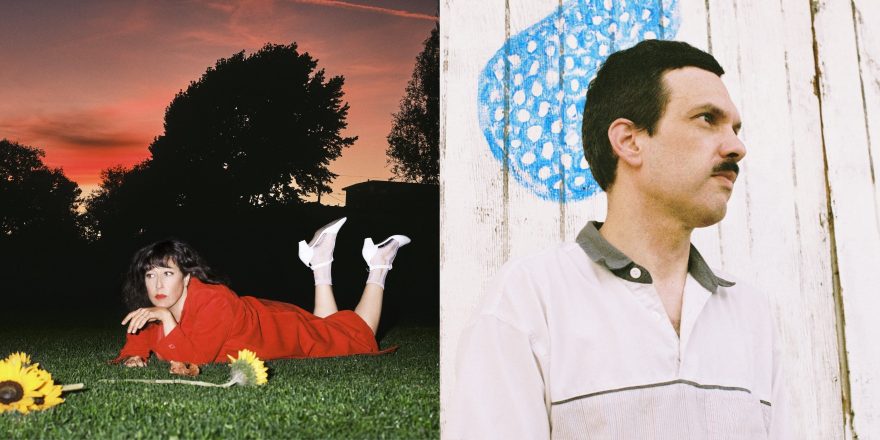
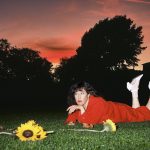
Hannah Lew is a filmmaker, musician, and visual artist in San Francisco. Her film work has screened at the San Francisco Video Festival, Theatre Arteau, the Red Vic Theater, Artists Television Access and SFMOMA. She received both the Leo Diner and Robin Eichman Awards in 2009 for her films Stoplight and Over the Hill. She plays bass and sings in the bands Grass Widow, Cold Beat, and Generation Loss.
(Photo Credit: Sean Hewitt)
Hannah Lew is a musician based in San Francisco, who’s played in the bands Grass Widow and Cold Beat, and solo under her own name; Chris Stewart is an electronic musician based in Brooklyn who leads the band Black Marble. Hannah’s debut self-titled solo record is out today on Night School Records, and so to celebrate, the two got on a Zoom call and caught up about acid, confessional songwriting, the concept of success, and much more.
— Annie Fell, Editor-in-chief, Talkhouse Music
Hannah Lew: Are you in your studio?
Chris Stewart: Yeah.
Hannah: [I’m in] my studio. We both have a lot of concrete. Maybe that affects our cold sounds.
Chris: I like your concrete, actually.
Hannah: Yeah, it makes me feel safe. It’s kind of bunker-y, you know? I really like sensory deprivation. I see you have a big window, which is nice.
Chris: Yeah, I can’t handle the no window.
Hannah: I have a tiny window, but I just kind of go into a weirdo mode dream state when I’m making stuff. Like if you’re in a movie theater or an airport and you’re just kind of nowhere — I like to be there.
Chris: I wish I felt the same, because then I could get a cheaper studio.
Hannah: [Laughs.] Just underground somewhere. I mean, I’m in my basement at my house — I’m literally underground.
Chris: Which might be good now.
Hannah: Oh, yeah, it’s really good to have a bunker. [Laughs.] Do you like 39 Clocks? Have you listened to them?
Chris: I have, but I have far from encyclopedic knowledge there.
Hannah: Well, I have one fun fact that I just thought of about them: I heard that they would take acid and rehearse in the basement of a church, so they could be on the same level as the corpses in the neighboring graveyard.
Chris: That is such a good press blurb. I feel like bands used to talk more shit like that back in the day, where they would say stuff like that, and probably most of it wasn’t true, but it just created a fun environment for the listeners.
Hannah: I mean, it sounds like the kind of thing people might make up, but I kind of believe it. I think those guys were probably the real deal, taking acid and getting weird.
Chris: I think taking acid definitely leads to a lot of promotional ideas you would otherwise not consider.
Hannah: Yes. Have you taken acid?
Chris: Many times. [Laughs.]
Hannah: Yeah, I’ve taken acid many times too. When I was young, I took a lot of acid. I often wonder what my life would be like had I not taken a lot of acid.
Chris: You think the acid-taking had some sort of a concrete effect on your trajectory as a person?
Hannah: Yes, undoubtedly… It’s probably just things you would never have imagined. Being like, Oh, there’s a lot more than is in front of me. There’s more to know, way more than this dimension of existence can offer.
Chris: It was spiritually awakening for you.
Hannah: I would say so, yeah.
Chris: Well, if you look at the United States as a country in 1955 and you look at that same country 15 years later, after the introduction of acid, you went from beehive hairdos and sock hops to bra-burning and the civil rights era, the youth movement… And not just in the States, but internationally [there was] a complete shift in how human beings were perceiving their environment and what their role was in society, what their role was to each other. I’m not going to say it was all just because of acid, but I think it would be crazy to discount how important that was and how it completely transformed society. I don’t know if we would still be in 1955 if acid hadn’t been introduced.
Hannah: We might have to reintroduce it again… My mom and my aunt are just a few years apart, but their experiences of the ‘60s are vastly different. My mom took acid, and I actually have this crazy reel-to-reel recording of her and her friend — it was one of those hand-held recorders with a microphone, and it’s just them tripping. They’re listening to Chopin and the mic is getting all crazy and it’s all distorted and it sounds really wild.
I don’t know if you like Alan Watts at all, but here near Muir Woods there’s this area called Druid Heights. It’s hidden, but it was this little intentional community that was outside of the whole system of generational wealth, just Alan Watts and a few other people that lived there in these crazy houses. It’s abandoned and you can still go into the woods and see Alan Watts’s abandoned house. It’s really amazing. It’s outside of this idea of, “some people own land, some people don’t” — it’s on public park land. He has this book Cloud Nothing that is a little bit about his time spent there, but he talks about how conformist culture is such an affront to life and how when you’re tripping out and noticing things about the world is the only time you’re actually alive. When you’re sitting by a tree and there’s dappled light, you’re noticing the world, you’re actually alive. But if you’re not noticing all that stuff, you’re not in the world. He talks about it basically like normies are an offense to life, and I tend to agree.
Chris: [Laughs.]
Hannah: I mean, I don’t think I really have time to take acid these days, but I’ve taken enough. I’m good.
Chris: Yeah, I think I am, too. I’ve done all the emotional work that I can do vis a vis acid. I have a distinct memory of being 16, and I’d been out all night — it was that thing where you tell your parents you’re going to your friend’s house and your friend tells their parents they’re going to your house, and then you wind up in some field with a million tripping suburban teens.
Hannah: Yep.
Chris: I kind of snuck back home at, like, 7 AM, when I was starting to come down, and just laid in my bed for a full day with the door shut and just thought about my life.
Hannah: You figured it all out. [Laughs.]
Chris: Well, honestly, I had this realization that I was not being a very good person — which I think is a good realization to have if it’s true. I’m not sure if it was or if I was just fucking tripping my face off, but I came to the realization that a lot of relationships, if you don’t think about them that much, are transactional. If you don’t really examine yourself, your life, your relationships too much, they can be transactional without you even really knowing it. It’s almost just an instinctive level of, I’m getting something from this. That opened me up to that idea that you can go through life not examining that, and I was like, I don’t want to be that person if I’ve been that person. I want to be more thoughtful in my relationships with people.
I was 16, so I was just becoming comfortable in having a bunch of relationships outside of my own family, figuring out where I fit in in this social structure outside of my own family. And this trip was kind of me for the first time reflecting on what that was and how I was behaving inside of it, and I didn’t like the way I was behaving. And I don’t even know if I would have even ever noticed that I was behaving that way if I hadn’t gone through that experience.
Hannah: It sounds like you were humbled by the universe, or by the enormity that can be an expanded consciousness.
Chris: I feel like I was put on to a higher way of thinking about the way I was acting in the world. Maybe I would have come to that realization at some point anyway.
Hannah: I know what you mean, though, that transactional thing. I’ve reflected on that. I mean, maybe a lot of us have just in our own lives — friends that are true friends that truly see you and people that you love, versus people that are in your life because, “You serve a purpose.” I’ve ruminated on that before. But not when I was 16. Sounds like that was an early epiphany.
Chris: Maybe I got a head start on that.
Hannah: Yeah. Or maybe I’m stunted. [Laughs.] I think I probably am. I think I’ve learned a lot of things just in the past 10 years. I’m teaching my seven year old how to emotionally regulate himself, and meanwhile, I’m like, Wait, how the fuck do I do that?
Chris: Yeah, if you got any pointers, that’s tough territory.
Hannah: How to calm yourself down, stuff like that… But anyway, I’m sure people really want to hear about your music. Actually, on my list, I was going to ask you if you had any dreams last night, but now I feel like we’ve surpassed that whole thing by talking about our acid trips.
Chris: The hippie portion of the conversation.
Hannah: [Laughs.] I feel like you and I have a lot of similar influences, and I really relate to your music. And I’ve loved when we played together, people that love your music are people that I feel like are just open. I remember when we played together, I had all these synthesizers, and then you just had this pet loop pedal — you had your whole sound in there — and everyone was just singing along and their brains were just filling in the rest of the sound. It almost didn’t matter what you had, people just were there to love you. I feel like people just really connect to your music and it’s really special.
Chris: I agree, and I’m so thankful that is the case, for lots of reasons. I mean, practically, it’s nice to be able to make mistakes and nobody seems to be noticing. [Laughs.] When I started making music, every friend I ever had had already been in a band. So I felt like the only way that I could carve out a space for myself was to really just try to make music that was personal to me, and hope that music would go through the universe and find the other people that could relate to it. And in those moments when people are singing along and stuff and not noticing me fucking up the songs, it seems like that kind of worked to some degree. That’s really gratifying. Because, you know, the music industry is a very tough place to be, and that’s kind of the one thing that makes it worth it. For all the things that make you feel like you’re doing the wrong thing, that makes me feel like I did the right thing at least once. You know what I mean?
Hannah: Oh, yeah. For me, that’s my goal: to connect, to be confessional enough so that I’m vulnerable without showing too much. Using a lot of analogy so I can completely let it rip with whatever I’m thinking about, but have it be masked in something that anyone can relate to. I think your music is really successful with that. It’s kind of funny too, and relatable, but not self-deprecating. You strike a balance that I think is personable.
I see a lot of people making music, especially a lot of synthesizer music — maybe because we like coldness and concrete walls and whatnot — but people can be kind of austere and not show a lot of themselves. I’m incapable of writing impersonal music. So that’s just something I’ve always valued about your music, too.
Chris: What to reveal and what to hold back… I think that’s one of the things that we as artists are dealing with, if we’re actually trying to create something unique that people are going to respond to in a unique way, instead of something that’s just going to be on a playlist of 30 other genre bands.
I remember being in school and one of my art teachers talking about this thing of “denial of access.” He explained the assignment, and I don’t think I got it very well. But I remember this one girl came in and she had written something on paper, and there were all these pins that she had put in the paper, and then the whole thing was put in a Lucite box so you looked at it from the top and you could see that something was written there, but it was kind of hard for you to see what was written, because you were trying to look through these pins… I remember how much more I was interested in her piece than I was in some of the other ones, and it was because it was a little bit harder for me to figure out. It presented a challenge. I think when I went on to start making music, that idea stuck with me about how much to reveal. Whether it’s through the production having this kind of underwater quality so that would make my lyrics hard to understand, I was intentionally playing with those ideas of, What do I want to be overt about, and what do I want to hold back? I don’t know where that professor is now, but that was a good assignment.
Hannah: I relate to that a lot, actually, I think with using a lot of reverb. There’s so many songs that I just didn’t really want anyone to hear what I was saying. But something I think about a lot is how limited language is. So I think if a song is doing its job, the music itself is carrying all the emotional weight in being descriptive, and then the words are kind of guiding it. I have to write personal things that I mean, or it doesn’t work. So I find myself in that space a lot where I’m saying something I mean, but it’s almost therapeutic, where I’m trying to use words that feel good to say about the thing that I’m feeling or thinking. It kind of forces me to be like, OK, someone’s going to hear this loud and clear, and I’m going to say it in a way that sits well with me. And that’s a challenge that I face. But I definitely spent over a couple of decades of music just hiding in deep, deep analogies. [Laughs.]
Chris: I think that can be good, though. I mean, hip-hop is obviously extremely overt in terms of the sonic characteristic — you can hear exactly what they’re saying, and that’s intentional. But then there’s still that element of like, “What do I hide and what do I show?” And that’s where wordplay and rhyming comes in. There’s no reverb on the vocal at all, it’s super high in the mix, so does that have something to do with how there’s so much clever wordplay and metaphor, which can then hide or give more color to your meaning? Because otherwise, you’re literally just out there talking.
For the style of music that I make, it’s a little more challenging than pop music. So I feel like the people that are there are there because they want that, so then my formula for how clear I am about the things that I’m discussing weaves its way through that, where I come to the conclusion that people don’t necessarily want incredibly obvious statements from me, or else they would be listening to other music maybe.
Hannah: Yeah. Personally, I feel like when someone gives you lyrics that are too plainly spoken, they don’t leave the listener room for their interpretation. My own personal joke with myself is that a lot of my lyrics are actually about death, but they sound like they’re about sex. Some people will be like, “Oh, that sounds like it’s about love or a broken up relationship.” But I would never say, “This is about death or grief.” I’m able to use other tropes in music that have existed before, even using the word baby — I can’t believe I have the word baby in a chorus to one of my new songs, but here I am. A friend of mine was roasting me about it yesterday… I don’t know, but it just worked.
Chris: It’s about how you say it, I think. Somebody could say it in a way that makes you cringe, but somebody could say it in a way that really resonates with you. Why are you saying it, and what are you really talking about? I’ve said it, I’ll admit it.
Hannah: We’re in the “Uses ‘Baby’ In Lyrics” club.
Chris: Yeah. I feel like you gotta say it in a way that works for you, you know? And that’s all that matters. When I said it at the end of a song, it felt like what was surrounding it was really sad, and then me saying that felt OK.
Hannah: The juxtaposition… I know what you’re saying. But I think that for me, not just saying the word “baby,” but certain tropes in music allow me to fully be myself and say something completely genuine and not have the listener have to guess about my life. They can just have their own time with it, because that’s all music is anyway. It’s helping people get through their day and their life and give color to emotions they don’t understand. People can’t exist without songs to help them get through. A world without it would be terrible.
Chris: So how do you feel about this world where people can’t exist without what we do, but nobody wants to pay for it?
Hannah: Oh, my god, don’t even get me started. We only have 10 minutes left.
Chris: [Laughs.]
Hannah: It’s really depressing. It’s embarrassing sometimes if I’m talking to people I don’t know about what I do — I barely talk about what I do to people I see in most of my everyday life. It’s just hard. I showed my royalty statement to a friend of mine who isn’t a musician, and she was like, “What the fuck?”
Chris: “Where are the zeros?”
Hannah: I had to explain why Spotify was bad. I was like, “Yeah, it’s like $0.003 a stream…” She was like, “That seems illegal.” I was like, “Yeah, I know.” Everyone was so shocked when the Spotify dude was funding military ballistics decision-making AI or something, and I’m like, Yeah, well, if you give away your volition and your sense of choice about what you like and what you’re into, what do you think is next? I’m not even being extreme by saying that.
Chris: I was definitely not shocked to hear that news. Why wouldn’t he think that was cool?
Hannah: You seem like someone who’s probably making a living being a musician.
Chris: At the lowest possible tier, but yes.
Hannah: Well, you are alive. You probably ate lunch today.
Chris: I did, but if I found out tomorrow I had some weird health thing going on, then the party’s over. I am able to support myself, but the sacrifices I’ve had to make in order to do it leave me in places that I feel like… I don’t think artists should have to potentially get sick and die in order to do something that people seem to think is important, whether or not they want to pay for it. And if people don’t think that art is important, then that’s fine. But if everybody goes home and their entire house is filled with art and music and television, and all their clothes are made by artists…
Hannah: Art is important. I don’t know if you saw One Battle After Another — I thought that movie was really good because it was about our times, but it was able to say things that a lot of people can’t say plainly, but they can say it in film. It’s like how a lot of sci-fi will sort of imagine a world where it’s like, “It’s not this world, but it’s something sort of like it,” and it enables people to imagine something else. That’s super important because if you just take it at face value, you’re fucked. If everyone was just status quo, 1965 — you kind of have to be 1967 or 1968 about it, and imagine that something else could happen.
I think about this a lot, Why do I have to write songs? Why do I have this compulsion? Why can’t I just be a normal person and leave things as they are in the world? Well, I think there’s just a lot of people that are not satisfied with status quo. I can’t conform into this culture, I can’t agree. And I think there’s just some people that have this sick compulsion to make things that didn’t exist before and explore that because they’re not satisfied or they don’t believe in the rules of the world as it is now. I mean, of course people have different motivations. But for me, I wish I didn’t have to make music, but I will lose my mind if I don’t. I get a song in my head and I have to see it through because I’m just that kind of person. And I think a lot of people have that malady.
Chris: I mean, I don’t think we have to necessarily be oddities. I think just some people love playing tennis, they feel they were born to play — I’m pretty sure like Andre Agassi was born to play tennis, both in his body, his mind—
Hannah: His hairdo.
Chris: His hair was so fucking cool. And he was just made to be that guy at that time, to the point where he didn’t even really have that much control over it. I actually think he hated tennis.
Hannah: That’s weird. That calling, though, and to have it not be monetized and to live your life feeling… I think about this a lot, What is success? And often I think you connect monetization with success. If you made money, you did it. You feel like what you did was worth your while. I make my money in other ways, too; I have a record store. It’s still connected to music, but I don’t know… I try to think outside of the capitalist structures that say what makes something successful or not and think about what success actually means to me. Because it’s not like the ‘90s where if you sell this many CDs, then you’re set. It’s just really hard to make money these days.
Chris: I think everybody has to figure out their own definition of what success is, even people that aren’t necessarily doing something like us where it’s difficult financially. I definitely have felt pressure, and have second, third, fourth, fifth guessed myself about what I’m doing, because of the financial situation. And if that wasn’t such a difficult thing, maybe I wouldn’t be doing that. I don’t know how much of that is, I’ve been imbued since birth with this capitalistic idea of what value is attached to your ability to generate some portion of GDP in relationship to your sweat equity, or if I’m literally just like, I can barely pay my rent and this fucking sucks. So why am I wasting my time? Why am I wasting my life? Am I just deluding myself by thinking that what I’m doing is important when it’s making my life so difficult that I might not be that fun to be around for the people that I love? There’s two sides of it for me, and every day is kind of a new reassessment of how I feel about the whole thing. When I’m having that moment on stage where people are singing my songs, it feels like I’ve made the right decision. And there’s other times when people are quitting my band with a month’s notice before a month-long tour that I spent two years planning, where I’m like, What is this grown man doing?
Hannah: The ups and downs and that lack of stability — I have friends that are on salary at jobs, and we just have a totally different set of things we think about. Being on the edge like that kind of forces you to constantly plateau to a new place, and maybe be in an existential place.
Chris: Yeah. If anybody’s reading this who’s thinking about if they want to have a career in the arts, if what you’re interested in doing is being seen and being The Man or The Woman, then it’s going to be hard. Because the second that you figure out how to do it, the definition of it will have changed, because ultimately that’s a commercial mindset. That’s the music business, and the music business needs new faces, or else those people can’t have the healthcare that we don’t get to have. So I feel like you just have to figure out a way to get through it. If you really want to do it, where you can decide at the outset what your definition of success is, so that on the back end you can say, “Is this still working for me based on my ethical point of view when I set out on this mission?” And you can always refer back to that. Because if you’re just looking at it in terms of numbers or likes or what shows you can play and what festivals you can get on, you’re just going to be a miserable person. And ask me how I know. It can be fun for a while, but you have to find a better reason to be doing it. I think that’s actually the one beauty of this world: you’re going to learn how to become a good person, or you’re going to fail.
Hannah: You have to have your success be outside of capitalism. And maybe you won’t have success in your lifetime — you have to be OK with being like a Renaissance painter and not being known. Pop culture and celebrity culture is pretty fleeting anyway. You have to believe that if you make true things, they’ll be recognized at some point.
Chris: Exactly.