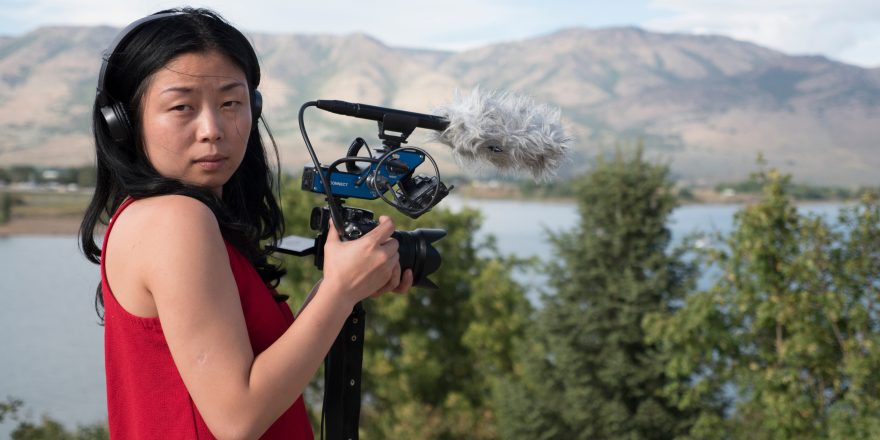



Elizabeth Lo is an award-winning filmmaker whose latest documentary feature, Mistress Dispeller, the intimate portrait of the disentangling of a real-life love triangle, is in theaters through Oscilloscope from October 22. Her debut feature, Stray, an intimate portrait of three dogs roaming the streets of Istanbul, came out theatrically in 2021 and her short films include Hotel 22 (2015), Bisonhead (2016), Mother’s Day (2017), The Disclosure President (2016), Notes from Buena Vista (2016), Treasure Island (2014), and Last Stop in Santa Rosa (2013). In 2017, her collected shorts were released by Video Project as a DVD, The Short Films of Elizabeth Lo. Elizabeth was born and raised in Hong Kong and holds a B.F.A. from NYU Tisch School of the Arts and an M.F.A. from Stanford University.
When I first imagined making what would become Mistress Dispeller, the idea took shape after I rewatched Zhang Yimou’s Raise the Red Lantern. The film is set in 1920s China, where a young woman, played by Gong Li, is married into a wealthy patriarch’s household as a fourth wife. Over time, she is forced to compete for her husband’s affection for her own survival, and descends into madness. Throughout the film, you never really see the patriarch – he’s a phantom presence whose power defines every movement of the women around him. I remember being transfixed, not just by its formal beauty, but by the central question it posed: What is it like to be a woman navigating the pressures of society? It was a question that has lingered with me personally, especially every time I returned to Hong Kong in my thirties and felt that quiet, tightening pull of tradition and expectation. I thought Mistress Dispeller might be my way of looking that pressure in the eye.
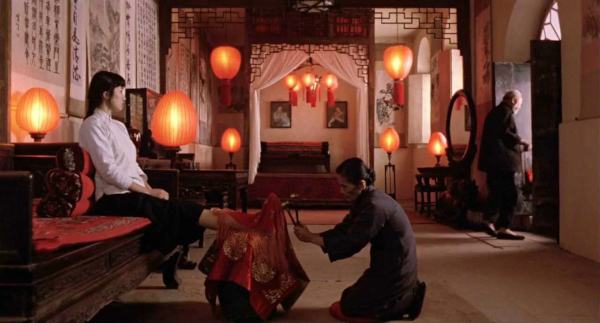
At first, my approach was purely conceptual. I was circling themes of power and repression, thinking abstractly about how to transpose the premise of Raise the Red Lantern into contemporary China. But as every documentarian learns, the field has its own plans. Your subjects transform your intentions.
Two decades earlier, when I was studying abroad in Beijing in 2004, I remember seeing cellphone numbers for private investigators scribbled under bridges, alongside listings for pirated DVD shops. I’ve always been drawn to people who operate in the cracks. The image of those numbers scrawled under overpasses stuck with me for years – these codes of secrecy and of desire. When I returned to mainland China years later, I tried following that thread: private detectives, fortune-tellers, the gray zones where secrets and dreams negotiate with cash. But doors stayed shut to my documentary process. Access – both ethically and practically – was impossible. Then, through working with producer Maggie Li, I met Wang Zhenxi (or Teacher Wang, as her clients respectfully call her) – a real-life “mistress dispeller” whose job is to break up extramarital affairs – and suddenly the work was no longer theoretical. Wang had the clarity and confidence to allow her work to be witnessed, and even recorded.
The first time I filmed with Wang and her clients, a man who’d been having an affair was crying – truly crying – in front of her. It disarmed me. Up to that point, I’d been preparing to make a film about women’s resilience under patriarchy, about male power as a pervasive, oppressive force. But in that moment, watching him weep, the neatness of my intentions cracked open. I no longer wanted to make a story menaced by phantom male villains; I wanted to make a compassionate study of people improvising through love and pain. The moment I stepped into Teacher Wang’s orbit, my thesis began to bend.
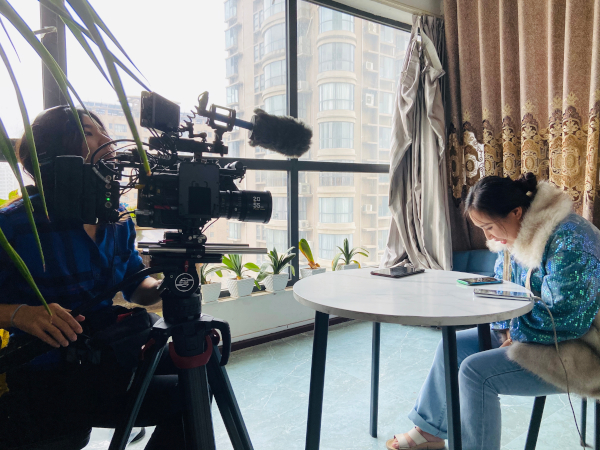
That realization changed everything: the structure, the camera language, even how I carried myself in the field. Your participants move you past what you thought you wanted to say.
For producer Emma D. Miller and I, the challenge then became how to approach this world without turning it into a shallow procedural or a soap opera. The premise itself – an undercover woman whose job is to reveal the cracks within a love triangle – could easily have veered into tabloid spectacle. But we wanted Mistress Dispeller to go deeper – to explore the undercurrents tying people to one another, to their environment, and to their choices.
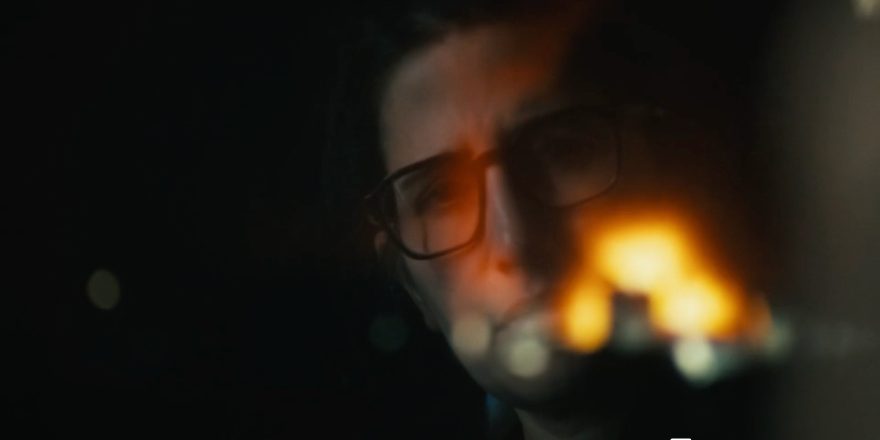
I realized I needed a form that could resist the sensationalism of its subject matter. Formally, Mistress Dispeller is a pendulum swing away from Stray. My earlier film, shot entirely from a dog’s point of view, wandered with a DIY restlessness that matched the canine bodies I was following. Here, I returned to the discipline of my early short, Hotel 22, where unhoused people on a public bus were observed through static wide shots and patient close-ups. In both cases, the fixed-frame visual language was my way of saying to the audience: Let’s resist the pull toward voyeurism. Let’s watch, but not editorialize.
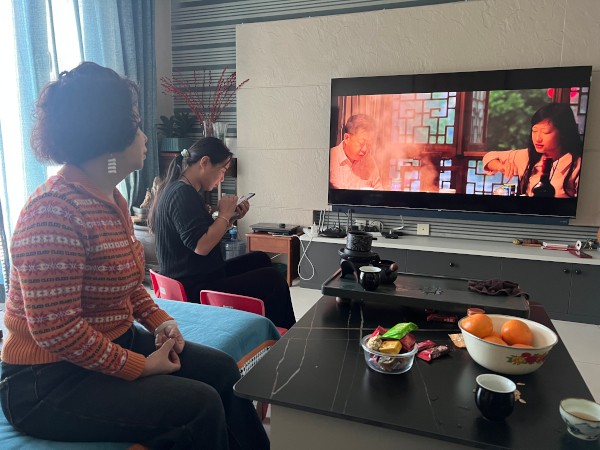
As a cinematographer, I was inspired by Chantal Akerman’s iconic film Jeanne Dielman and its use of time and stillness. As one watches potatoes being peeled and beds being made in real time, Akerman’s devotion to duration transforms the mundane into something spiritual. In filming Mistress Dispeller, I drew from that ethic: allowing time to pool inside long, fixed takes, letting silences hang until they acquired weight. In my mind, these static scenes were designed to be rewatched – stillness holds secrets the second and third time through, open to reinterpretation with every viewing. My hope was that, as in Akerman’s work, restraint would disclose the seismic beneath the ordinary in the lives of Mr. and Mrs. Li – the married couple at the heart of Mistress Dispeller.
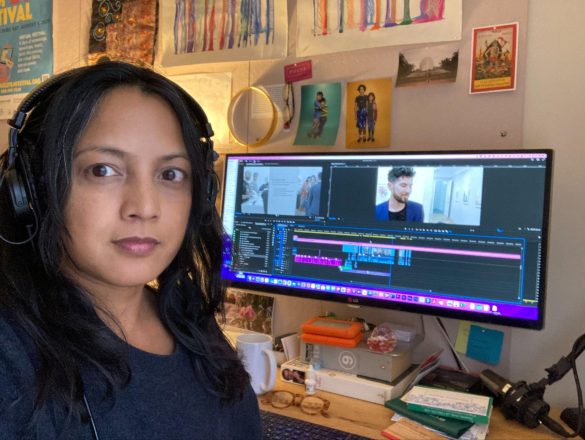
The aesthetic choice to lock the camera also allowed me to step away from the room. Mr. and Mrs. Li, and Fei Fei (Mr. Li’s mistress) could then negotiate not with me, but with each other. This practical effect, however, soon had ethical implications. Stillness offered them a sense of privacy. Often, my participants revealed more than they realized. The responsibility of me and editor Charlotte Munch Bengtsen, then, became to protect what they’d given us – to shield them from overexposure without betraying emotional truth, and to honor the original intention of the film: to understand, not to condemn. In this way, our aesthetic restraint always existed within a moral framework.
My first love, before cinema, was literature, so I returned to it for structure and inspiration. I found myself rereading my favorite author, E.M. Forster, whom I came to through Merchant Ivory’s films about suppressed feelings and their sudden detonation. Our sweeping, operatic score nods directly to A Room With a View in how the music charts the protagonists’ transformation at the beginning and end of the film. For a time, I even considered structuring my film with novelistic chapter headings like the ones found in A Room with A View: “Lying to George” and “Lying to Cecil” would become “Lying to Mr. Li” and “Lying to Fei Fei” – mirroring the deceptions in Mistress Dispeller: Wang deceiving her clients, wives deceiving their husbands, husbands deceiving their mistresses. But my editor Charlotte and I recognized that disclosing less would be more electric. Instead of pointing to Wang’s strings, we’d let omission and withheld answers create tension, and trust the audience to assemble Wang’s scheme on their own.
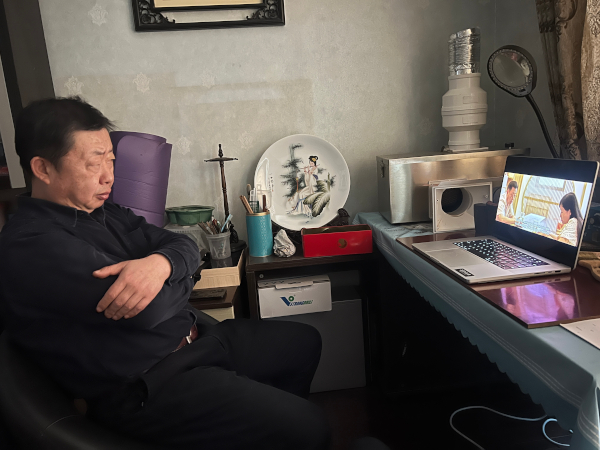
If Forster inspired my approach balancing omission and revelation, Tolstoy reminded me of the importance of scale. Anna Karenina stretches the drama of a love affair across decades and social strata; in our documentary, we had four months with our protagonists, not 40 years. So how do you honor the forces shaping your characters – their upbringing, class and environment – within the slim window production grants you? I leaned on a device borrowed from Romantic literature: the use of nature and landscape to physicalize a character’s emotional terrain.
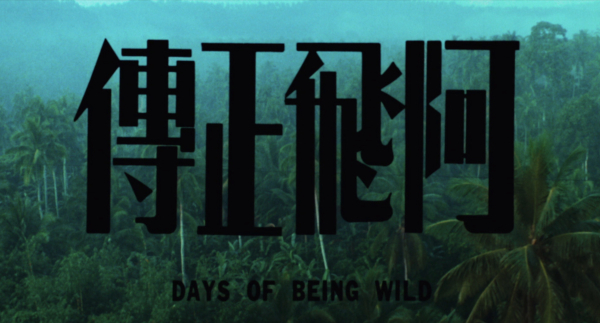
Midway through production, Wang politely kicked us out of her offices, because we were getting in the way of her business. We were in China with a small crew – Maggie Li and Boyu Zhu – ready to shoot for two months, and suddenly our access vanished. But because I’d been thinking about literature and landscape, about the environment as a mirror for interior life, I wasn’t stranded. I thought of Wong Kar-wai’s Days of Being Wild. The film opens with a long, unexpected shot of a lush green jungle landscape, before dropping us into the life of a handsome drifter played by Leslie Cheung. Wong – like a novelist – used wilderness as a space just outside of human order, where longing can uncoil – adding an existential layer to his story. So with our unexpected, newfound time to fill, we left the city and filmed in China’s national parks: storks flying over mountains, reeds undulating in river currents. These detours allowed us to create images our original schedule could never have justified – languorous textures that became a way to externalize the inner storms of our characters when we couldn’t be with them.
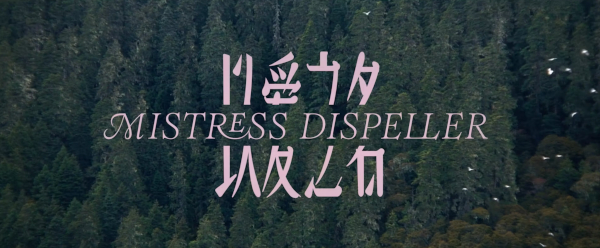
Chinese landscape painting offered another grammar: forests, dwarf figures, negative space speaks. Unlike Western painting, which centers the individual, Chinese art reminds us of our smallness. This felt right for a story about people who repeatedly choose duty over personal desire. The landscapes in Mistress Dispeller are not only refuge for audiences from dialogue-heavy domestic spaces – freedom from society’s strictures — but also evidence of nature’s indifference to our pettiness. The natural world is also the stage upon which our protagonists’ fears and desires play out. Love triangles, jealousy, betrayal – these dramas aren’t inventions of modern life; they’re evolutionary. As author Yuval Harari writes, they are the “bio-dramas” of our species – how we have evolved to compete, connect and survive – and that’s why these stories resonate so deeply with us. In being kicked out of Wang’s offices, and wandering through China indefinitely, I experienced a fusion of accident and preparation, East and West, human drama and nature’s indifference.
In Antonioni’s “Eros” trilogy – L’Avventura, La Notte, L’Eclisse – his lovers drift aimlessly from one affair to the next. He showed me that the mediocre love story is sometimes truer to the messiness and nonlinearity of real life. Reality, even in its mundaneness, can be enough if you attend to it with rigor. That realization freed me from a particular documentary anxiety: Is the love I’m filming “enough”? When Charlotte suggested we forego attempting to weave in the other couples I filmed, and focus only on Mr. and Mrs. Li – an ordinary couple trying to hold their marriage together – Antonioni gave me the confidence to agree immediately. Their love wasn’t spectacular, but it was real. In its quiet, incremental way, it moved me more than any melodrama could. Their story reminded me of what Antonioni understood so deeply: that longing, distance and failure are not signs of narrative deficiency – they are the texture of being alive. Watching and reading about Antonioni enabled me to see our story in the edit more clearly. Preparation doesn’t guarantee control, but it builds flexibility. It teaches you how to recognize the film that’s arriving and follow it without fear.
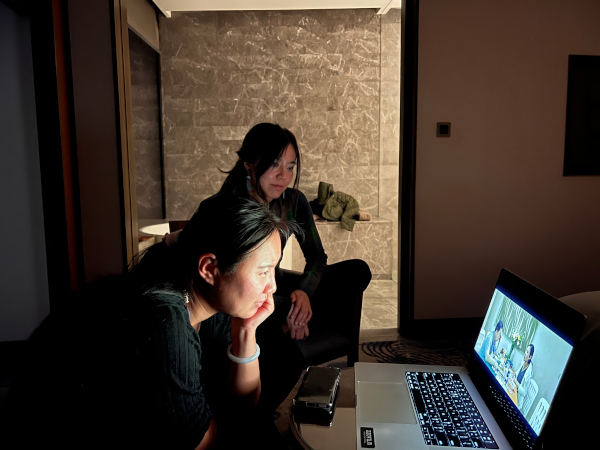
Theory and practice are constantly colliding and reshaping each other. A formal choice can solve a logistical problem; a logistical constraint can yield an aesthetic revelation. We were shut out of rooms, so we filmed rivers and mountains. We chose a static approach for our camera, and people stopped performing. I went back to novels, and they taught me how to create scale and depth.
When I began Mistress Dispeller, I was interested in making a film about gendered pressure in contemporary China. I still care about those questions. But the film that emerged became broader than that. I think of that man crying in front of Teacher Wang. I think of his contradictions, of the husbands and wives who lied and loved. The film broadened my perspective to become more inclusive, dissolving my judgments. In the end, Mistress Dispeller became less about what love should look like and more about how it actually happens – in compromises, in silences, in the spaces between people trying to hold a life together – lessons I’ve taken into my personal life. If I can claim anything, it’s preparation – years of watching, reading, collecting – so that when the unexpected happens in the field, as it always does, I have a language ready to receive it.
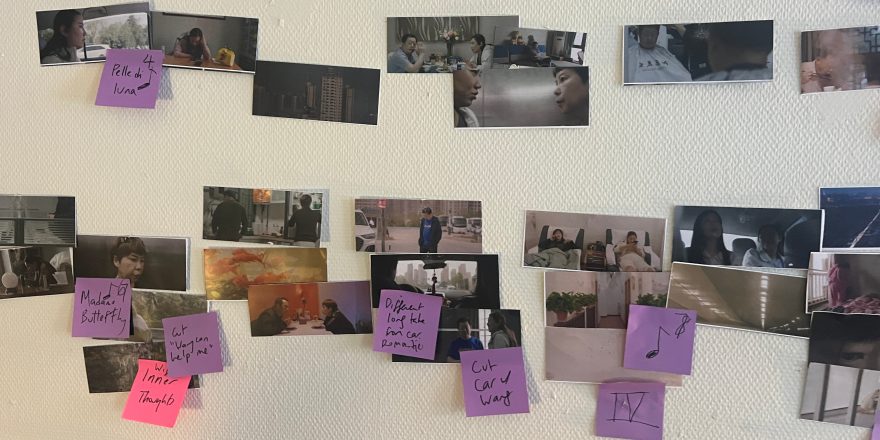
Featured image, showing index cards mapping out the edit of Mistress Dispeller, courtesy Elizabeth Lo.