

Leah Warshawski specializes in producing and directing documentaries, television, commercials, corporate videos, non-profit and brand videos around the globe. Her career in film began in Hawai’i for shows including Lost and Baywatch. Leah’s first feature doc, Finding Hillywood, took place in Rwanda and won six awards after its Seattle International Film Festival premiere in 2013. Her second feature doc, Big Sonia (2016), won 22 awards, screened for Congress, qualified for an Academy Award, and had a three-year run on PBS. Last year, Leah launched a nationwide screening and impact tour for her award-winning short film, Uncle Bully’s Surf Skool (2023), filmed in Lahaina before, during and after the devastating wildfires. Leah also consults with filmmakers about audience engagement, distribution and social impact. Her personal journey is the inspiration for her TedX Talk called “How Do You Cope with the Trauma You Didn’t Experience?” and the subject of a chapter she wrote for Soul Success, a #1 best-selling book on Amazon. She is currently based between Seattle, Idaho and Maui.
How many women do you know who have more than 1,000 people attend their 100th birthday party in a local small-town movie theater? Big Sonia’s 100th Birthday Bash in November sold out within hours, and I’ve just recently had time to reflect on the wild journey she and I have taken together over the past 10 years. What began as a quirky short film about a tailor shop in the basement of a dead mall turned into a feature film, an education/impact campaign and (most recently) an interactive AI installation. Our path has not been linear, but our commitment and drive are as strong as ever – kind of like Sonia herself.
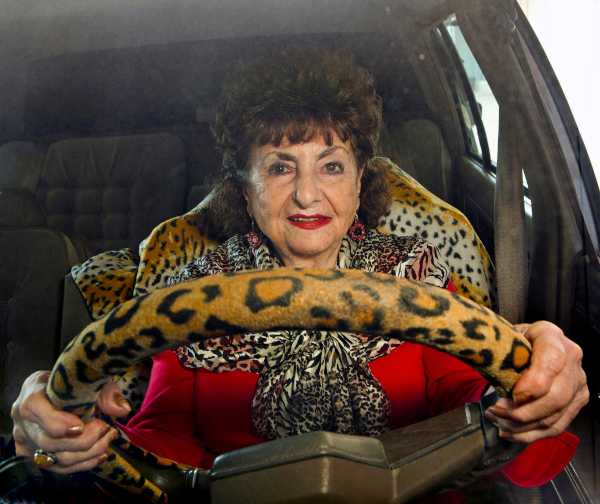
Big Sonia follows Sonia Warshawski – 84 years old when we began filming – one of the last living Holocaust survivors in the Midwest who was still visiting schools and prions to talk about her experience during the Second World War. Sonia is also my grandmother. So, while I grew up knowing that we had many Survivors in our family, I wasn’t aware of the details until we started filming. Growing up, I didn’t spend much time with Sonia since we lived in different states, so making Big Sonia allowed me to get to know my grandmother in an entirely unique way. Luckily, Sonia always wanted to be a movie star, so being in front of the camera was the least of her worries. Big Sonia qualified for an Academy Award in 2018, and Sonia was more upset than all of us when we didn’t get nominated, because she had always dreamed about being on the red carpet.
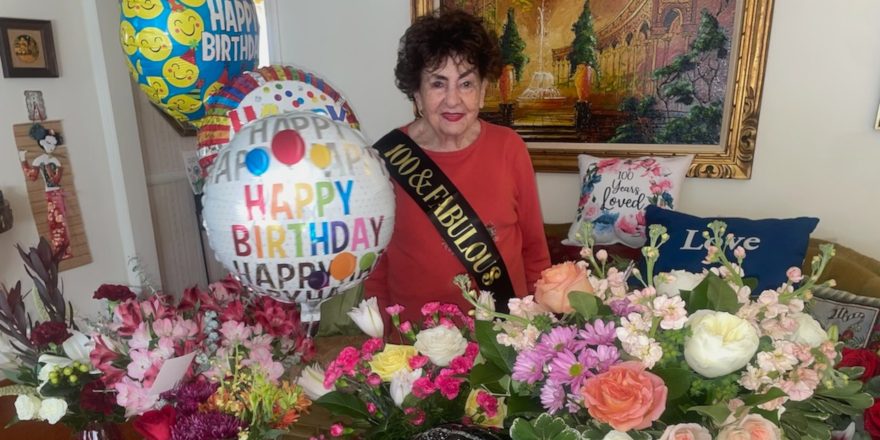
Sonia never thought she’d live to be 100, so you can imagine her delight when so many people showed up to celebrate her big day a few months ago. Her adoring fans each brought a card or homemade gift, and they stood in line for hours just to give Sonia a hug as she held court next to a life-size balloon sculpture of herself. A local baker donated 500 cookies with an image of Sonia at her trademark leopard-print steering wheel. Another friend, a former customer of hers at John’s Tailoring & Alterations, spent hours before the show decorating the theater with photos and glitter. Sonia’s community rallied to celebrate her in a way most of us can only dream about.
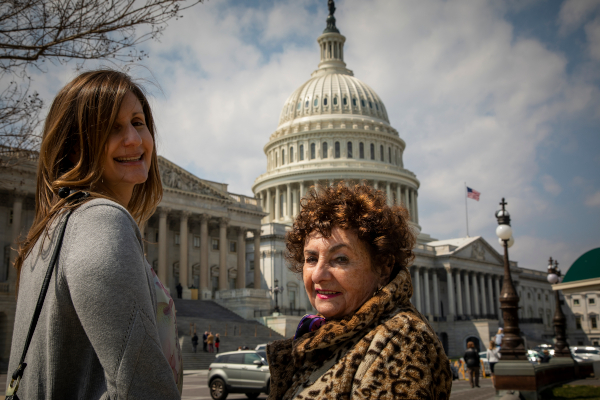
We premiered Big Sonia in November 2016, with screenings on both the West and East Coast, just one day after Donald Trump won the presidential election. Sonia came with us and got to experience her very own film premiere – it was the last time she traveled out of her home state. She was 90 at the time, and it’s a deeply dispiriting sign of the direction the U.S. has taken that this year (2026), during our 10th anniversary, we’re having to work harder than ever to bring Holocaust education and impact into schools, museums, and communities across the country. Big Sonia had an incredible run on PBS+ for three years, with more than 200 million potential viewers, won 22 festival awards, and screened at the Capitol for bipartisan members of Congress and the Senate. Sadly, when we pitched the film to Netflix and Hulu, their response was that there are already “too many Holocaust films.” Yet, hate crimes and antisemitism are on the rise, and our current political climate seems to favor bullying instead of empathy. Have we learned anything from the past?
At Sonia’s birthday party, crowds were taking selfies with the balloon version of Sonia, and I lingered in the background to try and burn the scene into my memory. The biggest surprise of the night was about to happen. I felt someone tap my shoulder and turned around to see Brian Betts, an inmate at Lansing Correctional Facility when we made the film, who was now out of prison and ready to sing “Happy Birthday” for Sonia. Brian is well-known in the Kansas City area for his wrongful conviction by a corrupt cop, and we visited him a few times during production. Brian says in the film, “It takes someone who’s been through something to understand someone who’s going through something.” So many audience members remember Brian and his wisdom, and to now see him out of prison and coming to thank Sonia in person felt like maybe we are making a difference.
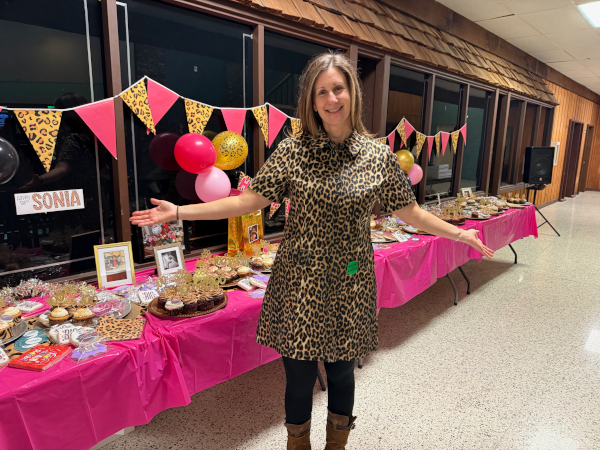
Sonia’s tenacity and perseverance over the past 10 years has fueled and inspired me to continue screening the film and looking for sponsors to bring our education materials into remote parts of the country. In some cases, the schools I visit have recently had an antisemitic incident on campus. In some schools, the kids have never heard of the Holocaust. And in some places, bullying is so prevalent that kids are afraid to speak up and be upstanders in their own communities. Currently, only 30 states in the U.S. mandate that Holocaust education is taught in classrooms, and I’ll continue working hard to raise that number. This kind of work is never “done.”
At midnight, we started cleaning up balloons and popcorn, and just had a few leftover animal-print cookies. Sonia was ready to keep partying (as usual), but the rest of our team was exhausted. She was still elated that so many people showed up – her fans are loyal. Sonia has always been a superstitious person and it’s hard for her to think about the future or making plans, so I’ve become accustomed to telling her everything as it happens or at the last minute. It’s overwhelming for her to think about her legacy, but I’m confident that she will long be remembered for promoting Holocaust education and acting as a Witness to the cruelty of humanity. She deserves nothing less.
Featured image shows Sonia Warshawski at her 100th birthday party; all images courtesy Leah Warshawski.