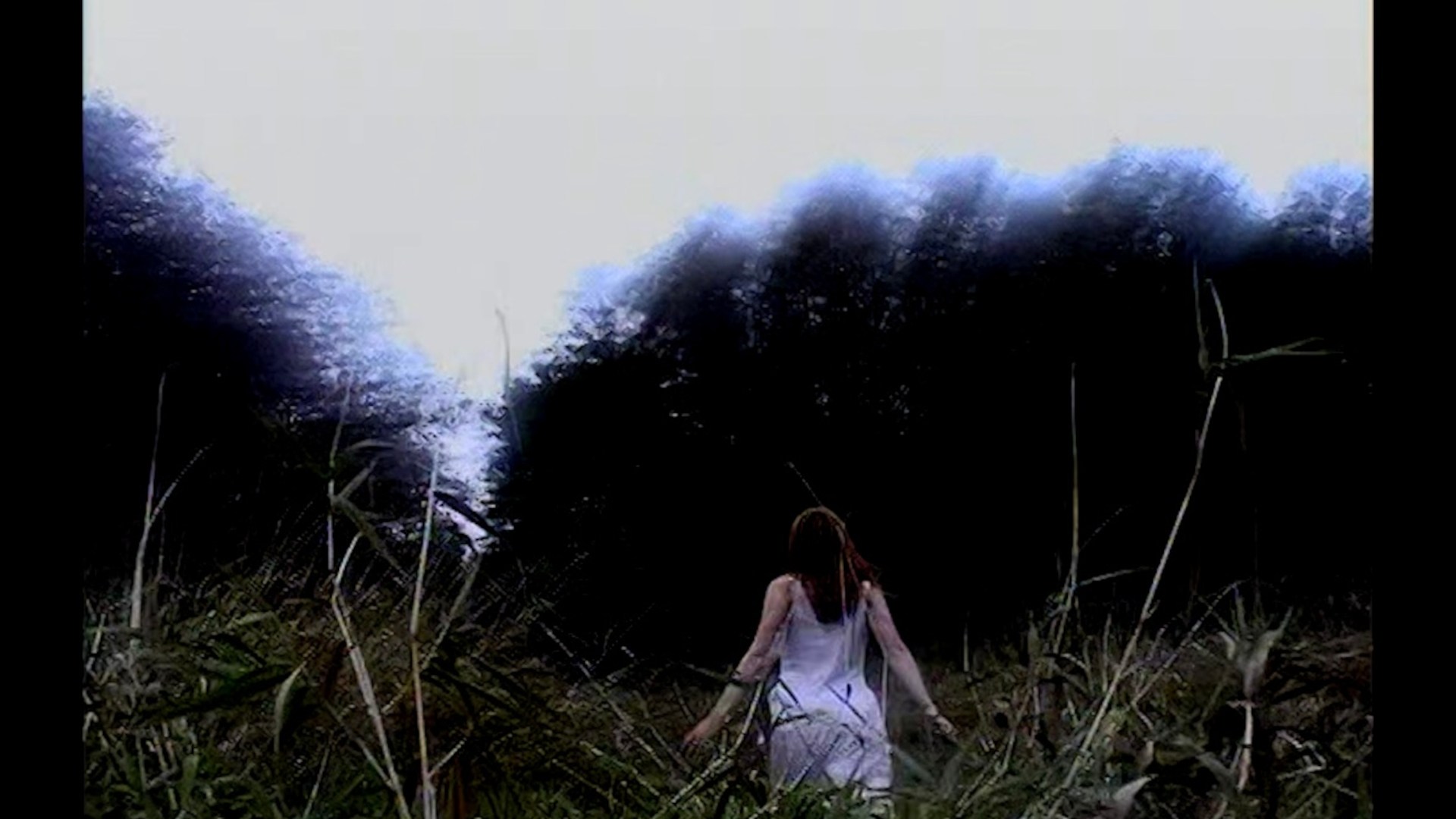
As we all know, everything starts somewhere. I had written a fiction about the making of the movie Ivan the Terrible (1945), czar of Russia from 1533 to 1547. In the fiction, Marlene Dietrich – who in The Scarlet Empress (1934) played Catherine the Great, czarina of Russia from 1762 to 1796 – comes to the set of Ivan the Terrible with the intention of seducing Nicholas Tcherkassof (Ivan), clearly an impossibility. Aside from the fact that their reigns were two hundred years apart and their respective movies were made in two different decades, she succeeds. Of course she does, because she is Marlene Dietrich. Well, it’s a fiction, right? There are no rules and even if there were, they are meant to be broken. Even though the editor of the journal didn’t want any pictures illustrating the article, I did. I thought it would be a lot sexier to actually see them together, fiction or no fiction.
I learned how to use Photoshop, and I was off and running. First, you go through both films, collecting dozens and dozens of stills and then try to see what might possibly go with what. I was right. It was sexier. And even the editor agreed and printed my “fictionalized” images to go with my fictional concept. I started doing other ones, just for my own pleasure. Marlon Brando and Delphine Seyrig, Bette Davis and Jeanne Moreau, Peter Lorre and Marilyn Monroe … You could seamlessly crash through the borders between time and space. Both of them would evaporate in the unholy juxtaposition of images that were never intended to inhabit the same frame. The moviegoer’s revenge! Imaginary movies that challenge the supremacy of Hollywood product! After a while, however, I got a little bored with this. Maybe this is true of anything you can master. You lose the appetite to continue to do it. I wanted to see if I … And here begins the article you’re about to read.
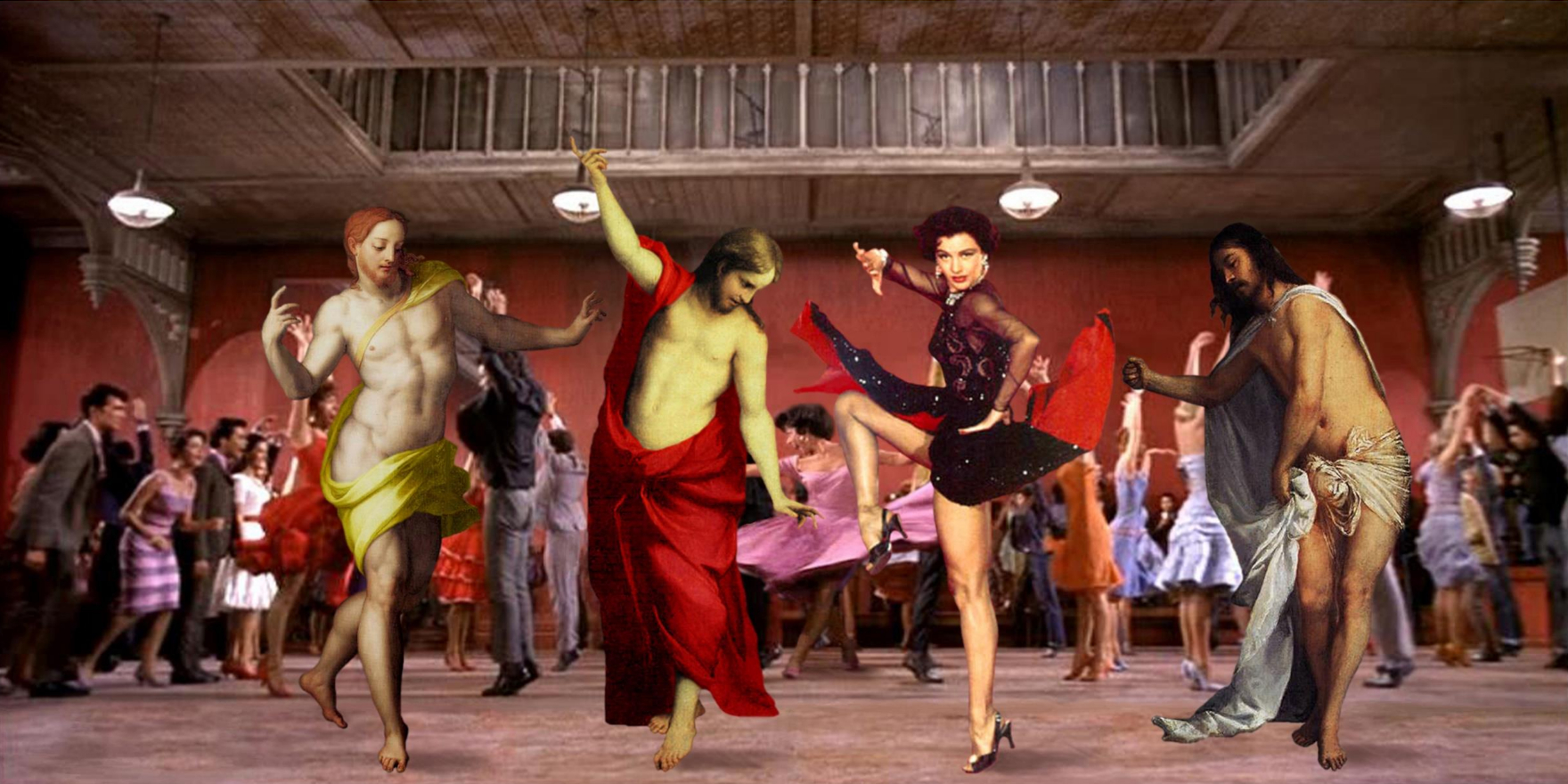
A larger canvas, more elements, less related to each other, the fine art of collage-making, but with much more flexibility. You can flip the image, you can make it smaller or larger, change the color, move it from the foreground to the background, or vice versa. It was a universe of infinite possibilities. A dream come true for those who like manipulating images. And the finished images — are they symbolic? But of what? What do they mean? Nothing. Are they political? Huh? Are they an intentionally subtle commentary on social mores? I doubt it. Are they a Rorschach test? I seriously doubt that, too. Why do you make them? I have no idea except that they are all film-related, taking elements from here, taking elements from there and smacking them together so that they become something else. And what are the viewers supposed to make of them? Whatever they like.
These images are yoked together, culled from different places – an ancient Greek statue of Poseidon, referenced in Jean-Luc Godard’s Contempt, to The Creature from the Black Lagoon, to an illustrated image of Fred Astaire and Cyd Charisse in The Bandwagon, a Corinthian column, using a movie studio logo as their playground, a backdrop, a rear-screen projection. Does it ring any bells for you? Does it suggest any associations it might have for you? Does it mean more to people who recognize the source of each image? No, I don’t think it’s necessary to know any of the images. Do you have to understand it in order to enjoy it? Again, I don’t think so. But don’t worry. There won’t be a pop quiz when you finish the book, Book of Dreams.
No studio logo. Dorothy Malone and Rock Hudson in The Tarnished Angels, the pyramids, Dorothy Malone in Written on the Wind, a statue in a garden of a love scene in a painting by Fragonard. Do you understand the Photoshopped image? Neither do I. Does it have to mean anything specific? No, it doesn’t. Here’s a quote by Stanley Kubrick —
“There is far too much focus on understanding — or being understood. The defining characteristics of those things — books, films, paintings — that I consider to be art were not things I understood … I don’t trust those who need to understand things. There is artistry and joy in not knowing. Feel more. That was what I meant to say.”
Here we are, more than 50 years after 2001: A Space Odyssey was made, still arguing about what the slabs in the opening scenes mean, what Keir Dullea in the 2001 bedroom furnished with baroque furniture mean, and what the hell is the movie about anyway? I am not Stanley Kubrick nor do these photomontages carry “the what’s it all mean?” weight to it. But I fully concur with Kubrick’s sentiment, as I do with the title of Susan Sontag’s book of essays titled Against Interpretation.
Now here’s something we all know and understand — the Cowardly Lion from The Wizard of Oz. But does it illuminate the mis en scène? Once again, I doubt it. Does the addition of the Beast from Jean Cocteau’s Beauty and the Beast clarify it? You tell me.
I know if there were a quiz, I would fail. How about you?
Feel more. That’s what I meant to say.