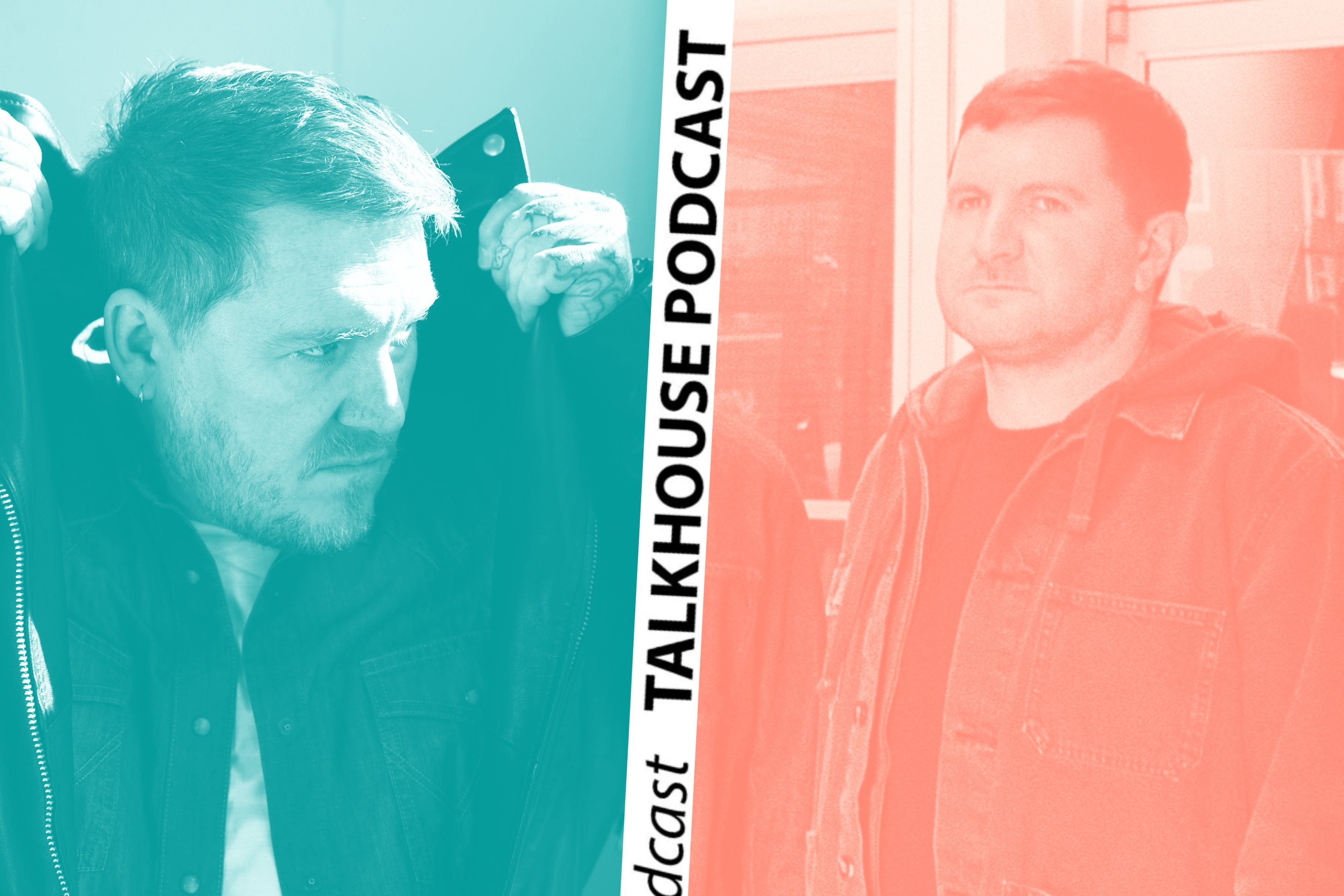
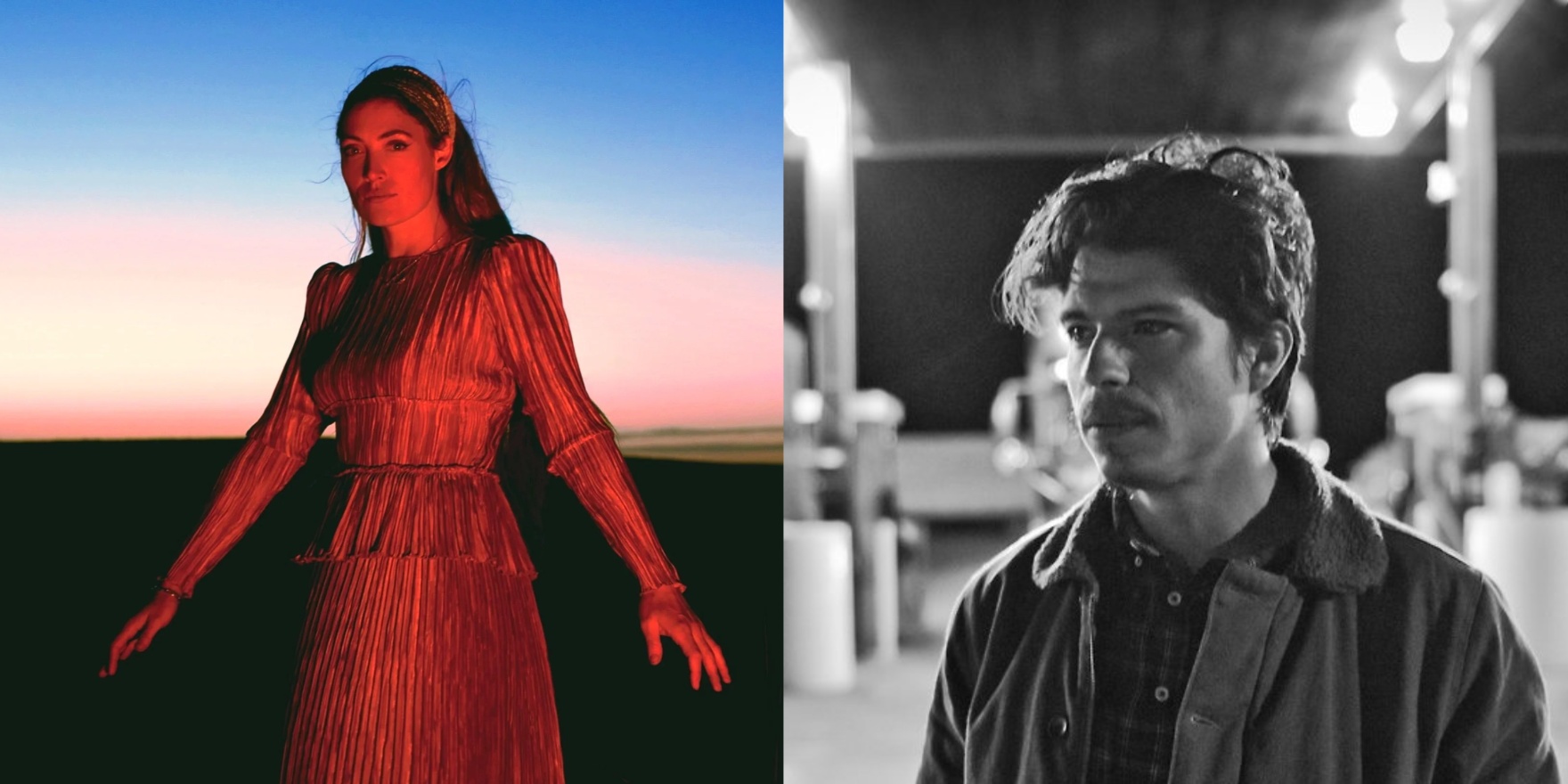
Cornelia Murr is a singer-songwriter whose latest record, Run to the Center, was released last year via 22Twenty; Reverend Baron is Danny Garcia, a singer-songwriter and former pro skater. The two are wrapping up the last leg of Cornelia’s Last Run to the Center Tour, so in a quick dispatch from the road, they chatted about post-tour plans, the best soups they’ve had, and more.
— Annie Fell, Editor-in-chief, Talkhouse Music
Cornelia Murr: Hi, Danny.
Danny Garcia: [Laughs.] We can ease into this thing. We've been together for six months straight.
Cornelia: Yeah, we've been around each other pretty non-stop, so there's not a whole lot to catch up on. But I still have some questions for you.
Danny: Why don't I start with the questions.
Cornelia: You want to start? OK.
Danny: Well, I guess I could say we're on the road right now.
Cornelia: We are on the road, in Oregon. We're on our way to the Seattle airport to pick up the rest of my band. What are we doing, Danny, after that?
Danny: We're going to play some shows. It'll be the end of touring for I think a while. Do you want to talk about the last six months of touring?
Cornelia: This is going to be the very last run of — well, technically a tour that we started in March, that's being called the Last Run to the Center Tour, which is wrapping up the cycle of touring my record Run to the Center that came out over a year ago. But the truth is, it's been many, many tours back-to-back at this point for about a year-and-a-half. Not entirely straight, but it feels almost like that. It hasn't been a whole lot of downtime, so it feels like a bigger end of a chapter. And Danny, you have been opening these shows and playing with my band, which has been really cool to see you get used to playing with them in your own music and kind of form a new band yourself. Do you like playing with my guys or what?
Danny: Yes, I do. Things are fun. But the music seems like such a small part of it.
Cornelia: Kind of, yeah. In terms of the time it takes out of the day, the playing of the music is a small window of time, and most of the rest of the time is in the van, in motels, sometimes Airbnbs, on the phone with airlines like I was this morning. A lot of logistics and administrative details.
Danny: It feels like the job is driving to me.
Cornelia: That's one of the jobs. Also moving — we're like a moving company, loading in, loading out, carrying boxes of merch. We're also like a retail shop, selling our merch. We wear a lot of different hats. It feels like a traveling circus to me, to put it one way.
Danny: I feel like the music has become the easiest part for me. It used to be that that was the hardest thing — I maybe just was always anxious and felt unprepared. It just took me a long time to get comfortable with playing in front of people. So it wasn't that long ago where all this traveling and driving was the easy part and the shows where the hard part. But now that's flipped.
Cornelia: I relate to that too. I used to be so nervous about a show, even weeks in advance. I would think about it every day and stress and calculate in my head different ways it should go and log so many hours leading up to it just thinking about it. And now I don't think much. I mean, when we change things in a set — I like changing things up so there is more to think about and get excited about trying. But it’s the end result of doing this so much. I think it's been good for me.
Danny: That was maybe a goal of yours to do this, to tour this seriously and get more comfortable with it.
Cornelia: I don't know about quite this much, but yes, I did want to really cover a lot of ground and play in a wide variety of scenarios and just expand myself so I was more resilient to anything that gets thrown at you in the live setting. Which, you know, it can be anything. You're working with different people every day in every venue, and your gear can break. There's always problems to solve. And I think the stronger and more resilient you are, and more used to problem solving and what it's like to play to a small group of people or to a large group of people — all these variables — it makes me feel just better at the job, and like it's appropriate that I'm doing it as a job. I also think that nervousness can sometimes make for great vulnerability in a performance, but I think generally — speaking for myself, anyway — that more often acts as a barrier between me and the audience. And so the more I've done it, I feel like there's more transmission and communication with audience, more circuitry. And that feels really good. It's less about me, more about them.
Danny: It's a good point because, yeah, anxiousness about playing a show, you kind of contract.
Cornelia: You're thinking about yourself.
Danny: You’re not open to any any type of feedback in real time. Whatever the energy in the room is, it doesn't matter.
Cornelia: You can cut yourself off to receiving the energy in the room, which can change the experience… But I'm really proud of what we've done, and I love this band of mine. I didn't know any of them until about a year-and-a-half ago, when I just needed a band in New York and they all kind of fell into my life. I had no idea they would remain as my band, but they have. The three core players are James Preston, Abdon Valdez, and Henry Raker. To get to really know them and feel like a band — I wanted to experience that, feeling like a band, really digging deeply into the music, not just rehearsing a couple times for one show, and that's that. And like I said, it's been so cool for me to see them become your band too, and shine in a different way.
Danny: Yeah, well, I got to play with them with you for a little bit first, get to know them personally, which is a big part of having a band. It's kind of a personal connection.
Cornelia: Yeah, this past year-plus couldn't have worked if we couldn't stand each other in the endless hours in between, in the van and elsewhere.
Danny: It's also been a bit of a soup-hunting tour.
Cornelia: [Laughs.] He's saying this because I am addicted to eating soup. I love soup, at all times of the day, in any season. I love the hydrating and healing qualities of soup at all times… We've eaten soup in so many different places.
Danny: What are the highlights?
Cornelia: I just had some wonton soup at some place in southern Oregon, next to a Starbucks off the side of the road. It was so good. Spicy broth… That was maybe the most recent highlight we had.
Danny: I remember Pittsburgh. I mean, I wasn’t there, but I remember you guys talking about it all the time.
Cornelia: Danny wasn't even on that run! But yes, we had a stop in Pittsburgh that was the best pho I've ever had. Pho is kind of my favorite soup. Pho is king. I also remember a very good — or, it might have been a sort of average French onion soup, at a pub in Quebec City. But I feel like the scenario can really heighten the experience of soup. We were all cold, and it was that beautiful part of Old Quebec. We barely had time to do it, but we went for it anyway before having to go to soundcheck.
Danny: It was risky.
Cornelia: There was an element of danger. We all just love French onion soup so much, and it makes sense to do that there. It's like soup is a form of tourism, I guess… All food is. Food has really connected us with people on tour as well. I think it was in Quebec — it was that same day, probably — earlier that morning, we had breakfast at a really lovely cafe, and the waiter was named Claude and he seemed like a very serious man who didn't really want to have anything to do with us at first. Didn't seem amused by the band's jokes or anything. But I got up to go to the bathroom, and while I was gone, the band invited him to the show — which I was like, “Why? He didn't seem at all interested.” But lo and behold, not only did he come, but he brought a friend and he came with so much enthusiasm, and he had — in the meantime, between breakfast and the show — knit me a rainbow scarf. I kid you not. I still have it. It was a lesson: be open to strangers wanting to connect.
Danny: It's been cool to see your fans. I mean, that's kind of the reason to do it, to actually see the people. That probably gives you fuel to keep going, keep writing, keep doing this thing.
Cornelia: It does make it make at least a tiny bit of sense. It's the only thing that makes it make sense. It doesn't make sense financially or logistically, but there have been so many sweet fans that have been really direct and sincere about what it means to them.
Danny: Well, what's after this? You're recording soon.
Cornelia: After this tour — mid-May, it ends in Big Sur, which is a really beautiful place to end. Then what are we going to do? We'll probably go back to the East Coast, to New York, where we've been half-living in between tours. Then in June, we're gonna go to Nebraska for a little while, where I have this little house. And then in July, I'm gonna do some recording in Paris, and I'm gonna hopefully wrap up what will become an EP, that I started last summer out there actually. I'm looking forward to completing the process.
All I really want is to find our home, figure out where it's going to be, and solidify it and nest a bit. And be still for a while, and to basically to write. That's all I want to do for the foreseeable future. What about you?
Danny: Those are also my plans. Home. I am going to record, though, right after this.
Cornelia: Oh, yeah? What's that gonna look like?
Danny: Just a couple days in this studio, Taconic, in Red Hook.
Cornelia: In Upstate New York.
Danny: Right.
Cornelia: With my band. And me!
Danny: Yes. Record and take it from there, I have the songs for a record and I just haven't been able to finish it. So I need to record a little bit more and just see what I gotta do after.
Cornelia: Yeah. You've had a record not quite done, but seemingly done, almost, for a long time that I really like. But I think you want to redo some of it.
Danny: Yeah, it’s not quite finished, to me at least.
Cornelia: I think it's cool to have multiple versions of things, too.
Danny: Yeah, it's a luxury. It's been harder this time around because I've made my records by myself and been able to do multiple versions of songs and spend a lot of time on stuff, and not just power through things really quickly. But with all this moving around, it's harder to do that. Also, I don't want to do that — I don't want to make records by myself.
Cornelia: You want to record with a band.
Danny: Yeah. I want to do it as streamlined as possible. But it's just still an experiment…
Cornelia: How it feels to me, in my somewhat limited experience recording with a band, if you rehearse a bit and then you just do a number of takes so that you can decide, if the whole idea isn't working, you can hopefully identify that, that night or the next morning listening back to it, and re-approach it. But that's the thing about recording that just sucks‚ it's so often the feeling of time pressure. You don't want to lose a day in a studio you've booked. Which, both of us have recorded ourselves at home and in our own spaces. And so when you don't have that, it's hard to go back to that.
Danny: Well, it changed my life just to get a studio. To have my own, that's really it. That's where it's at for me.
Cornelia: And you pretty much, when you can, go every day to your studio. It seems like you keep office hours.
Danny: Yeah. Just because I still like to do it. It's fun.
Cornelia: That's a good sign… I think we're in a similar place of just wanting to write and record and travel less. Partly because we both haven't had a fixed home, for me for quite a long time now. It’s going on two years that I haven't really lived in my little house in Nebraska and have just been bouncing around in between tours. And that means that you're traveling every day on tour, but then there's no going home. There's still more traveling for the most part. We've had some short stints in one place for a while, but I think two months is the longest we've spent anywhere in years. So lately, I've been feeling like I travel almost every day, and it takes up just so much time. And it's been a great gift. But, yeah, I think we're in a similar place.
Danny: I am grateful for this. It's crazy and it's tough sometimes. But the gift is some sort of personal growth that happens very quickly, and it's been a while since I've had that kind of forced adjusting.
Cornelia: Your bandwidth is broadened. I'm glad to hear that. I remember you saying when you first got on the tour with us, which was I think for the Matt Maltese tour at the end of last year, that you were feeling this irritability coming up — which is classic. Everybody can feel that. But because you're stripped of your outlets — like, you play basketball as much as you can to get energy out.
Danny: And I realized I was alone. I had solitude for a long time, and so I kind of sunk into that. Which isn't necessarily great. It was just extreme.
Cornelia: I mean, it's incredible that we don't get on each other's nerves a lot more because we have no time apart when we're at it. You just learn.
Danny: Yeah, that's kind of the gift is the opportunity to develop these things in yourself.
Cornelia: And there is a feeling — not to be really sappy — but it feels a little bit like being a family, eventually. A version of that. There's a camaraderie and closeness. And, yeah, we all probably get on each other's nerves, but we all love each other more and we just have shared so much. I've worked other jobs where you are around your colleagues a lot; it makes me think of working on sets, where you're like a crew and there's a bond there, and part of it is that you're pulling something off that's crazy. You're together working as an organism, and when you're working well as a group, your power is amplified and you're doing something that no one could do on their own. So there's a very energizing bond in that. But, nonetheless, I've never felt that more than with this band. So it is beautiful and I'm grateful for it…
We're looking out to our right and left and there’s just absolutely endless fields of mustard flower — which I guess is invasive, but it almost looks intentional here. It's a bright lemon yellow color. And I think we're gonna end it here.
Danny: Ciao!