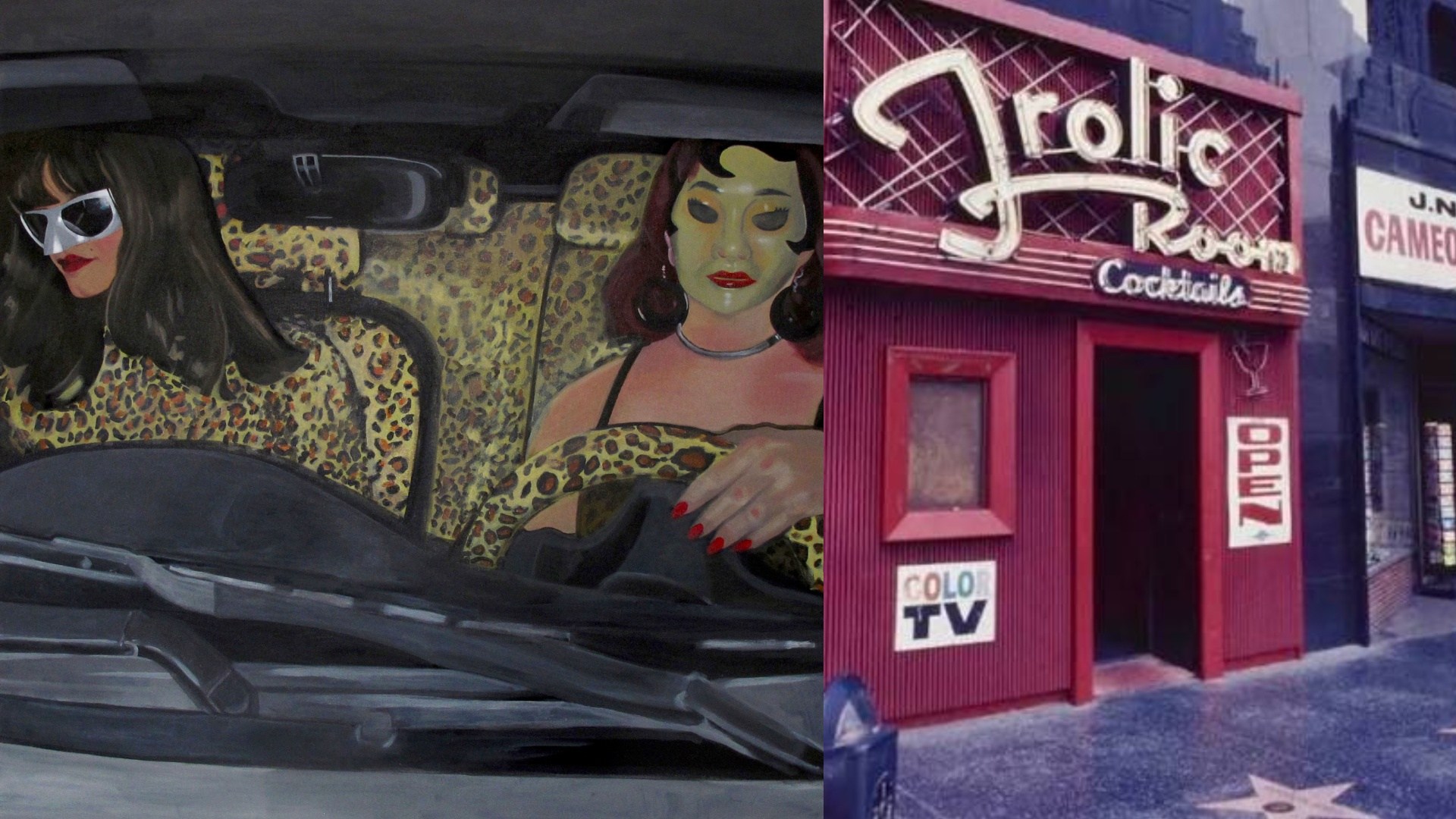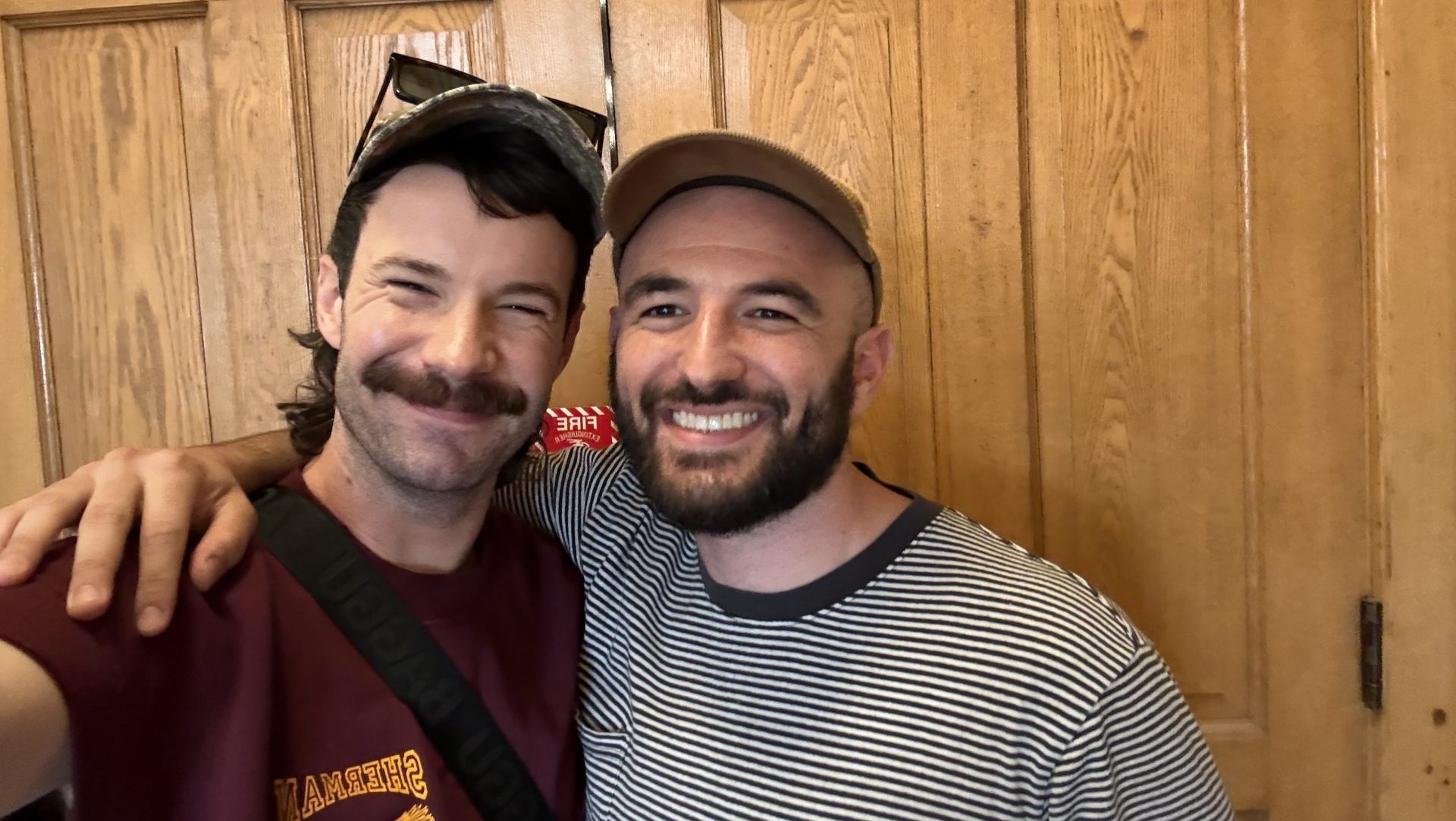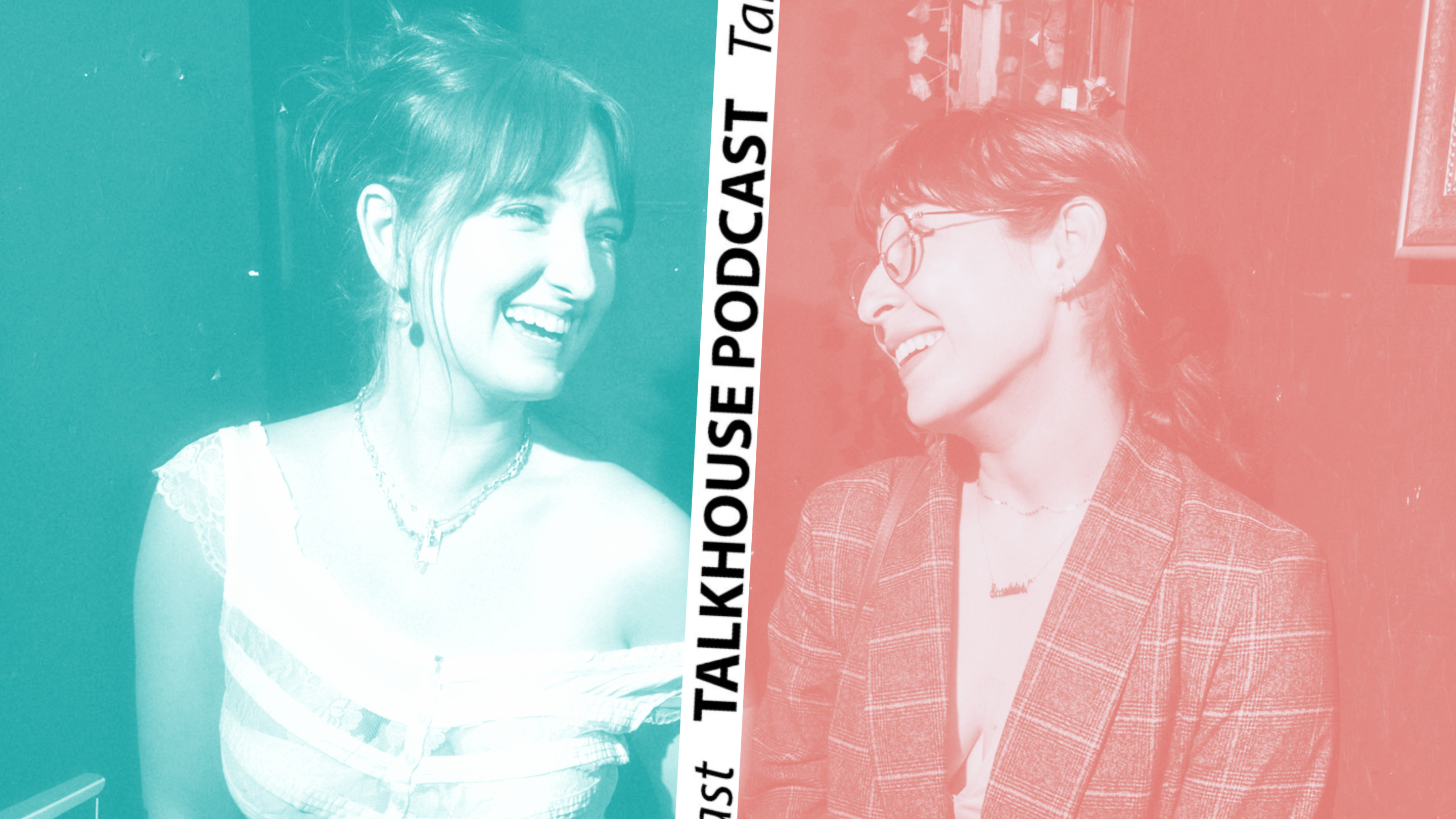
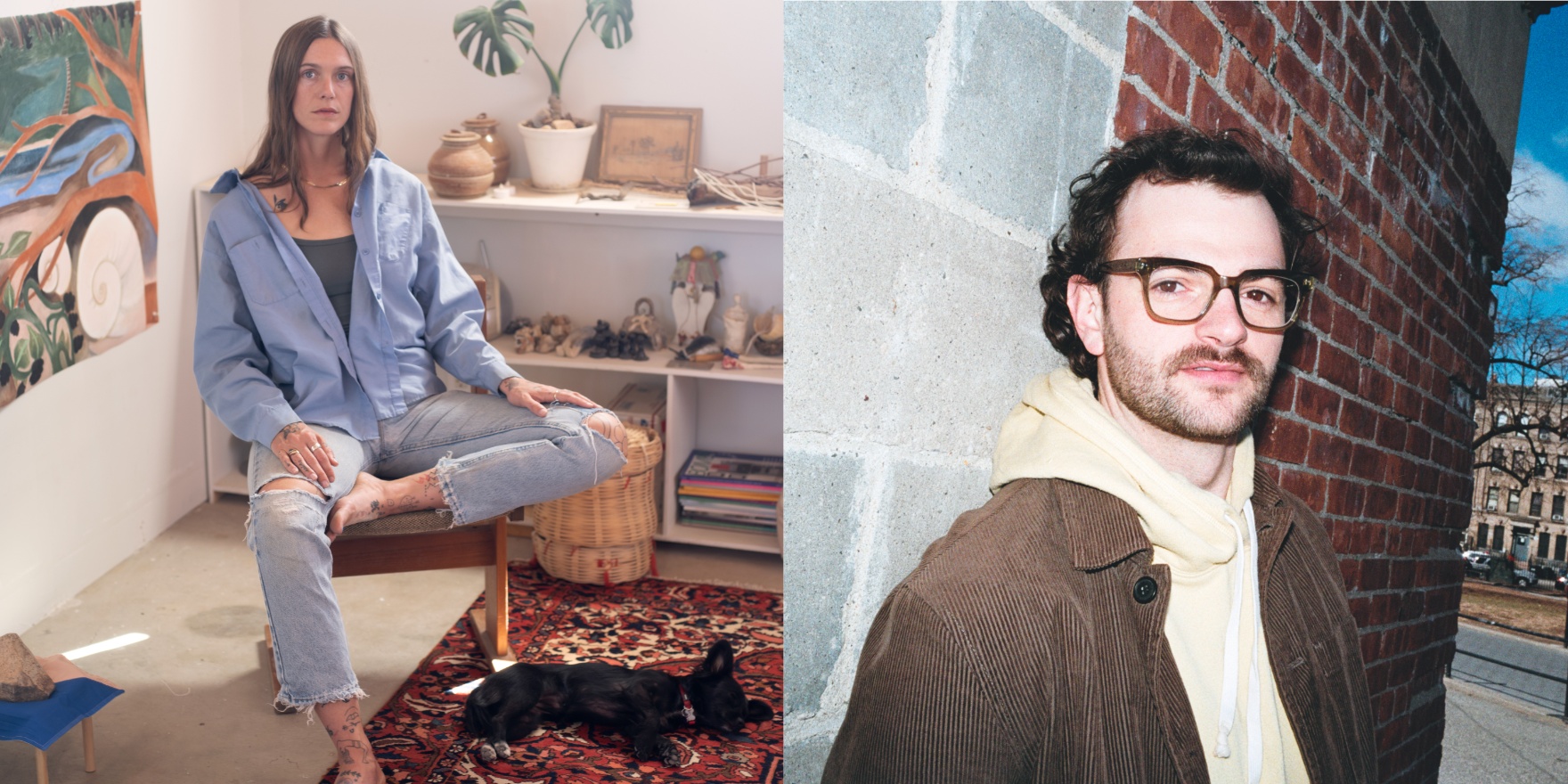
Dan Langa is a composer, producer, and engineer based in Northampton, MA; Aidan Koch is an artist and graphic novelist based in Landers, CA. Dan’s debut record with his new project Fugue State, After Nothing Comes, draws directly from Aidan’s graphic novel of the same name, and features original artwork by her as well. The record will be out tomorrow via Switch Hit, so to celebrate the release, the two got on a call to catch up about the process of making it and much more.
— Annie Fell, Editor-in-chief, Talkhouse Music
Dan Langa: It's a funny feeling when everything comes out and it feels like suddenly it isn't mine anymore. I don't know if you have this feeling with your work and it going public, but all of a sudden… I still like the songs, but it's almost like it's not mine to worry about anymore.
Aidan Koch: Yeah. I think it’s an important transition. I don't know if you have this when you're editing or messing with production, but I feel like when I'm actually moving from making the art to scanning the images to putting them in the layout, suddenly everything changes and then it's just about getting it out there. It's about all the external parts and no longer about the content.
Dan: Yes. There's often a very big block for me in doing the sort of analogous music editing and scanning — those moments are kind of fleeting, but sometimes they're very special, and so it's almost a fear of doing it because I don't want it to leave the space yet. And so it delays things sometimes, in a good way.
Aidan: I mean, I enjoy that part because then in some ways you reap the rewards. But your process is so much more collaborative, versus mine goes from being totally isolated and internal, and then suddenly it's like, Oh, my god, finally I get to engage with people and they get to see what I've been doing. There's this almost celebratory feeling of reconnecting with the world again. But I'm sure you're always working with other musicians.
Dan: Yeah, there definitely is more of a cohort of people that are involved. I'm feeling that right now because the end of 2024 and most of last year was working on both this and then a lot of other people's music, which was kind of a new gear to be in last year. It does feel nice, especially just with close friends and family, to be able to like, “I promise I'm doing things!” And to have tangible stuff.
Aidan: “This is that thing I talked about! It’s real!”
Dan: Because I also don't perform that much. It's something I want to be doing more. But I feel like oftentimes, there's the public release out into the world, but then there's this disconnect where there's still some kind of wall between me and the reception. And I think the live versions of it, there's more in the room in the moment connecting with it together. I'm hoping to do more of that. But that's still kind of a new experience to me.
Aidan: What does it take to make that happen?
Dan: I'm figuring that out right now. Why I haven't done a lot of live performance to this point is because the music itself is so dense, just sound world-wise, that it feels like it's a completely different version than what the music is. So it's almost like… It's not totally rewriting it, but I'm working on all the arrangements for a live version now, and it's turning out to be completely different. Which is fun. I've learned to make it a fun activity. But for the whole of last year, I was sort of dreading it.
Now it's exciting. A lot of it has been leaning on the performers and coming upon the ensemble. A lot of them played on the record, and all of them have some form of improvisation experience, which is exciting because I'm familiar enough with all of them that I can arrange it in a way where there are moments specifically for their voice. And I'm trying really hard to make it less technically complicated. Just because I feel like I'm often stuck in studio brain, where you can take the time to make anything happen and there can be wires everywhere and that's OK. In the live setting, that can be disastrous, so I'm trying to be OK with stripping things down. But we'll see. We did two proof of concept studio videos earlier this month, and it went pretty well. So I'm excited for the rest of it.
Aidan: The little notes that I jotted down for this, the main idea that I was thinking about was translation. I was thinking about translation between medias, but it’s interesting, too, within your own process having to do translations for different settings. Was that a process you were already familiar with or curious about?
Dan: I feel like it's not something I really have had to think about too much until the last few years, because the biggest hurdle in terms of translation has been from in the box or in the recording out to some live setting. It has always felt like a large step. I think there's always this translation happening between me — someone who understands the basics of what I like to think is a fair amount of instruments — to someone who actually really plays it, or someone whose style is slightly different. There's always a little bit of a new vocabulary, both words and musical vocabulary. There's also the translation that comes from the work to the performers or the other collaborators. That has been the translation that I've been most involved with recently, just because of working with people in the studio.
For this specific project, it was just from having one complete work, a completely different version of this piece, into a new completely new world. That was definitely a big hurdle. I don't think I would have been able to do it without the other people involved. I think that was why I leaned so heavily on people for this one, because I knew that I had spent so much time on this other version and I had heard it so many times, the original chamber music version, that as much as I tried I wouldn't be able to completely break out of it. So basically having people force me to do that was really important.
Aidan: That's interesting, through the translation there being this relinquishing of control.
Dan: Do you feel like that is the same for your taking things from a development stage into an exhibition? Do you feel like there's that same level of translation, or are there other places that that comes up in your work?
Aidan: Maybe less directly. I think there's more of a sense of, I'll have these core visions or ideas, and in some ways it depends on which opportunity is coming up how that vision or idea becomes something. I think the externality is that, Well, what am I working on right now? Do I want to be working on a long form narrative? Do I have a show? So there's all these overlapping ideas, and even source materials or texts or experiences, and then what it becomes is more dictated just by what's happening in my life.
I think for a while, I was less comfortable with that. I felt like things needed to really be independent from each other. Like, the comic story shouldn't bleed into the exhibition, which shouldn't bleed into whatever project I'm doing. But I think more and more, I'm like, Well, it's all my work and why wouldn't it all be connected? Why wouldn't these things show up in multiple ways and forms? It's fun to get comfortable with that, because I feel like I can let ideas generate and be less precious with them. If there's something that feels like it's what I want to work on right now, then I don't feel like that's the only time or place that's going to be part of what I'm doing. I feel like I get to sit with ideas a lot longer, and then watch them change in little ways as I reinterpret through different things. At times I really wish I had more people or voices that could help direct that. There's definitely the single voice version where I can get a little self-conscious or insecure about those processes. But I also end up with stuff that I am interested in and deep dive and that part is really cool.
Dan: I'm curious how important it is to you understanding the actual physical space that your work is going to be displayed in. Is it something you think about a lot before?
Aidan: It is very helpful for dialing in. It's rare that I haven't been inside of a space that I'm going to do an exhibition in. It's really scary to not be there more physically — I've been sent a video of a place and then gone there and it's like, Oh, my god, everything's changed. I have a completely different idea of what this is like now that my body is in here. That's really more just about understanding what will fill the space, what's going to make it feel alive and engaging. I feel like it doesn't really play into so much the creation or ideas process. There's times where I could see a level of being more conceptual about it — in grad school, it'd come up like, “Well, how are you thinking about people seeing work that's about the desert, but they're in…” And I was like, “Well… I don't care. They'll be fine.” I'm pulling people into my world no matter where that is. I think the understanding of the space is understanding also how to calibrate to make that space feel like a world that someone's entering. If it's too little work, then it fails. Or if it's crowded, it's hard to engage with and it fails. So I think there's a way in which the space is really important in understanding how people enter it and move around, and where to place things is a big deal.
Dan: I've tried to not be so precious about the space. But my composition starting point was more contemporary classical composition, and the sound of the hall is really kind of everything. Knowing that beforehand plays a lot into how things should be performed, almost like programming things for the space that you're in. Early on, I was tuned into that, and now have flipped away from that but it's still sort of there. I like what you said about bringing people into a into a world and still wanting that experience, but trying not to be so concerned about the physical space.
Aidan: Yeah, understanding how it can add to your vision versus adapting your vision to it.
Dan: Yeah. I wanted to ask you about archiving your work. It was really interesting for me to see how you reworked artwork from a few years ago, going through a similar process of revisiting old work. Something I've been thinking about more is archival processes; I'm finding it more important to have a system set up where it still feels creative to go back and look at work, which I don't think is something that I thought about early on. I'm curious about how you manage that in your work.
Aidan: I found all this material I made from that same era, from when I was working on the After Nothing Comes stories; maybe it was over a six or eight year span. I feel like I'm in a pretty different life than I was then, but I was looking at all these unfinished or unpublished works, and the first thing I tried was just taking directly from those drawings and arranging things. I was like, Wow, these pieces come straight out of that moment and they're directly connected. But there was still something where they didn't quite work, or I still wasn't feeling very attached to them. And that led me to actually going back into my freakin’ iPhoto — instead of pulling from the things that were drawn by me in that time, let's just go back to that time and look at everything about it. Because I used a lot of photo references back then too, so looking at the exact photos that I was taking that I then drew from, connecting all these kind of historic artifacts… So the drawings I ended up doing for the singles and the album were starting from that time, but drawing now — using those photo references from 12 years ago and thinking in the same stylistic hand, but then also making choices I would make now that I wouldn't have made then in some ways. It was an interesting way of speaking to that younger self, but not being that younger self.
And my actual archiving — it's searchable. I save things by year. Every project from a year goes in that year's folder, and slowly those get put on external drives and off of my main computer. But one thing I started doing recently: there is so much source material and external material that is so deeply tied to different points in time. I think about all those early comics — I was deep on Flickr at the time, so I had all these references and artists I looked at. And then I had this really long Tumblr era, and had these incredible archives. When I left Tumblr, I took almost all my images from there that I'd collected and I started printing them in books for myself. I did that recently with some of my own work too, where I was like, Wouldn't it be nice if I could just flip through a catalog of my own work that has names, dates, mediums, title?
Dan: That's cool.
Aidan: The digital archive can only function so well, so I really love having things in print in some way. And because with comics, so much does end up in print, I look through the books when I want to revisit something, and in that way that final media is the real one. When I look back at my comic drawings, I'm like, Woah, I didn't remember that this color changed in that printing, or, Oh, I actually drew it bigger or smaller. To me, the book was the final goal and the work that I want to have live on. So I think the things that I get to have in the tangible world are the most important to me. Do you have ways of documenting?
Dan: The last five years or so, I've been not worrying too much about it. It's been a busy creation period that I don't feel like I was thinking about it too much. It was just folders for years, similarly. But I feel like now, my life has sort of branched off and there's three different modes I'm working in: a teaching mode, where I’m still making things but it's more for demonstration.Then there's the more client-facing world of writing for other people or for commercials, which also is really important because if there's leftover work from that, it's helpful to be able to draw on old demos. And there's my composition world. All of them have slightly different formats for how I'm archiving them. But I really love the idea of it being a physical medium. It's making me want to make mixtapes of my work.
Aidan: That would be so beautiful. I get a little obsessive when it comes to getting to design objects. It's only for me, but I get such pleasure from creating these visual worlds that are just my reference objects.
Dan: I do have one thing that I keep a physical copy of, which on the surface sounds very pessimistic, but anytime I get a rejection letter from a residency or grant or whatever, I'll print it out and I have a “no” folder. I really love watching it grow, just because every time I look at it, I'm like, I've tried! That, to me, is really encouraging. It's just purely, I made an effort here.
Aidan: People only witness an artist’s or musician’s successes, the things that came to fruition, and there’s this lack of acknowledgement of everything else that doesn't make make it off the ground. I think to acknowledge that as material is actually really nice.
Dan: Yeah, definitely… What's something coming up this year that you're looking forward to?
Aidan: This year I was very excited because I did have a new book come out. It's one that I really struggled with at times, but I feel really happy with how the story came together and the choices that I ended up making. It's called Harvester — but the interesting thing is it actually only has come out in Spain, in Spanish.
Dan: Yeah, I was wondering how that came about.
Aidan: It was a connection that I made in those Flickr days, with a cartoonist who's from Spain. He and I have loosely stayed in touch over the years and he has a little publishing house, and checked in a while ago being like, “What are you working on? Do you want to put something together and maybe have it done in time for this big comic festival in Barcelona?” And I was far enough along with this story, but I wasn't done, and I was like, This actually is great. This is how I can get this finished, having this concrete deadline and this guarantee to go to print. I'm so busy getting it done, I haven't followed up yet to see about putting out English. It's even possible it might come out in Swedish before English. Who knows?
Dan: Was it translated to Spanish or did you write it? Are you a Spanish speaker?
Aidan: I am not a Spanish speaker. My Spanish is quite atrocious. So it was translated, and I rewrote it by hand and put it back in the book.
Dan: Oh, wow. Cool.
Aidan: Even that process was really lovely. Not speaking Spanish, it's hard for me to know exactly how the translation works, what little changes there might be. But I've met the translator and he makes comics as well, so I really trust that he knows my work and knows the energy and the mood.
Dan: I love that we began and ended with ideas of translation… I feel like that would be a really nice bookend.
Aidan: That sounds great.
(Photo Credit: right, Nich McElroy; left, Alex SK Brown)