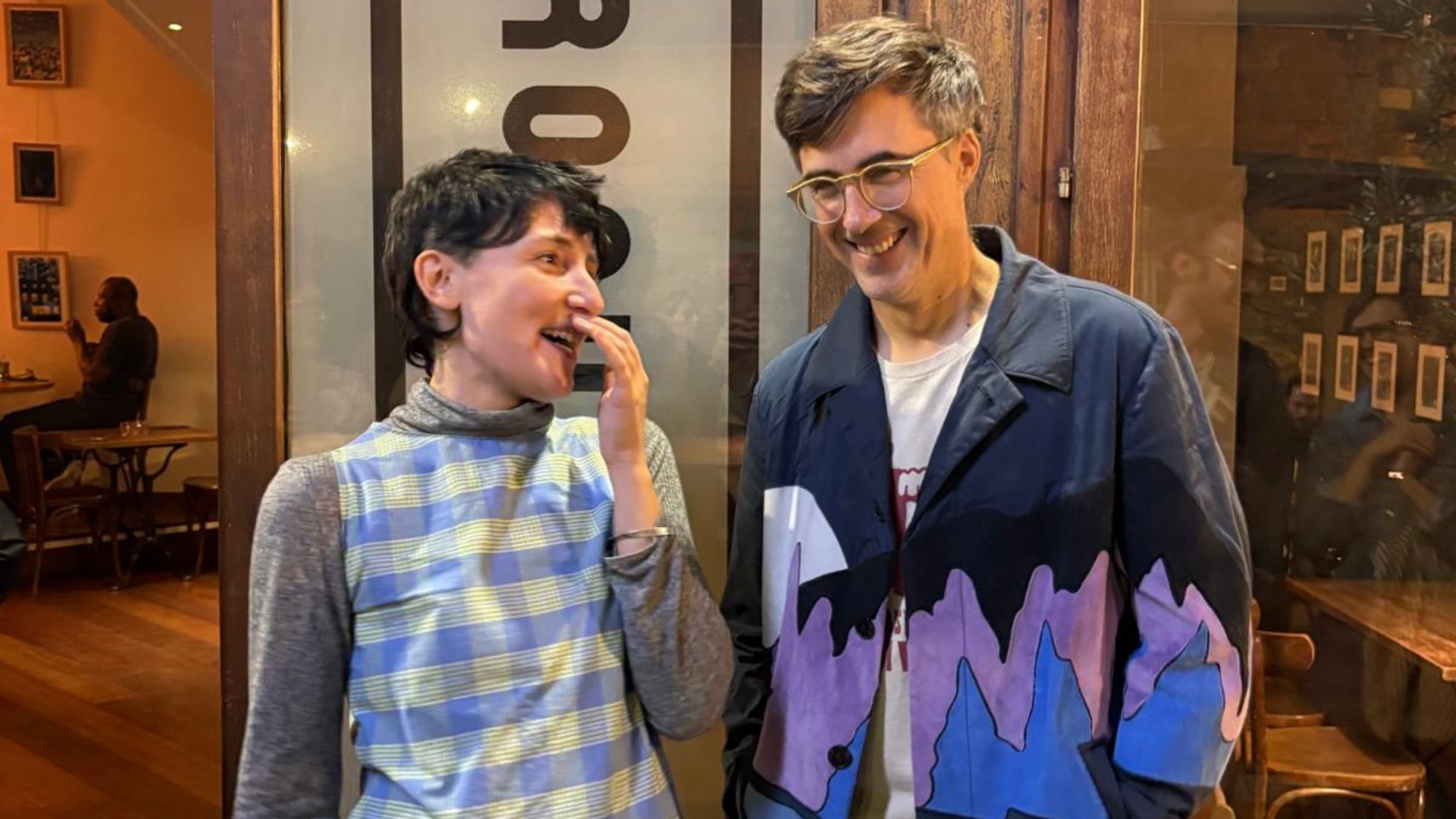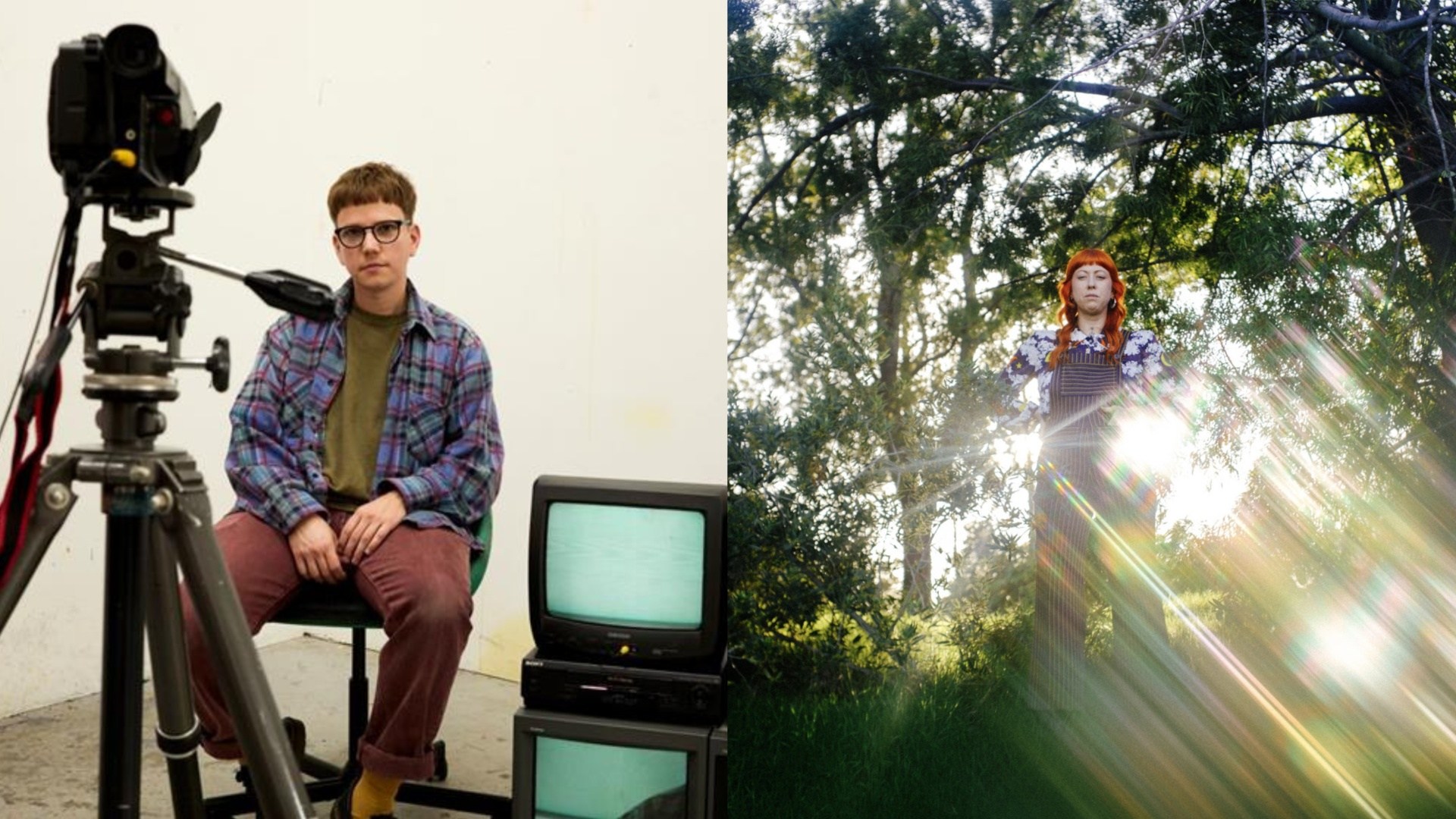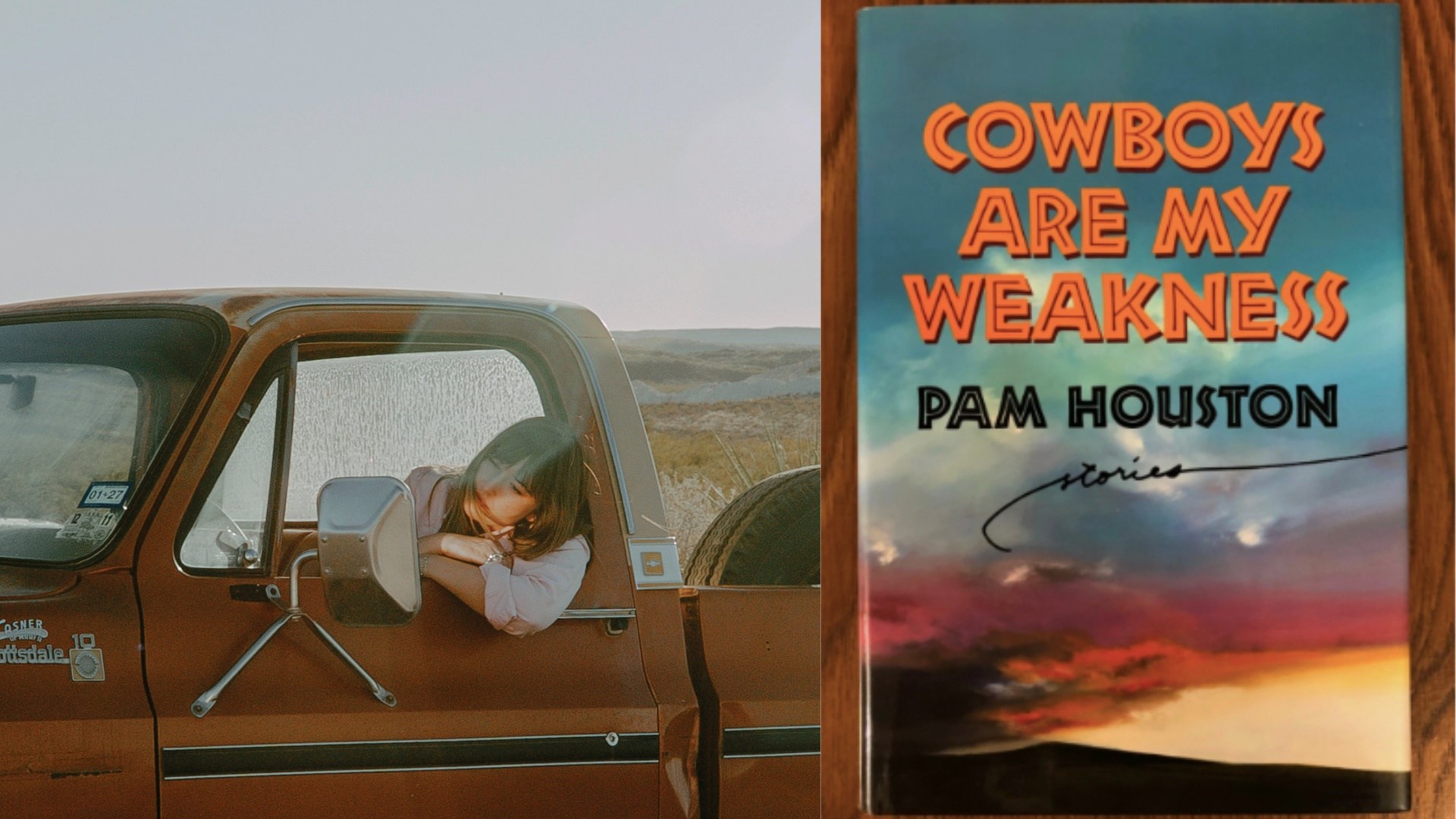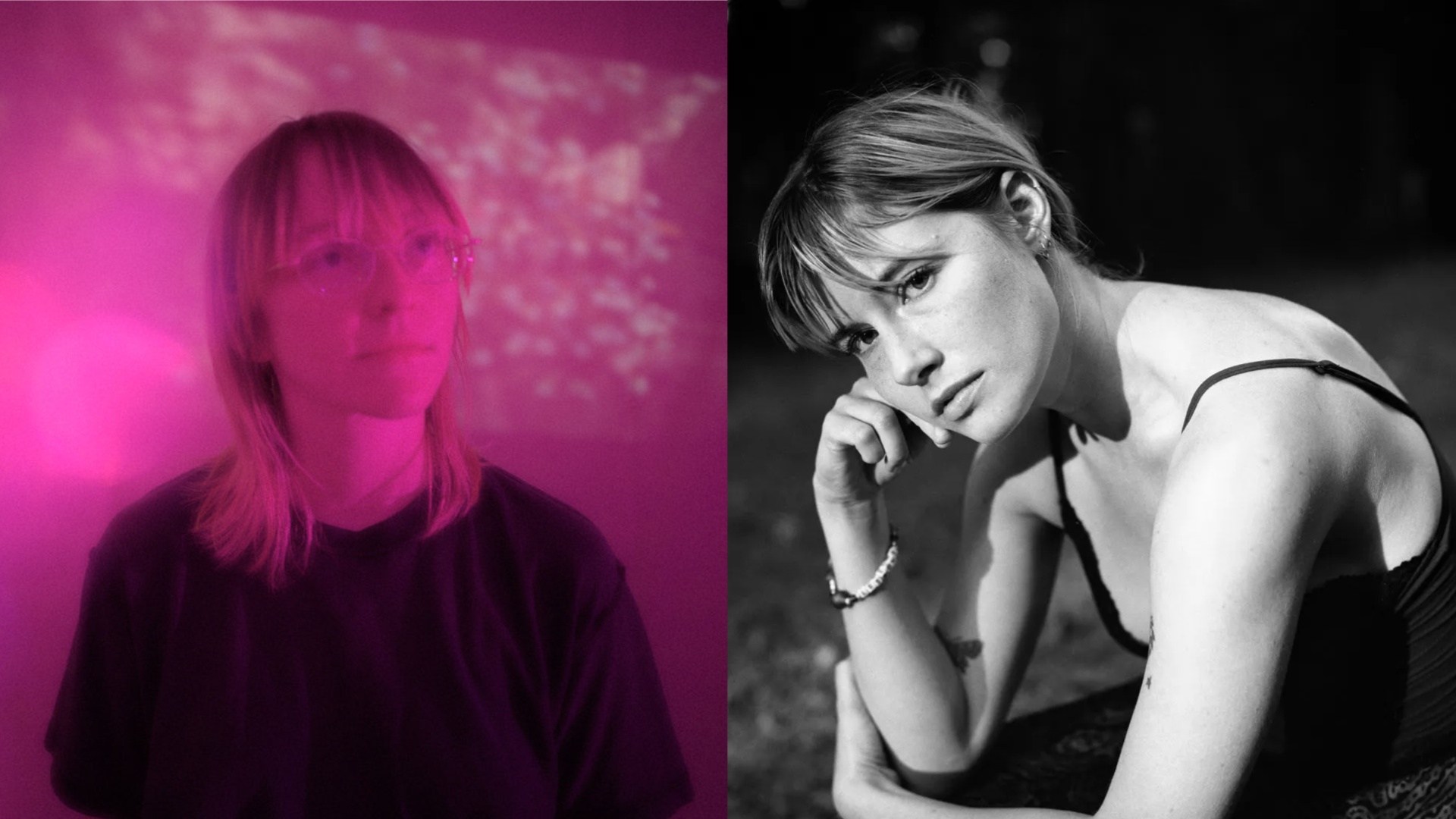

Jesca Hoop is a singer-songwriter and guitarist based in Manchester; Sam Amidon is a singer-songwriter and multi-instrumentalist based in London. Sam contributed “a cast of stringed instruments” to Jesca’s new record Long Wave Home, and to celebrate the release, the two got on a call to catch up about the making of it.
— Annie Fell, Editor-in-chief, Talkhouse Music
Jesca Hoop: I'm so excited. I’ve got this in pen in my diary.
Sam Amidon: We have a plan.
Jesca: I love a plan. How are your plans unfolding, Sam?
Sam: They're opening back up. I've been on tour for two months — I mean, tour is kind of like an absence of plans, really. It's like a traveling nursing home.
Jesca: Yeah, to recover from the full time administration job that you have.
Sam: [Laughs.] But it was the beautiful range, that I'm sure you know, of life where for some of the gigs I had really nice hotels, and then, especially the last section, I was just staying with friends. Which is so beautiful and I'm so thankful for the people who I can crash with. But as I get older, it's harder and harder for me to just make small talk without losing my voice… But it just goes so against human connection to arrive somewhere and then not chat, and there's so much to catch up on. It's challenging.
Jesca: Well, this is just something you're just going to have to manage.
Sam: You know what I have to do? I have to learn to talk more quietly.
Jesca: It's not necessarily talking quietly — I'm going to tell you something.
Sam: Give me the secret. I think you might have cracked it.
Jesca: Well, when I was about 16 years old, I considered myself quite the singer. This was something that I identified with. But then I picked up a pot smoking habit, and I also identified as quite the pot smoker. But I didn't know that it was completely ruining my training, and I could no longer do these things that I used to do. I couldn't hold up the amount of hours that I needed to sing — I was a singer in the choir. And so I was losing my voice, and I didn't put the dots together because I had no perspective. So I went to a vocal coach and she told me that whispering is actually really hard on your voice. It draws a lot of air through the vocal cords and dries them out. If you're whispering, you can feel your vocal cords stress. But if you — you have to think about Michael Jackson. He used to talk in this particular position in his voice.
Sam: Yes.
Jesca: You have to position your voice so that your vocal cords are are touching and they are not straining. Talking quietly is actually better.
Sam: But not whispering.
Jesca: It has to be out of the throat, into the head. Let's just practice this through the rest of the conversation.
Sam: I'm gonna try it. I'm gonna find the space.
Jesca: No one's going to hear this conversation. But they can read the difference.
Sam: They can sense it in the text…
I love your record. I love every element of it. Can I ask you some questions about it?
Jesca: Yeah, let’s talk about it! The last time I saw you, it was in session.
Sam: We were in the studio together for your album. You brought me in for a day to Bristol, with Jesse [D. Vernon], and I sprinkled bits of banjo and fiddle and a teeny bit of acoustic guitar and a teeny bit of singing on all these different beautiful songs. But you had done a lot — was there ever a point where you were in the room with people doing this live, or was it done entirely through the kind of sculptural additive process?
Jesca: I did it in chunks. Guitar and voice, I came with those full and complete. Then I traveled to the drummer, Sebastian Rochford, and Leo Abrahams [engineer] in LA. Then I traveled to the Isle of Wight and I added Jon Thorne [bassist] with Jim and Rob Homes [engineers] at Empire Sound, this great studio off the coast of England. And then I went to Bristol. The horn arrangements were being arranged in isolation based on early demos. And I did send little updates but nothing really changed. So to me, what was miraculous was, the way the Tetris worked where no one was hearing each other, the only common factor was myself. And when I listen back, I'm actually amazed that that worked.
But you — Jon Thorne created his parts spontaneously, and you created your parts spontaneously.
Sam: Well, you were guiding a lot, but yes.
Jesca: I wasn't guiding. I would say I was just asking you to continue.
Sam: [Laughs.] Coaxing… But the vibe is so coherent. It's amazing that that's how it was made.
I think something that people forget when they talk about records sometimes is they think of production as, like, a thing. But for me, I feel like there's no such thing as production separate from what is happening in the actual songs. Right? Because you can't just make something sound like something else if it's not that. So maybe the reason it sounds so coherent to my ears is that your sound and your musical world is like this world unto itself. And on this album as much, and maybe even a little more than, all your other records, the clarity of your expression in your singing, in the melodies, in your guitar parts — boom, it's there 100%. That's the house. And if the foundations are so strong, then you can do this process where you travel around and add all this stuff and it still sounds like one thing.
Jesca: Thank you. That's really generous. I think the difference for me this time around is that I would outsource judgment in the past to a producer. I've been involved in so many sessions; to stand in the producer role is to give people a figure to look towards for the parameters of the session. That's how I'm viewing it at this stage, and there's a lot of different ways to go about it. But without the person to outsource that judgement to, I got to discover how to render material from players and arrangers — Jesse being the arranger — and engineers in a way that I didn't know that I knew how to do.
Sam: This was the first time?
Jesca: Yeah.
Sam: Beautiful.
Jesca: And what I discovered, because I've watched other producers work and watching them work made me feel quite nervous. Was their judgment going to align with mine? Was I undercutting my own authority? What if I decided that my taste is definitive? That was the bottom line. Production, technical things aside, so much of it is about taste. And who you cast is the most important thing. And if you bring people who can deliver different tastes, you can choose what you like. So that's how we landed on the firm decisions.
But also, I want to say that when you came in to that session — first of all, it was really, really nice to have an American on board.
Sam: [Laughs.]
Jesca: We've had a few run ins in the past. But you came into that session with so much energy and presence. You know when you do a recording session over the course of many songs? For me personally, I'm always looking for the surprise — those moments of surprise, and the moment where things really click and the song transforms because of who's playing on it. And I would say that I experienced that with you for the first time in the sessions. The song clicked and the heart of the song opened up. I've experienced that in too rare of circumstances in my recording career.
Sam: Thank you so much. If the music is speaks it, it happens, you know?
Jesca: Well, I think you have to be a listener. And actually, the way I perceive you listening is very similar to an old friend of mine, and the kind of feeling that I experienced in this session is a feeling that I have to say that I'm chasing in a session. I'm really hoping that a person will listen and invest in the song in this way, and then bring themselves to it to make the song their own in a sense. I experienced that back in the day with my old friend Blake Mills, and it's not since that time that I've experienced that. And I experienced that with you, especially on the song “Love Is Salvation.” So thank you.
Sam: It was magic. There's a deep rhythmic groove to your music, and for me, coming out of folk music, playing Irish music, old time American, that's something you don't always find in songwriting type music. And your music is so full of that every song, regardless of what the vibe is. It always has a really deep rhythmic power underneath it, and that's something that I really like.
Jesca: I remember hearing you say about your dad that he was a “lifetime beginner” — on the saxophone?
Sam: No, trombone. Good memory though!
Jesca: Well, I'm a lifetime beginner on the guitar. I've never taken lessons and I'm not sure that I have the potential to be proficient as a guitarist. But I really enjoy hammering in the rhythmic sense. If you can't be like this Billy Strings, you can be other things.
Sam: That rhymed.
Jesca: [Laughs.]
Sam: I think that's very interesting. The whole lifetime beginner thing — I think composing music is way easier as a beginner. When you first approach an instrument, I think you can often write a bunch of things on it. And then as you learn the instrument, it can be harder to write. So I think staying in the place of lifetime beginner is probably helping sustain all these incredible riffs. That's the goal, I think. I picked up the guitar also later — I played only fiddle ‘til I was 20, and then I picked up the guitar, and it was a somewhat self-taught element as well. And when I first started playing it, I wrote all this really great stuff on the guitar, and then as I got better… You have to sort of find new ways to trick yourself out of the space of competence. Because when you have competence, you can't make anything.
Jesca: The wheels are in their groove, and so you're following a form rather than creating the form. And music is absolutely amorphic. There's no such thing as “stuff” — there's only form. It's just this thing that can be shaped.
I really don't like the term “experimental.” I'm a receiver of that adjective lot. I don't think that music is ever experimental. Music is just music. It's the standard norms and conventions who state that “this is music, and this is may become music…” To a certain extent, I guess it takes a decade to get a particular dish to be accepted into the Italian cuisine. But I feel like I've been doing that my entire career, saying, “This is a dish! You can play guitar this way!”
Sam: But it's helped you create your own world.
What about the writing of the songs? Was that process similar to previous [records]? And I ask this not as an interviewer being an interviewer, but as somebody who — it's a magical, mysterious process to me, because I do write a lot of music on my records, but I don't really write songs in the sense that you do, generally.
Jesca: But you must! Because — [your song] is called the “Golden Willow Tree”?
Sam: Yeah, but the words are all from old folk songs.
Jesca: Oh, gosh! I was wondering how you wrote that. [Laughs.]
Sam: Yeah, I could give a whole lecture on how I wrote such an incredible lyric if I had written it, but I didn’t. [Laughs.] All of the words on [most] of my records are traditional, and the music is a range between fully original in some cases, and then a range of reharmonized and rearranged.
Jesca: That must be a very relaxing way to go about making records.
Sam: It's much easier. I mean, writing songs, I know, is very hard.
Jesca: It's very hard. It's a lonely season. It's a lonely period of time, isolating and daunting. It is deeply satisfying and a very rich practice, but it comes with a lot of agitation. There's a lot of fear in the beginning. You’re like, Is this song bad? Am I writing a bad song? Am I investing time in a bad song? You have to allow enough time to write the bad songs, the songs that you just won't return to. And then at what point are you not going to return to it? Because you can't abandon a song too early. If you start to judge your work too soon, it never has a chance to form. It's embryonic, it's this ugly little thing and you have to give it a chance to grow. You cannot rush the songwriting process. And you only have so much effervescence in a day, where my brain will actually engage. And that's not to say that I wait for creative energy — I don't. I approach it in a very disciplined way where I have these six months and I protect these hours in each day and I will sit down and I will do as much as I can within that day. And sometimes my body will only engage an hour of that time, and I might come up with nothing. But you know when you get an acupuncture treatment? The effects of that treatment are active for three days, is what they'll say. That hour that I might put in will still be active, possibly, on the back burners of my mind as I'm traveling through the day, and it starts to apply itself to everything I'm observing and everything I'm doing.
Sam: So it becomes like an antenna. The antenna goes up through that process of the hour, or however much time it is.
Jesca: Yes. And then when I get that first torque going and I'm able to maybe strand some words together, and I don't know what they mean, I can eventually — through letting the work continue with or without my physical awareness — come back to it. It's like a magnet. But it comes with a lot of self doubt. But I do recognize that the work is happening in these different ways through this period of time.
I think people who wait for creative energy — I haven't had that in a long time, where I wanted to sit down and write a song. Or, Oh, I feel a song coming on…
Sam: And do you go in with the intention, or do you just kind of leave your instruments out and try and visit them frequently? Do you have a moment like, “I'm going to go into my office now for three hours and write”?
Jesca: Yes, I have to structure it: “I'm writing these hours and these hours.” But then the best part is when the momentum starts to build and you're like, Ah, that's the beginning of a song.
Sam: It takes over your mind.
Jesca: Yeah. Then I get to return to it at the end of the night, after the day is over, and just enjoy playing this thing that now exists. It might be half the song. But it's like a new friend that you've made, and you literally have made it. You get to sit there and enjoy this sensation of this aesthetic, this texture, this feeling, this little nugget — whether it be pain, or it could be like a zap you're giving somebody — like somebody crossed you and you get to give them a zap. You get to lean into these treatments. Your songwriting is like a treatment. You're tending to your life, and strumming at the chords of it. And you're doing it for others as well through the act. Because that's the job. You speak about these things that you're going through, that of course are shared. Your job is to put voice to things that other people can't or don't put voice to. Songwriting is important because it's a record of our shared experience, and there's nothing one can go through that’s not shared by two.