

Juliana Hatfield is a singer, songwriter and guitar player. She began her music career in the late 1980s in Boston with the Blake Babies. Since then she has released approximately fifteen solo albums and been involved with numerous other groups including the Lemonheads, Some Girls (with Freda Love Smith) and MInor Alps (with Matthew Caws from Nada Surf). Her latest project is a collaboration with Paul Westerberg called the I Don’t Cares. Their debut album, Wild Stab, came out in early 2016. Hatfield’s new album, Pussycat, will be released on April 28, 2017.
(Photo credit: Brad Walsh)
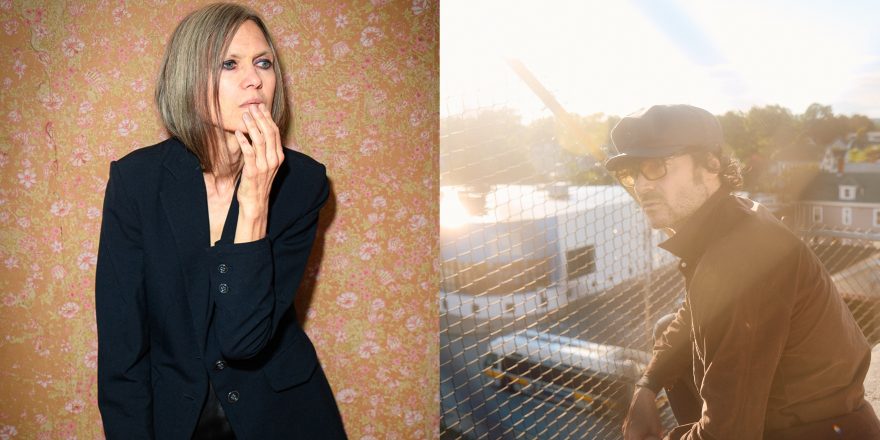
Juliana Hatfield is a musician and songwriter based in Western Mass; Will Dailey is a musician and songwriter based in the Boston area. Both put out new records recently — Juliana’s Lightning May Strike came out in December, and Will’s Boys Talking was released on streaming in February — and to celebrate it all, the friends got on the phone to catch up about the grief that inspired both records, and much more.
— Annie Fell, Editor-in-chief, Talkhouse Music
Juliana Hatfield: Are you in Boston proper?
Will Dailey: I live in Watertown, right at the exit off the pike. So kind of in this very fluid area of the city where I can go anywhere in a second.
Juliana: That sounds nice. Convenient.
Will: You’re in Western Mass, right?
Juliana: Amherst, yeah. My house is on three acres, and it’s kind of a wooded area.
Will: That’s peaceful. It’s a change from greater Boston area.
Juliana: Yeah, but I kind of miss the city.
Will: I know. When I go play places like that, I think, Why don’t I live here? But then I think about it, and I get anxious for some reason.
Juliana:Yeah, I’m not exactly feeling very settled here, and I don’t want to live here forever.
Will: But have you ever lived anywhere forever?
Juliana: I felt like I lived in Cambridge forever, but… I mean, the answer is “no.” But when I say I don’t want to live here forever, I mean I don’t know if I even want to be here for five years.
Will: Did you write the newest record there?
Juliana: I did. I wrote about how unhappy I was. Some bad things happened when I came here: Gary Smith [producer and owner of Fort Apache Studios] died as soon as I got here, and then my dog died and my mom got cancer, and I didn’t know anyone here. I don’t make friends very easily, and I was very isolated and depressed. I was just writing about all that stuff.
Will: I can hear it. “Constant Companion.” That’s heavy.
Juliana: Yeah, that was about my dog. Someone thought that one was about Gary, but actually, “Ashes” was about Gary. And also about my property, just all the things I was learning about plants and the different kinds of things that grew.
Part of the reason I came out here was that Gary had this plan that we were going to find some property together up where he was in New Hampshire or Vermont, and we were each going to have a house and we were going to help each other out as we got old. I came out here to get closer to that plan, so that we could start looking at properties and easing into it — because it might have involved building a house or two houses, so it was going to be sort of a long range plan. But then he just got sicker and sicker, and the very first night I slept here in the house was the day he died.
Will: My gosh. I’m so sorry.
Juliana: You know, shit happens. I don’t want to be crude, but — I love your album, by the way. It’s so good, and I just wonder, who died? Maybe you don’t want to talk about it.
Will: No, I’m absolutely fine with talking about it. I had a friend who was like a fake older brother to me, and he was an older brother of someone who was in my grade in high school. He was the legendary, beautiful all-star sports boy. I had a girlfriend who was a year older than me and she would take me to these parties that older kids were coming back to — and I grew up in a very sports town, and I couldn’t catch or throw or hit a ball to save my life. I was playing guitar and doing music, but there wasn’t any space for it at the time. So I’m going to this summer party with these older kids, some of these legendary, folk tale boys who I would have thought, I’m not going to have a good time at this party. But he had a guitar there, and I took it out and he was like, “You’re doing the coolest thing in the world. Just remember that.”
He remained like a surrogate older brother, but struggled with depression and addiction our whole lives and had an abusive childhood. He really got his life together and did everything, but then over the pandemic, he took his life. It was one of those things where you realize — he was the person who would have written me a dissertation the morning the album came out, a really insightful dissertation, and I was like, Oh, shit, this is going to be the first time I don’t get a dissertation from Joe.
Juliana: Those people are so important. They’re so rare. And that’s why Gary was such a huge loss to me — well, for many reasons. He was one of the smartest people I knew. He was complicated, but I felt like he really appreciated my music in a way that maybe other people who even liked my music didn’t really get it on such a level. He just appreciated it in a way that felt so sincere without being cloying. It wasn’t over the top. He valued it and he treasured it in a really cool way, and it meant a lot to me because my music was so much of who I was.
Will: Yeah. And correct me if I’m wrong, but just in the similar kind of comparison here, he understood the whole story. He wasn’t jumping on and off, like a lot of people jump on and off in your artistic career — they’ll have the record of yours that impacted them, and that becomes their narrative of you. It’s rare to have people who are keeping track and seeing the whole story. For me, when I listen to you, I feel like it’s just a long continuum. There’s not a spike anywhere, it’s a whole story. And to lose someone like Gary just feels lonely, I imagine. That’s how it felt for me. I felt, Oh, I’m a little bit lonelier, and this is what the rest of my life is going to be like, losing the people who connect me to the ground into my own reality.
Juliana: Yeah. And he was such a huge loss because there’s so few people like that in my life that mean that much to me. I don’t think I’ve even really processed it yet. I still almost can’t believe that he’s gone. I mean, I do, but…
There’s people that understand that you are your music. Like, you’re not just making albums for fun. We don’t do it because it’s fun — or, I don’t. It’s who I am, or part of it. Sometimes I get frustrated, Oh, that’s all I can do. I get bummed out about it. But then I think, At least I have something I can do. Some people never find what they were meant to do.
Will: That’s right. But, yeah, it does fuck with your head.
Juliana: Especially when you’re not a household name, necessarily. Or if you once were a household name and you’re not anymore, it just makes you question everything. If you’re a performer or an artist, you’re supposed to have an audience. You need an audience, or else no one’s hearing. So that just makes it more confusing. If your audience is small, or smaller, you wonder, Does that mean my work is not as good or not as important? And then you have to gradually figure out that you just have to do it anyway. You just do it because that’s what you do.
Will: I have never been a household name. I’ve never had a huge spike, or been a part of a larger cultural moment. I’m a total trench warfare guy. But I have gone through labels and syncs and a career that’s been built off a ton of work and a lot of great opportunities — and I’m talking to you right now. Everything’s wonderful and I have no complaints. But I did realize years ago, there would be people coming up to me after shows or writing me and saying, “Oh, my god, I love your music, I don’t know why you’re not more famous,” or “I’m sorry you’re not more famous,” and it would crush me. I would start to justify to them, or try to explain a part of myself or my career or what’s happened. And then I realized, Holy shit, that person just told me how much I mean to them, and they are explaining why it’s not enough for them because they don’t feel like they’re enough. When I let in the fact that another human being that I don’t know feels that way about me — and not because any media system sent me to them, but because the music or my presence alone created it — I stopped going inward, and I immediately just turned guru. I would just take the person’s hand and go, “I want you to know that you are enough. If I’m enough for you right now to feel this way, I want you to know that you are enough for me. And if we allow anything to take that away from us, then we’re both fucked.”
Juliana: That’s beautiful.
Will: That’s so much of growing up with the 20th century construct of commerce around music — a thing that’s been in our DNA for hundreds of thousands of years, we just look at this one lens of its importance. And so especially with Boys Talking and how it began with this loss and feeling kind of scared — and there was another friend I lost to cancer who was kind of my guru. He was a sculptor in France, and he heard me playing in a club in the middle of France and just took me on this two day journey from right when I walked off stage. He passed away from cancer over the pandemic at the same time, and he was another person who saw me that way without any caveats. I just decided what I’m good at is the kind of trench warfare artistry and instilling these things that shit like fascism, capitalism tries to sap from our humanity.
That’s why you might be like, Wait, I thought I released this song with Will a year and a half ago, and I just dropped the record [on streaming] the other day because I did 18 months of touring and just selling records and CDs and tape cassettes. One song that’s on the record is forever not online, and it’s a way of protecting everything in my head with it. It’s just just remembering that the power in numbers and that all these gestures and all these efforts and all this engagement with core humanity principles matter in a big, big way.
Juliana: Yeah, it’s hard because, like you were saying, the capitalistic, consumer society that we’re engulfed in, everybody is supposed to want the biggest audience, which isn’t necessarily always the best audience or the best thing for everyone. People have said that exact same thing to me after: “Why aren’t you huge?” Even though I had some, quote-unquote, “commercial success” at one point, people still say that. And I remember when I had my record that did well — better than others commercially — on Atlantic Records, even people around me like Scott Litt, the producer, was disappointed in how it sold. He thought that the label didn’t promote it enough, he thought it was going to, quote-unquote, “do better.” And that just made me sad because he became a really good friend when we were making the record, and it bummed me out my friend was disappointed in how the album landed in the world. I thought we had a good time making it, and it was more successful commercially than anything I’d ever done before then. So for me, it was like, “Wow, I can’t believe so many people are hearing this.” But he kind of brought me down when he said he was disappointed. So it’s all just very confusing, endlessly. But I think that your attitude is probably better than mine. It’s really good. Because I’m always conflicted about this stuff.
Will: It also plays to my anger, too, like my resentment of that we measure each other this way. Instead of making it what I talk about, I want to put it into just redesigning the value of our time together and not letting the bastards define it. You know?
Juliana: Yeah, that’s what’s so great about the way that you unfolded this album and its songs. Now I want to hear the song [that’s offline] — I was going to buy the record anyway.
Will: I’ll send you the record. Whatever you want — vinyl, CD, compact laserdisc, tape cassette…
Juliana: The song “My Old Ride” makes me cry every time. Something about it makes me have memories of my own past, just like, Kill me. Nothing specific even. It just summons up these feelings… I guess there’s something nostalgic that I just get all broken up about it. That song, I think, is just really great and powerful.
Will: Thank you. I mean, you came in and overdubbed your part, but all those songs are the takes. I would overdub some leads and all the solos are overdubbed, but all the guitars and the bass, drums, and keys are all the takes. And I did a thing where I just wanted 10 days in the studio, make sure I’m the least talented person in the room, and everyone comes in in the morning and I say, “Alright, I’ll play you five songs on my guitar.”
Juliana: And they haven’t heard them before?
Will: Yep, nobody had heard. And there was only one song that everyone had a meltdown about. But, yeah, [I wanted to] just have amazing people react to them, and if it’s 10 AM, try to get one song by 3, and then another song by 10 PM.
I remember showing everyone songs one morning, and I was like, “I have this song called ‘My Old Ride,’ it just feels like a songy songwriter song…” And then everyone was so excited to record it, and now I really do love playing it live. It works, and it is super heavy now to me, when I thought I was being manipulative, maybe, emotionally when I was alone with it.
Juliana: But if you were, it worked. I’m totally manipulated here.
Will: I was on a radio station and the guy was like, “It just makes me feel like I’m in my old car!” And then I played it live on the mic by myself for him, and he was bawling by the end. He was like, “Oh, I did not really listen to the words.” [Laughs.]
Juliana: I mean, is it literally there was a car?
Will: My stepfather gave me his old Honda Civic, but we have a good relationship for the most part. I was actually in Asbury Park on the road by myself, listening to the Bruce Springsteen audiobook where he’s talking about his father. So I go [to the show], [the photographer] Danny Clinch is there — he’s a good friend of mine, and he showed me a picture of Bruce and his dad in a convertible that he took. There’s this one image that I used in verse three of Bruce Springsteen leaning on the car. I drove home from the show I played in Asbury that night, and I think I might have sang that chorus into my phone. And then Ed Velasquez was looking for a song for a Disney thing, a show that needed a song about a car, and I submitted it. And right away I was like, Wait, I don’t want them to have this. And I realized I really liked it and finished it, and brought it to the studio. Danny is the one singing on the end of it. And then last month I played with Bruce Springsteen at this event in New York, and I sat there while Danny told him all the story of the song.
Juliana: Do you know if he heard it?
Will: I don’t know if he heard it. I’m so bad at being like, “Make sure you send it to him!” I’m always afraid to do that. I try to just be like, Wow, my life led to somebody telling Bruce Springsteen about my song, and be grateful about that.
You can catch Will on tour in the Northeast now.