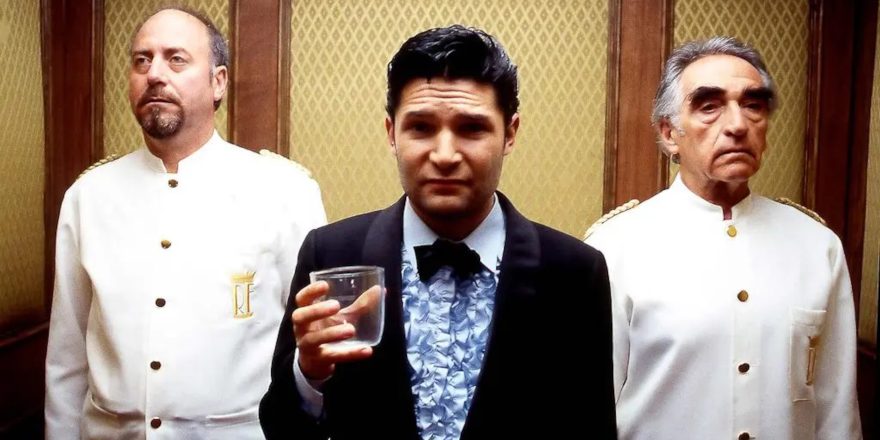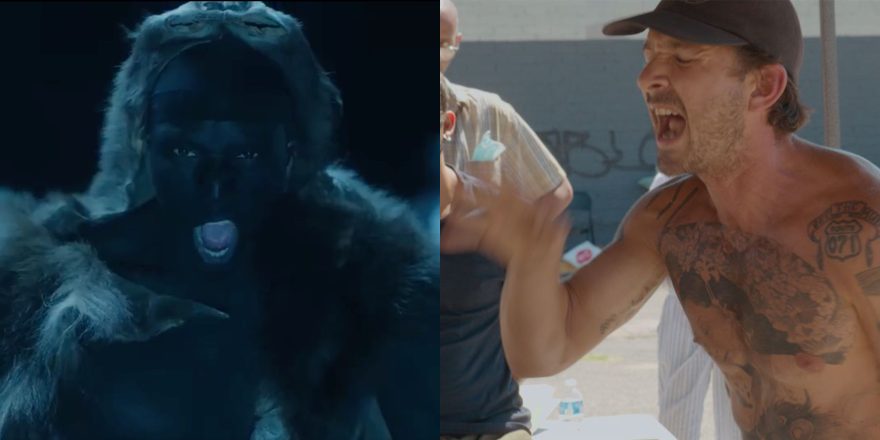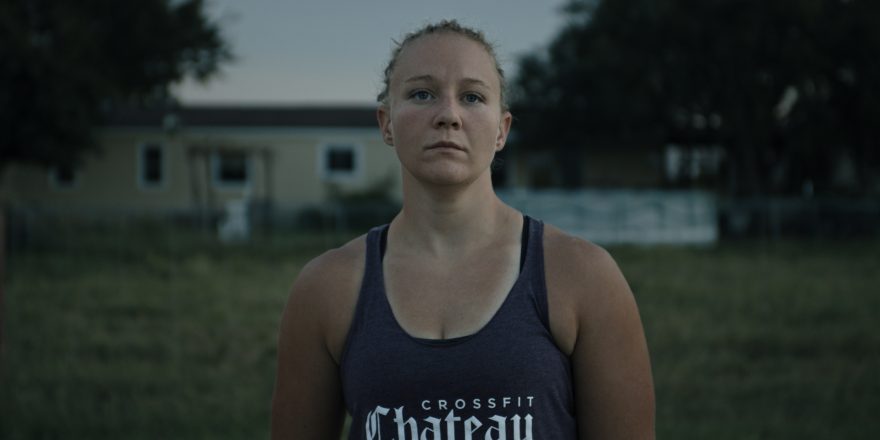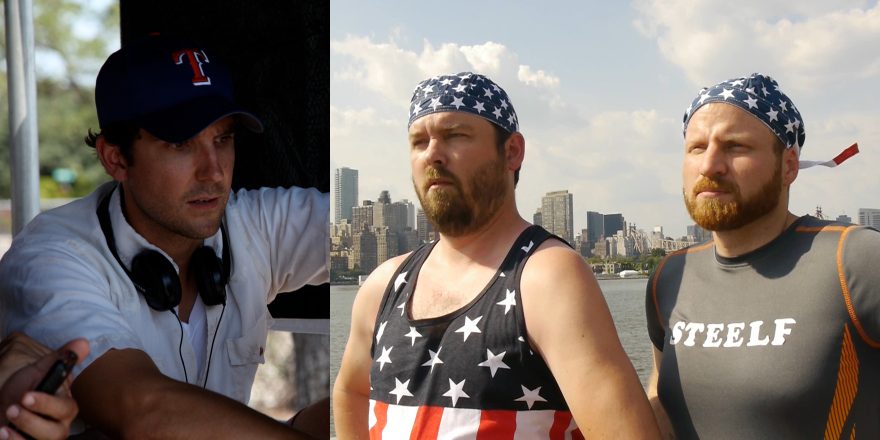


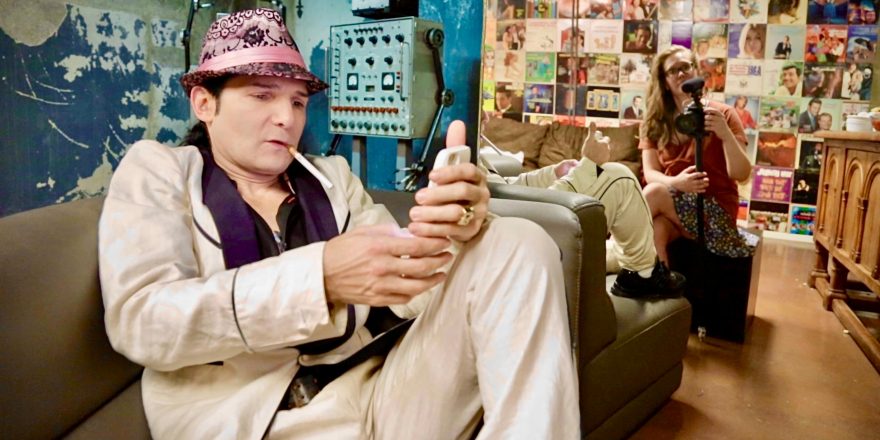

Marcie Hume is the director of the new documentary Corey Feldman Vs. the World, which is now available worldwide on Apple, Google and YouTube. A documentary filmmaker and television executive, she began her career at the BBC in London and has since originated and executive produced series for the BBC and Channel 4 in the UK, Discovery, National Geographic, Lifetime, TLC and A&E in the US. Her feature documentary Hood to Coast (SXSW 2008) is a portrait of endurance, friendship, and the quiet madness of a 200-mile relay. Her award-winning film Magicians: Life in the Impossible (Hot Docs 2016; acquired by Netflix via Gravitas Ventures) is an intimate look at obsession, wonder as labor, and the cost of impossible dreams. In recent years, her work has expanded from documenting wonder to engineering it, bringing the lens into the room through immersive, participant-driven magic. Her live projects range from immersive experiences in Francis Ford Coppola’s New Orleans attic through the Overlook Film Festival to site-specific encounters in unexpected corners on the outskirts of Los Angeles.
There is a moment in every conflict when you decide what kind of person you are going to be. For me, that moment arrived when my own documentary subject, Corey Feldman, publicly accused me of using stolen footage and obtaining footage through dishonest means.
These are not casual complaints. These are allegations that, in legal terms, approach defamation.
The question that appeared was simple and brutal: Do I sue him?
Before the Cease-and-Desist
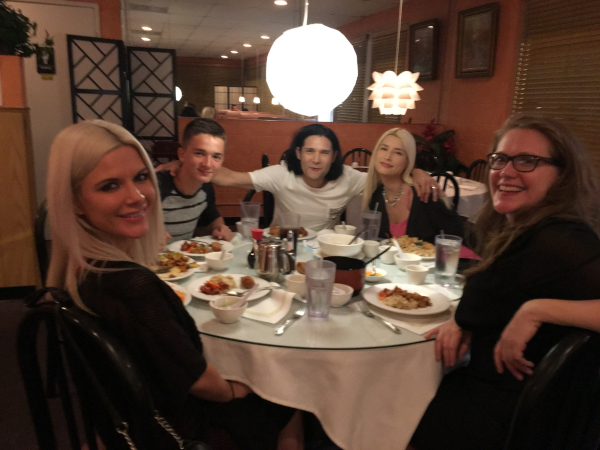
I felt that Corey and I built a foundation of trust over the many years I knew him and filmed with him … first a tape to pitch a TV show, and then during the year we spent shooting my documentary Corey Feldman vs. the World.
At a certain point, however, Corey began making his own film and stopped participating in mine.
By then, the material I had shot had begun to form a larger picture, and in fact the story about one person had become something much more encompassing.
So I finished my film.
Releasing Corey Feldman vs. the World meant accepting that the relationship might not survive the work. I showed Corey the movie a few days before its theatrical premiere. Corey was clear that the he did not want to have to revisit this time in his life, nor the stories of the women whose allegations he had long had to face.
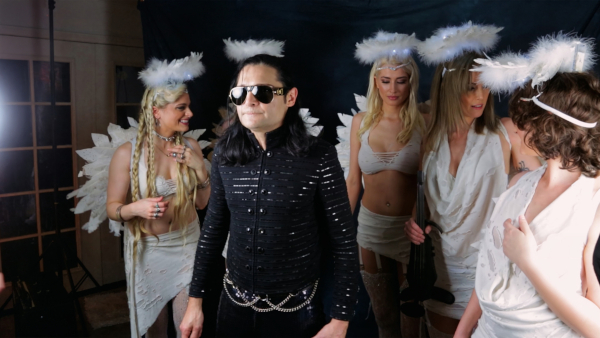
His response included not only a cease-and-desist, but public claims, both from his legal team in press coverage and from Feldman himself on X, that the footage was “stolen” and obtained through “dishonest means.”
There are many ways to respond when someone tries to unwrite your work. The obvious one is force; the less obvious one is form.
If you make documentary films, those kinds of statements feel like an attempt to unwrite the thing the work depends on: good-faith participation and a relationship built over years. Even so, you still read these comments as unbelievable in their untruth.
But the question “Should I sue?” is actually: What kind of documentary world do I want to live in? And what kind of filmmaker do I want to be when I’m under pressure?
Documentary is a Witness
A lawsuit is designed to produce a winner and a loser. Documentary is designed to produce depth of vision. In an era when every conflict gets routed toward online pile-ons or legal threats, the culture is addicted to verdicts. But the documentary form, at its best, refuses simplistic judgments. Documentary is a way of touching complexity.
If I sued Corey Feldman, I would be converting a documentary rupture into a legal contest. Even if I “won,” I worry it might lead the culture to expect something similar the next time a documentarian had to deal with a uniquely difficult subject.
The medium is fragile. The ecosystem runs on a social contract that is largely unspoken: Subjects agree to be seen, and filmmakers agree to handle that visibility with extraordinary care. Both sides accept an aftermath they cannot see, an aftermath that is emotionally unpredictable.
And subjects are usually unhappy with something … After all, it’s almost impossible to watch ourselves. Much of the time, subjects can stomach the complexity of that end result.
But sometimes, a subject will attack the filmmaker. They may rewrite their participation, or even insist that the camera itself was an aggression. All of that is painful. Usually it is unfair or simply false.
But if filmmakers normalize suing subjects for what they say afterward, the implied message becomes: Cooperate with us, or else. Instead of witnessing our lives, documentary becomes a kind of cage.
Power Continues Off-Screen
Documentary filmmakers already hold a certain power: we choose the frame and decide what goes in and what stays out. Every film is very much an authored object. And as distribution becomes more user-friendly and films can instantly reach a global audience, the asymmetry grows with it. So we must know what to do with our power, even when we’re tested or provoked.
If the filmmaker’s response to a subject’s accusations is “I’m going to court,” we quietly transform the relationship between subject and storyteller into something closer to a warning label.
And then we shouldn’t be surprised when fewer people participate, or when our beloved subjects start lawyering up or becoming more performative and, worst of all, sanitized. That would encourage the opposite of the depth and openness we’re searching for.
So my refusal to sue is a boundary around the medium itself.
To Be Shaken for a Moment
The phrase “dishonest means” does one thing: it makes the work feel contaminated to anyone who hadn’t looked closely.
At that point, I considered what made me commit myself to documentary in the first place: its unique ability to see the human experience from a particularly joyful and optimistic perspective. Documentary makes me my best, most empathetic self. Doc filmmaking demands of us that we be our most curious, giving, unbiased, unshakeable person for those we are inviting to be part of our work. And that allows us to get the best out of our subjects: their most authentic moments, and often the most vulnerable parts of them.
But documentarians cannot demand vulnerability and then punish the backlash. Not if documentary wants to remain a serious form. Not if we want it to remain a humane one.
So I refuse to set the precedent that a filmmaker’s answer to a subject’s public disavowal is legal force.
A film is not a hostage negotiation. As always, this work will stand on its own. When you build your life around witnessing others, you don’t abandon that practice the first time the witness turns their gaze and the mirror back on you.
Featured image shows Corey Feldman and Marcie Hume during the making of Corey Feldman Vs. the World; all images courtesy Marcie Hume.