

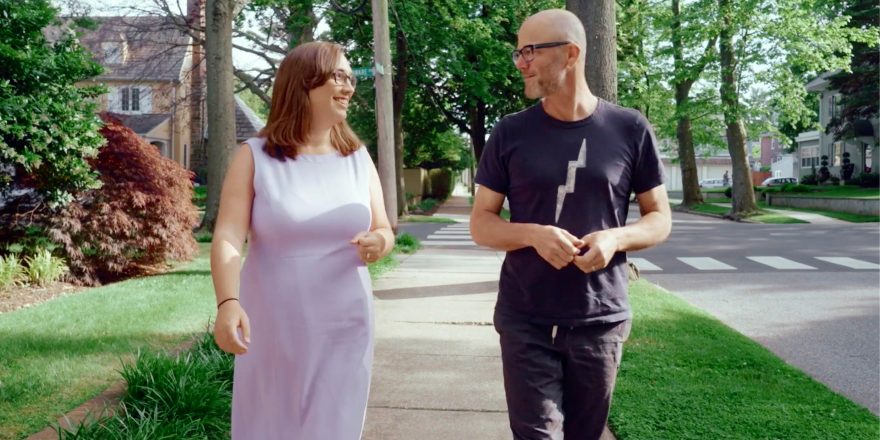
Benjamin Wagner’s new documentary feature, Friends & Neighbors, which addresses the current mental health crisis by “looking for the helpers” in post-pandemic America, is now streaming on PBS and is also available on video on demand on Apple and Amazon. Made his Wagner Brothers filmmaking partner and brother, Christofer, Friends & Neighbors was inspired by Benjamin’s podcast of the same name in which he speaks with CEOs, artists, authors and athletes about cultivating depth and simplicity in complex times. Benjamin also researched, wrote, voiced, scored, produced and co-directed the brothers’ 2012 PBS documentary, Mister Rogers & Me, which explores the roots of TV icon Fred Rogers’ values, unmasks the forces acting against depth and simplicity, and helps viewers develop the means to lead deeper, simpler lives.
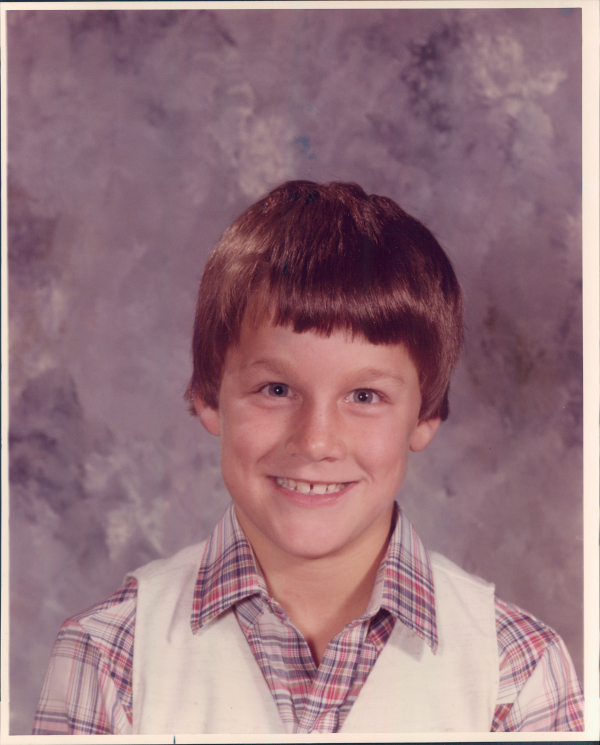
I was nine the first time I remember wanting to disappear. My parents were arguing again – yelling, stomping, shaking the house. I sat at the dining room table, tracing the same word over and over in my spelling workbook: escape.
Mom wagged her finger in Dad’s face, shouting, “Coward!” He grabbed her by the throat, shoved her into the front hall closet and slammed the door. I dashed down the basement steps, buried myself under a pile of winter coats and sobbed in the darkness.
That’s where I learned something simple and powerful: if you can’t change what’s happening, you can at least try to get away from it. In the moment, it works; your body settles just enough to survive. But over time, that reflex can turn on you; what begins as protection becomes routine. You start to leave not just danger, but discomfort, conflict, uncertainty – even connection. The body learns to leave before the mind gets a say.
That’s part of how I ended up making Friends & Neighbors, my new documentary about trauma and chronic stress. In the 70-minute PBS film, I return to the actual locations my most painful, overwhelming experiences – times and places when escape was less of a choice and more of a lifeline – and look for the people helping others find something different: steadiness, connection, a way to stay.
How did I get here? What did I learn? And why did I put it on film?
Escape, it turns out, is a powerful teacher. It’s a form of negative reinforcement: whatever brings relief, even briefly, becomes something to return to. Hiding. Running. Drinking. Working. Getting high. Losing yourself in a movie theater. Filling your life so completely there’s no room left to feel what’s roiling underneath.
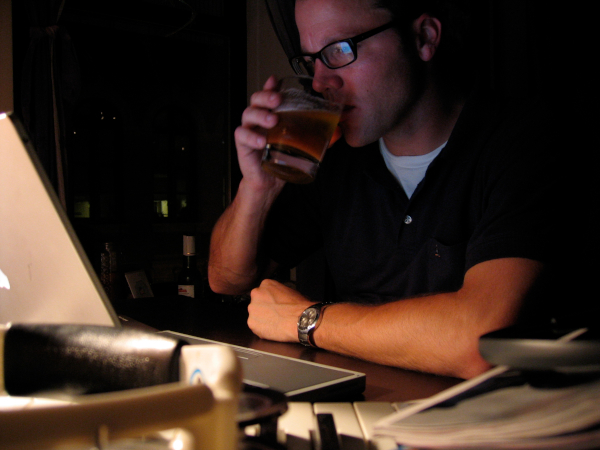
“Trying to get away from pain is an evolutionarily ancient survival impulse,” psychologist Dr. David Sbarra told me. “You feel terrible, so you do something that reduces or ends that feeling, and because it works, you’re more likely to do it again the next time discomfort shows up.”
Even when it keeps you stuck.
In the silence that followed that fight and preceded my parents’ extended, acrimonious divorce, I escaped into music. Sinking into our plush brown carpet with over-ear headphones and a stack of Styx, REO and Journey records, flipping through Rolling Stone magazine, I imagined a different life where the chaos in my house was translated into something coherent, something shared – something that might save me. Something that would at least take me somewhere else.
I escaped into movies, too, remaking The Greatest American Hero, Grease and the long-forgotten Clint Eastwood jet-pilot thriller Firefox on my dad’s Super 8 camera. I’d watched those films at the nearby Lake Theatre, where I saw Raiders of the Lost Ark eight times. Anything to avoid the pain of my parents’ bitter sniping.
In the years after my mom packed my brother, our Springer Spaniel, Alfie, and me into the family station wagon and moved us a thousand miles east from Chicago to Philadelphia, I spent hours flying between my parents, white-knuckling takeoffs and landings. The strain of connecting and disconnecting from them was made manifest in my body – the chest-pounding race down the runway, and the bone-rattling return to earth that still unsettles me today.
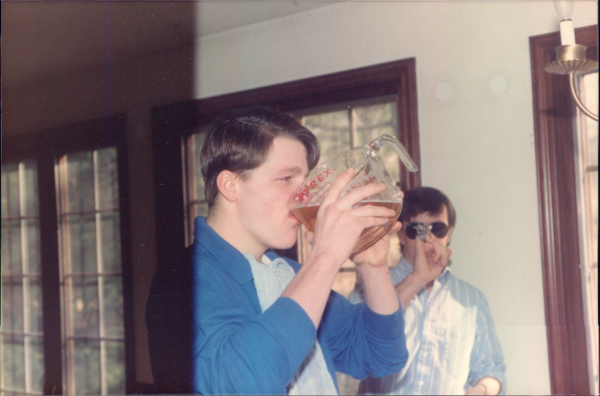
Soon enough, in the waning hours of those long, latchkey afternoons, I found alcohol, then pot – the warm numbness, the soft buffer between me and whatever I didn’t want to feel.
When I was assaulted by a classmate in the parking lot of a Wawa on the last day of my junior year, I began getting high all day, every day. That escape felt necessary, as the shock, shame and confusion were unbearable.
That same impulse to escape carried me into singing, songwriting and performing in scrappy rock bands; if I could write it down, sing it out, move it through my body, I might understand it – or at least shake it loose. As long as I didn’t have to sit still with it, talk about it or actually feel it.
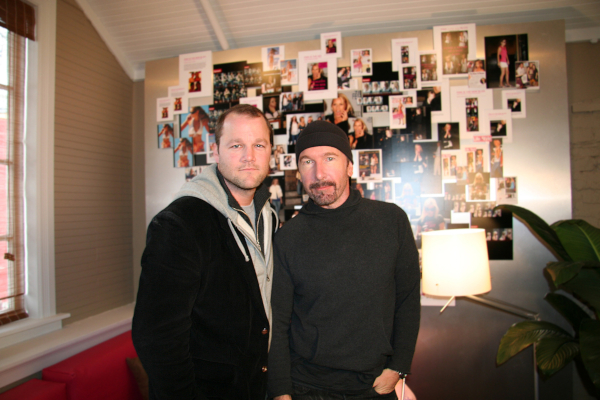
Achievement was another way. I graduated from Syracuse with dual degrees and a solid GPA, landed a job as a features reporter at a small upstate paper, then moved to Hell’s Kitchen, where I networked my way to gigs at Rolling Stone and MTV News. To take the edge off the constant pace, pulse and pressure of New York City, I stayed stoned for years.
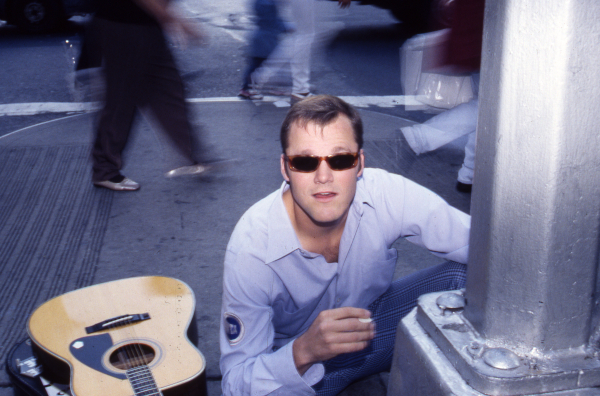
The impulse showed up in my albums too, including one released just weeks after September 11, 2001, called Crash Site. The title track narrated my parents’ divorce from the perspective of a downed jet’s black box recorder. “Leave my body where it was found,” I sang – a line circling something I didn’t yet have language for but somehow understood: the body holds what the mind can’t outrun. It keeps the score. And until we face it, we keep finding ways to leave it.
Making records brought meaning, and the shows – Mercury Lounge, CBGB, Rockwood Music Hall – came with their own escapes: bottomless pints, endless cigarettes, flirting in half-light, and casual hookups. It got me out of my head, but further from my body.
As the pressure built climbing the ranks in MTV’s relentless 24-hour news cycle, I kept moving – producing, performing, escaping. When running the news operation got to be too much, I’d slip out of our Times Square offices and into the cool, dark AMC Empire across the street to disappear into someone else’s story.
And I actually ran, pounding out loops around Central Park every morning, 10Ks every weekend, and marathons every year – 10 in a row – convinced that my body would submit to my will; that the marathon wasn’t about readiness, but about my brain’s capacity to push through pain. Still, I noticed wear: my lower back ached and seized, my hips grew tight and tender, my hamstrings burned. One doctor shot my legs full of platelets. Nothing. Another peppered my lower back with steroids. Nothing. I popped Excedrin like Tic Tacs and grew accustomed to constant ache.
I struggled with depression, anxiety, nightmares and chronic headaches, heart palpitations, odd dermatological outbreaks and an eventual hospitalization. Still, I kept pushing. Doctors asked, “Are you under any stress?” As if the answer wasn’t self-evident.
In 2014, I leapt from the frying pan into the fire, trading MTV News for Facebook. Within 16 months, the product I led, Trending, became front-page, primetime news. There was no malfeasance, but it didn’t matter. Congress called for an investigation, the global press closed in, and I felt nauseous for weeks. My system was on high alert, fight-or-flight lit up like a Christmas tree. I coped with alcohol, Xanax, Paxil, and wrestled with fitful, fractured sleep.
And then I started traveling: Seattle, Singapore, Sydney, Hong Kong, Jakarta, Kuala Lumpur, Manila and beyond. The longer the flight, the better. Eighteen hours of transoceanic white noise felt like relief. I’d wash a Xanax down with champagne, wake somewhere over the Arctic, order a cheeseburger and watch back-to-back movies.
It wasn’t until my wife and I moved our young family to her quiet, leafy hometown of Wilmington, Delaware, just before COVID, that something began to shift. The pace slowed, the noise fell away, and for the first time in a long time, I had nowhere to go – no deadlines to chase, no flights to catch, no dark theaters to slip into – and no real way to outrun what I’d been avoiding for decades.
Like millions of Americans who reached for whatever would take the edge off during COVID – more drinking, more weed, more pills, more doomscrolling – my escape trajectory deepened.
When we finally saw a therapist and I laid it all out, he said simply, “Sounds like you’re dealing with a fair amount of post-traumatic stress. It makes sense you’ve been avoiding what hurts – most people do. And in a world that offers endless ways to escape our pain, avoid our feelings and numb out, it’s easy to keep doing it.”
I began to trace a line from the basement to the headphones to the stage to the newsroom to the plane to the bottle – a lifetime of trying, in one way or another, to get away from what my body insisted I feel.
And I began to see same the pattern everywhere in the post-COVID reality around me: the rage of January 6, the outbursts in parking lots, the struggles of kids with screens, the isolation of communities, the chronic stress of a nation. What felt deeply personal was, I realized, profoundly universal. I wasn’t alone, I was surrounded.
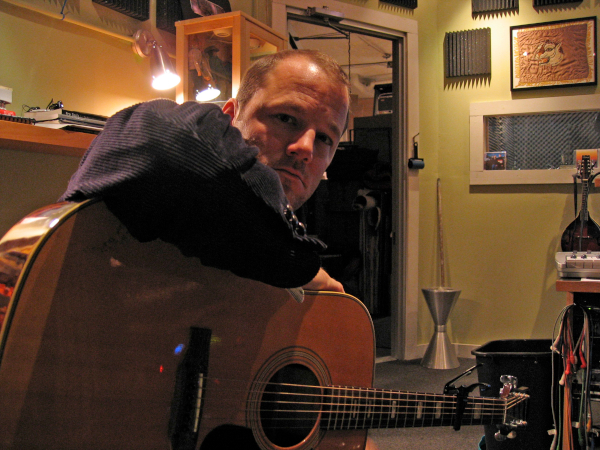
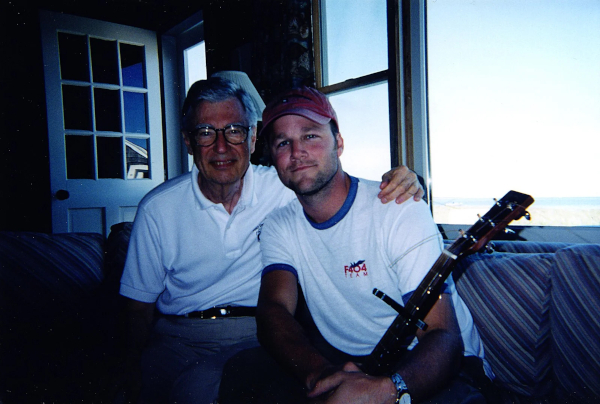
I got into therapy, got sober, and picked up a camera. Inspired by the advice of my onetime actual neighbor Fred Rogers – the subject of my first PBS documentary, Mister Rogers & Me – to “look for the helpers” in times of trouble, I set out to find some.
And I found them everywhere: policymakers working to reshape systems, educators and storytellers helping people feel seen, practitioners working directly with how stress lives in the body. People creating small, tangible ways back to steadiness, presence and connection.
Leaders like and U.S. Representative Sarah McBride, elevating the role of belonging and human connection in public life; Delaware State Representative Alonna Berry, advancing trauma-informed systems across government; and Logan Herring, CEO of the WRK Group, addressing the long-term impacts of inequality through food, housing and health. Educators and storytellers like Anne Kubitsky, founder of the Look for the Good Project, bringing social-emotional learning into schools, and Michael Tyler, an award-winning children’s author transforming his own childhood trauma into stories that help young people feel seen. And practitioners working at the level of the body: Matthew Tousignant, a somatic psychotherapist helping people process trauma through sensation and movement; Kelli Rae Powell, a board-certified music therapist and EMDR practitioner using rhythm and bilateral stimulation to support healing; Lauren Scott, a school counselor guiding students in emotional awareness and regulation; and Winden Rowe, director of the Center for Change, reframing trauma as something widely experienced and deeply human.
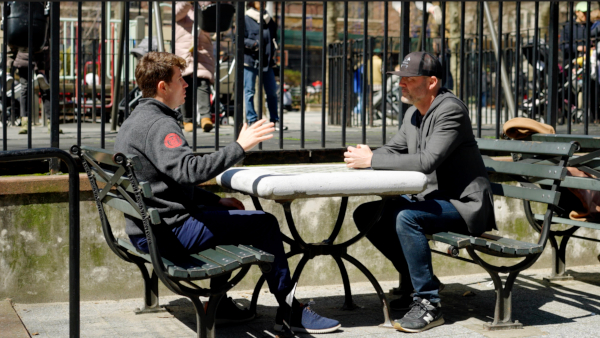
And what they showed me – what Friends & Neighbors makes clear – is that staying isn’t abstract. It’s physical. It’s practiced. And it’s as simple – and as difficult – as learning how to notice what’s happening in your body and not immediately run from it: slowing your breath, naming what you feel, letting a wave of discomfort rise and fall without numbing or fleeing. And moving – walking, singing, dancing, swaying, exercising – so the stress has somewhere to go. And reaching for another person instead of retreating from them – staying long enough for something to shift.
I also began to see that not all escape is empty. Some of it comes with a return: songwriting that becomes understanding, films that are born from dark theaters, the attunement of playing music with others, the simple act of breathing differently when you sing. Small shifts that point to something else available to all of us – not escape, engagement.
I’ve started writing songs again, and I’ve noticed a change: I’m writing less about leaving, and more about staying. One lyric comes to mind:
When gravity has come unbound
And the world is turning upside down
And your feet are falling off the ground
You find a way; these are the best days
These are the best days. Not because things are stable, but because I’m learning how to stay steady through the inevitable stress, uncertainty and overwhelm of being alive. We can all learn and practice this stuff.
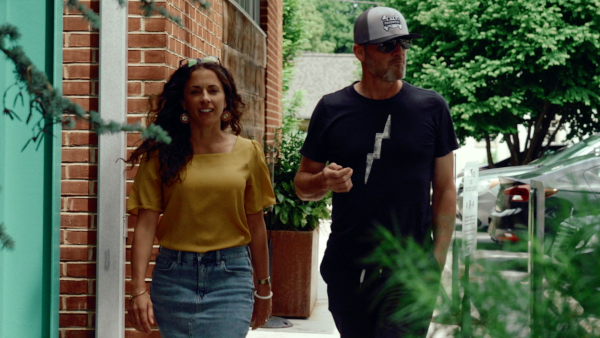
And now, as Friends & Neighbors premieres, it’s so clear how wrong I got my prepositions all along: the way out isn’t away from it, around it or over it, it’s through it. It’s not about leaving; it’s about learning to stay long enough to feel it, process it and heal it.
Fred Rogers had it right. Often, what’s most personal is most universal. And in looking for the helpers, I found something I hadn’t been able to outrun – a way back to myself, and a way to show up for others.