



Matt Johnson was born and raised in Toronto and is the writer-director of The Dirties (2013), Operation Avalanche (2016) and BlackBerry (2023). He is co-creator of the cult comedy series Nirvanna the Band the Show (2017-19), the predecessor to the new film Nirvanna the Band the Show the Movie, which is being released by Neon on February 13, 2026. His next film is Tony, a biopic about young Anthony Bourdain starring Dominic Sessa and Antonio Banderas.
Three Great Things is Talkhouse’s series in which artists tell us about three things they absolutely love. To mark the February 13 theatrical release of the new mockumentary time-travel adventure Nirvanna the Band the Show the Movie, written by and starring Jay McCarrol and Matt Johnson (who also directed), Canadian multi-hyphenate Johnson – possibly best known for his 2023 film BlackBerry – shared some of his favorite things. — N.D.
John Updike
When I first read John Updike in high school, I just didn’t get it. I didn’t understand any classic literature when I was young. But when more recently I reread Rabbit, Run, the first of the Rabbit series, I was like, “Whoa, what the hell?” I couldn’t believe someone was able to write like that, and then I just started devouring everything that he ever wrote.
My absolute favorite of his books is a novel he wrote in the ’70s called The Coup. It has some echoes of A Confederacy of Dunces; the protagonist of The Coup is a larger-than-life, hyperverbal ne’er-do-well like like Ignatius J. Reilly, but he also happens to be the dictator of a French colony in Africa that has just regained its freedom. He has a number of different names, including Happy, and he’s so obsessed with women that his empire is crumbling around him. Anyone who likes A Confederacy of Dunces should definitely pick up The Coup – every single page is incredible and so funny.
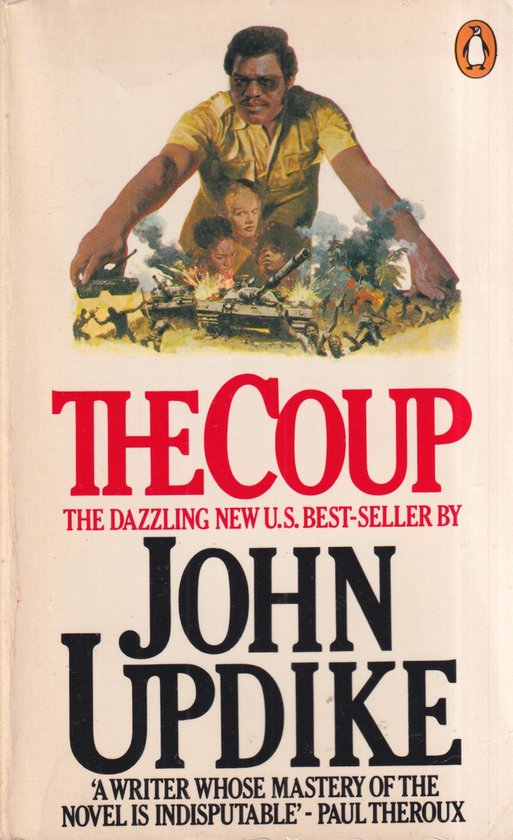
When I was reading The Coup, I was writing down every third sentence, so I’ve got an interlinear exchange with the entire book. I think there’s something about great writers that when you find them, it’s more like they found you. It’s like they are alive and they’re reaching out to you. To say Updike has changed my life is such a critical understatement. I came late to reading – when I was young, I only read comic books – so finding someone like John Updike at this advanced age has completely and totally changed me.
I have a philosophy that I never, ever read a book for pleasure that I think would make a good movie. I’m a firm believer in the idea that if something that really works as a book, it’s working because of the poetry of the language. And I am not a talented or sophisticated enough visual storyteller to figure out how to transpose that verbal symbolism into actual symbols.
Hades II
I really love the recently released video game Hades II. The studio that made it is called Supergiant Games, which previously also created Bastion and Transistor. For me, in the world of independent video games, Supergiant is the best working studio in the world and they began very much like an independent film company. It was a small group of people developing games, using the limitations of what an indie developer can do, but taking it right to the max.
The first Hades game is such a brilliant use of the underworld of these mythological characters; you’re playing an action game, having fun, but there’s an amazing depth both in the art and the voice acting that really opened me up to Greek mythology and made it so real to me. It brought these characters to life and got me so interested in not only the main Greek deists, like the Mount Olympus gods, but also all of the little stories, like Arachne.
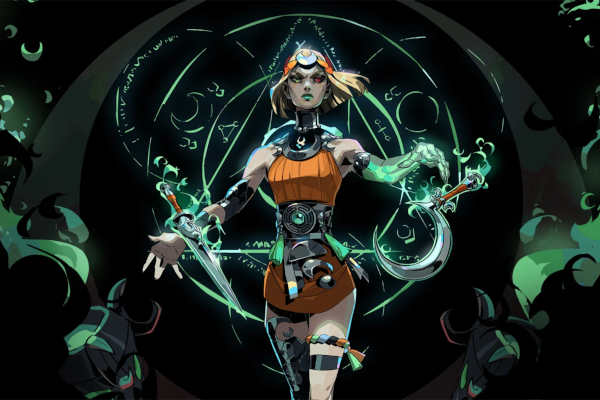
I have stolen tons of shit from all the little myths that make up the full tapestry of Greek mythology for the new movie I’m making, Tony, about Anthony Bourdain. A lot of it is inspired directly by both the Latin that I picked up reading these myths because of the Hades games and the actual mythic stories. Bourdain obviously was a real wordsmith, but having a connection to the Latin that he learned in the 1970s in high school made everything connected for me.
Whenever I am writing a movie, I always try to find tangential pieces of media to absorb that aren’t movies. They can be books, games, board games or documentaries, and I’m always trying to get just one little idea from each of them. Hades II is already a best-selling game that doesn’t need a boost from me, but it is incredible and Supergiant changed my life.
Magic: The Gathering
My third thing is the original collectible card game, Magic: The Gathering. I think Magic does not get enough credit for how it basically inspired an entire generation of readers. As a kid, I was allergic to words. In my ignorance, I thought reading was silly, because it was intimidating to me – learning to read is really hard when you’re five years old!
But Magic: The Gathering has a math-driven game system that forces you to learn how to read, and that is what I credit with my literacy. The fact that I can even read is because I have been playing and reading about that game since I was six or seven years old. Magic is truly my vade mecum – I can’t get away from it and I carry it with me wherever I go.
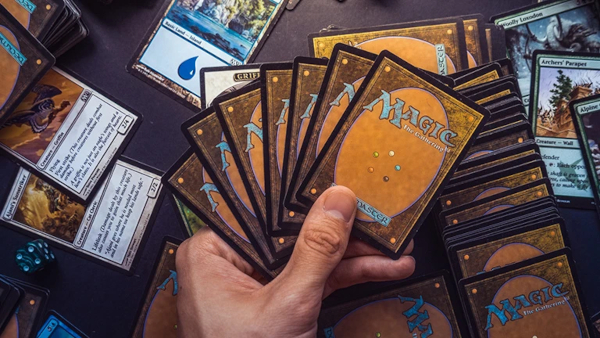
I wanted to be a competitive Magic: The Gathering player when I was young, but I gave it up to become a filmmaker. Nevertheless, I still owe Magic in the same way so many filmmakers owe Star Wars or those early Sam Raimi horror movies. I’ve not played it seriously in years, but if through some bizarre miracle I got invited to go play on the pro tour, I would drop everything to do that. When I was in film school, I went to the Magic: The Gathering Grand Prix in Detroit in 2006. I made Day 2 and finished in the top 32, but I really wanted to make it to the top eight, because that would have meant that I’d made it. After that tournament, I felt like I couldn’t take the game seriously enough to go pro, so I decided to focus solely filmmaking. Who knows, maybe I made the wrong call!
Right now, my approach to storytelling and filmmaking stems from what I’ve learned on a podcast called Drive to Work, which has been hosted by the lead Magic designer, Mark Rosewater, since 2012. All he talks about is communication and game design, and all the tools that I use to build the world of Nirvanna the Band – to write scripts, to tell stories, to approach editing, to think about audience – are all stolen from this podcast. The way that Magic approaches world-building comes from a beautiful concept called lenticular design. “Lenticular” refers to a lens, and the concept is that you have a number of playing pieces which allow a beginner to understand immediately what’s useful or not useful about them and how they will help them play the game. But idea is that same piece, through the lens of somebody who’s played the game many times, will be seen in a way that’s much deeper, much richer. My whole career, I have been trying to recreate this lenticular design principle in my work, and of course I fail all the time, but I love the idea of making work can be viewed simply or in a very complicated way, and both those readings are right.
Featured image, showing Matt Johnson (left) and Jay McCarroll in Nirvanna the Band the Show the Movie, is courtesy Neon.