

Baltasar Kormákur is an Icelandic actor and filmmaker whose work spans theater, movies and television. His latest film, Apex, starring Charlize Theron, Taron Egerton and Eric Bana, is now streaming on Netflix. He is the director of Icelandic films including 101 Reykjavik, The Sea, Jar City, The Oath and The Deep, the latter of which was shortlisted for the foreign language Academy Award. Since 2008, Kormákur has directed and produced several non-Icelandic features, such as Contraband, starring Mark Wahlberg, Ben Foster and Kate Beckinsale; 2 Guns, with Denzel Washington and Wahlberg; the epic adventure movie Everest, with an ensemble cast featuring Jason Clarke, Josh Brolin, John Hawkes, Sam Worthington, Emily Watson, Keira Knightley, Robin Wright and Jake Gyllenhaal; the ocean survival tale Adrift, starring Shailene Woodley and Sam Claflin; and the survival movie Beast, starring Idris Elba and Sharlto Copley.
Three Great Things is Talkhouse’s series in which artists tell us about three things they absolutely love. To mark the release on Netflix of director Baltasar Kormákur’s new wilderness-set thriller Apex, starring Charlize Theron, Taron Egerton and Eric Bana, veteran Icelandic filmmaker and actor Kormákur shared some of the things that bring him most joy in life. — N.D.
Riding Horses in the Icelandic Highlands
Every summer, I go on a trek, riding a herd of horses through Iceland’s volcanic landscape. That’s my favorite thing to do when I’m not making films.
I started to ride horses when I was a child, and then began breeding them and training them and competing on them. I was an active kid so I did a lot of other sports when I was young, but riding’s the one that really stuck. In my early 20s, I started doing trips with my friends, going out for a week or two weeks, trekking horses through the Icelandic Highlands and riding for 12 or 14 hours a day. Over time, the trips got longer and longer, and it’s become an existential test of endurance – not physical, but mental. I’ve done that pretty much every summer since I was a young man and I’ve probably been on every mountain and field in the Icelandic highlands.
On these trips, everyone is very excited at the start. Early on, we would ride the hard course, which meant we had to carry our own food, as nobody could send it on to us. In the end, we’d end up just having noodle soups and hard dry fish. Riding for so long every day impacts you a lot physically. You quickly get a sore butt and aching thighs, but then after a few days, you stop feeling it. You can’t really bathe, but you don’t feel dirty. You just become part of the earth, part of nature.
I use these trips to get away from the hustle of my work life. Mostly I ride with my old friends, who are not in the film industry, but are carpenters and shoe salesmen. The trips are physically and mentally captivating and take all of you, but they somehow make me rested and allow me to be ready for the coming winter, for the mental challenges in my work. I am restored by getting physically and mentally tired, but it’s a different kind of tiredness than from my work. It’s almost like a religious experience, a rebirth through this endurance of nature.
Shooting in Wild Places
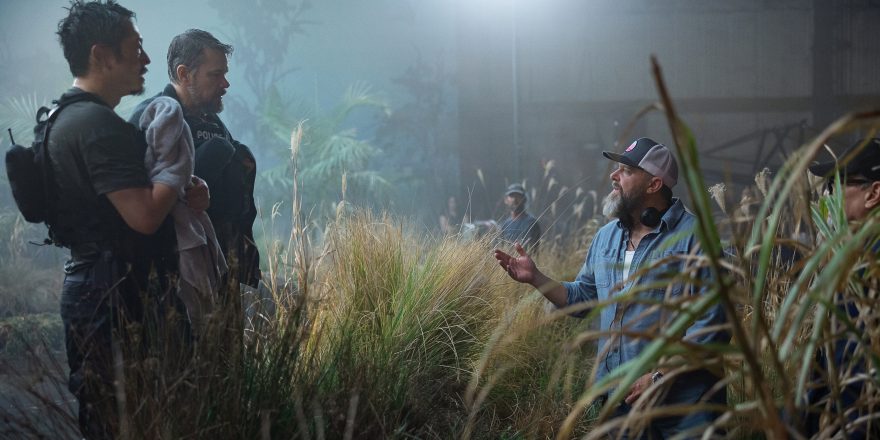
I love shooting in places that are unsuited for making a film, places that in some way reflect experiences I’ve thrived on in the past. I somehow try to give to audiences that experience through the actors, through the performances, and to let nature take over. That way, place you’re shooting becomes a character in your movie rather than a backdrop, and plays an essential role in the outcome of what you’re approaching.
I don’t think I specifically look for projects set in extreme environments, but when they come to me, I have a hard time resisting. A project needs to have other elements that interest me, too. I just look for stories that interest me, and it often tends to be that films like Everest or Apex find me, rather than I find them. I’m never thinking, “Oh, I have to find the next outdoor project …”
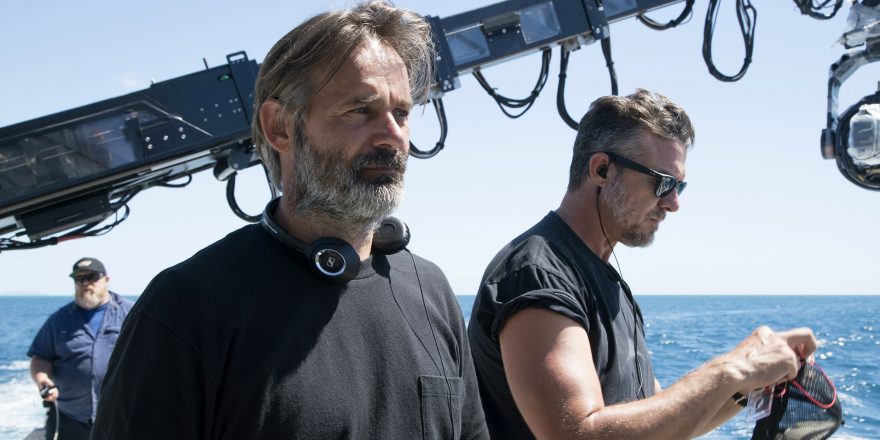
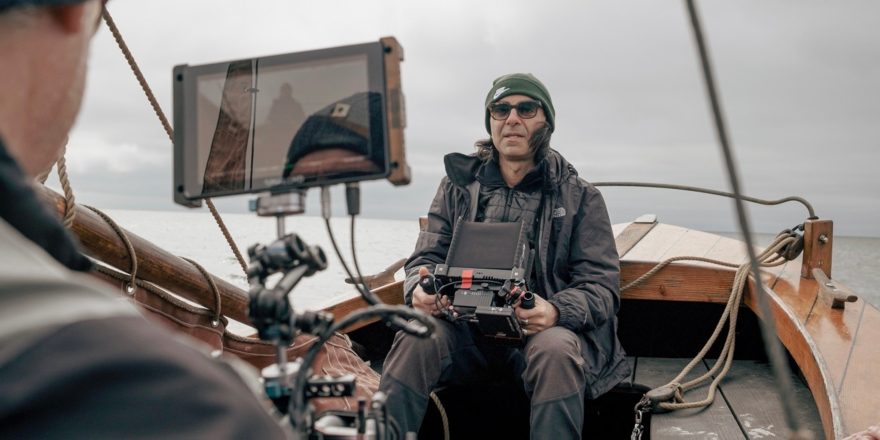
When I make films in extreme places, I tend to find the right collaborators. When I was shooting The Deep (out in the North Atlantic Ocean), one of the camera crew got seasick and I remember thinking, What the hell is this guy doing here? Why would you ever sign up on a film like this if you have that problem? We had to send him home, of course. Whether it’s choppy seas, intense cold or something else, the wrong people fall off pretty quickly in extreme conditions, but some people surprise themselves with how well they cope. The thing is, it’s not about physical strength, it’s mental endurance. Muscular guys are great in the gym, but they’re not great at high altitude on a mountain or hanging off a cliff. It’s more your mental strength that will get you through.
Family
I have six children. If I think about what I love to do, what comes to mind is just spending time with my kids, taking them places, doing things together. Most of them are grown up now, and they have all become very good friends of mine. I feel best when I’m around them.
As a parent, what I really want for them is freedom. The freedom to find what it is they want to do, rather than me trying to push them in any particular direction. I found my calling through having the opportunity to try out different things. In the end, I know if I give them the freedom and the tools to discover what direction they want to go in, they will find happiness. I think it’s rare to find people who are really happy if they’re not doing what gives them a sense of fulfillment, so I think that’s the first step.
A few years back, I made a thriller called The Oath, about a father who is trying to save a daughter from drug abuse. In the process, the government asked me to visit schools around Iceland to discuss some of the issues in the film, but I quickly discovered that was pointless. Instead, I started talking about how these kids could find happiness by listening to their intuition, instead of parents or teachers. I thought that was much more effective, rather than saying, Oh, you shouldn’t be doing that … Because once you find what makes you happy, the other things fall away, because you don’t need them. So I basically went to every little village school in Iceland and told the kids how I got to live my out my dreams, so that I could inspire them, rather than being an authoritarian telling them what to do and what not to do. That philosophy definitely comes from how I think about parenting.
Although my kids are mostly grown, I think I’m always going to be a parental figure to them in some way, or at least I hope so. But for me, things change when your kids become your friends, and that only happens if they enjoy your company rather than your parenting. I’m very lucky that I now work with my older kids, so we have become comrades in work and found new trust. Because professional relationships are different, that helps me learn new things about them and see them in a different light.
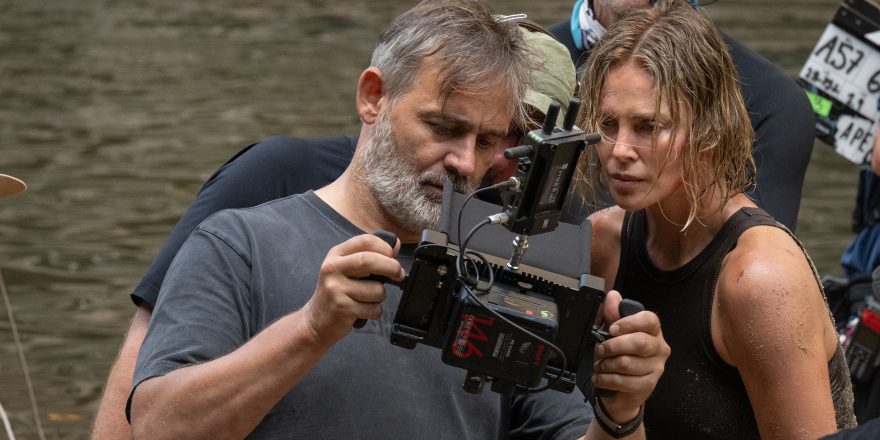
Featured image, showing Baltasar Kormákur and Charlize Theron on the set of Apex, is by Kane Skennar/Netflix.