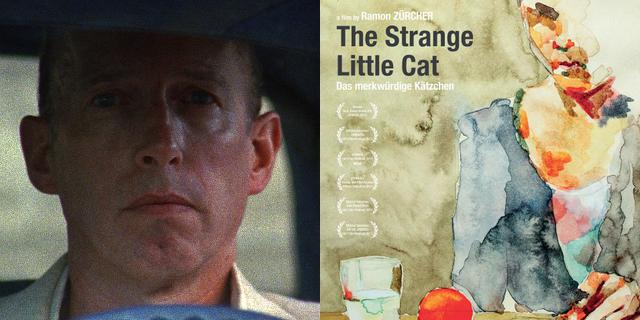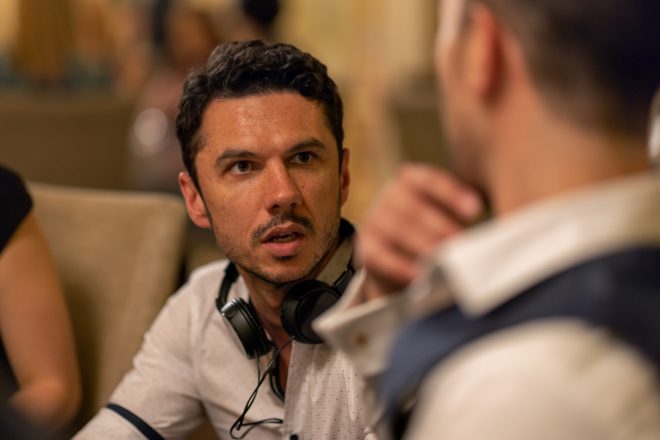



Ramon Zürcher is a Swiss writer-director whose latest film, The Sparrow in the Chimney, is now on digital. His first feature film, The Strange Little Cat, premiered at the Berlinale Forum in 2013 and was selected at over 80 festivals, including Toronto, Cannes, New Directors/NewFilms and Mar del Plata, winning numerous awards. His second feature film, The Girl and the Spider, also premiered at the Berlinale, where it was awarded the prize for Best Director and the FIPRESCI prize of the Encounters section. In Cahiers du Cinéma, the film ranked eighth on the 2021 Best of the Year list. The Sparrow in the Chimney is his third feature film and he is currently writing a youth drama with the working title The Young Woman with the Crowbar. (Photo by Iris Janke.)
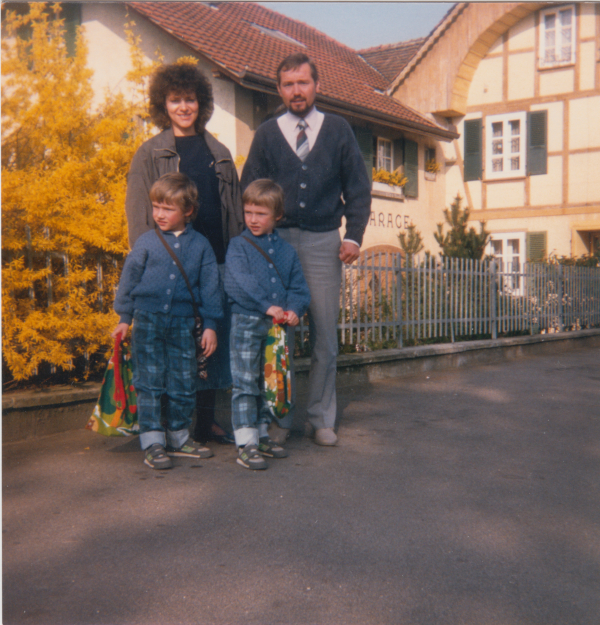
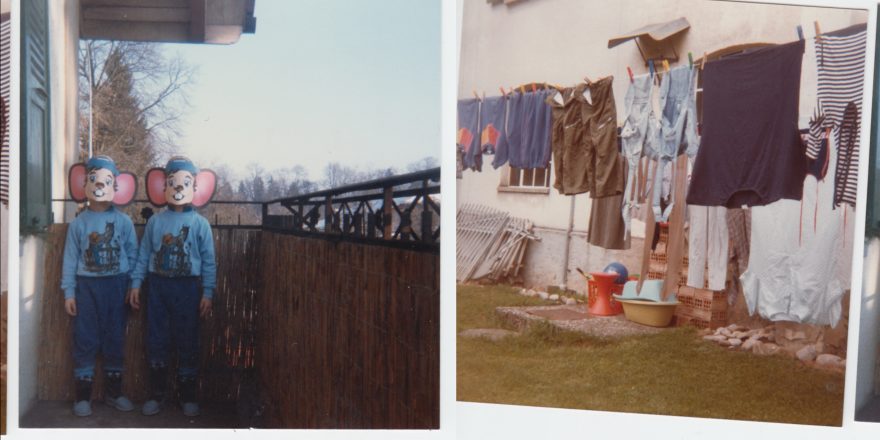
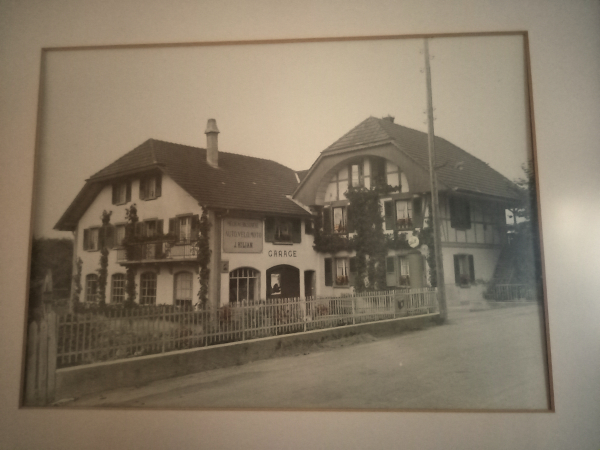
The first apartment my twin brother and I lived in with our parents was a two-story apartment in a traditional, old half-timbered house. It stood in a small village in the Swiss western midlands, between the Jura and the Alps, not far from a canal. The house was part of a quirky apartment building. Like Siamese twins, the two houses had merged together, as if clinging to one another for stability, as if they needed each other for company. As if they were keeping each other warm, or suffocating one another, frozen in a loving embrace. A building like a beautiful eyesore, organic, harmonious. In which we lived between 1982 and 1993, in a cozy, imperfect and, precisely for that reason, lively apartment that our grandfather had renovated for us in a not-entirely-professional manner, before we moved in. He had installed radiators, wood-paneled the walls, tiled the hallway and kitchen floors with mosaics and built an internal staircase that connected the two floors. The staircase was so steep that every step had to be cut down to size and could only fit either a right or left foot at any given time. The staircase dictated how it wanted to be climbed. Every now and then, someone would fall down it, but that, in a way, was part of our self-willed staircase’s peculiar game. It’s a wonder no one ever plummeted to their death, onto the gray carpet in the living room, where the little magical box stood. Our tube TV, on which we watched our first movies. That lured us into the world of moving images, mysterious stories, ambivalent moods, and never let us go. Beside the moving images, there were also static images in the apartment. In the hallway, for example, hung a black-and-white photograph from the ’50s, an image of the Siamese twin: overgrown with vines, potted geraniums on each window sill, but no people. They were all hiding or were already ghosts, even back then. Out on the sidewalk was a gas pump that belonged to the bike repair shop our grandfather had taken over in the ’50s. Whenever he wasn’t in the workshop, our grandmother filled the strangers’ gas tanks and cashed in. Slightly annoyed about getting her hands dirty and having to cook for five kids, which didn’t leave her much time to dream. The family of seven lived in the apartment that smelled of petrol, directly above the workshop. The oldest child was our mother.
Up until now, my films have largely been characterized by chamber play-like narratives that shape the familial living space. Audiovisual sculptures of family psyches, projected onto undulating living spaces. Perhaps this is the case, because the rooms of my childhood and adolescence accompany me like fragile ghosts. Ghosts that cling to me, like the scent of my skin …
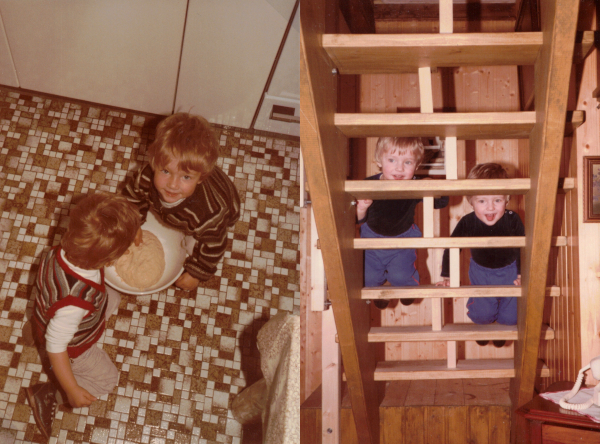
So when we were born in 1982, our grandfather built out the apartment next to my grandparents’ for us. That is how the cozy, makeshift apartment came into being. When the tanks thundered down the street on their practice runs, the glass cabinets rattled. When mice scurried across the room, our mother would scatter onto a chair, screaming, banging on a plastic bucket to scare them away from her. When a jar of candied fruit fell onto the kitchen floor, the mosaic tiles that had come loose over the years, would stick to our slippers or the soles of our feet for days. Our mother would then gather all these tiny, wayward pieces and stick them back down where they belonged with a fragrant glue. For a brief moment, the gray concrete screed and a tightly meshed netting became visible, on top of which she would stick the broken away pieces.
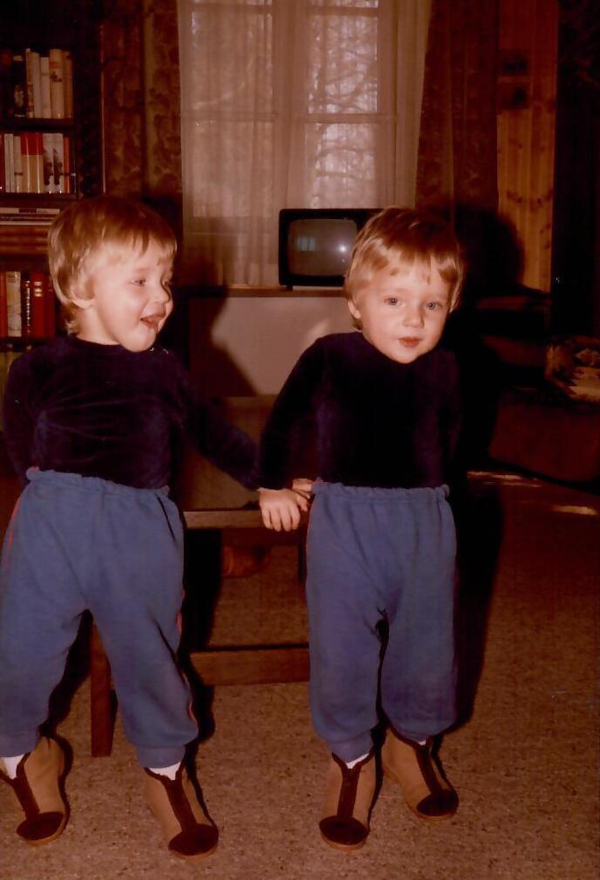
When we were 11 years old, we moved out. We moved into a perfect house. It was a museum for furniture and beautiful objects, where we didn’t want to leave a scratch and where the new chrome steel wasn’t to be tarnished by limescale. The unwritten rule was, that the house should always remain new and never be tinkered with. This house popped up like a flower at the back of the field, where once sheep grazed and where we had planted our vegetable patch. Where the bush beans and strawberries grew, and the asparagus and raspberries. As if by a magic sleight of hand, this new house grew there. A new habitat for us. Out of the large kitchen windows, we could see the Siamese twin, the eyesore of a house with its patina. The two conjoined houses were still keeping each other warm, smothering, kissing each other. We were now the solitary house, sprung from the luscious vegetable garden of the past. As yet uninhabited by ghosts, because we were the first ghosts. And here too, there was a tube TV. It was bigger, more beautiful. And we could record the moving images on VHS tapes, collect them, immortalize them, label them meticulously and classify them. We painstakingly studied the TV guides, highlighted the films we wanted to record and filled hundreds of VHS tapes, on which moving images were left to slumber. To this day, they’re still dozing in the living room, next to the dining table, in a wooden trunk, as if in a coffin. Sleeping cassettes that dream moving images. Captured by us, so that we would never lose them. Like fish plucked from a river, to preserve something in motion, knowing that everything passes and evaporates into ghosts.
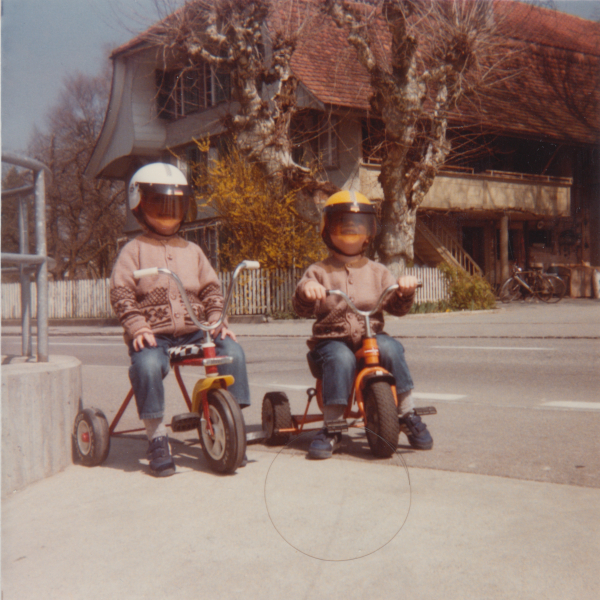
In the meantime, our aunt and, later on, two cousins had moved into the makeshift apartment. Today, a Polish family lives there. Whenever I step foot into the makeshift apartment, I visit the steep staircase of near-death, look at the now-yellowed wood paneling on the walls and imagine my mother cowering in panicked fear on a stool, banging on a plastic bucket. I personally never saw a mouse scurry across the gray carpet. I only ever saw a couple of dead mice in mice traps. One time, when I sneaked through the darkness of the old hayloft over to my grandparents’, I heard a faint crack and felt a tiny bump under the thin soles of my slippers. I stopped in my tracks, looked back behind me on the floor and saw a dead mouse, that moments ago had still been alive. It was glowing neon green, but it wasn’t a dream. The faint sound of its skeleton shattering still sticks delicately to my ears, like the mosaic tiles on the handicraft kitchen floor. Now replaced by indistinct laminate flooring. The mosaic tiles, too, became ghosts. Like the moving images on the VHS tapes, dreaming away, trapped in their eternal slumber. More and more ghosts are floating around. But I know that the past isn’t over, isn’t past. It sticks to my ears, my eyeballs, my brain. I can still smell the glue under the tiles. I can still see the green wood of the stairs. I can still hear the cabinets rattling, the tanks rumbling and imagine the four of us sitting at the small kitchen table. On wooden stools. Our feet on the mosaic tiles. Our hands on the cutlery. And I imagine us talking. I imagine our faces. Our glistening eyes. The light in them. And I know that we were ghosts. That we are ghosts. That we will always be ghosts. Always. The four ghosts of the makeshift apartment.