

Rachel Elizabeth Seed is an LA-based nonfiction storyteller working in film, photography, and writing. Her debut feature film, A Photographic Memory, premiered at True/False 2024 and was cited as “one of the best docs of the year” by Rogerebert.com and “an ingenious, meta doc” by Variety. Rachel’s work has been supported by the Sundance Institute, Chicken + Egg Pictures, NYFA, Field of Vision, the Jerome Foundation, NYSCA, the Maine Media Workshops, the Roy W. Dean grant, the Jewish Film Institute, Jewish Story Partners, and IFP/Gotham Labs, among many others. Formerly a photo editor at New York Magazine, her photography has been exhibited at the International Center of Photography and she was a cameraperson on several award-winning feature documentaries including Sacred by Academy-Award winning filmmaker Thomas Lennon. Rachel’s writing has been published by No Film School, the Sundance Institute and Talkhouse
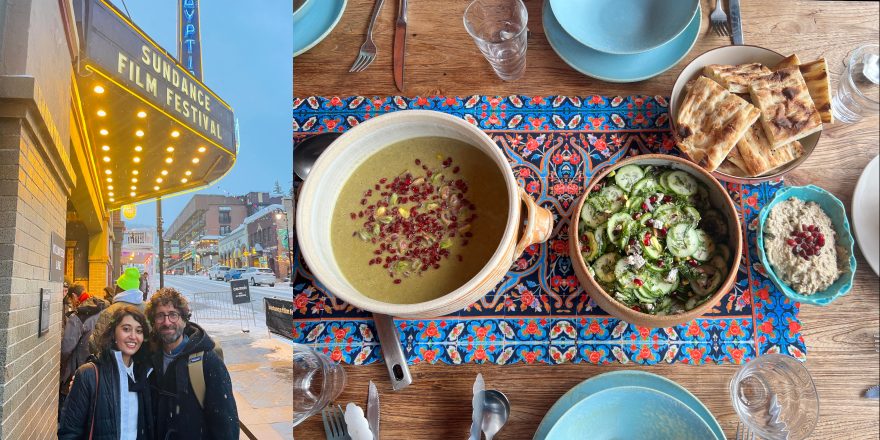
There was a palpable excitement among my fellow filmmakers as we prepared to attend the last Sundance Film Festival in Park City. Small choices carried outsized meaning: How many pairs of shoes should we bring, or would snow boots alone do? Which parties were “must-attends”, and how could one get invited to [insert VIP party here]? Are you going with a project or just “for fun”? And most vitally … am I too old to sleep on a couch??
This was heightened only by joining the largest WhatsApp groups I’ve ever been part of – a homegrown project by Sean Glass, who started his festival WhatsApp groups circa 2022 at Cannes, when a few folks were trying to meet up on a boat. At its peak, this year’s Sundance WhatsApp group had 1,025 members (the platform’s max), and messages burst slowly and then quickly like hot popcorn as the festival drew nearer. The vibe was digital Woodstock, filled with bright-eyed, multi-hyphenate festival freshmen rubbing virtual shoulders with Sundance veterans, who were advertising their panels, sponsored popups or low-cost legal services. Despite the daily distraction (it took me a few days to figure out how to mute it), the bubbling enthusiasm was contagious. Here were a thousand close strangers with similar goals – reconnect with old friends and meet new ones, find support for one’s projects and be inspired by top-notch films.
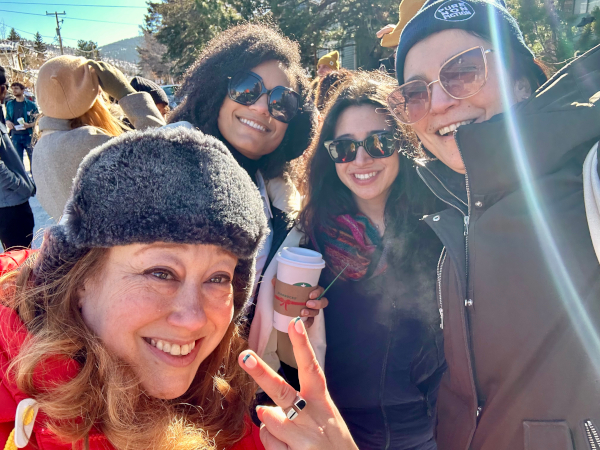
Of course, there were as many festival experiences as there were people going, and my particular view is that of a Sundance Institute alumna who did not have a project in this year’s festival, but who currently has several films in need of financial support and distribution. I quickly linked up with old friends who formed a roving posse, a home base and a source of shared intel throughout — i.e. how long was the line at the Cinetic party, and what were our chances of getting in?
I didn’t see many films this year, as I was focused on connecting with people. But when the day-to-day fervor on the ground simmered down, a bigger picture emerged – the dozens of chats with fellow filmmakers revealed that the excitement and passion for our craft is as strong as ever. But the industry (and our country, in the midst of its own upheaval as Sundance’s opening weekend kicked into gear) is in peril, and the buyers, funders, government resources and former ways of distribution are disintegrating before our eyes.
Sometimes, it felt like the veteran Sundancers – those who’ve been to 10 or more editions – were trying to hold on to a time and industry past. Park City Sundances represented years past that teemed with clamoring journalists, bidding wars and overnight discoveries.
Robert Redford’s death last year and the changing of a festival home base each felt, somehow, like a marker of something larger. We can’t keep pretending things are the same. As one anonymous Sundance staffer remarked, “We finally figured out how to run the festival this year!” … just in time to leave. Question marks remained: What would the infrastructure in the Sundance’s next home, Boulder, Colorado, be like? The new theaters? Housing, recreational activities?
My attendance this year marked only my third Sundance, so I’ll admit I shared little of the nostalgia and melancholy of the city swap. In fact, I love Colorado and am actually excited to go there. What would it be? Like anything in life, sometimes all we can do is wait and find out. In the meantime, one thing is clear: most of us filmmakers will keep making films. But we have to be just as creative with how we get the world to see them.
In the week following the end of this year’s festival, an outsized story dominated the film world’s conversation – Amazon’s gargantuan spending on both the acquisition and rollout of Melania. This, alongside the recent uproar over the potential Warner Bros./Netflix/Paramount merger, is at best, a slap in the face and at worst, a flattening blow to indie filmmakers. We continue to pour our time, minds, hearts and bodies into work for an industry that doesn’t value our efforts or support us financially. Something has to give. When I got home, I spoke with my friends and fellow film colleagues, producers Beth Levison and Jameka Autry, and publicist/producer Susan Norget for a post-fest vibe check.
Susan, for whom this was her 31st Sundance, called the festival “a reflection of the indie film world as a whole.” Since this was the last year in Park City, she said she anticipated feeling nostalgic, but actually didn’t. “I’m excited about the change! I think it’s good for the festival.”
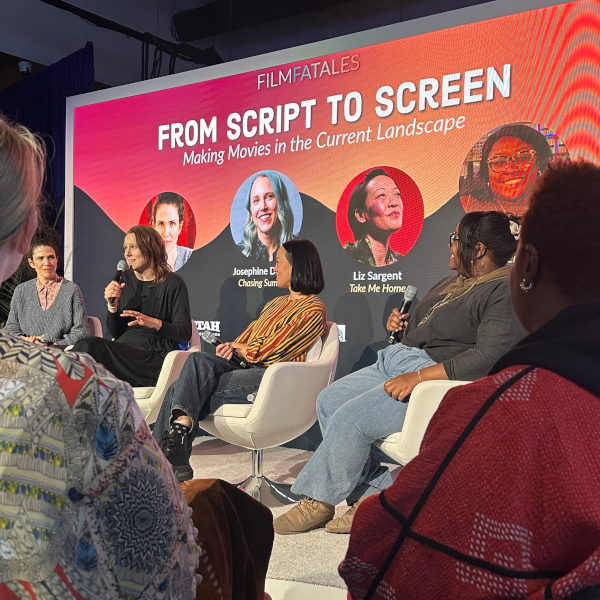
According to her, the most noticeable difference on the ground at Sundance was pre- and post-pandemic. She remembers earlier years where Park City was a more frenzied place, where there was a palpable excitement knowing there’d be all-night bidding wars, and careers made overnight. Now, she says, things happen later, if at all. “I hope people are over the idea that the festival’s worthiness is dictated by the number of deals that come out of it,” she said.
While Beth Levison was enjoying the friend reunions and catching inspiring films, she was also asking herself, “How can this be viable? Are we in a bubble? Are we creating work for a niche audience?” In nonfiction, we have also seen first-hand the toll that making indie docs can take. “The burden is really on filmmakers to have an impact in the world, through extensive labor and real costs,” she told me.
Jameka Autry, who was a producer on Time and Water, a feature documentary by Sara Dosa which premiered at this year’s festival, pushed the question further, asking herself, “What’s my exit strategy?” She told me she believes that as indie producers we have maybe a couple more years where there is some kind of industry infrastructure that will support the work of independent filmmakers who need to make a living through the craft. In 2022, she moved from New York City to North Carolina, where her family lives, when she realized she wouldn’t be able to climb out from debt and afford a decent lifestyle in NYC. The idealism of changing the world through issue-driven documentaries can only take us so far if the creators can’t sustain their lives making them. As financial remuneration for our work gets hacked away at by big tech and media, mergers and the shuttering of government-funded programs and platforms, does that leave only the already wealthy and privileged to the task of documentary filmmaking? Jameka is asking, “Who can afford to tell these stories?”
Still buzzing and coming down from the parties and filmmaker reunions I experienced at the festival this year, I hadn’t anticipated asking these questions as I sat down to write this piece, but upon zooming out from the fervor of attending Sundance, this is a vital query. Showing your film at Sundance, whether it sells or not, is a privilege. It’s considered the crème de la crème of film premieres, especially for documentary filmmakers. All five of the Oscar-nominated features this year premiered at Sundance last year. When people downplay the importance of a premium festival launch, they aren’t taking into account the privileged path such an opportunity presents. If even producers premiering there are looking for an exit, what does that say about where we are at?
I had a similar observation recently when a new friend, a filmmaker nominated at this year’s Oscars, reached out to me to help her find free accommodations in Los Angeles, and similarly had to arrange a free For Your Consideration screening of her work as part of the film’s campaign. She’s up for the very top award our industry has to offer, but a few days’ stay and a screening in the city where she’ll be celebrated is somehow out of economic reach. This, to me, is a perfect metaphor of the industry moment we are in. We continue to make great work, and as artists, the act of creating is just as vital to us as it’s always been (at least spiritually). Many of us will continue to pour ourselves into our work. The hope is that those with deep pockets will respect what we do, and financially support it. If they don’t, we will have to find new partners and build new systems to buoy the viability of our careers, to exit the industry, or to temper our output with other income streams. As the cogs of capitalism keep turning, our human impulse to create is no less powerful than it’s always been. In creativity, we find a way.
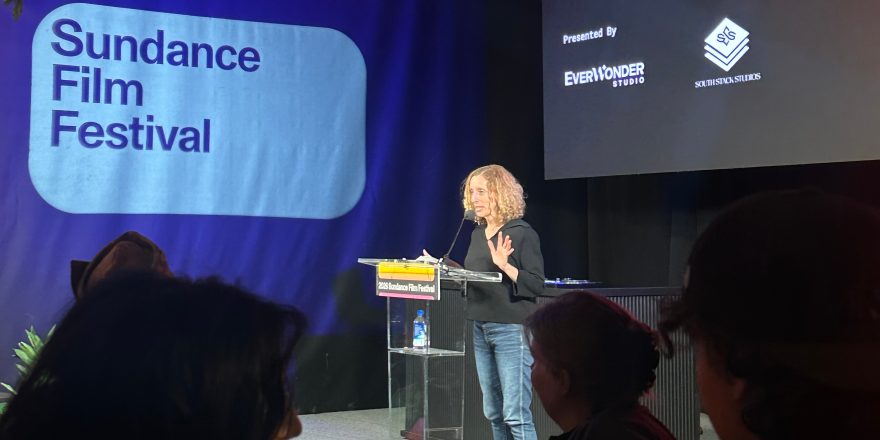
Featured image shows Kristin Feeley of the Sundance Institute’s Documentary Film Program, speaking at the Producer’s Celebration; all images courtesy Rachel Elizabeth Seed.