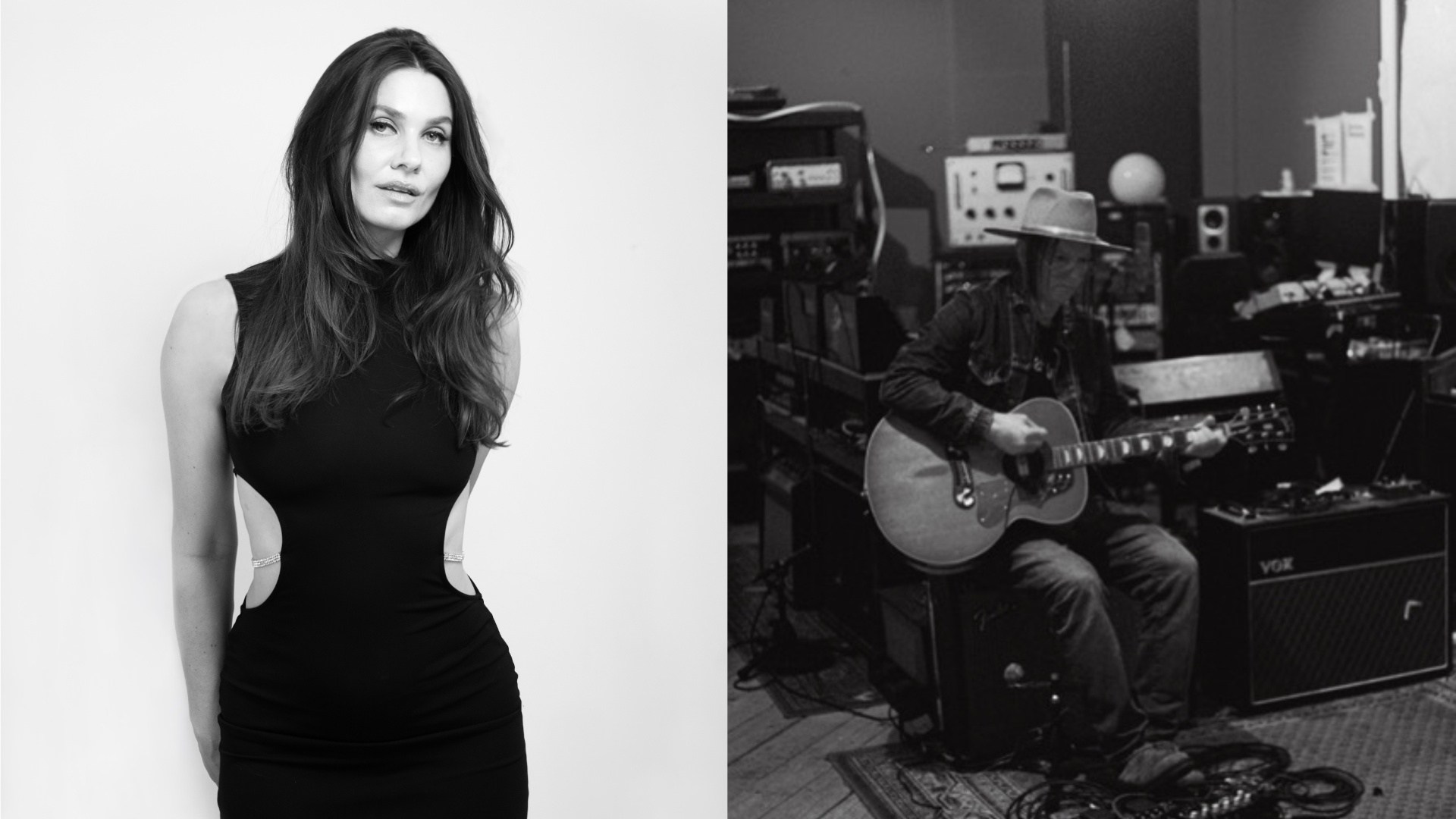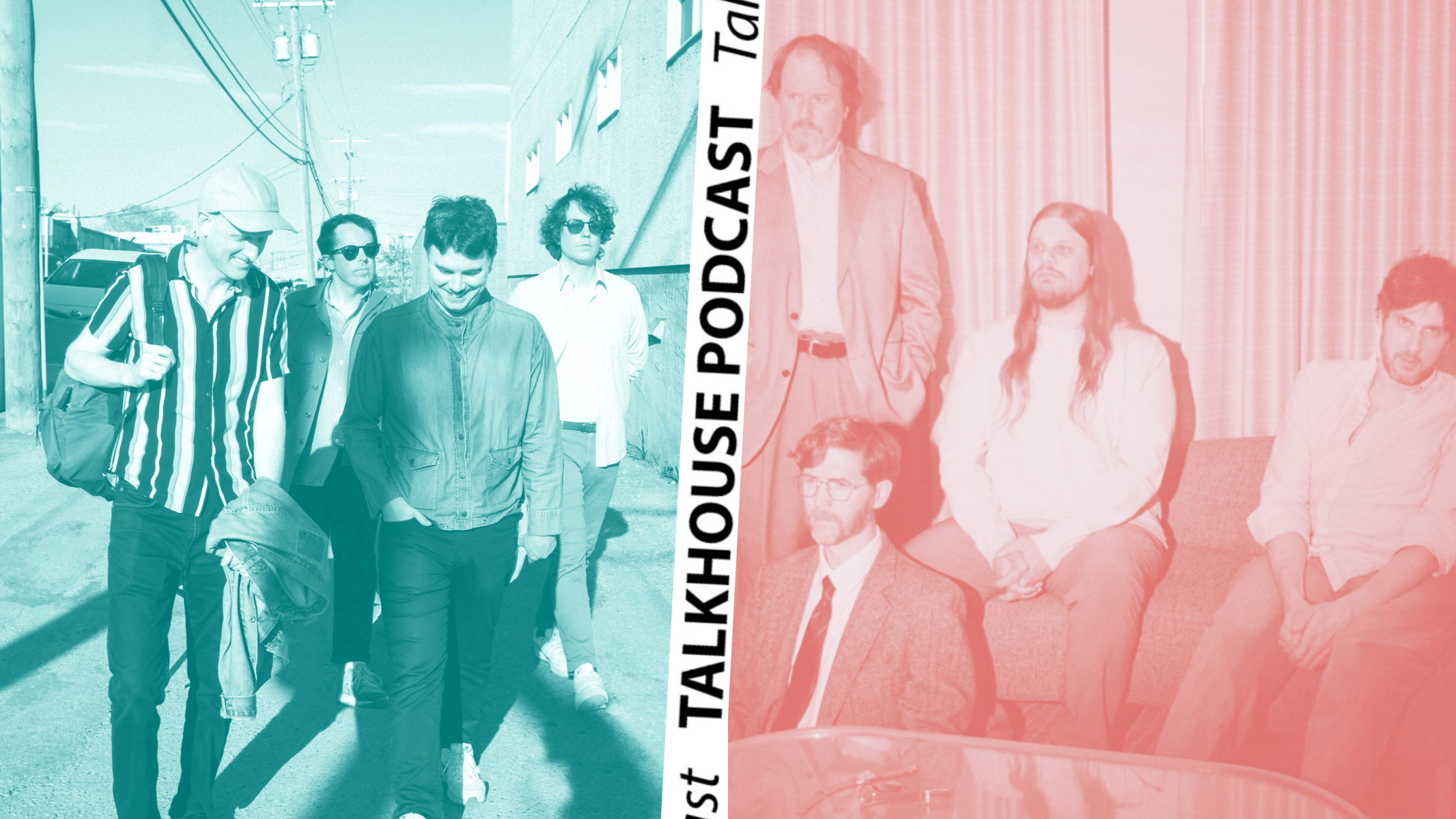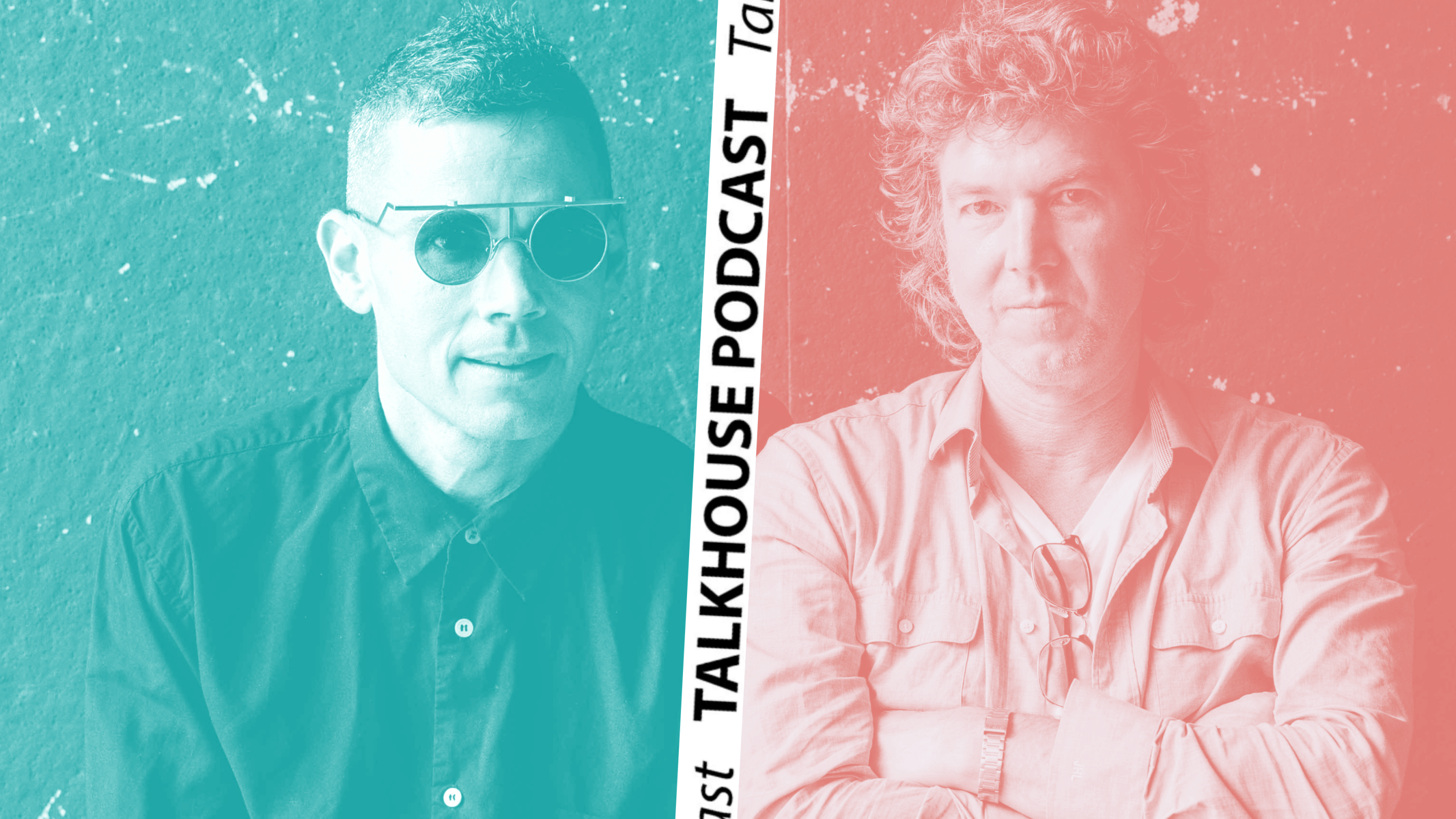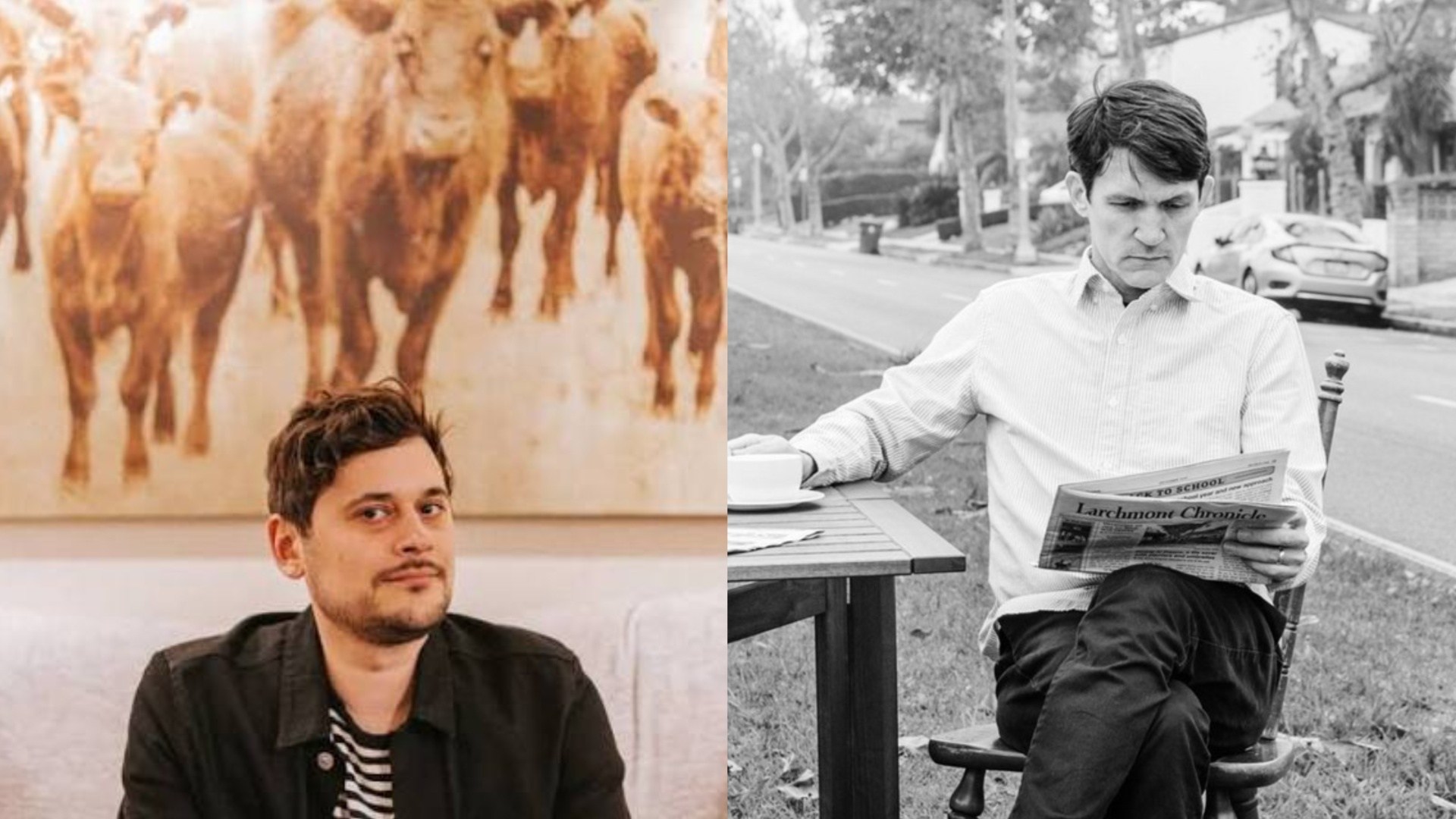
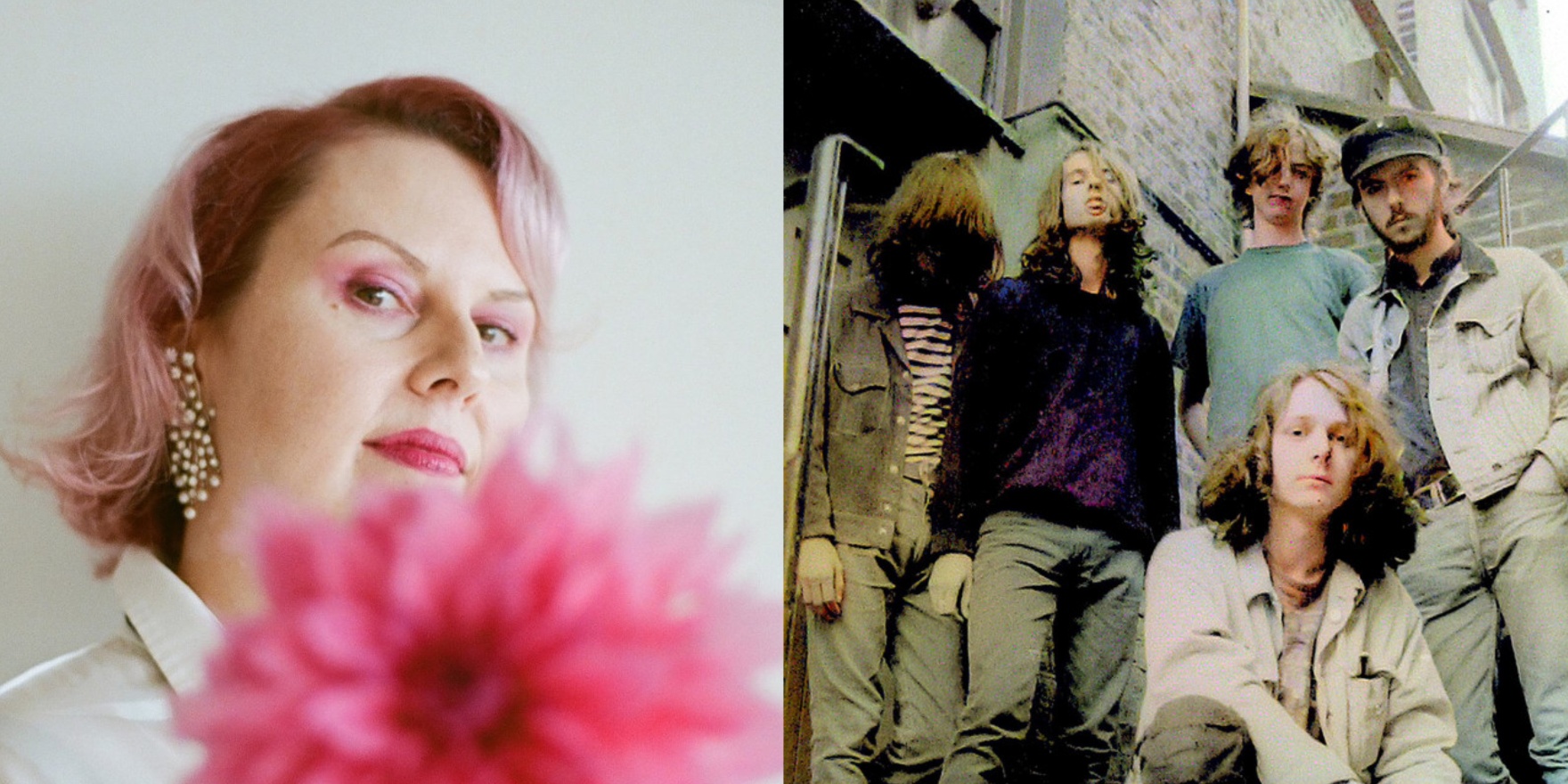
Andy Sherriff is a composer and a vocalist and guitarist for the band Chapterhouse; Paula Kelley is a composer and a vocalist and guitarist for the band Drop Nineteens. Paula’s latest solo record, Blinking as the Starlight Burns Out, just came out last month on Wharf Cat. To celebrate, she and Andy got on a call to chat about it, and much more.
— Annie Fell, Editor-in-chief, Talkhouse Music
Andy Sherriff: How are you?
Paula Kelley: I'm alright!
Andy: That's your studio?
Paula: It is. This is the Dream Field Academy.
Andy: That's amazing… You're living the dream.
Paula: Living the dream in rural Massachusetts. So have you begun to rehearse for the tour?
Andy: Yeah, we’ve done three rehearsals so far.
Paula: Is it all the original members?
Andy: It's three of the original members, me, Ashley [Bates] and Stephen [Patman]. And then we've got Greg [Moore] who came on the 2010 tour. He's standing in for Russell [Barrett] on bass. And then we've got a good friend of ours, Joe, playing guitar on behalf of Simon [Rowe].
Paula: We are four out of five of the originals.
Andy: So who left?
Paula: Well, after everyone — [Laughs] — Chris Roof, the drummer, declined. Pete Copeland was their second drummer. I was never in Drop Nineteens at the time with him, but we've been doing this for a couple of years now and I can't believe I actually said yes…
I was just thinking about one of my fondest memories when we played either Axis or Avalon [in Boston] — it was somewhere on Lansdowne — it was that first cluster of shows that we did together, and I sang “Pearl” on stage with you guys.
Andy: Oh, yeah. That was great.
Paula: It was, and I was just wondering if there was video of it, because old videos pop up, but I couldn't find any. But then I thought it might be a good thing because if I sounded terrible, then the memory would be tainted forever. So we're going to leave it. Leave the mythology there that it was great.
Andy: That's the thing, really: nowadays everything's caught on camera and on phones that people don't have time to absorb things in real time. When I've looked back to see if there's videos of performances, I haven't found very many, because back in those days the bouncers stopped you if you had a video camera.
Paula: I prefer that. I mean, after every show, it's like instantaneously YouTube videos everywhere. And I just can't look.
Andy: I don't want to be too judgy about it, but I just think people should enjoy things more in the moment. Because the sound is always really terrible on phone recordings anyway.
Paula: Now working in production, you have to mix for iPhone play, and it’s just… [Laughs.]
Andy: [Laughs.] Yeah, we used to have a little mono speaker that you would do for radio, but having to do it for a phone speaker is ridiculous. Did you record your new album in your studio there?
Paula: We actually just finished it before we moved, so no. We did it at our studio in LA, which was considerably smaller, but it came out really well. We were very exacting about everything. And I was fortunate that I had the time to do that.
Andy: It sounds really well produced. I loved it.
Paula: Oh, thank you. Now listening back to, not so much Drop Nineteens, but my bands and my solo stuff after that, things make me cringe. So I made a pact with myself to just not have anything that makes me cringe. You know, sometimes you're just like, Ah, it's good enough. No more!
Andy: I get it. It's weird listening back to old stuff. You could go on tweaking tracks forever, and there's just a point where you have to say, “That's it. Let's move on.” I mean, it used to be better in that sense that you would hire a really expensive studio and you'd have three days there, so you had to come out with something. But now you can tweak and tweak and tweak. But once the songs out there, it kind of has its own life. And I now listen to them very differently, almost as if I didn't have that much to do with them.
Paula: Once you let it out, people have their own perceptions of it. It’s like it's not yours anymore.
Andy: Yeah, it has its own resonance, its own life. And I think that's good. Then you can move on. But, yeah, like you say, if there's something that you're not happy with, it's just annoying and you can't accept it.
Paula: Yeah, there's some things I just can't listen to. Do you have any disaster recordings out there?
Andy: Yeah. We just released a box set of stuff and we wanted it to be fairly honest, so it was pretty much everything that Chapterhouse recorded. I wouldn't say there's real disasters on there, but there's stuff that I would do very differently, particularly in the middle period where there was a lot of electronic stuff going on. Which was just experimenting, so that was fine. But you know, some of it worked better than others.
Paula: What do you consider your middle period?
Andy: I guess the Blood Music period.
Paula: Which I like. It's quite different.
Andy: A lot of people do say they really liked it. I think it's just that it didn't feel as cohesive as the others. But that's not necessarily a bad thing. I think it was also because me and Stephen were going off in different directions — he was getting much more into his rock side of stuff, and I was getting into this sort of electronic dance stuff. Even though it was there originally with Chapterhouse, it was just a bit more. Most of that stuff on Blood Music is good, but there were some experiments that weren't quite as good. Also, a lot of the stuff that we put on the box set were just demos.
[Your voice] sounds great on the album. It reminds me of seeing you play years ago.
Paula: Does it? Even though it's totally different material?
Andy: It's very different. But it's very you, isn't it?
Paula: It's completely me, yeah. For better or for worse. I took a lot of time off from writing songs. Not necessarily intentionally — I got sober in 2013, and after that, I just realized how, how much stage fright I have and how much anxiety I have about performing. At the time I was doing arranging and composing for other people and I was loving it. I was just like, OK, I'm never going to play live again. That's fine. Love this. Then I started writing songs again — they just kind of came back to me. I was like, Alright, I'm just gonna have to do an album. That's cool. And then Drop Nineteens came and I said, “I'll do the album with you, but I will not tour. I hate playing live, never gonna do it!” And here I am.
Andy: And so how do you find touring again?
Paula: Being sober, I realized, I have to admit it, how high maintenance I am. I need to be alone before the show. I can't talk. I just need to do my introvert thing before and afterwards. I need the solitude. And I know that's not always possible, but as much as I can, I just really have to carve out that space for myself, or else I'll go crazy and/or get ornery.
Andy: You've got to do what you've got to do to make it the best performance. I think in the past we used to just walk on and play. There was no preparation or anything. Someone would just say, “Right, you're on,” or whatever. [Laughs.]
Paula: I feel like when you're young, you can get away with that. But when you're 40, 50, you don't get that sort of leeway. It's not as forgivable.
Andy: Yeah. I've been practicing singing a lot as well this time around, which I never did before.
Paula: Me neither.
Andy: Your voice changes as you get older. I've lost a couple of semitones, so it's trying to sort of get around that with harmony. I sang quite high anyway, so I've made a rod for my own back.
Paula: [Laughs.]
Andy: But it's getting there. Some of the capos have come off.
Paula: When I wrote songs, I used to never consider my vocal range, which sounds ridiculous now.
Andy: Yeah, we just used to put capos on if it put our voices into a better range. It serves me right for watching people, like, Glastonbury and going, God, they can't hit those high notes anymore. [Laughs.] So how was it doing the new Drop Nineteens stuff?
Paula: That was great. I love recording. It came together pretty easily. Greg and Steve just sent me songs, I would sometimes add arrangements. I don't really write for Drop Nineteens — a little bit. Sometimes I'll present a song and they'll kind of pick it away and make it something that that sounds Drop Nineteens. It's fine because I have my own stuff. I'm perfectly happy writing arrangements or harmonies and whatever.
You have been writing for other people. When you first started doing that, did you find it difficult to let your songs go? Or could you compartmentalize it?
Andy: I think because we were writing specifically for certain clients, it’s easier to let it go. But quite often part of the skill is really being able to take feedback and not be offended.
Paula: Yeah, that's a big one.
Andy: Because quite often if it's an advertising agency, it's people who really don't know anything about music, but they have the final say. And it's quite often there's a lot of them as well, so it’s trying to please everyone.
Paula: When I first started writing or arranging for other people, there were two things that would drive me crazy, and one was: I'd write an arrangement and give it to them, they would record it, and the mix was just, ugh. But it's their thing now, so I can't be like, “You can't hear the fucking oboe…”
Andy: The arrangement stuff that you're doing, is it classical or is it film?
Paula: I have done film stuff. I was really trying to get into that in LA and as I was starting to make my way in, that's when my substance abuse got really bad and I kind of murdered my career and had to rebuild. But I do now more orchestral arrangements for pop songs for other people. Which I love.
Andy: That must be really fun.
Paula: It is. I would be totally happy doing that forever.
Do your kids think you’re cool?
Andy: I think so, yeah. [Laughs.] I mean, no, they don't. They think the band's cool — they're starting to. When they were younger, they didn't know anything about it. But [my son], one of the first tracks that he put on Spotify was a Chapterhouse track.
Paula: Aw.
Andy: And he keeps keeps on asking for little bits of memorabilia and merchandise. So, you know, that's quite cute.
Paula: That is cute. Was it difficult if you heard them listening to music that you thought was terrible? How hands on are you as far as what music they were exposed to?
Andy: I try not to be too judgmental, but yeah, sometimes I just say, “Can you turn that off?” I can't deal with that autotune kind of thing. I quite like silence as well, so I enjoy not always having music on all the time.
Paula: I went through a period where I couldn't listen to anything. Nothing in the background, I couldn't look at an instrument. I mean, there was more to that than just liking silence — there were some deep seated issues.
Andy: Thinking time, breathing space. It's all that sort of stuff. Like a car journey or a train journey — I really enjoy trains because you can just look out the window and it gives you a period where you can sit there. But then you watch everyone else and they're just looking on their phones, which is another kind of window, but not the right one.
Paula: Yeah. It's not a window to reality.
Andy: I wouldn't have liked to have that to have been around when we originally toured. It's like you said earlier about that gig in Boston — I remember bits of it, but it's like a stream of consciousness kind of thing. I mean, I remember Kurt Cobain and Courtney Love were there as well wandering around.
Paula: I don't remember that. How did I miss that?
Andy: They were hanging out with the rest of the band. It's a very, very fuzzy memory. But I guess it wouldn't have been so cool trying to take photos and things…
Are you going to tour your new record?
Paula: I'll probably do a few isolated shows. One of the things that I realize stressed me out so much about playing live — I had a band after Drop Nineteens called Boy Wonder, which was kind of just an indie rock band. Then I did the Paula Kelley Orchestra, and when we played live, as I started bringing more and more instruments into the fold, I would get more and more stressed out because I'd have to do the charts, and people would lose the charts all the time, and I can't really fault them for that because that's something I would totally do too. But every time I was doing charts for 8, 10, 12 people. I think now, I could probably handle it better, but I know minutia really stresses me out. It probably stresses everybody out. But I don't consider myself a natural performer, so I'm worrying about what I'm going to sound like and then I'm worried about everyone else having what they need. If I had more money or more time, [maybe], but I don't anticipate getting a lot of money to do that. So it's going to have to be two or three shows, maybe New York, LA, Boston. Just do a few, do it right.
Andy: What have you been recording at the new studio? Have you got another album coming up?
Paula: I have enough new stuff to do another album. A lot of it's more chamber-y — I have this sort of requiem choral piece. I love arranging vocals and I love the Baroque kind of thing.
Andy: I guess in some ways, that's what's really nice, still, about music, using music as an escapism. And although it's escapist, it's got more of a reality than reality.
Paula: That's true. And I was thinking, there's this sort of contradiction where everything's so fucked up, who gives a shit about my record? It's so unimportant in this grand scheme. But then it's like, Or is it the only thing that's important?
Andy: Yeah, I agree with that. It's still really important and relevant, and it's so important that people keep on creating art and speaking out against things that aren't right.
Paula: Yeah. I mean, it's kind of our job.
Andy: So good to see you and talk to you.
Paula: Yeah, you too. I'll see you at one of your upcoming shows!