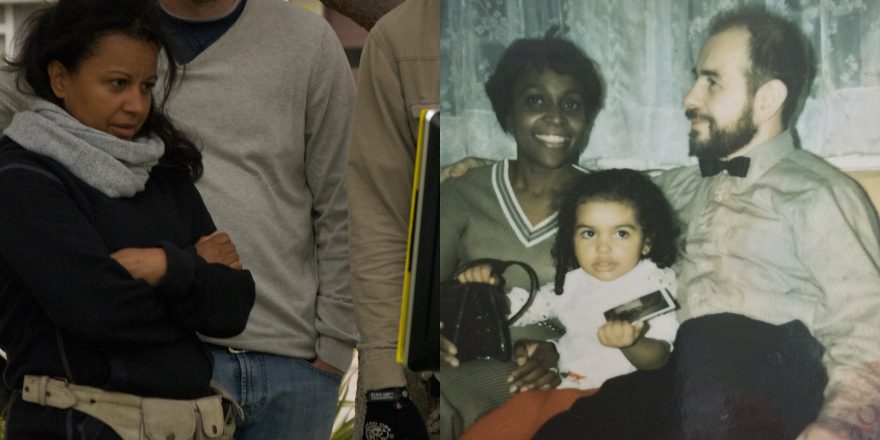



Deborah Goodwin is a writer-director-producer whose work in film and television began as a development executive for Sanford-Pillsbury Productions (Desperately Seeking Susan, River’s Edge, How to Make an American Quilt). Deborah’s Urbanworld Film Festival Best Screenplay win for her darkly provocative family drama Cherrys launched her filmmaking path. She has written for Emmy-winning and Independent Spirit Award-nominated producers, and for shows like the cult favorite horror series Tales from the Cryptkeeper. She is a Film Independent and IFP lab fellow and an ABC and NBC diversity showcase director, best known for her horror fable Vampires in Venice and her action/drama The Pastor, released by Fathom Events and AMC. Her Icelandic noir Snaeland, which she co-wrote and produced, premiered at the Vail Film Festival and screens in the Brooklyn Film Festival 2020. Deborah is a Sundance Collab advisor and screenwriting professor at Brooklyn College, and a newly minted co-creator and writer of the noir-crime-thriller series Hot Freeze, with Canadian producer Nomadic Pictures (Hell on Wheels, Van Helsing, Fargo).
First off, don’t read this unless you live for spoilers from Weapons, the latest horror phenomenon and box-office hit from Barbarian director Zach Cregger, and you find yourself spoiling for a fight when neoconservative columnists like David Brooks take to the Op-Ed pages of the Times to write about the “state of America.” You may be unsurprised to learn that Weapons is a slow burn, and you might be (as I was) thoroughly surprised that Brooks – usually a dour khaki dockside-wearing type of columnist – totally groks this perilous moment, as we reckon with our freedom and identity as Americans being weaponized. There, I said it. Now, if you are still reading, spoilers be damned!
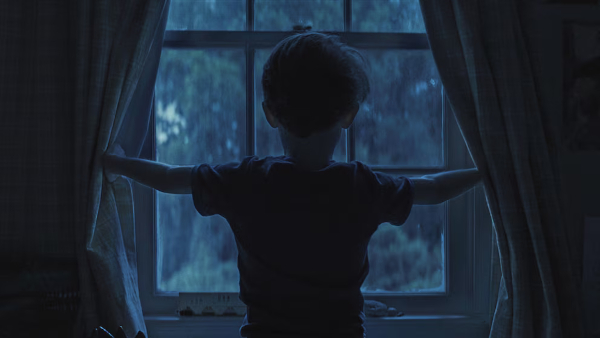
Weapons has its center an exhaustive witch hunt, framed by the voiceover of a child telling us this happened to them. Using the victim’s voiceover is actually the most insidious and frightening part of the whole narrative, as we eventually learn the victim is also the victimizer. When bad things happen to children in reality or in fiction, we are gripped with regret and secret shame. There is something about it that sears our souls and brings a lump to our throats. This, if anything, is the unnerving strength of Weapons, which is also loaded with other bits and bobs that misfire, veering into dull retreads that don’t even aim to pay off. Weapons felt to me, at two hours and eight minutes, like being bludgeoned in slow motion, which is perhaps its secret power.
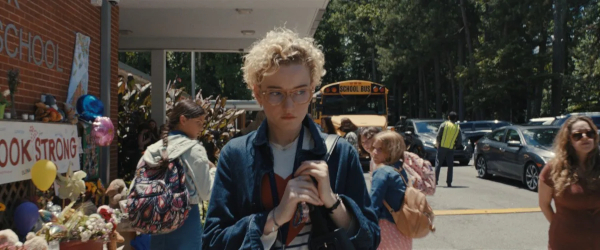
Much has been made (in reviews and online chatter) about Weapons supposedly being an incisive allegory for school shootings and their tragic aftermath. I did not see that. To me, that analysis feels reductive, and like giving a narrative pass to scattershot writing. For instance, that haunting voiceover I mentioned previously, used to bookend the narrative, is not of any child we actually get to know over the course of the story. Huh? That is like taking the literal victim and turning them into a prop of the narrative. It reminded me of that Trumpian trope that’s rolled out whenever it’s necessary to justify, say, martial law or mass deportations, or a breach of any civil liberty or right, where we are barraged with misinformation about “crime” and “criminal acts” and a proxy victim is dutifully held up to support the baseless accusations. Here, look at this sad, bereaved and entirely made-up person! Here, look at these totally conflated and misrepresented circumstances! Oh, and if you don’t believe us, we have doctored photos!
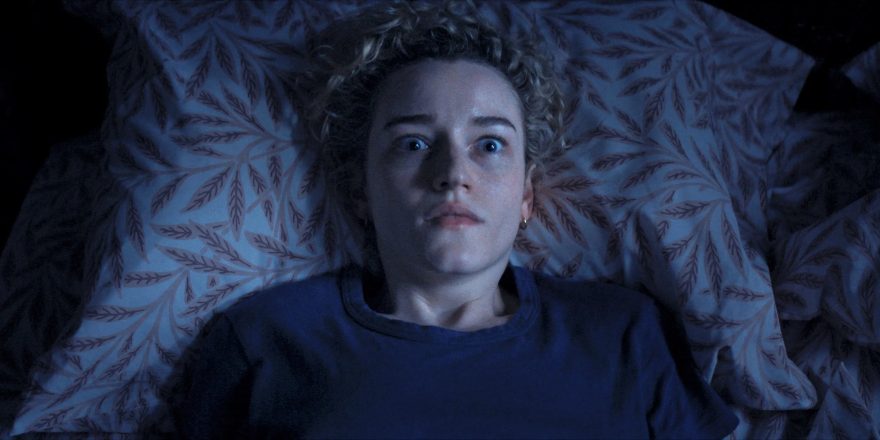
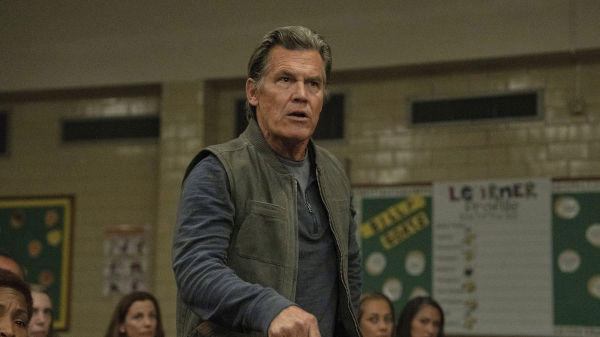
Weapons is divided into chapters that center different characters, like Julia Garner’s vilified teacher whose class all disappear, save for Cary Christopher’s Alex who, it’s revealed, is under the spell of Amy Madigan’s abusive and witchcraft-wielding relative. Another chapter is devoted to Josh Brolin, who plays an angry contractor determined to find his missing son. However, no single timeline ever unites these stories, and none of the overlap between characters ever stacks, narratively speaking.
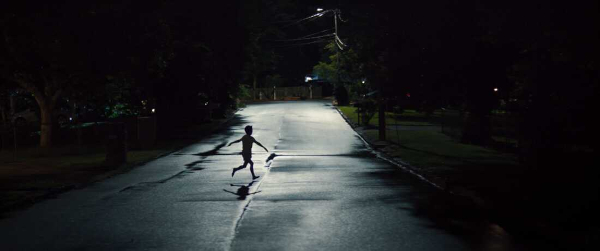
On that basis alone, Weapons is a fail, for me, but as I read a Brooks’ Times Op Ed from a few months back, prepared to gnash my teeth in liberal indignation (oh yeah, we’re tying this shit together now!), I got the kind of surprise (jump scare?) that only sincerity can deliver. Brooks writes:
“Trumpism … is primarily about the acquisition of power — power for its own sake. It is a multifront assault to make the earth a playground for ruthless men, so of course any institutions that might restrain power must be weakened or destroyed. Trumpism is about ego, appetite and acquisitiveness and is driven by a primal aversion to the higher elements of the human spirit — learning, compassion, scientific wonder, the pursuit of justice.”
Is this not the quintessential battle we are fighting? More compelling than any fictional narrative, this is the actual threat we are confronting at this very moment. We can’t simply walk out of the theater after the movie’s obligatory finale … because it ain’t over! Not even close. I left a 7 p.m. horror movie to greet the still torpor of 89 degree heat, only to face the profound realization that the true horror lies straight ahead.
A multifront assault to make the earth a playground for ruthless men …
The irony is that Weapons revolves around the oldest trope in existence: “blame women,” especially older, wiser, unattractive women. Cat-loving women. Single women. Women who run for office. The easiest person to blame is seemingly the unattached or isolated or disruptive woman in your sights. And instead of sincerely upending that trope in Weapons, Cregger fails to illustrate the true, real and present danger — that even a khaki docksider-wearing neoconservative boomer columnist recognizes —namely, it Ain’t About the Witches!
Because it’s actually about the Wizards … the Men, the Titans of Industry, the Bellicose Reality Television/Podcasters and Technocrats of the modern future, the Evangelical Dominion-Loving Neo-Neanderthals …
And there are no narrative parameters. Let that horror lie on your heart and mind, and in your next steps. To Brooks again, with a little encouragement…
“What is happening now is not normal politics. We’re seeing an assault on the fundamental institutions of our civic life, things we should all swear loyalty to — Democrat, independent or Republican.
“It’s time for a comprehensive national civic uprising. It’s time for Americans in universities, law, business, nonprofits and the scientific community, and civil servants and beyond to form one coordinated mass movement. Trump is about power. The only way he’s going to be stopped is if he’s confronted by some movement that possesses rival power.
“I’m really not a movement guy. I don’t naturally march in demonstrations or attend rallies that I’m not covering as a journalist. But this is what America needs right now.”
This is a single effort to undo the parts of the civilizational order that might restrain Trump’s acquisition of power. And it will take a concerted response to beat it back.
In Weapons, the climax/resolution is the most deeply satisfying. As zombified children break free and rampage after the villainess, she realizes the spell she wrought has failed spectacularly and now the very thing she weaponized to take everyone down has been turned against her tenfold.
“Oh no,” she exclaims, before taking off – and being intercepted by her worst nightmare: the children she has abducted by proxy and held captive and starved in their paralyzed state. As the children rip her to shreds, literally, I must admit that I did exhale aloud, “Get her,” in that empty theater showing that I attended. But it begs the question whether it is better to get her, or get the pathetically anemic system that allowed (and is continuing to allow) this national spell to go unchallenged, to go unbroken.