

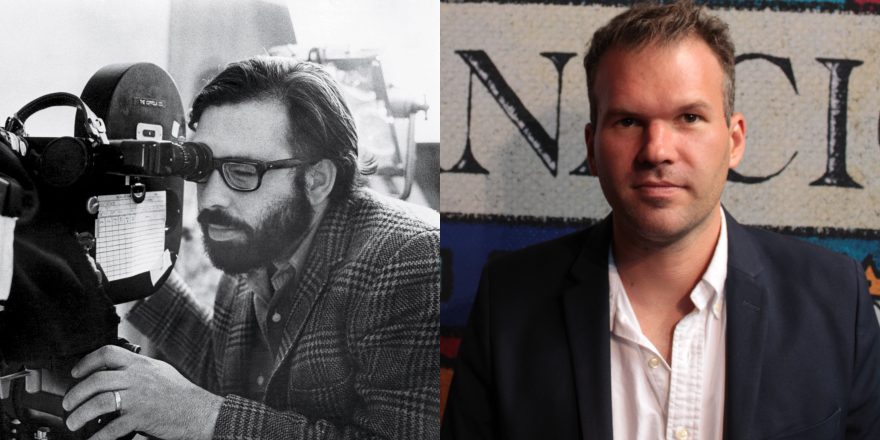
Janek Ambros is an Independent Spirit Award–nominated producer and director whose films have won honors at Venice, Sundance and GLAAD, and have screened at major festivals around the world. As a producer, his credits include Human Capital (starring Maya Hawke and Marisa Tomei), Ten Thousand Saints (starring Ethan Hawke and Hailee Steinfeld), Monica (winner of the Arca CinemaGiovani Award at the Venice Film Festival) and In the Summers, which won the Grand Jury Prize at Sundance 2024. As a writer and director, Ambros has helmed projects such as the psychedelic farce Mondo Hollywoodland, a sequel to the 1967 cult classic, executive produced by Oscar nominee James Cromwell, which is now available on Prime Video; the political documentary Imminent Threat, examining the War on Terror’s impact on civil liberties; and Ukrainians in Exile, executive produced by Liev Schreiber and two-time Oscar winner Janusz Kamiński. He is the founder of Assembly Line Entertainment, established in 2012. You can find him on Instagram and Twitter, and Assembly Line on Instagram.
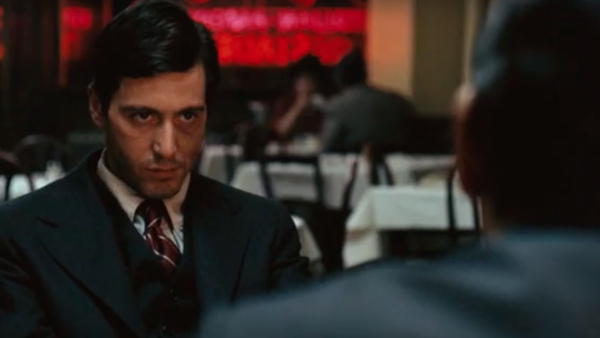
The restaurant is quiet – too quiet. Pacino sits rigid at the table, listening more than speaking. His eyes flick toward the bathroom. Back to the men across from him. Time stretches. When he finally pulls the gun and shoots McCluskey, then Sollozzo, the violence isn’t cathartic – it’s abrupt, disorienting, irreversible. The sound echoes. The room doesn’t recover.
I was 14 or 15 when I first saw that scene, and I remember it vividly. At the time, I didn’t know why it affected me so deeply. I just knew it felt different from anything I’d seen before. It wasn’t flashy. It wasn’t fast. It was about waiting, tension, and finally crossing a line you can’t uncross.
That was my first real encounter with Francis Ford Coppola.
Before Coppola, movies were something I loved instinctively. When I was six or seven, I made crude stop-motion Star Wars films at home. Around nine or 10, I was introduced to Goodfellas and felt the jolt of cinema as something dangerous and alive. By my teens, I understood the idea of a director. But as I kept devouring movies, I started noticing the credits more carefully. Writer. Director. Producer. These weren’t interchangeable roles – they were distinct acts of authorship.
As I read more about filmmakers, Coppola stood apart. Not just because of the films themselves – The Conversation, Rumble Fish, American Graffiti – but because of how he moved through cinema. He wrote, directed, and produced, sometimes all at once, sometimes separately. He wrote Patton and won an Oscar, without directing it. He produced American Graffiti, without being its authorial center. To a 15-year-old, this was a revelation: you didn’t have to be one thing. You could do the jobs independently, strategically, according to what the work required.
Then I started seeing the logo.
A strange, hypnotic image: a zoetrope. And the words “American Zoetrope” beneath it. It kept appearing before films that felt riskier, stranger, more personal. I didn’t fully understand what it meant, at first. My only reference points for studios were the roaring lion of MGM or the glossy logos of Disney and Universal. Zoetrope felt different – less like a brand, more like a presence.
When I finally learned what it represented, something clicked.
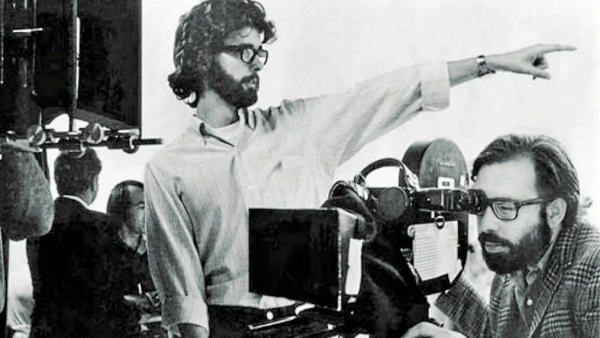
Coppola wasn’t just making films – he was creating conditions. A place where people could stay together long enough to figure things out. Where friendships mattered as much as outcomes. Where the work didn’t have to justify itself immediately.
Zoetrope emerged at a moment when the old studio system was collapsing. The era of bloated musicals and aging moguls was losing relevance. Audiences were young, restless and uninterested in fantasies that didn’t speak to them. Power was shifting, studios were breaking apart and a generation of filmmakers coming out of UCLA and USC wanted something the system couldn’t provide: freedom and continuity.
It’s also important to understand that Coppola’s thinking didn’t come out of nowhere. He cared deeply about the tradition of movies – especially the original studio founders, who built Hollywood from nothing.
He often spoke about the old-guard moguls: Jesse L. Lasky, Carl Laemmle, Samuel Goldwyn. These were not aristocrats or inheritors of power. They were immigrants from Eastern Europe, many of them Jewish, who faced persecution and exclusion on the East Coast and responded by inventing an entirely new industry on the West Coast.
What they created wasn’t just a business – it was a community.
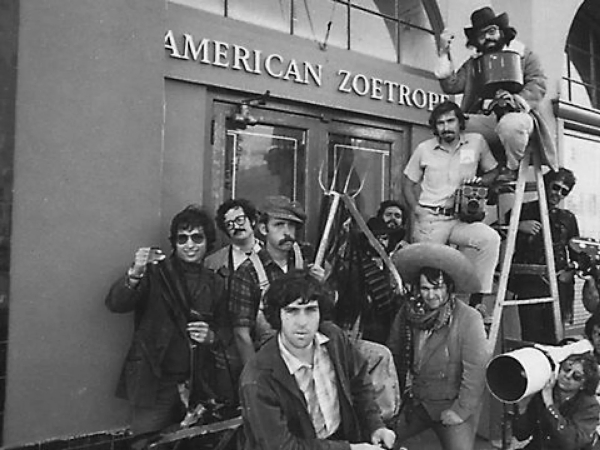
Carl Laemmle, in particular, envisioned something radical: a fully self-sufficient studio that functioned like a city. Universal wasn’t just a lot; it was an ecosystem where people lived, worked, ate, built, and imagined together. (For more information on the old studio system and specifically Carl Laemmle, follow film historian and niece of Carl Laemmle Antonia Carlotta on YouTube.)
Laemmle once described Universal as: “The first city or community to be devoted exclusively to the manufacture of motion pictures… a whole city where everyone is engaged in the making of motion pictures, a fairyland where the craziest things in the world happen.”
Coppola understood the power of that idea. American Zoetrope was his attempt to revive it – not as an industrial machine, but as an artist-centered community. Where the founders built cities around production, Coppola wanted to build continuity around people. Friendship, shared risk, long-term collaboration. A place where the work could fail and still be worth making.
In that sense, Zoetrope wasn’t a rejection of Hollywood history – it was a return to its original spirit.
Coppola had worked inside the system – he even directed Finian’s Rainbow for Jack Warner – but he felt constrained, unexpressed. Alongside friends and peers like George Lucas, Brian De Palma and John Milius, many of whom had passed through Roger Corman’s orbit, he wanted a way of working that didn’t reset every time a movie ended.
So American Zoetrope wasn’t just about independence. It was about staying in motion together. Films came and went – some worked, some didn’t – but the relationships endured. That idea stayed with me.
I was born in Morristown, New Jersey, but grew up in upstate New York, surrounded by friends whose parents were businessmen. I learned early that money makes things happen – not in a romantic way, just in a practical one. As much as I wanted to make movies, I also understood that waiting around for permission was its own kind of risk.
So I made a quiet decision. I studied economics in college. I studied film independently. I wrote constantly, mostly in private. The idea wasn’t to choose between art and practicality, but to let them inform each other. I wanted to make work, yes – but I also wanted to help create the circumstances where work could continue.
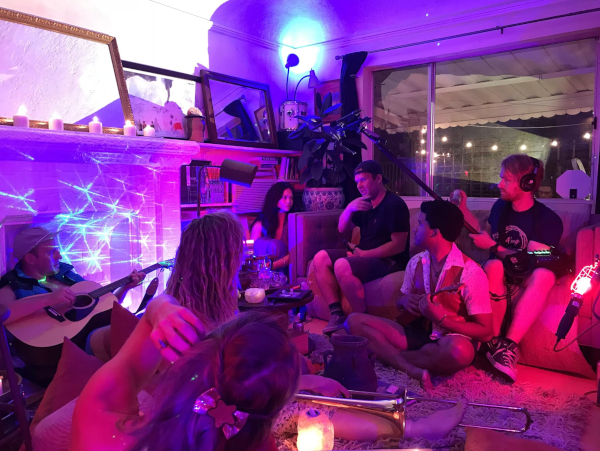
At 22, I started Assembly Line Entertainment. We made short films. Avant-garde projects. At one point, I cut together propaganda footage from the 1940s and turned it into experimental narratives that played at small festivals. I directed my first feature for $10,000 – a documentary about the war on terror. In a very real sense, my collaborators and I were already a small community making things together.
Over time, I became better at producing than directing. I could connect projects with financing. I worked on films that went to Sundance and Toronto. On paper, things were moving forward. But something felt wrong. I could help make movies with A-list actors – just not my own. The scale was growing, but my relationship to the work was shrinking. I was deeply unsettled.
Coppola never seemed to wait for permission. When studios wanted to shelve American Graffiti, he famously offered to buy it just to force its release. He called people. He took risks. He thought in terms of momentum and continuity, not career ladders.
So, somewhat desperately, I emailed Barry Hirsch, Coppola’s longtime lawyer, asking for advice. He was polite, clearly busy. I kept emailing every few months anyway. It was uncomfortable, but I didn’t know who else to ask. Coppola, without knowing it, had shaped the way I was thinking about all of this.
Then one morning, my phone rang. I had just woken up. They told me Mr. Coppola was on the line.
I explained my problem: I loved writing, directing and producing – but I wanted to direct, and it wasn’t working. Every investor now expected bigger movies from bigger directors with bigger actors. I felt boxed in by expectations I’d helped create. His advice was simple and disarming: Forget the camera. Forget the equipment. Write and act with your friends. Use a cell phone, if you have to. So I did.
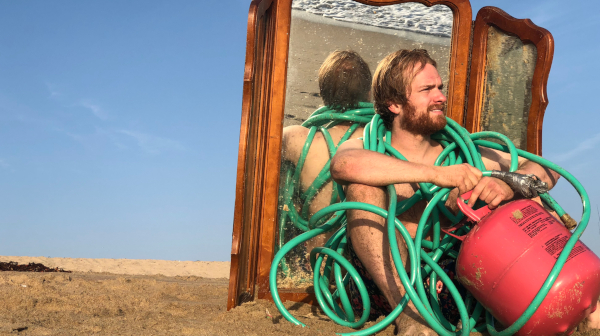
I made Mondo Hollywoodland, a psychedelic comedy and loose sequel to the 1967 cult film Mondo Hollywood. It was experimental. Messy. A long, chaotic shoot with friends. Writing, directing and editing bled into one another. It wasn’t efficient, but it was alive. For the first time in a long while, I wasn’t positioning myself – I was making something because we wanted to make it.
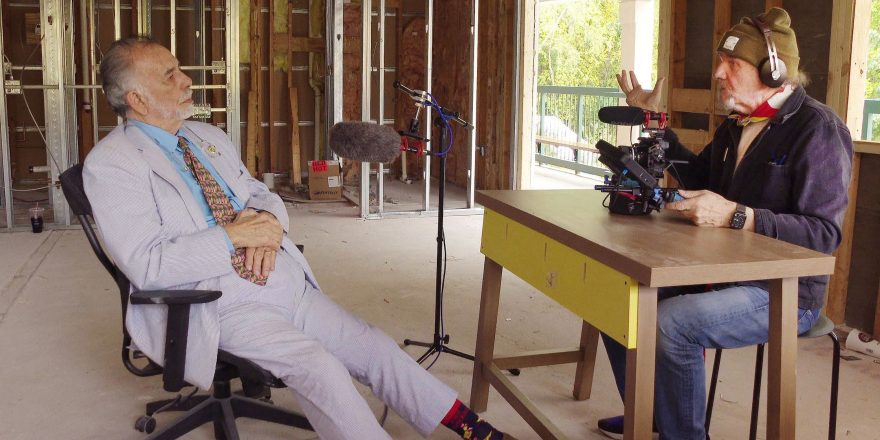
Coppola later told me he wished he’d made more films like that when he was younger. Instead, he’d been handed enormous responsibility early on, and only later in life returned to smaller, stranger, more personal work. He joked that he’d had a reversed directing career.
Is it still hard to direct a movie? Of course. Is it still my deepest passion? Yes. Would focusing only on directing have led to more films? Maybe. But being involved in multiple roles has its own reward. You help other people make their work. You stay connected. You build something that lasts longer than any single project.
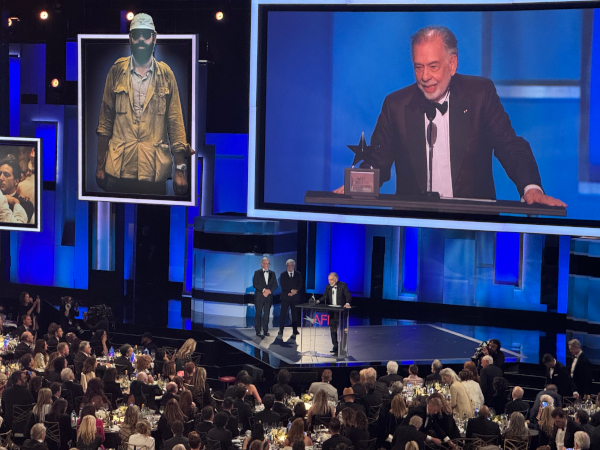
I was fortunate enough to attend Coppola’s AFI Lifetime Achievement Award ceremony. His Zoetrope collaborators – going all the way back to the 1970s – were there with him. They didn’t talk about Oscars or box office. They talked about being young together. About taking risks together. About friendship.
That’s what Coppola taught me. Is my company anywhere near American Zoetrope? Absolutely not. But it’s a North Star.
Cinema isn’t just about the films you make. It’s about the people you make them with. In the end, it’s the community that carries the work forward. Human relationships are always more important than accolades.
And that’s what American Zoetrope really was all about.