

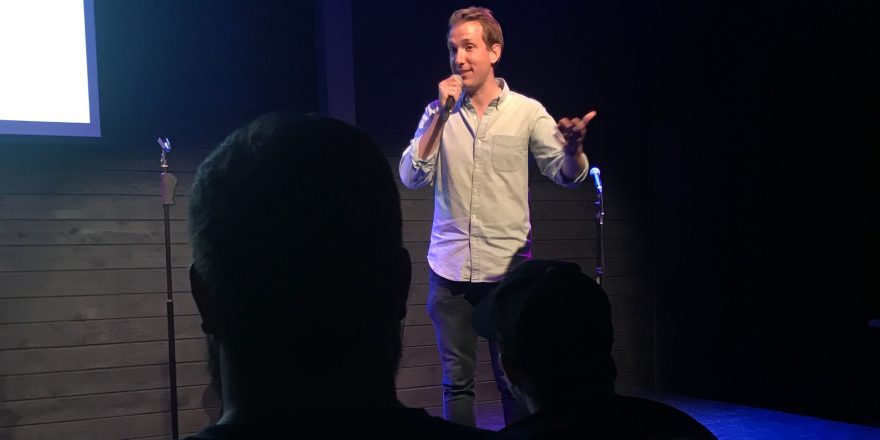

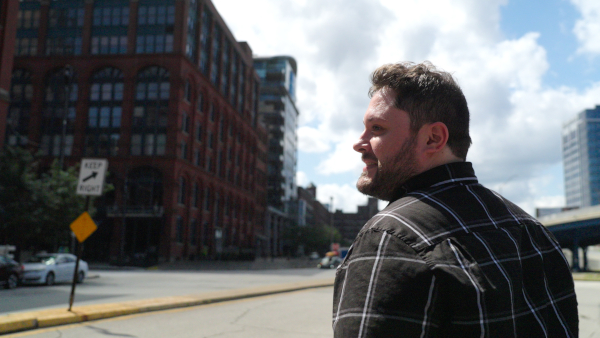
Will Thwaites is a documentary filmmaker based in Brooklyn, New York whose latest feature as director and producer, Crime & Parody, has its world premiere at the Big Sky Documentary Film Festival on Saturday February 21. He’s worked on projects for Netflix, Amazon, Hulu, and PBS. Will was a producer on two acclaimed Netflix series: Full Swing and My Next Guest with David Letterman. He started his career at Kartemquin Films (Oscar-nominated producers of Minding the Gap and Hoop Dreams), where he worked on the Emmy Award-winning film, The Homestretch. (Photo by BVO Media.)
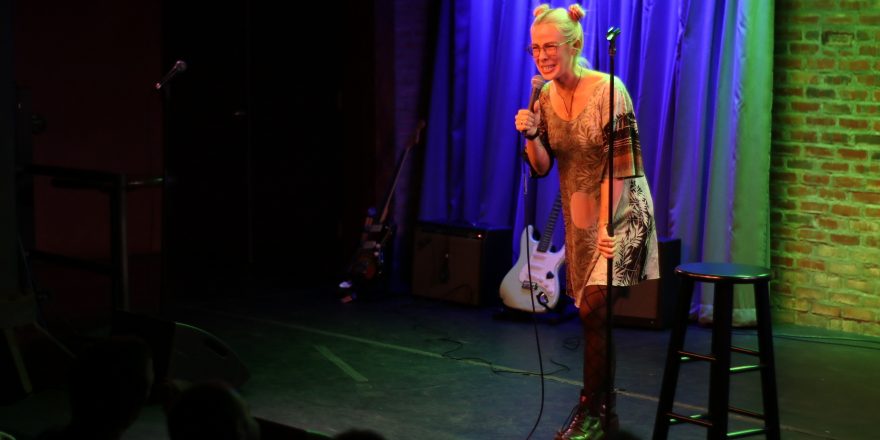
I’m a failed comedian.
My resume says I’m a documentary filmmaker, but “aspiring comedian who couldn’t hack it” is probably a more accurate assessment of who I am.
I spent half of my 20s living in Chicago, the city that launched the careers of Tina Fey, Stephen Colbert and Jordan Peele. I caught the comedy bug quickly and had delusions that I’d add my name to that list.
Instead, I did one open mic and dropped out of improv training after two classes. It was clear almost immediately that I didn’t have the talent, charisma or confidence it would take to make comedy a casual hobby, let alone a career.
On the other hand, documentary filmmaking came easier to me. I got an internship at Kartemquin Films, producers of Hoop Dreams and Minding the Gap. A few years later, I got hired by Zero Point Zero Productions, producers of Anthony Bourdain: Parts Unknown.
What I was good at was asking questions. I learned how to be curious with purpose. I could ask questions that added up to stories, stories that drove to big ideas.
And after spending ten years honing that craft of asking questions, I decided to ask one that had been bouncing around my head ever since my time in Chicago: what’s the point of comedy? I may not have had the chops to be a comedian, but maybe I could try to understand why comedy matters.
As luck would have it, a story fell in my lap that would help me answer that question.
One day, a friend sent me a short but intriguing text. It simply said, “Isn’t this story about your hometown?” I soon found myself reading an article with an eye-catching headline: Ohio Cops Think This Guy Should Go to Jail for Making Fun of Them.
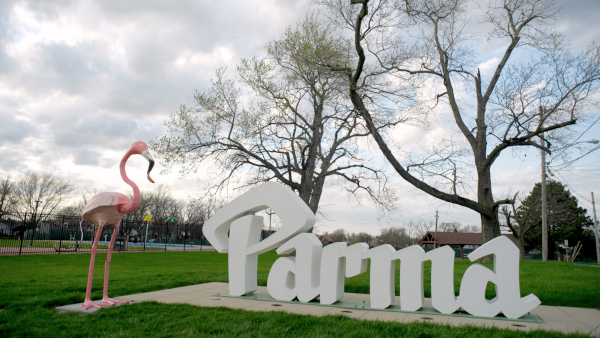
The story was indeed about my hometown of Parma, Ohio, and it laid out an incredible tale of an amateur comedian who was arrested, jailed, and faced up to 18 months in prison … all for a joke.
The deeper I dug, the more this story had everything you’d want for a documentary: suspense, stakes, compelling characters. And perhaps most importantly, it was a story about comedy under attack. A story like that might help me understand the question I’d been asking: why does comedy matter?
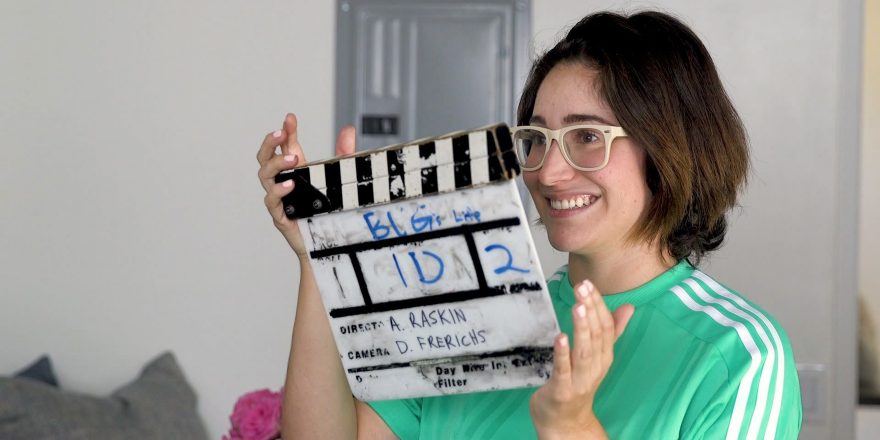
But like any good story, searching for answers would take me to places I never expected. Those unexpected places would add up to my debut feature documentary, Crime & Parody, a story I’ve been working on for the past three years.
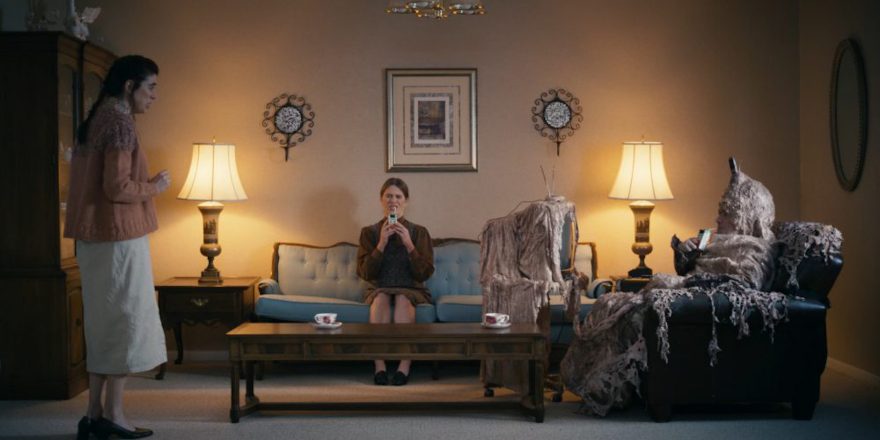
The story started with Anthony Novak, a full-time call center manager and part-time internet comedian. One day, Anthony made a parody Facebook page making fun of the Parma Police Department. The page looked exactly like the real police department’s page, but all the posts were insane. One advertised that the police would be giving out free abortions to teens in the parking lot of a grocery store. They’d be using an experimental abortion technique discovered by the Parma Police.
People on Facebook found the page hilarious. It got more than a thousand likes and shares. The Parma Police, however, did not find it funny. Officers in bulletproof vests kicked in Anthony’s front door with guns drawn. He was charged with a felony for “disrupting public services” and prosecuted in criminal court. “The scariest moment was the verdict,” his mom says. I’ll let you watch the film to find out what the jury ruled.
What followed was even more significant than Anthony’s criminal case. He sued the police for violating his right to free speech. Nationally recognized civil rights lawyers appealed his lawsuit all the way up to the U.S. Supreme Court. “We all have the right to mock the government,” his lawyers said. “It’s part of what makes America special. And so when Anthony’s case came to us, what was at stake is, are we a free people or not?” His lawyers had a singular goal: to try to hold the police accountable for violating Anthony’s constitutional rights. And one of the key obstacles in their way was a legal doctrine called qualified immunity that can shield government officials from liability, even when they violate someone’s rights.
Oh man. Some of this was music to a documentary filmmaker’s ears. When you ask a question and someone answers, “Our goal was …” and “The obstacles were…” and “What was at stake was …” you know you’re on the right path. But for me, that path would soon take a big left turn.
As much as I was excited that Anthony’s story had a goal with stakes, there was this little part of me that thought, “Oh crap: this story is important, but when it comes to holding the police accountable for their actions, aren’t there even more consequential cases out there?” I had started on this quest to find out why comedy matters, and now I faced way more serious questions.
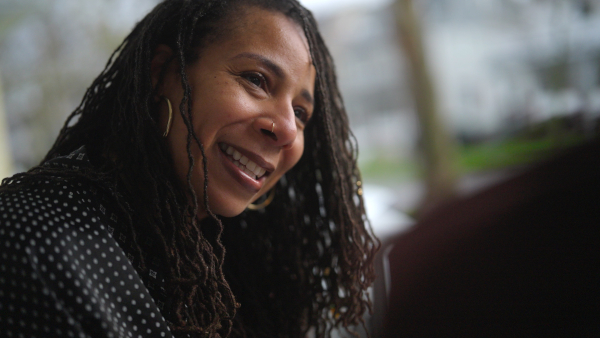
But then someone said out loud the thing I was thinking about quietly. When I was filming Anthony at a panel discussion about police accountability at Case Western Reserve University, a law professor named Ayesha Bell Hardaway spoke up with a comment that perfectly distilled the worry that was on my mind.
“I’m really interested in knowing how your case turns out, Anthony,” Professor Bell Hardaway said, “but I don’t want to be remiss in not acknowledging the lives that are lost at the hands of police. My high school classmate Omar Arrington-Bey was killed by the Bedford Police in the Bedford jail.”
She went on to tell the story of how Omar Arrington-Bey died in police custody after having a mental health episode. His death was ruled a homicide. When Omar’s family sued the police, the case was dismissed due to qualified immunity, the same legal doctrine that stood in the way of Anthony’s attempt to hold the police accountable in his case. Qualified immunity makes it so that government officials can only be sued if the law they violate is “clearly established.” As crazy as it sounds, it wasn’t clearly established that Anthony couldn’t be thrown in jail for political satire. And it wasn’t clearly established that police officers should have had enough training to prevent Omar’s death.
“[Omar’s] mother lives with the reality of that every day,” Professor Bell Hardaway says, “and as long as we have those realities for Black and brown people who are disproportionately affected by police violence, this is a real problem.”
Her comment took the air out of the room that day, and it changed the course of my film for the next two years.
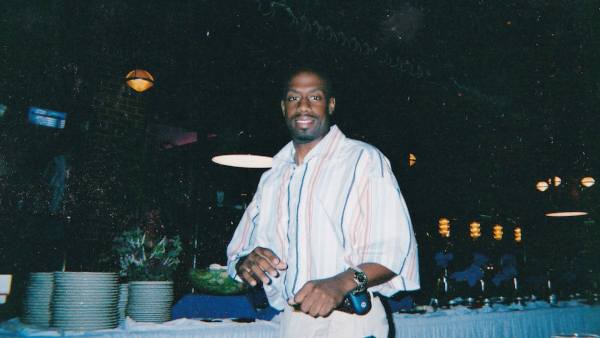
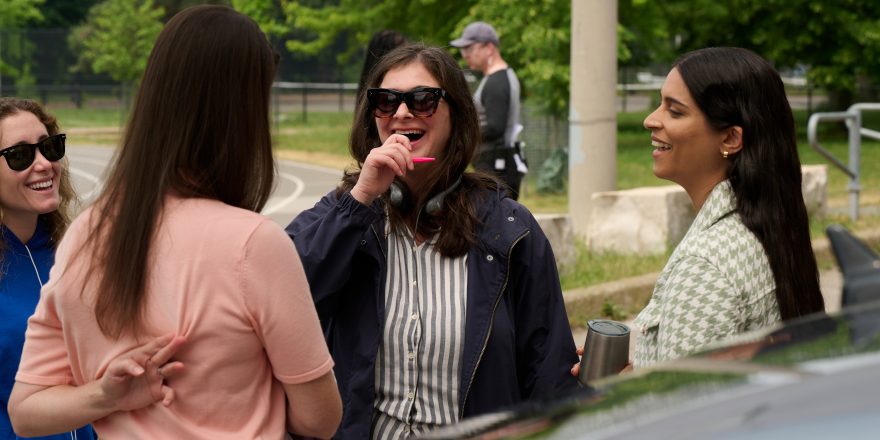
I’d like to think I did meaningful work in those two years. With Professor Bell Hardaway’s help, I reached out to Omar’s family to learn more about his story. I slowly got to know them off-camera, then when they felt comfortable, I started filming with them.
I asked Omar’s family about the joy of his life and the tragedy of his death. “There was no justice,” his brother Raj said. “Not just for me, but for his wife and kids. He was their father. Just the thought of having to go through life without your father knowing he was in police custody and he’s just … no longer.”
Here I was at the end of a three-year journey, a journey started with a big but trivial question: why does comedy matter? And now I was faced with a smaller but more consequential one: why do Anthony and Omar’s stories both matter?
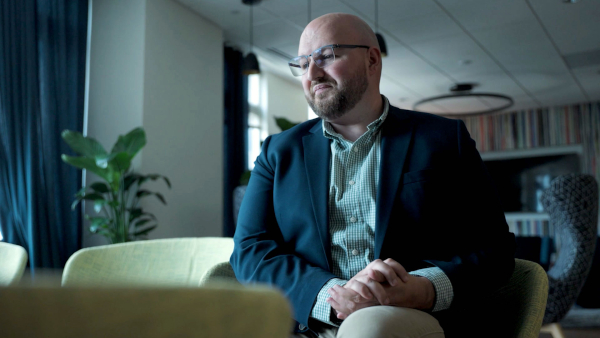
Patrick Jaicomo, one of Anthony’s lawyers, ultimately helped answer those questions for me.
“Both Anthony and Omar’s cases are important,” Patrick said, “because the throughline is this absurd and bizarre legal doctrine [qualified immunity]. What that doctrine does is say that our rights aren’t the thing that should matter.” But for Patrick, “Our rights do matter, our rights must matter.”
It was clear that our rights matter, but why would comedy still matter? How could a humorous case like Anthony’s coexist with a heartbreaking case like Omar’s?
“The humor in Anthony’s case is so important,” Patrick said, “because humor is a way in the law everywhere else to draw people in and make them listen.” As Mike Gillis, head writer for The Onion, would later add, “Comedy makes the work of understanding the world around you not feel like work, that it’s something you’re intrinsically motivated to do.” Humor grabs our attention and forces us to listen.
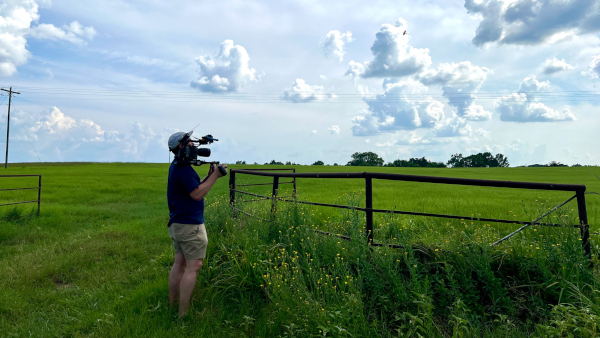
In other words, I might never have done the work of understanding Omar’s story if the humor in Anthony’s story hadn’t led me there.
We all might never think about the tedious details of qualified immunity if a goofy Facebook page didn’t invite us to do so.
And I might have never figured this all out if I hadn’t failed as a comedian.
Featured image, showing Will Thwaites performing comedy in 2019, is by Elizabeth Newkirk; all images courtesy Will Thwaites.