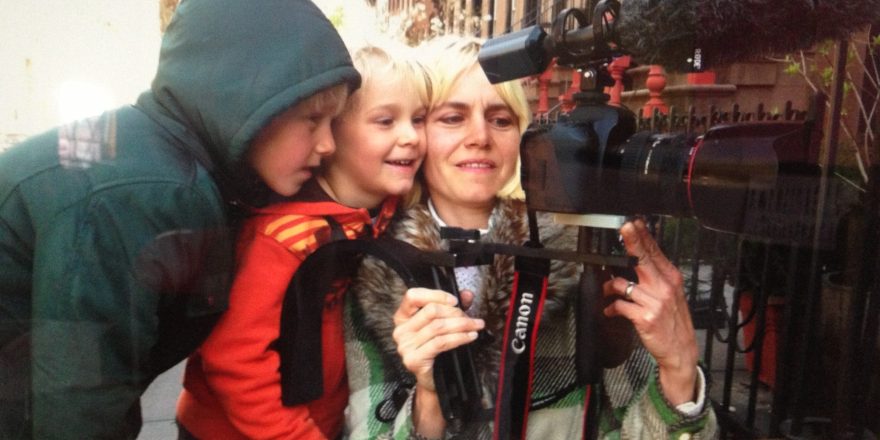



Shannon Plumb has shot over 200 short films, which have been exhibited in museums, galleries, and on international screens. She started by shooting herself as various characters, acting out three-minute situations using humor and silence as her vehicles for storytelling. In 2013, her first feature film, Towheads, premiered at MoMA as part of New Directors / New Films; it is now streaming on the Criterion Channel. You can see her short films at shannonplumb.com and Towheads is available on Netflix and iTunes. She lives in Brooklyn with her husband, director Derek Cianfrance, and their two sons.
“Godard sucks!” I shouted 27 years ago, while drinking pastises and smoking cigarettes with two Frenchmen and a Belgian. “Oh … my … God,” one of the Frenchmen responded. His bottom jaw dropped in shock as it carried a cigarette that never fell from his lip. I continued, “I hate Contempt.”
When I was growing up, women were valued more for their breasts and bottoms than for brains and brawn. Every boy in America seemed to have a picture of Farrah Fawcett taped to his bedroom wall. Not all the women of my generation could relate to the pinup girl or to the bimbo whose cleavage got screen time in National Lampoon movies. While we ate our cookies and milk before bed, Benny Hill was chasing bare-bosomed girls in short skirts across the TV screen. From time to time, the centerfold of a Playboy magazine stared up at us from the bathroom floor.
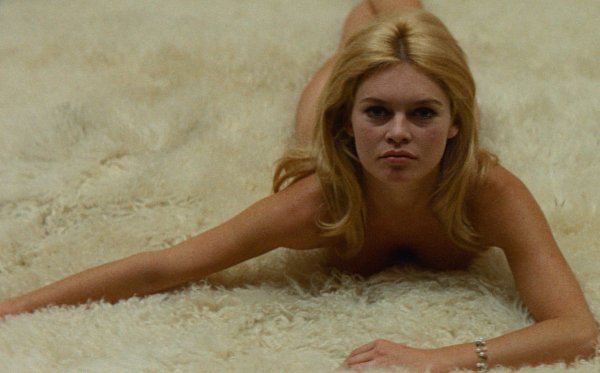
In my late teens, I started to challenge the norms that had never bothered me before. Why were women in movies naked and men were not? How come that actress in the tight shirt never had any lines? Why did the smart women come across bitchy? Why did actresses only get parts playing wives and whores? Would women still be exploited on screen if women ran Hollywood? When I saw Contempt in the ’90s, I thought, “Great, just another man exploiting another beautiful woman …”
I didn’t fully understand the meaning of the word “contempt” back then. Now I do. I had contempt for Godard.
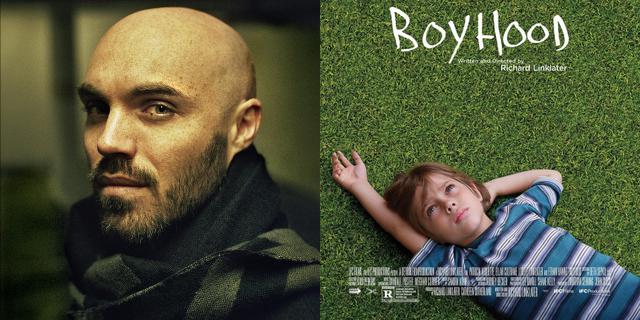
Earlier this fall, a friend asked me to go with her to see a film at the Directors Guild of America theater. I’m bad with contemporary names of who’s who in Hollywood. The film had a French title, Nouvelle Vague, and the director was Linklater. I wasn’t too familiar with either. I went ’cause I like hanging out with her.
Outside the DGA theater, on the edge of a permanent red carpet, my friend told me about the movie we were seeing. Godard?! A movie about the making of Breathless? A narrative film? I might have made a disgusted face, because her reaction was one of surprise. I felt the need to reassure her. “It’s OK.” I said. “I came to see you.”
We caught up the best we could in the crowded theater. We sat close, as one does in theater seats. Turning my head to talk to her, I became self-conscious. I’d been schooled to stay away from sardines and onions when attending face-to-face gatherings. But it’s my fast food in a can. I kept my lips tight as my friend and I exchanged info on our movie-making endeavors. I spoke of my failed attempts to get a movie made – impossible if I’m the director and lead actress. She told me about her short that was playing on the festival circuit.
House lights went down and the film began. It was in French. My perspective of the screen was obstructed by a big head in front of me; the head of a man wearing a baseball cap, his spine and skull rising into the middle of the English subtitles like a scarecrow towering above a cornfield. I read the beginning of the subtitle by leaning to my left, and caught the end of the sentence by quickly jerking to my right, almost colliding with the woman next to me. I repeated this action like the carriage of an old typewriter, side to side, back and forth, jerking away from my own margins, desperate to find meaning in the translation. Making my neighbors flinch and getting myself dizzy, I moved to an empty seat on the other side of my friend. What a relief! Vision unobstructed. Full screen. And then … I saw Godard.
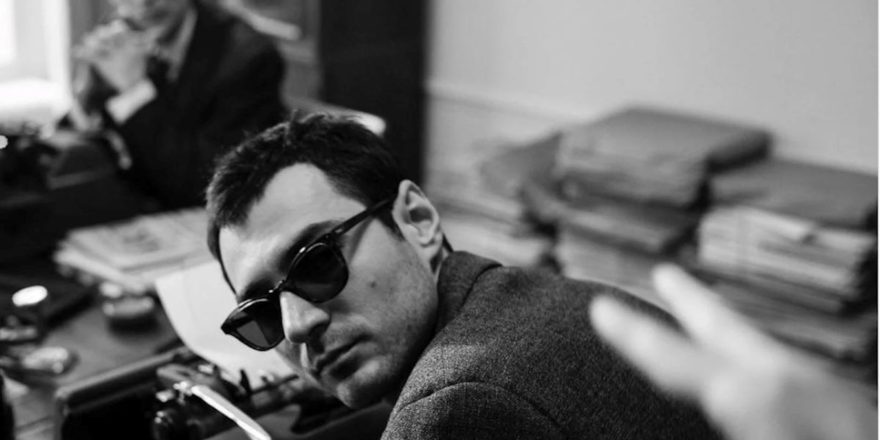
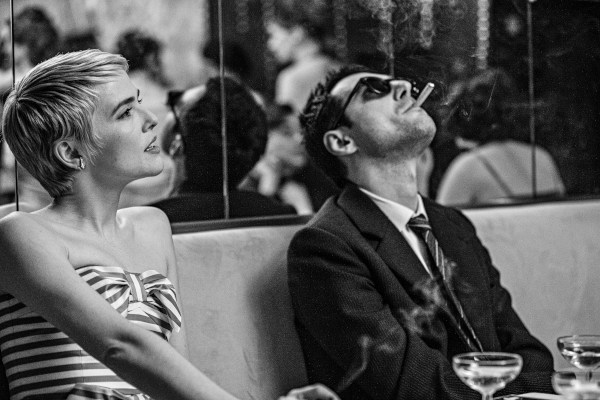
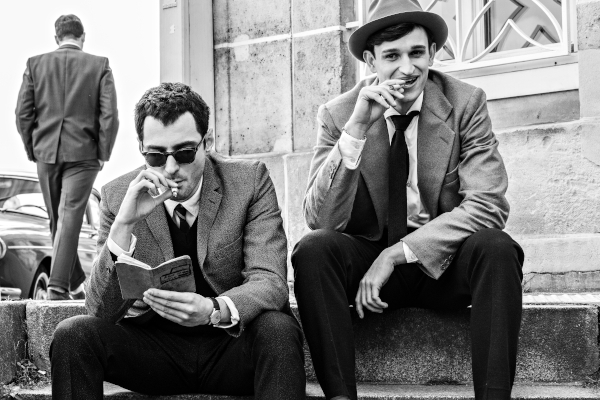
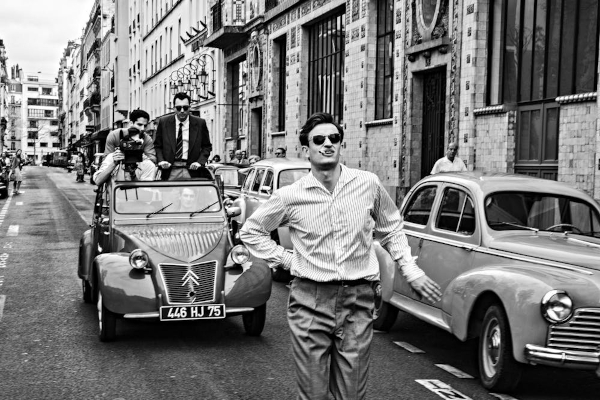
I can’t be sure if the actor, Guillaume Marbeck, charmed me or if it was the director he played, but I was enchanted by the spirit of Godard and the way he approached filmmaking. How had I gotten this so wrong?! The Godard portrayed here on screen was getting laughs. He was cocky, as I always thought, but cocky in defense of filmmaking. Rules? Who needs rules! Continuity? Script? The guy was a rebel. He didn’t need Hollywood. He could shoot a low-budget film with a small crew in the streets of Paris. He didn’t need four huge trucks taking up residential parking spaces and a 50-person crew sitting on apple boxes. He could get scrappy and shoot guerrilla style, the camera hidden in a push cart. What a champion for independent film. For the avant garde. For a new story, a new style, a new wave. For the auteur.
I immediately wanted to rewatch Contempt. Alone, so as not to have the energy of the room complicated by male gazers. Brigitte Bardot, and her buttocks, can do a lot to a person’s eyes (and other body parts). The male audience is aroused, the women aroused and perhaps slightly jealous.
As I stared at the iconic Bardot throughout the film, the Contempt theme playing, stopping and restarting, her beauty paralyzed me. I thought about the industry of creating icons, how Hollywood cultivates young actresses, like a farmer trying to grow the biggest sunflower for the state fair. He sees the potential for a new icon as it presents itself in a young blossom. The sunflower gets displayed, a fence goes up around her and people line up at the farm where she grows. They love to stand in front of the sunflower and stare for a while, but as the season passes, and the petals droop toward the ground, the farmer waters it less and less. It soon fades away.
Now at 55, my own petals drooping, I watched Contempt informed by 28 years of experience in film. This time, I wanted to be attentive to Godard’s craft and philosophy, notice the discarded and broken rules, rejoice in the possibilities of making a movie without the Hollywood system. I didn’t feel the need to get hung up on feminist idealism. I put the opening buttocks aside; cruised past them as if passing two dunes in a desert, and really watched Contempt. But wait, was this buttock move a ploy? A lure? A tool used to get a film made? I heard Godard say that all you need to make a movie is “a girl and a gun.” A giant sunflower! With buttocks.
This time, as I watched the epic pan from Bardot’s face to her bottom, the image transformed into a landscape of emotion. I felt the settled earth before the wind stirred; the beauty of love before the fall; the praise before the contempt. There was language in this maneuver that I hadn’t seen before. Godard was reciting his experience of love and break-up. The pan was poetry.
I wanted to learn more.
I asked my husband if we had a book on Godard. He said I’d banned Godard from our house long ago.
What was this crazy feeling I had? Heat in my veins. The room shook from my bouncing knee under my desk, or was it from my brain motorized like a loud Harley down a quiet road? I rolled away from my computer on a chair with broken wheels. I hurtled over a heap of dirty clothes, dashed past a hungry dog and an empty bowl. I descended the stairs, two by two, and entered the basement. I hopped on the couch, ready to research the ways of my Nemesis. I did a Search for Godard.
What had come over me? Was this a sign to make my films no matter what obstacles are in the way? To look at what I didn’t see before in art, in politics, in men? My heart was racing and I couldn’t sleep. I needed something from this experience, but what? What could I learn? How could I apply it? To filmmaking, to performing, to being a human? What was the burn leading to? Pain and regret? Motivation and change?
This all got me thinking. I simply need a girl and a gun. I don’t need a famous girl. I’ll be the girl. Maybe I won’t shoot the gun. I’ll put it in a drawer. I’ll get a cameraperson and a camera. I’ll be the director. I’ll find a helper; my neighbor wants to know about making movies. I’ll probably need a producer. Don’t want makeup. It looks bad on digital, anyway. Shoot in the streets or in one location. Keep the crew small and ready to move, like a special units team. Hide the camera! It’s a revolution! It can be done without Hollywood. Without all the agents pushing their icons, and gatekeepers guarding their gates. Who needs gates? Who needs stars? We want to take risks, cast unknowns, push the medium. I’ll hire a handful of actors. Me and the crew will stay in the same house. We’ll wake up, brew coffee and eat croissants. We’ll smoke cigarettes while discussing the shots that day. Doesn’t art take time? French time? Is there a different way to schedule things? A different way to make a movie?
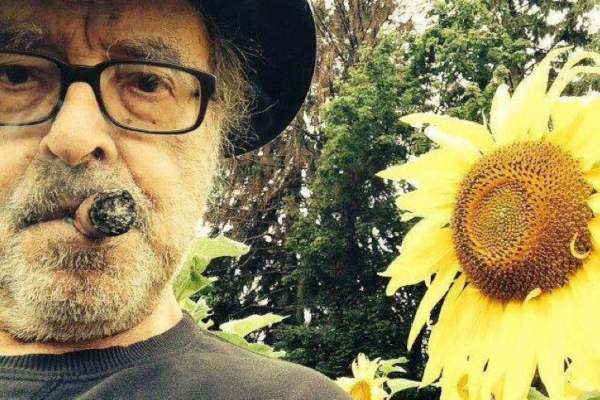
Unexpectedly, Nouvelle Vague liberated me from my own bias. I never thought I’d revisit Contempt. Or that I’d resent saying “Godard Sucks!” I’d missed art-pivoting revelations because of my hang-up with Brigitte’s buttocks on the big screen.
Watching a movie about the making of Breathless and then looking at Godard’s work, I returned to my faith in lo-fi filmmaking. I returned to believing that a homemade chocolate chip cookie recipe is sometimes better than a store-bought batter in a box. That duct tape and strings really do hold things together. That the less you have, the more creative you can be.
The Hollywood way is not the only way to make movies. When thinking about the state of independent film, I wonder about young filmmakers. Will they be stifled by the rules of the industry? Or will they invent new techniques to get their movies made? The upcoming generations of auteurs could benefit from this introduction to Godard. It might encourage them to look back in history and discover old ideas for making new films. If they turn to see what’s come before them, maybe there’s hope for independent film. Maybe that’s all it is. Looking back to see another wave coming.