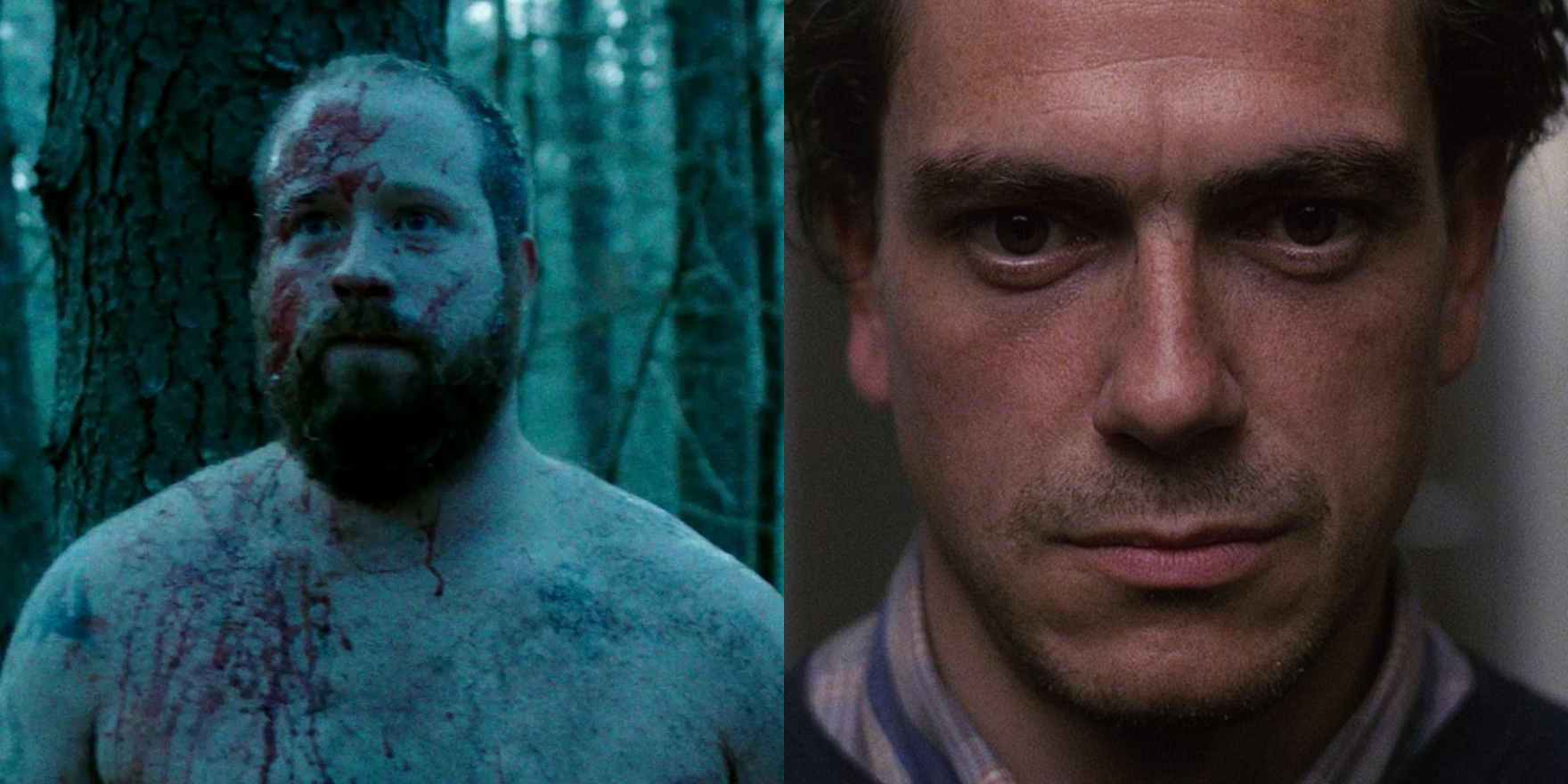
As I have credits on movies like Companion, Gretel & Hansel and Orphan: First Kill, it is safe to say that my career is inextricably connected with the horror genre. As a film editor who traveled to festivals, I met a lot of filmmakers (and kindred spirits) working in the genre, and that created work for me. I grew up loving horror films and making them with my friends, so being able to turn this into a career was a dream come true.
For the first decade of my career as an editor and producer, I worked on more than 20 horror movies, from $50k indies to wide theatrical releases. I feel very blessed to been able to make films with my friends, including writer-director Joe Begos, whom I've been working with since high school. I wouldn't trade it for anything.
But in addition to my lifelong love of horror films, I have also spent a lot of time as a fan of bleak, confrontational art. I fondly remember driving with friends across state lines to go see Michael Haneke films as a teenager. Of course, growing up in Rhode Island, it's a lot easier to drive across state lines – the entire state is less than 40 miles across at its widest point.
As a teenager, I already knew that I wanted to edit films, so I gravitated toward arthouse, as well as horror. In addition to Halloween, Suspiria and Phantasm, my friends and I were also dedicating time to A Clockwork Orange, Irreversible and The Vanishing. By the time I moved to Los Angeles at 21, I didn't need to cross state lines to see Haneke films anymore. I just had to find a Laemmle theater.
So even as I was kickstarting my career playing a zombie in the background of a horror anthology, or working as an assistant editor on half-million dollar slashers, I was feeding this other side of my cinephilic self as well. A region-free Blu-ray player became a passport to international cinema. Even more incredible, Los Angeles' independent theaters were booking these films onto screens, allowing me to race across the city after a work day for Gaspar Noé's Enter the Void during its initial run, walking in sober as a bird and stumbling out afterwards onto Santa Monica boulevard feeling high as a kite.
It was around this time that Begos and I made our first film together, Almost Human, an alien abduction slasher film that had its world premiere as part of the Midnight Madness program at TIFF. In addition to editing and producing, I also played the killer. A dream come true for a kid growing up watching horror films. Traveling to a festival also meant we could see those international gems early, and wouldn't have to wait until the end of the year.
In late 2017, I was editing a film in Europe, spending my nights wandering around the snowy streets of Sofia, Bulgaria, around Christmas. The Criterion Collection was having their usual 50% off sale. Snuck in there amongst all of the "I really have to see this" and "I can't believe I don't own that" was a blind buy: Götz Spielmann's Revanche. I'd never heard of it, but the cover looked fantastic. Minimal and striking.
A few weeks later, when I was back in the States, I popped the disc into my player and proceeded to have my mind blown. A maintenance man in a Viennese brothel falls in love with a (likely trafficked) Ukrainian woman and decides to rob a bank to fund them getting the hell out of town. The kind of film you'd discover in the back of a Blockbuster back in the '90s with a young Michael Douglas or Alec Baldwin, and it always ends in a shootout. Revanche didn't end with a shootout. It didn't even have a musical score. Just quiet tension and moral complexity. I was hooked from the opening.
It suddenly occurred to me … I'd loved Michael Haneke movies since I was teenager, why wasn't I seeking out more Austrian filmmakers? Or Germans? Tarkovsky only made seven feature films, why don't I just sit down and watch them all? It lit a fire under my watchlist and I started devouring all the Eastern European cinema I could get my hands on. Tracking down Andrey Zvyagintsev and Sergei Loznitsa Blu-rays. Discovering the glory that is Aleksei German's filmography. Anticipating modern masters releasing new films, like when Pawel Pawlikowski won best director in Cannes for Cold War.
By the time Karyn Kusama did her Adventures in Movie Going in 2019 and chose Elem Klimov's Come and See, I already had the Japanese Blu-ray, and I could tell that they were sourcing a different master for the clips they were showing. I was ensconced.
In 2018, I took on a polish job for a horror film. I decided to take the salary and fund a short film of my own, with a script that crossed those genre lines I'd lovingly juggled for a couple decades of movie-watching. That short was Gutter, which I wrote, directed, produced and edited. Shot on a rainy weekend in Los Angeles for around $3,000, it was a great experience, and it brought together a lot of my talented friends who became a core part of Channel 83 Films, the banner my friend Joe Begos and I have been producing films under since our debut.
In addition to its up-front genre leanings, Gutter also drew heavy inspiration from my love of directors like Zvyagintsev and Loznitsa, trading traditional coverage for wider framed masters, framing characters through doorways and hallways, presenting scenes without score and leaning into the ambience. As a storytelling exercise alone, it was an invaluable experience, as writing and directing a project can have a powerful effect on your editorial skillset. Working the story in the moment on set with the actors and crew, creating opportunities for what will be possible in editorial.
A couple of years later, the American Cinematheque launched Bleak Week. The Cinematheque’s artistic director Grant Moninger texted me while I was on a film shoot (Christmas Bloody Christmas, about a robot Santa Claus slashing its way across a small mountain town), teasing me that something was coming that felt like it was almost entirely for me. No stranger to my viewing habits at this point, he introduced me to Chris LeMaire (now director of programming) and we became friends immediately.
For four years now, on Chris and Grant's invitation, I have introduced a dozen or so screenings and even contributed some program notes for Bleak Week. I have probably attended more than 60 Bleak Week screenings as a fan of not only the festival, but also the American Cinematheque’s programming team. They even asked me to kick off a new program they started in January 2025, Transcendental Appointments, delivering an intro for Andrei Tarkovsky’s Stalker. Given how much time and money I spend on Bleak Week, Beyond Fest and the Ultra Cinematheque 70mm festival,, I have no idea how I keep a roof over my head most of the year.
While most of my work still comes to me in the form of killers and jump scares, I've spent the past year developing a project that will hopefully be my feature directorial debut. A film which again lives in that cross-section between those genres that I love. A downer that can hopefully make folks feel the way I feel when I see a sad, challenging film. Excited. Overjoyed. My cold, black heart nourished.
While I've been writing that project, I also edited the new Casper Kelly horror film, Buddy (my third film with my friends at Boulderlight Pictures), which just had its premiere at the last Sundance in Park City. Following that, I immediately jumped onto the next film in the Orphan franchise with William Brent Bell and my friends at Dark Castle. I'm still living and breathing that dichotomy everyday. Editing scares and tension all day, then heading home to pop in a downer and revise my own project. I have no idea if it will ever go in front of a camera, but the exercise has been so rewarding in and of itself.
Somewhere in those darkest, bleakest creative spaces is something that sends me out into the world fully charged and ready to create.
It's not like it's getting any better out there in the real world. We might as well get some good films out of it.