

Jessica Harrop is executive director of Sandbox Films and an Emmy- and Peabody Award-winning documentary producer who has dedicated her career to inspiring passion about science through film. In her role at Sandbox Films, she oversees all project decisions and company strategy and acts as an executive producer across Sandbox Films’ documentary slate — including Oscar-nominated Fire of Love; Sundance Special Jury-Prize winning All Light, Everywhere; Emmy-winning Fathom; and Fireball, a documentary directed by Werner Herzog. Jessica has produced content for a variety of outlets including Netflix, Showtime, Discovery, National Geographic, and PBS. As an establishing partner of Sandbox Films, Jessica’s passion for science storytelling shines through in each project she produces. She holds a degree in Ecology and Evolutionary Biology and a Certificate in Theater from Princeton University, where she also co-taught an undergraduate film course on communicating climate change. Jessica is a member of both PGA and WGA and she serves on the board of Reel Works Teen Filmmaking. (Photo by Ruvan Wijesooriya.)
Sundance Film Festival was a wonderful blur last week as it celebrated its final year in Park City. It was the first time I premiered two documentaries at the festival – eco-thriller The Lake, which follows scientists as they expose the imminent collapse of the Great Salt Lake in Utah and which won a Special Jury Prize in Impact for Change, and Time and Water, a poetic film that tells the story of a family’s connection to Iceland’s melting glaciers. Both projects embrace the humanity and beauty of the scientific process. As we celebrated the films’ successes, it was also a time for reflection on how I got here.
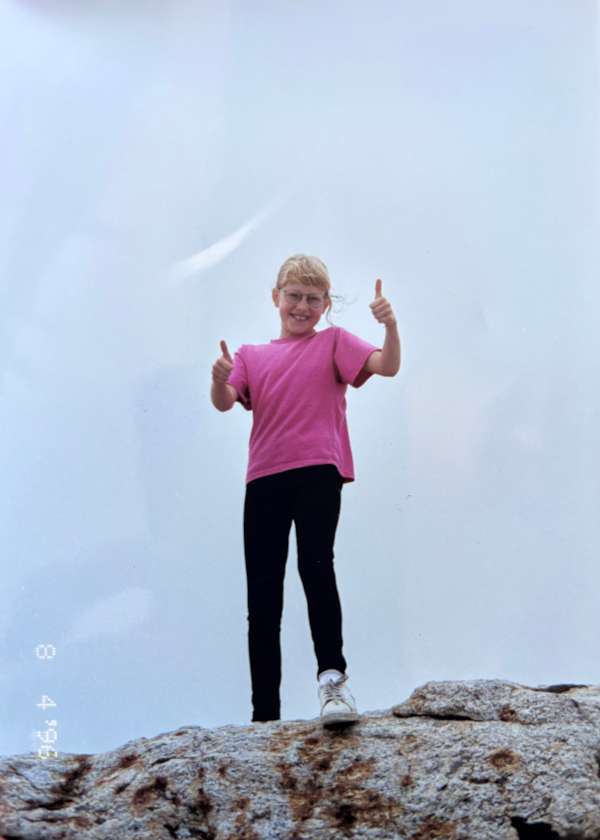
My love of science started early. My fifth-grade teacher chose me to accompany a team of scientists studying shad populations on the Potomac River. I went out with them in a small rubber boat to try to understand whether a new dam was blocking the fish from spawning. I was only 10 years old, but I remember that it was a thrilling adventure. I remember a rush of cold and fear as we went through the rapids and waded into the river in thigh-high boots. I remember being concerned for the fish and so curious about what we would find. The work eventually convinced the local government to cut a notch in the dam so the shad could pass. This was my introduction to science, and I was hooked.
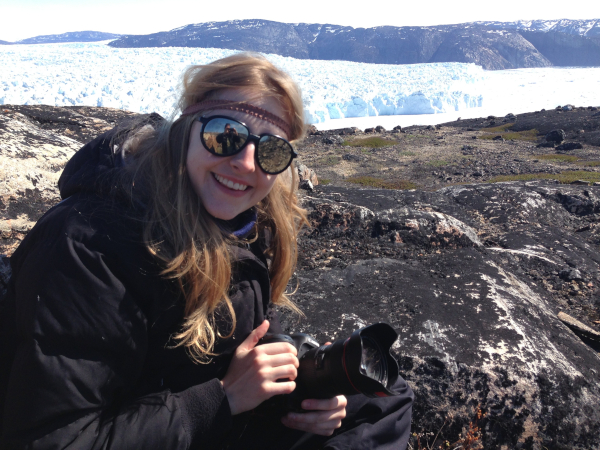
I majored in biology in college and spent time shadowing scientists in field research programs. After graduating, I decided to work in science communication. That allowed me to keep learning about everything – from immunotherapy research to the melting of glaciers to crow intelligence. It was a career that let me feel the things I felt on that expedition when I was 10 – curiosity, passion and adventure.
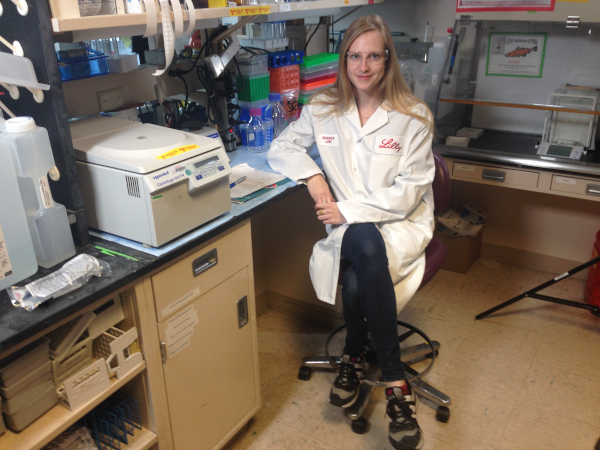
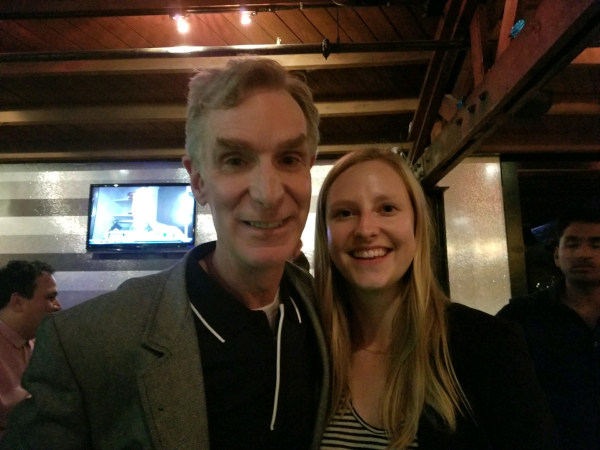
I spent more than a decade in science television, working my way up from associate producer to showrunner. As the only “science person” on set, it was often my job to translate the science and make it accessible. This often meant interviewing scientists, trying to extract answers. What do we know? What does the science say? Then we’d cut their interview into sound bites and add the voice of a narrator to simplify everything. It was educational and didactic. Sometimes we would inject humor – Bill Nye would tell a joke, or the host would eat a bug – but the science was presented as facts.
I was having a blast. I was meeting fascinating people in labs and on expeditions, and learning about their colorful lives. The more I saw how beautiful and human science is, the more I wondered why we don’t see more stories about that. Science was being portrayed as sterile facts and figures – but to me, it was full of emotion, creativity and humanity. There was rarely a satisfying answer, because every answer led to another question. Ultimately Sandbox Films was born from the desire to redefine how science stories are told and to bring the beauty of the scientific process to life through cinema.
In 2019, I started Sandbox Films with colleagues from the Simons Foundation, who supported the vision to encourage artists to take risks and create documentaries that lead with the excitement of the scientific process, instead of the results. We hoped more creative and artistic science films could draw in new audiences. And maybe these films could premiere at places like Sundance, play in movie theaters to mainstream audiences, and be bought by non-science-specific distributors. We wanted to see science films in places where the average person could find and enjoy them.
These ambitions were strong, but in 2019 there were very few creatively ambitious science films for us to support. To help change that, we began hosting retreats, now known as Camp Sandbox, that bring scientists and filmmakers together to connect and exchange ideas. The aim was to spark curiosity about science in filmmakers who did not see themselves as science communicators. At the same time, the artists helped scientists recognize how compelling their perspectives could be. That is the magic we try to cultivate: the moment when curiosity meets creativity, and both sides see themselves, and each other, in a new way.
Over the past seven years, I’ve worked on more than 40 feature films that expand the language of science storytelling. And most importantly, I’ve seen an increase in the number of science films being made and shared. Some of our Camp Sandbox success stories have even gone on to be realized without our involvement, a sign that the ecosystem itself is growing.
One of my favorite examples of Sandbox’s approach is our film Fire of Love. At an early version of a Camp Sandbox retreat, filmmaker Sara Dosa met volcanologist Clive Oppenheimer, and they spent the weekend talking about Maurice and Katia Krafft – two scientists who devoted their lives to studying volcanoes, only to die together in an eruption, leaving behind hundreds of hours of footage. Sara later called me to say she’d been dreaming about making a film using their archive. Over the following year, we developed and financed the film. We supported Sara’s vision to tell the story entirely with archival footage, rather than caving to pressure to make the film more conventional and “educational.” The result was extraordinary: Fire of Love premiered at Sundance, was acquired by National Geographic, and went on to be nominated for an Oscar. The film was praised for its unique style and the risk we took in funding a different approach to science.
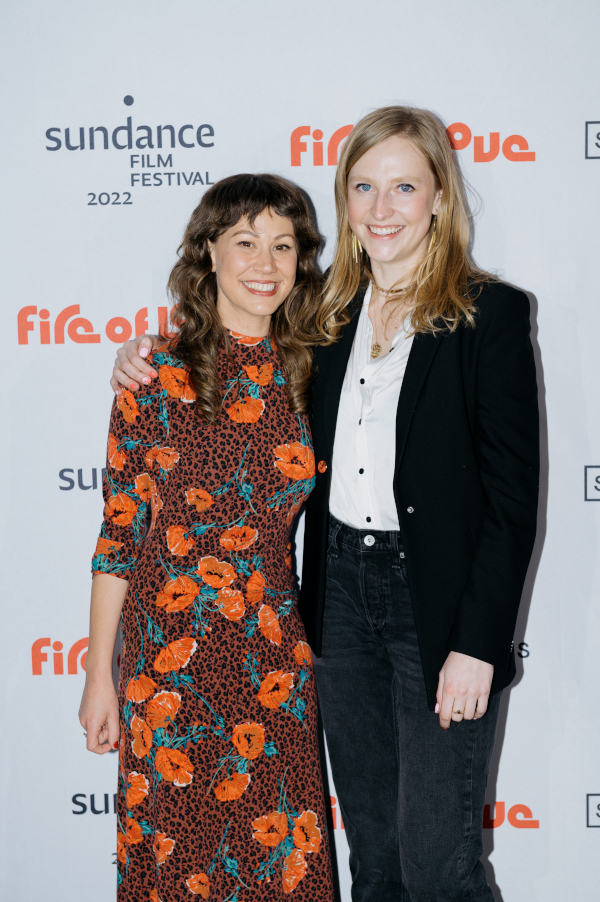
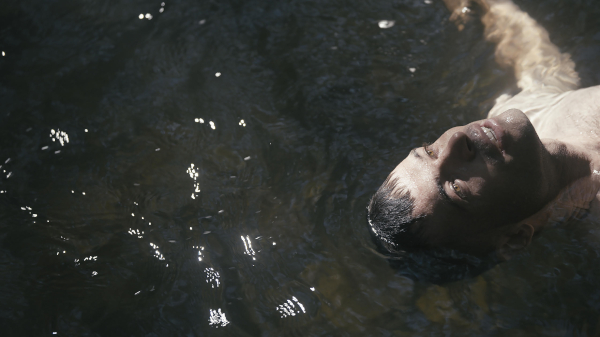
The partnership with Sara Dosa, her team of producers and editors, and National Geographic has continued, which brings us to last week, Sundance 2026 and the world premiere of Time and Water. We were so fortunate to partner with National Geographic to support a film that one reviewer called “a poetic musing on intergenerational memory.” The film is set up as a time capsule created by Icelandic writer Andrei Snær Magnason, capturing a moment in time when Iceland’s glaciers are melting, but before they are completely gone, allowing us to think deeply about the impact humans are having on the planet and what we want to leave to future generations. It is a film that is centered around questions – like, how do we say goodbye to things we never thought we could lose? – instead of answers.
The other Sandbox Film to premiere at Sundance last week was The Lake, directed by Abby Ellis. This vérité film tells the story of scientists and politicians discovering the collapse of Utah’s Great Salt Lake, which is leaving behind toxic chemicals in its dust. The film helps the audience learn with the scientists, carefully documenting their process. It shows how people have worked together to try to solve the problem. Utah Governor Spencer Cox embraced the film and has announced his determination to make the lake the first of its kind to be saved after entering decline. The film was honored with the Special Jury Prize for Impact for Change.
I’ll end with some science … the science of science communication. You can tell people facts over and over again, but if they believe something else, facts won’t change their minds. The way to affect people is through emotion and story and art. We want our films to provide more questions than answers. We never want to lead the audience – we want them to think like a scientist. Sandbox Films exists to be that bridge – a place where science isn’t just about knowing the world, but about feeling connected to it. I hope both Time And Water and The Lake will do that for audiences as they make their way out into the world this year.
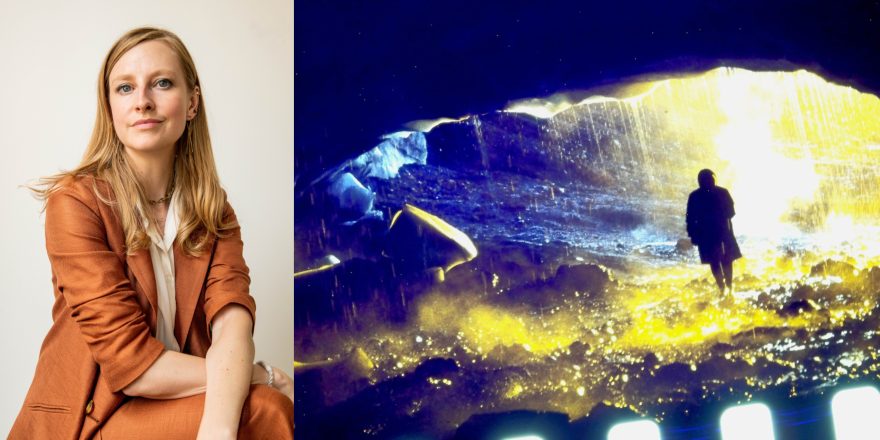
Featured image shows Jessica Harrop as photographed by Ruvan Wijesooriya (left), and a still from the Sandbox Films production Time and Water, directed by Sara Dosa (right).