


Shannon Plumb has shot over 200 short films, which have been exhibited in museums, galleries, and on international screens. She started by shooting herself as various characters, acting out three-minute situations using humor and silence as her vehicles for storytelling. In 2013, her first feature film, Towheads, premiered at MoMA as part of New Directors / New Films; it is now streaming on the Criterion Channel. You can see her short films at shannonplumb.com and Towheads is available on Netflix and iTunes. She lives in Brooklyn with her husband, director Derek Cianfrance, and their two sons.
If you’re an artist, you have to be deluded.
All the makers, creators, builders, movers and shakers of the world couldn’t have achieved what they’ve achieved without delusion.
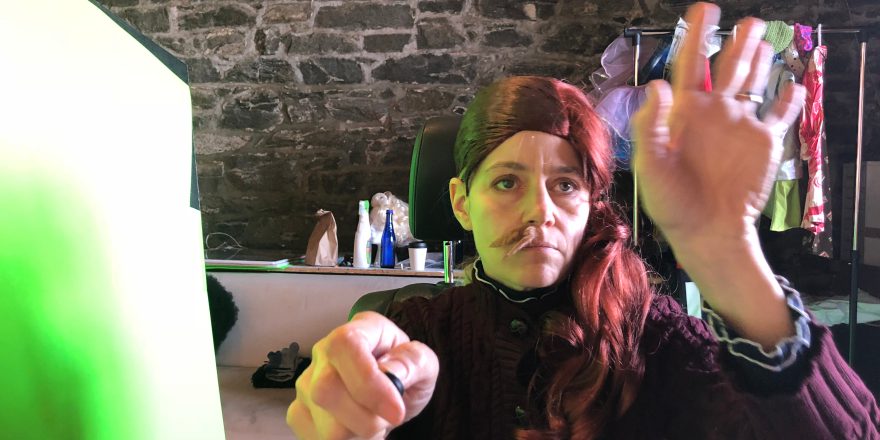
My feature film Towheads, which premiered in 2013, just started streaming on the Criterion Channel. I better get ready, finish the new script, polish the old one, reread the one that is set in a galaxy too far away, too expensive to make. I’ll be filtering through my Amazon, Target and J.Crew emails, searching for that one official subject heading: “Your Next Movie.” I’ll have my wigs and mustaches primmed, I’ll remove old flight tags from my suitcase, ready to fly to my next film set. I thought I’d have made three movies by now, but I’m content to be a little behind. I’m sure somebody will offer me money now. Delusion lurks nearby.
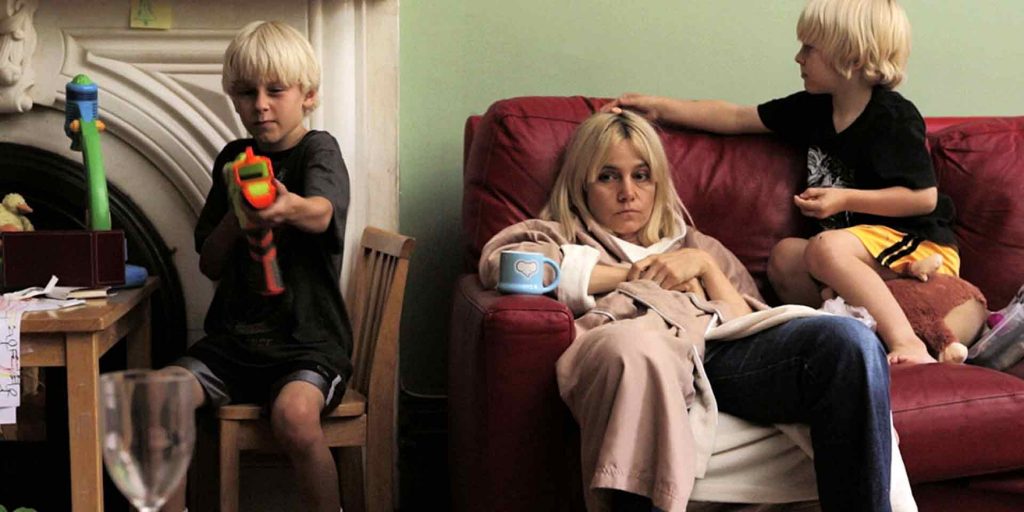
Before you begin to write a script, you have to be convinced that your idea for a story is worth a year or 20 years of writing. One early afternoon, I was riding the subway, alone. Since my sons were born, I’d been an artist and stay-at-home mom. A moment to myself was cherished time. My boys were six and nine at that point and getting accustomed to the fixed hours of their school day. In these short segments of time, I could continue where I left off before they were born. I could concentrate on writing and making movies. On this particular afternoon, as I took a deep breath on the C train and examined my life, I looked around the subway car. A homeless man cuddled into a corner, a Russian woman applied powder blue to her eyelids, a man with pizza on a paper plate struggled to untangle his tongue from a string of mozzarella cheese. Suddenly, a revelation popped into my head. I had something in common with every human on that train. We all had a mother. This blew my mind! Never thought of it that way. Had anyone made the movie about becoming a mom? In a world dominated by male filmmakers, had there ever been a Mother who told the story of becoming a Mother? Becoming a mom was the biggest, strangest, most important thing I ever did. How could there be so few movies about it? Was Motherhood something that just happened over and over again, like leaves changing in the fall, “Yup, that’s just what happens”? Were women expected to accept and adapt to this life-changing rite of passage without examining it? Was this supposed to be “in our nature”? Had society taken for granted the hours of deprived sleep, the practice of patience, the inexhaustible love, the infuriation, the challenges and sacrifices, the constant vigil, the mistakes, the beauty and grace in becoming a mom? And what about the fear leftover from the fifties – roads to Motherhood lead to Housewifehood lead to Death? For a few minutes, as I leaped off the couch, I thought I had a genius idea. Determined to tell the universal tale of being a mom, and play the most important role of my life, I tripped over building blocks and mini raceways to a laptop on the kitchen counter to construct a mother’s story.
It would be called Towheads.
The realities of making a film are daunting. I’m amazed at how many of us know this and still begin writing page one of our scripts. After convincing yourself that you have a great Idea, you have to convince a whole lot of other people of the greatness of this Idea. You need to take on the persuasiveness of a cult leader. You learn the art of seduction. You talk more than you ever did and acquire big descriptive words. “Great, intense, really funny.” You become an ambassador to the Idea as it develops into a new country not yet drawn on a map. You’re a salesman, a matchmaker. This Idea is for you and you and you. Look at this Idea. You bring it around like a cake in a box. Protective and careful, but excited to share.
So what gets us to page one and beyond? Delusion has to be assisting.
When presenting myself to the Artist Production Fund, I had to embody the most magnificent writer-director-actor there ever was. I had to say, “I’m fucking great! The best! No one’s ever gonna make a movie like this but me!” That’s not what I said when I did my pitch. Instead my lips froze with little bits of air leaking out of them. What was I saying? “What’s the look?” someone asked. “Do you have references?” asked another. “It’s a mother’s tale.” The sentence seemed to leak from my lips in liquid form. Someone filled in the rest.
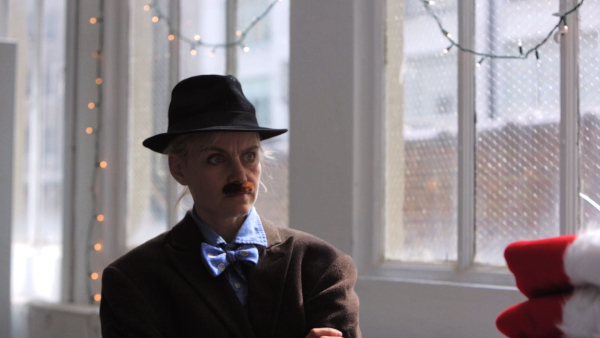
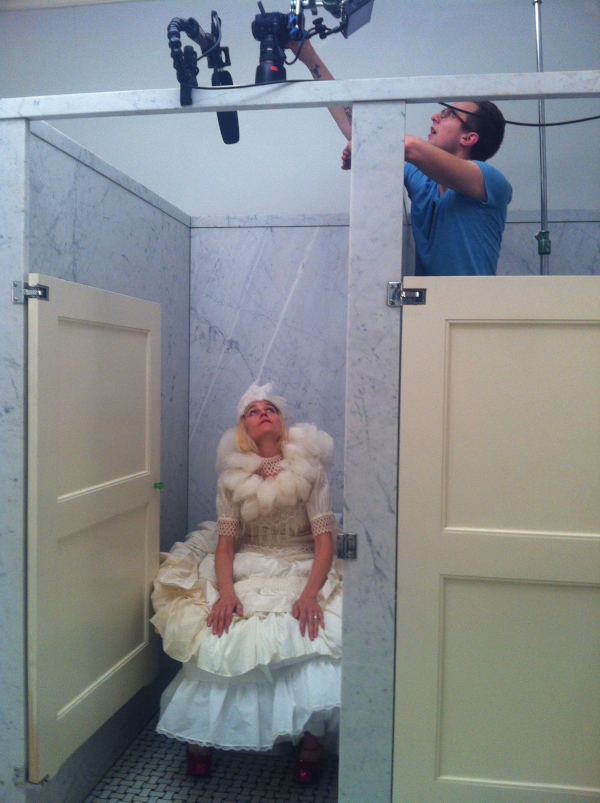
Delusion is that instant when you’re writing page 13 of your script and you’re thinking, “This is definitely going to Sundance.” On page 26, you have an idea for Melissa McCarthy to play your Aunt Sally. You’re writing away, your head is growing, your fingers moving faster like a piano player performing “Ragtime.” Then, as if you’ve forgotten parts of the song, your fingers slow down. You’re not making music anymore. The clicking of the keys starts to sound desperate. One letter here, one there. Barely enough contact to the alphabet to make a whole word. You slam the delete button like a three-year-old hitting flat notes.
Dribbling out letters, you reach the bottom of page 29. You bang on the return button and page 30 appears blinding you with emptiness. Reality stops you. “This sucks!” And, “How you gonna get the script to Melissa McCarthy? You’re a nobody who doesn’t know anybody.”
Delusion is seductive and should be used with caution. Like tobacco, a couple puffs will ease the nerves and inspire your thought, but start smoking whole packs and you’ll wrinkle up, then die of disease. If utilized correctly, delusion will get you to the next scene, the next brick, the next new leap in a choreographed dance. The healthy delusional state lasts for brief intervals of time. I’d like to say it lasts from 3 minutes to one day at the most, but there haven’t been many studies on delusion.
After an all-day writing session, and a bout of delusion, you might crack open a beer, let out a burp, and celebrate the last scene you just constructed. It was comparable to Shakespeare! You might hug your cat a little too hard. When your husband asks you, “How’d writing go?”, you might reply with a cocky, “Fantastic! I don’t do dishes anymore.” Delusion has a euphoric and invincible nature.
Once a script is written, you have to believe someone will give you millions of dollars to make it. How delusional is that?
Unless the financier is an arms dealer needing to launder money, why would someone ever give that much money away to a filmmaker? I guess financiers have to be delusional, too.
I wrote Towheads while my husband was away shooting his own movie. I wrote between drop-off and pick-up. When I had a fine tuned script, I submitted to Artist Public Domain, who ultimately produced the film. They were a not-for-profit company granting funds to artists making their first features. They liked it! We started hiring crew. We were going to make a movie!
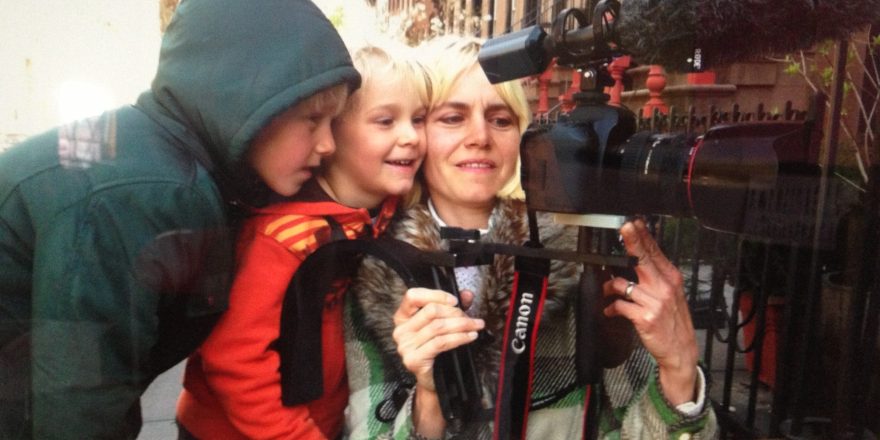
We had no budget for kid actors, or for a house as a set. We had to use what we had: the house we rented, the kids we birthed. Oh no. Now it was up to my kids if we made the movie or not. I had to ask my sons if they wanted to make a movie with me. I was terrified. What if they said, “No.” I tried to think of the most important thing in their lives, something I could hold for ransom. I’d tell them they had to do it or … they couldn’t watch Cars ever again. Nope. I couldn’t force them to work on a project for me. Could they be inspired as I was by the importance of this movie, its tribute to those who nurture the future humans of the world? I sat them down behind plates of spaghetti and meatballs and asked if they wanted to help me make a movie about being a mom. They said, “Maybe,” and asked how much they would get paid. I promised some money and threw in a few Beyblades. The deal was sealed.
When I watched the first assembly of Towheads in the edit room, with Joe Krings at the wheel, I heard angels singing. This movie would be undeniable! There were so many choices of funny scenes. Each take was hilarious, the edit room filled with laughter. “I’m the female Buster Keaton, Jacques Tati, Charlie Chaplin, Lucille Ball lookalike!” Great, but I needed to cut three hours down to 90 minutes. And it had to make sense. Funny for funny’s sake wouldn’t survive. We needed to knit a story. As scenes got discarded, I started to feel less like a great vaudevillian and more like the six-year-old ballerina I once was, who froze from fright on stage, and peed in her tutu.
The first time we laid down the music composed by Dave Wilder to the opening scene, I thought, “I’m going to make strides in the world of filmmaking. People will know my name.” I would be one of the first few females to bust out with physical comedy in 21st century cinema. Then my producer Andrew Adair interrupted, “Call SAG immediately.” I got on the phone with an elevated tone of superiority. A representative asked for my name. I replied, “Shannon Plumb.” The guy said, “Oh, yes, I see you here: ‘Shannon Plump.’” “No, that’s Plumb. With a B for boy,” I told him. Ten years paying dues and the Screen Actors Guild didn’t even know my name!
The editing sessions went back and forth, from complete cockiness and ego oblivion to, “I’m going to be humiliated. I’m quitting filmmaking.” The ball bounced that way for six months. Then I woke up to another reality on Thanksgiving – a rejection letter from Sundance. I felt extra empathy for the turkeys that year.
A delusional state that lasts 24 hours or more can be dangerous. If your head gets too big, you can walk into Stop signs. I did that once. It was either delusion or a bad hangover.
Delusion is like a trail of breadcrumbs for the sparrow. While constructing your masterpiece, whether it’s a skyscraper or a poem, you need a few crumbs of delusion to get you through. You need to think you’re T.S. Eliot, to lure the muse out. Don’t worry, this feeling of brilliance will pass and you’ll suck again.

What would we be without delusional thought? Would we even get past page 13 if we didn’t pump ourselves up a bit? Would airplanes exist if there hadn’t been a deluded inventor? Would elephants be rescued if there wasn’t a deluded bushman? Would TikTok be as popular if everyone didn’t think their video would go viral?
The conviction to get to “the end” of a creation seems to be a good balance of unrealistic and realistic thoughts.
On Mother’s Day, when I woke up to crayon drawings from the boys with “i luv you” in a corner of the page, after hugs, kisses and pancakes, I fantasized that Towheads would surely be screened as a celebration of Mothers everywhere. Iron Man 3 played instead.
On a silent retreat this summer, we recited a prayer that said, “Delusions are inexhaustible. I vow to put an end to them.”
Delusion in the Buddhist texts is referred to as “a fundamental misunderstanding of reality, which leads to a distorted perception of oneself and the world.”
I can see how delusion can create problems. You let yourself down when you perceive yourself differently than how the world sees you. One critic who reviewed Towheads thought I was complaining about being a mom. She wrote, “What does she have to complain about? Look at her home, and her husband’s a famous director.”
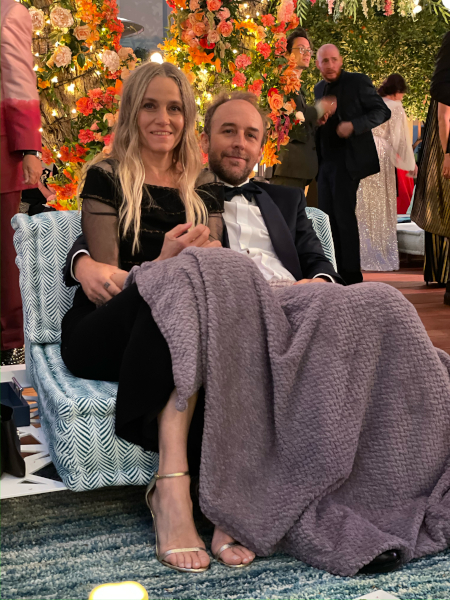
The screening of Towheads at New Directors/New Films at MoMA was unforgettable. Three hundred people filled the theatre. My parents sat together for the first time in years. My cousin and aunt, who I spent a lifetime laughing with, arrived from Schenectady. I gave a speech. I drew comfort from my family and friends in the audience. When the movie began, the volume of laughter surprised me. The silences scared me. I sunk down in my seat. I sat up in my seat. Sinking and rising like a buoy in stormy waters, I thought, “I suck.” I thought, “I’m great.”
Twelve years have gone by. I haven’t made another feature yet. But, on Criterion, I have another chance to show a film I’m really proud of. When I think of my grandma, and the stories of her mother, and my mom and my aunts, when I think of that man and his battle with cheese on the subway, I think how important this film is for a whole new generation of moms to see.
I know I’m not Charlie Chaplin or Lucille Ball. I’m me, with a mother’s tale to tell. Towheads captured the innocence and generosity of my sons navigating a real and made-up world. The collaboration was a once-in-a-lifetime experience. I remember the last day of shooting, the boys were sad to say goodbye. They had been a part of a team, made friends with the crew, pushed themselves to do one more take, helped to create a world that didn’t exist prior to Towheads. Leaving that world was difficult.
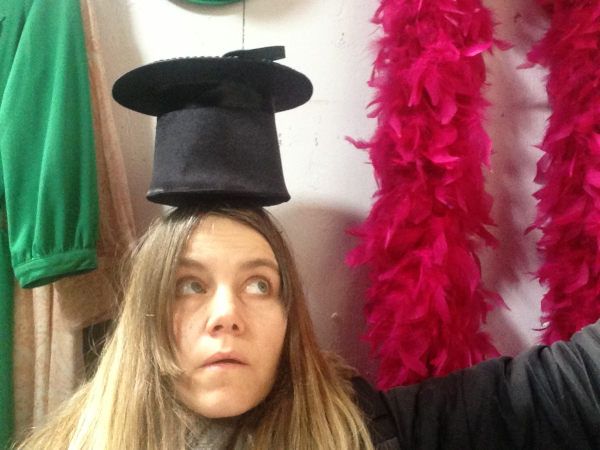
I’m not sure I can get through a script, or a performance, or even just a day, without a touch of delusion. It’s like hitting Turbo in a race car: a kick in the butt when you’re losing faith, a gospel song on Sunday morning. Maybe if I were enlightened, I could let go of delusion. Enlightenment might take a while. For now, I’ll try to keep the balance. Accept the hard punches of reality, ride delusion like a wave toward shore, and keep believing the Idea is worth sharing with the world.