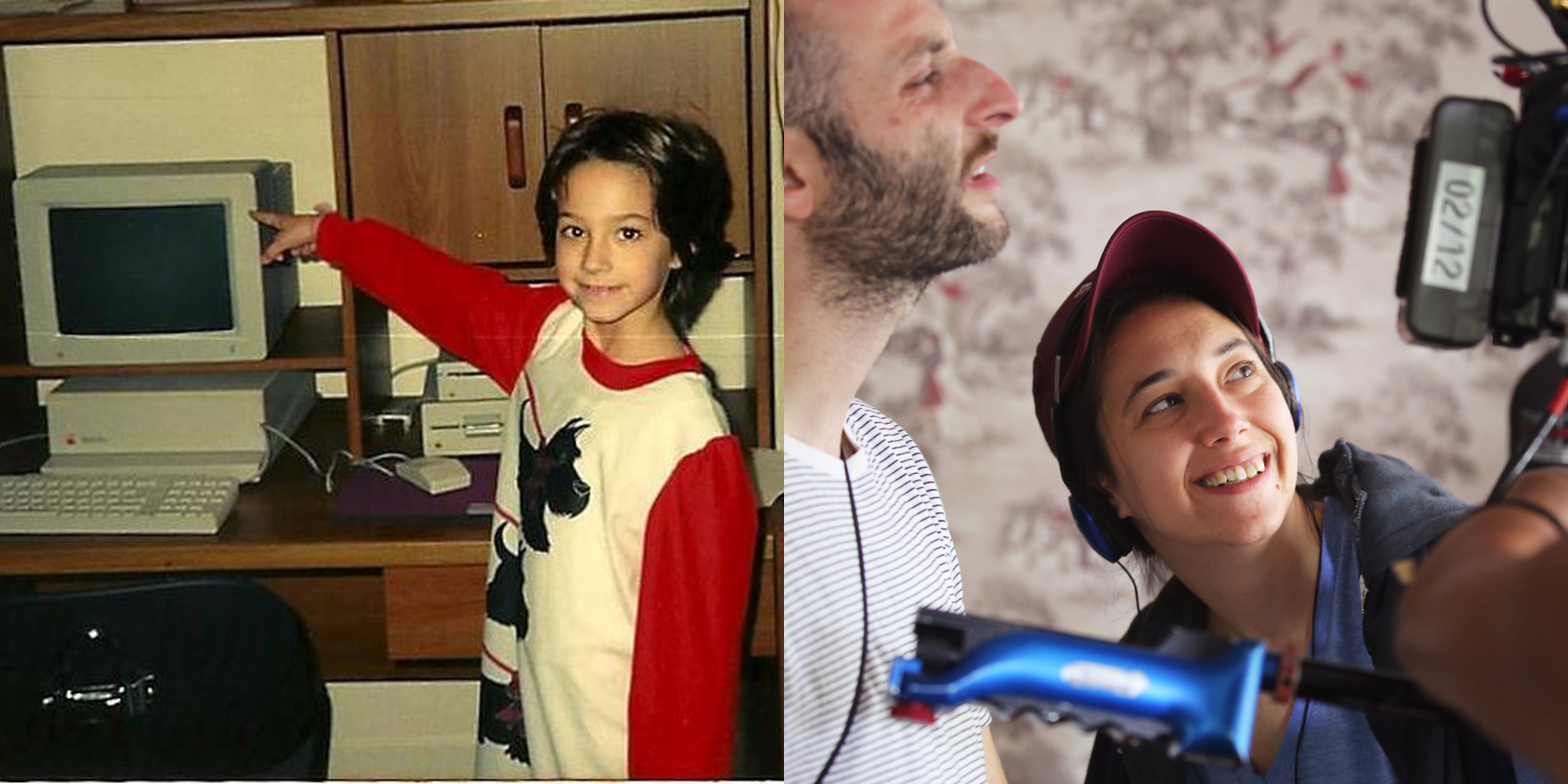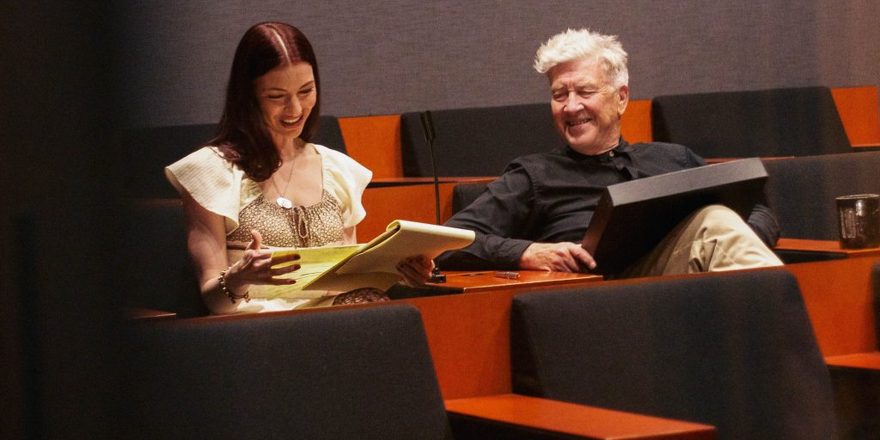


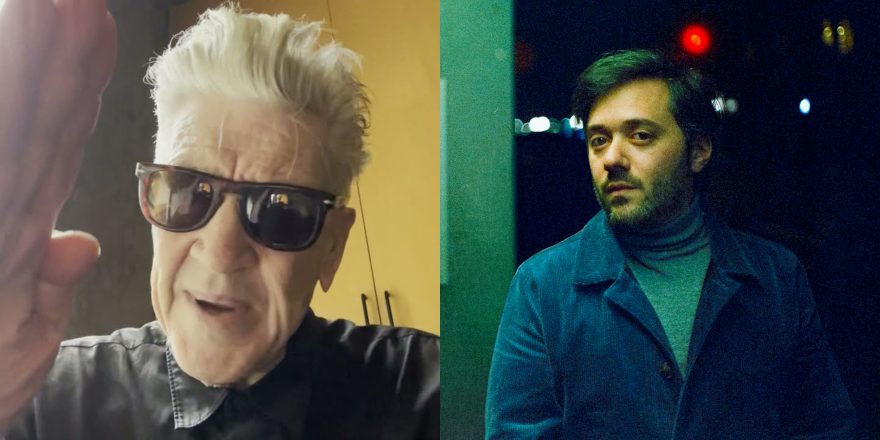
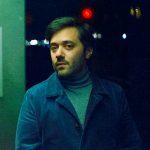
Robert Kolodny is a director, writer and cinematographer based in New York City. His feature film directorial debut, The Featherweight, a biopic of the boxer Willie Pep starring James Madio, Ruby Wolf, Ron Livingston and Stephen Lang, premiered at the Venice International Film Festival and was released theatrically in fall 2024. As a cinematographer, Robert has shot on films by Josh and Benny Safdie, Alex Ross Perry, Robert Greene, Laura Poitras, Sean Price Williams, David Byrne, Taylor Mac and Cecilia Vicuña. His short film Fly on Out screened at the 67th Cannes Film Festival in the Court Métrage. His direction of the TV series Frankie Cooks, earned him a New York Emmy Award. In 2022, DOC NYC named Robert one of its 40 Under 40 Filmmakers. Robert is a prolific film-viewer and a lifelong student of the craft and history of cinema. When not making or watching films, he is a professor of film at the School of Visual Arts in New York City.
On May 28 last year, I was caught off guard when I saw that 441 lots from David Lynch’s home and personal archives were going up for auction at Julien’s, a privately held Beverly Hills based auction house that specializes in film memorabilia. This was the same auction house that hosted the 2016 sale of the dress Marilyn Monroe wore when she sang “Happy Birthday, Mr. President” to John F. Kennedy in 1962 at Madison Square Garden. The sale was for $4.8 million and remains the most expensive single gown ever sold at auction.
As someone with a great deal of reverence for Lynch, I exuberantly registered for the auction on that first day. As I plunged into the items listed, I became overwhelmed at how personal some of the effects were: Lynch’s brown leather art studio apron (sold for $13,000), a felt Christmas stocking embroidered with the name “DAVID” (sold for $10,400), a compass belonging to Lynch’s father Donald (sold in lot for $3,900), Lynch’s simple wood and rope dreamcatcher (sold for $19,500). The trove was overwhelming. I put in several bids that first day of the auction, primarily on cameras, books and woodworking tools. I am a working filmmaker, so suffice it to say my finances were limited at best. However, I held out hope that cinema magic would intervene and I would be bestowed with a meaningful curio or two.
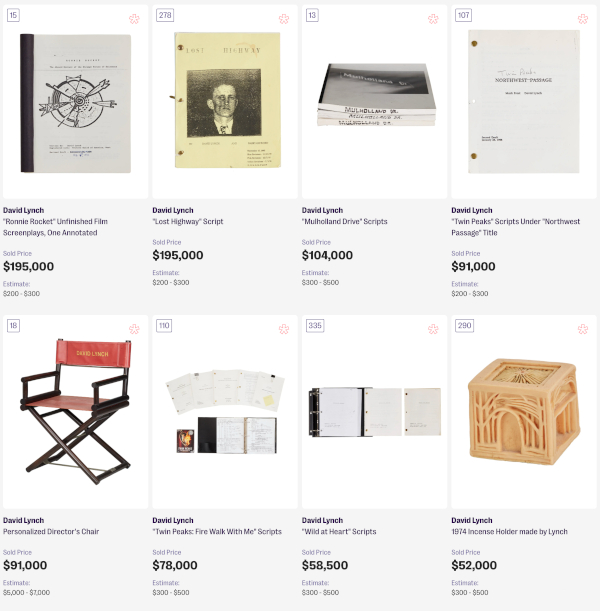
As one might expect, the auction was replete with all the Lynchian staples. Matchbooks, lighters, ash trays, a profusion of coffee makers, including three Mazzer espresso grinders, three La Marzocco espresso machines (one of which sold for $45,500), three Mr. Coffees, two Keurigs, a Bodum travel coffee pot, an electric coffee pot and an early 1970s travel electric espresso maker by Velox. There were scripts for Mulholland Drive, Lost Highway, Twin Peaks: Fire Walk with Me, The Straight Story, Twin Peaks (with a crossed-out title of Northwest Passage) as well as screenplays for the unrealized projects of The Dream of the Bovine and Ronnie Rocket. (That last one wound up selling for $195,000.)
I wouldn’t say that I fetishize objects that are in the orbit of cinema history; it is more that they take on a spiritual quality to me. They become articles of virtue, devotional totems. Not in a religious sense, but more akin to how David Lynch viewed his practice of Transcendental Mediation; it was a “vehicle that allows you to go within.”
I wanted less a souvenir or keepsake and more a catalyst that could spur and accompany my own spark. I wanted something which, through an invisible connection (call it inspiration or motivation), would anchor some small cropping of this artist’s magic to me. I have some small tokens of Martin Scorsese (an inscription addressed to me), William Friedkin (a wrap gift coin given to me by his producer while at the Venice Film Festival) and John Waters (a postcard he gave me at the Provincetown Film Festival). I had the notion that owning a scrap of Lynch’s past might fortify my future and inspire some confidence in my own art; suffuse it with the inspiration his work gave me.
When I was 15 or so, my parents erected a wooden storage shed in our backyard. It sat largely empty for about a year, during which time my brother Adam and I co-opted it into a sort of makeshift clubhouse. One side of the room was full of shovels, rakes and axes, but on the other side we kept a small CRT Television and DVD player.
This was during the height of my voracious need to find strange, challenging, new-to-me cinema – by any means necessary. One notable conquest was a Chinese bootleg of Eraserhead from eBay. My brother and I watched the movie for the first time out in the shed that winter. The film cast a spell on me; it was unlike anything I had ever seen and was my initiation into the world of Lynch. It became a frequent occurrence to bring friends out to the shed after school to watch it. I probably watched Eraserhead two dozen times while in high school. I printed out the film’s poster and stapled it to the plywood wall of that shed out there in the woods.
Over the years, as is the case for many filmmakers, Lynch’s work became increasingly important to me. At different times of my life, different films would burrow into my personality and inform my fashion, outlook and way of considering art. The essence of why I respond so deeply to Lynch’s work can be found in a scene halfway through Blue Velvet. Jeffrey Beaumont (Kyle MacLachlan’s proto Dale Cooper character) and Sandy Williams (Laura Dern) sit across from each other at the diner.
“Jeffrey, why?” asks Sandy.
“I’m seeing something that was always hidden. I’m involved in a mystery. I’m in the middle … of a mystery. And it’s all secret,” Jeffrey responds calmly.
“You like mysteries that much?” she asks.
“Yeah,” Jeffrey nods, smiles, then gazes at her. “You’re a mystery. I like you. Very much.”
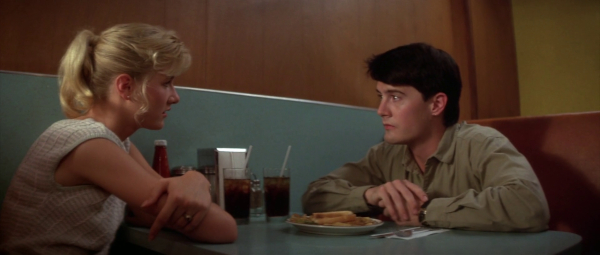
At this point, the angelic synthesizers of Julee Cruise’s “Mysteries of Love” gently begin to pipe. This moment contains all the fragile uncertainty, curiosity, fear, desire and sweetness that typifies Lynch’s work. The feeling of some great mystery in the darkness calling to us, either horrible or beautiful – while still reaching out and longing for human love and sincerity. This whole world is wild at heart and weird on top.
I was heartbroken to learn of Lynch’s death. I spent that day listening to the scores of Angelo Badalamenti, drinking coffee and eating pie. That night I watched The Straight Story followed by Twin Peaks: Fire Walk with Me, before crawling into bed and re-reading Catching the Big Fish. Over the next few weeks, all the arthouse theaters held retrospectives, so I set out to treat myself to as many rewatches as possible on the big screen. Eraserhead, The Elephant Man and Mulholland Drive at IFC Center, Blue Velvet and Inland Empire at Metrograph.
For all of these reasons, it felt emotionally significant for me to own an artifact that had belonged to Lynch … some emblem imbued with a small bit of his fairy dust that I could keep and pay respects to. Sure, I wouldn’t be able to even attempt bidding on his custom red leather director’s chair, which had his name stitched onto the verso in yellow leather. (The chair sold for $91,000.) Even though I had a picture of Lynch holding his metallic black 1997 Parker Fly electric guitar pinned to my wall in high school, I wouldn’t think of bidding on it. (It sold for $32,500.) Perhaps I could, however, bid on the 78×78 inch framed photograph of a nuclear bomb exploding. It’s the one that sits behind Lynch’s character of Deputy FBI Director Gordon Cole in Twin Peaks: The Return. The starting bid was only $250. (It sold for $45,500.)
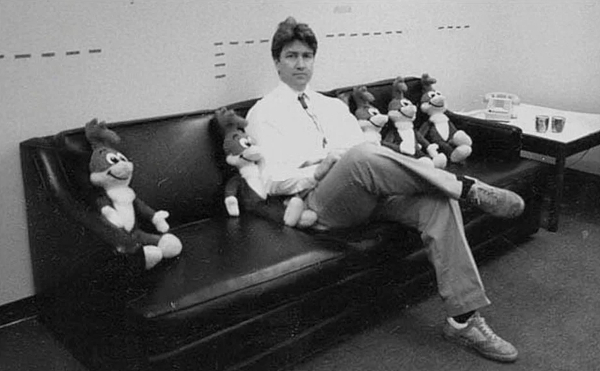
One of Lynch’s longbill caps was for sale, opening bid $50. I always admired those hats and remember once seeing him speak about them, how incredibly functional they are, especially on set. I decided that was something I would love to have. (It sold for $7,800.) There were also several peculiar gadgets that you could tell were collected over the years purely as items prone to Lynch’s flights of fancy. For example, there was an antiquarian violet ray medical device made by the Halliwell Electric Company. This was a bit of snake oil quackery, invented by clairvoyant Edgar Cayce with the purpose of treating all manner of ailments using early electrotherapy. There was also a pair of silverplate presidential spoons by the William Rogers Manufacturing Company of Hartford, Connecticut. One spoon depicted George Washington on the handle and Mount Vernon Virginia in the bowl. The other showed John F. Kennedy on the handle and a depiction of the Friendship 7 spacecraft orbiting Earth in 1962 in the bowl. There were, however, no signs of the five Woody Woodpecker dolls that Lynch once rescued from a gas station and dubbed as “his boys.” Perhaps they made the cut for the preserved official archive.
To my dismay, the early bids I had put in for Lynch’s Canon Scoopic 16mm Film Camera, his Sony MiniDV and Hi-8 cameras and the set of his Panasonic AG-460 S-VHS Camcorder and Zenith VM6200 (JVC GR-C7) VHS-C Camcorder were quickly overtaken by far higher bids. The same was true for the books and even the workshop tools. Also on offer was an unopened EcoloBlue Atmospheric Water Generator still in its shrink-wrap, but this felt like a soulless object that was fully divorced from the director. (The winning bid was $910; I hope whoever bought this adores it beyond reproach.) I became withdrawn, knowing that I wouldn’t be able to afford a single thing from this auction.
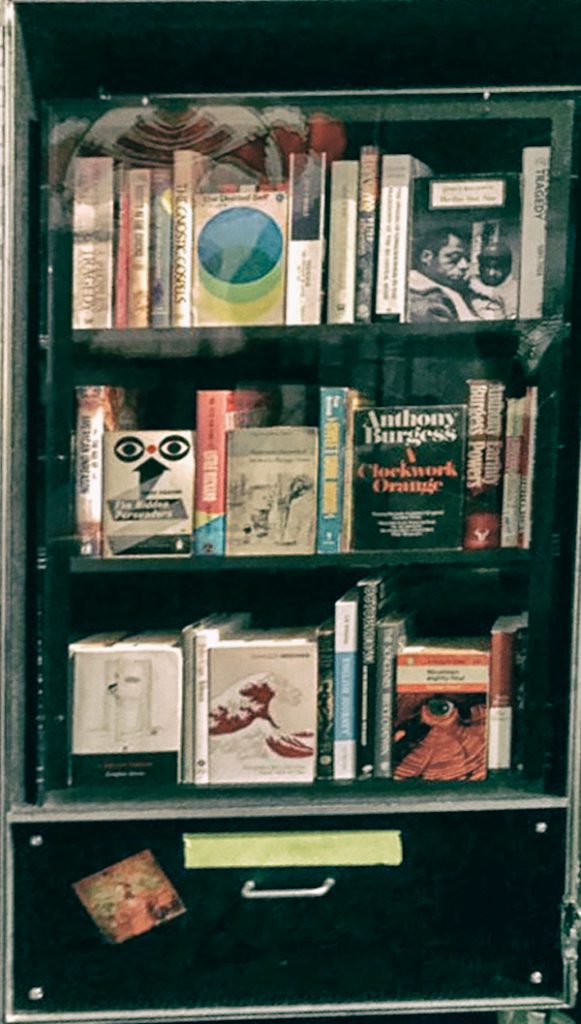
However, I began to think that maybe there was something else of value with the auction. Maybe there was a mystery of my own that I could become involved in. I remembered something from the David Bowie Is exhibition that the Brooklyn Museum presented. Much like the Lynch auction, it was a treasure trove of personal effects – some momentous and some absolutely commonplace. In 2018, when the Bowie exhibit was taking place, I was working on an installation called Disappeared Quipu with the artist and poet Cecilia Vicuña. The installation was taking place at the Brooklyn Museum, and so I had a lot of access to the exhibitions on at that time. To this end, I was able to visit the David Bowie Is exhibition multiple times and in doing so become fixated on one object in particular: a large wheeling road case that Bowie had converted into his personal traveling library while on tour. I saw that many of the books Bowie loved were the books I loved as well. On one visit to the exhibition, I brought my notebook with the intent to catalogue all the books in the road case for my own reference.
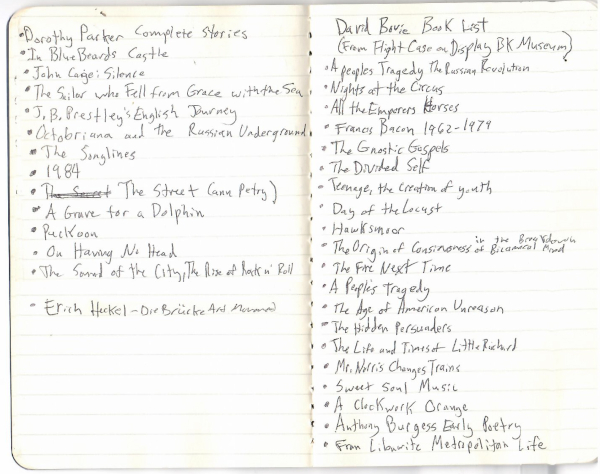
These were the words that nourished the artist, words that anyone could take in and sublimate into their own consciousness. How much more powerful it was to have the same tools and transmute something than to have some material position that passed through said artist’s ownership. I began to use the David Lynch auction as an unprecedented look into the fascinations and inspirations that fed and nourished the notoriously guarded and inscrutable Lynch. There were dozens of lots of books, some lots holding 20 or 30 titles. I began a spreadsheet and started cataloguing all of the books in David Lynch’s personal library. This was no small undertaking, as very few titles were actually listed – rather there was just a photograph of a stack of a few dozen books. I would download each photo, then zoom in so I could transcribe what was there. I made four columns: title, author, section and whether or not it was a book that I had read. (In the case that I had, a simple * was added.)
I took joy in combing over Lynch’s library and felt closer to the director for the experience. I could imagine obsessions and reading tangents he must have gone down. Aside from the expected collections of transcendental meditation, books on film and fiction, some notable genre clusters in his library included anatomy, woodworking, Lyndon Johnson, automobiles, France, Max Ernst, architecture and the history of the guillotine. Through the osmosis of this process, I mostly let go of the importance of owning something of Lynch’s. I began to genuinely feel that I was involved in a private form of archeology that was sincerely uncovering hidden truths. I was involved in a mystery.

I found myself researching artists whose work was foreign to me, who were featured in this DIY Lynchian library I was cataloging. The work of Bill Henson, for example, particularly his collection The Liquid Night, which looked to be 35mm neon-soaked night images in smeary, saturated wonder across New York. Or the paintings of Austrian expressionist Oskar Kokoschka, whose work I was woefully unfamiliar with.
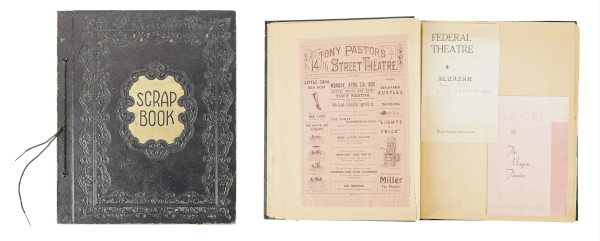
One fascinating, and presumably one-of-a-kind, book in Lynch’s collection was a scrapbook made by a young, Depression-era actress named Madeleine Reynolds. She was a part of the Federal Theatre Projects Works Progress Administration. Its yellowed pages were full of handwritten notes, 1930s photos and playbills. How this artifact came into David Lynch’s possession is a mystery; however, it is hard not to draw correlations from the hopes and aspirations of this young unknown actress to Naomi Watt’s character Betty Elms from Mulholland Drive.
In the shadow of the announcement of the David Lynch Auction, I was invited to attend a wedding in Los Angeles. While out there, I went to the Hollywood Forever Cemetery, located at 6000 Santa Monica Boulevard in, where else, Hollywood. Entombed on the grounds are Tinseltown greats such as Cecil B. DeMille, Judy Garland, Douglas Fairbanks and John Huston. I strolled through the gates with my partner, Bennett, on a sunny, cloudless day. Immediately we were met by two peacocks who greeted us with an air of nonchalance. I noticed a perfect, albeit nondescript feather on the grass. I picked it up and placed it in my shirt pocket.
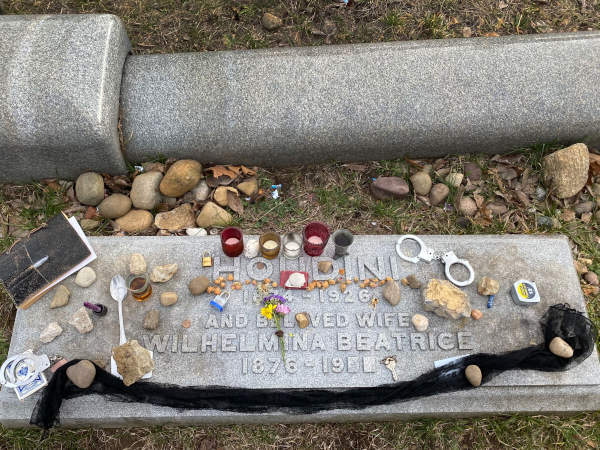
This was not my first trip to the Hollywood Forever Cemetery; I am a great lover of graveyards and make it a point to seek out the beautiful tombstones whenever I travel. I have a very small, smooth gray stone, dug from the earth around François Truffaut’s grave at Montmartre Cemetery in Paris. I kept it in my pocket every day on set when directing my film The Featherweight. At Père Lachaise Cemetery, I made a grave rubbing on the tombstone of Chantal Akerman with a page from my notebook. At the final resting place of Anna Karina, I left a cigarette (Gauloises) with “For Anna” inscribed on it, then sat and smoked another with Bennett (and spiritually with Anna) in the late August afternoon. During the pandemic, I walked four miles with an actor friend Ruby Wolf to the Machpelah Cemetery in Queens to visit the gorgeous gravesite of Harry Houdini. I brought with me a Thermos of mint tea, a pair of handcuffs and two decks of playing cards. One deck was an offering that I would leave, the second deck and the handcuffs I would leave on the gravesite to saturate with Houdini’s spirit, while drinking the tea.
As Bennett and I walked the grounds of Hollywood Forever, we passed the grave of Mel Blanc, whose epitaph reads, “That’s all folks – Man of 1000 Voices,” beneath a star of David. We rounded the corner and passed the modest grave of Alan Crosland, whose epitaph lays below a small engraving of a motion picture camera and reads like a dictionary blurb: “Early Hollywood Director with over 60 films to his credit. In 1927 he directed The First Talking Picture The Jazz Singer” – a sentiment so essentially show business.
We turned before the Beth Olam Mausoleum along Leonard Nimoy Way, which houses the gravesite of Las Vegas pioneer and famed gangster Bugsy Siegel, before reaching Maple Avenue and nearing the Sylvan Lake. There we saw the bronze bust of Burt Reynolds, the cenotaph of Johnny Ramone immortalized in a rockstar pose with his guitar, a stone bench that accompanies the headstone of Fay Wray, the stone slab monument of Tony Scott – with a mountain climber anchored to a rope on one side and the director’s filmography etched on the other side. We saw the tragic headstone of cinematographer Halyna Hutchins, which has a motion picture camera and five frames of 35mm depicted on it. The most Lynchian of all in this area is the memorial of Toto from The Wizard of Oz, a bronze statue of the terrier atop a granite base, which of course reads, “There’s no place like home.”
Eventually I spotted Lynch’s grave. As I walked towards it, a black sedan pulled up and parked beside the tombstone. A perfectly dressed rockabilly couple exited; he in black skintight jeans, cuffed above the boots, a black shirt cuffed at the sleeves, sunglasses and a pompadour, she in fishnets and kitten heels with a black 1950s cut dress and jet-black hair with severe bangs. Both were expectedly pale, petite and sailor-tattooed. I watched them go to the grave and gave them space as they paid their respects, opting to pass the time in the small stone pavilion near John Huston’s grave overlooking the lake.
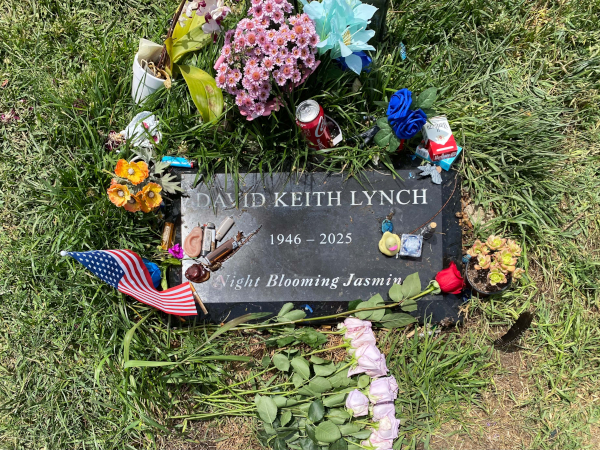
Once the rockabilly couple left, we made our way over to the grave, a flat laid stone with the epitaph “David Keith Lynch – 1946-2025 – Night Blooming Jasmine” (a reference to cestrum nocturnum, the nightshade plant with the petite white star-shaped flowers that emitted a scent Lynch held synonymous with the bygone days of Hollywood). In one of his weather reports (a blessed mirage of a series that he kept up through the Covid-19 pandemic) dated December 21, 2020, he said: “Now, the days are going to start getting longer and springtime is right around the corner. When, at least in L.A., that night blooming jasmine will once again fill the air with its sublime fragrance.”
Laid out on and around the grave were a suit of offerings to pay tribute to the director. A full bouquet of white roses, four BiC lighters, a rubber duckie, a pack of Marlboro 100s, a pack of blue American Spirits, a pin with a silver angel, a plastic army man, two blue roses, two severed ears made of rubber, a can of Coca-Cola, more assorted flowers, some loose cigarettes and a blue flower in a plastic case like a corsage. I took the feather from my shirt pocket and planted it in the soil beside the headstone. After a moment, we walked away from the grave, but something was calling me back. I hadn’t felt the connection yet. I left Bennett near the grave of Maila Nurmi, better known as “Vampira,” and headed back to David Lynch.
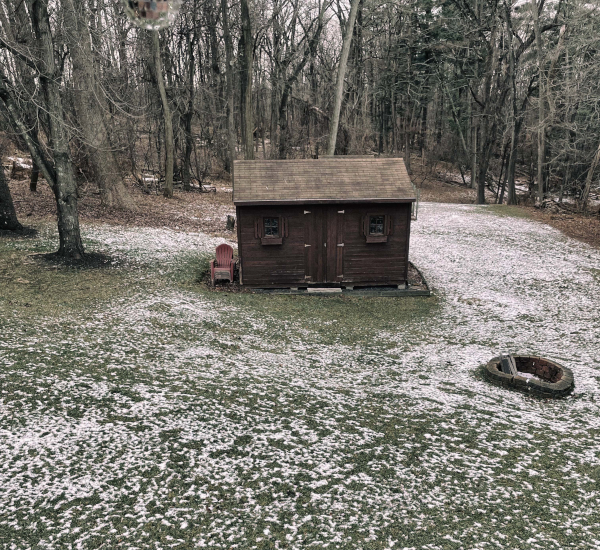
I stood there, looking down and felt a cool breeze blowing. I thought back to the way I felt in that cold woodshed in my parents’ backyard, in that makeshift theater my brother and I made. I felt the way Eraserhead showed me something new, something I have never seen before. I held that feeling, which was the great and wonderful truth that art has the power to forge something from the subconscious into existence through a sheer act of expression. After another moment of feeling this fleeting, spectral connection, I bent down, not really thinking about what I was doing, and plucked a few green weeds from the grass touching the tombstone, neatly placed them in my shirt pocket and rejoined Bennett as she walked through the grounds.
Four hours after leaving the cemetery, Bennett and I found ourselves miles away, sitting down in Mel’s Diner for a late afternoon snack. Buddy Holly played over the speakers as we sat in our small vinyl-seated booth. There was a miniature chrome jukebox perched above the table and our waiter was a character directly out of central casting. It was an appropriately Lynchian epilogue to the afternoon … and that’s when the door swung open. The same exact black-clad rockabilly couple from the graveyard strolled in. They were the only other patrons in the restaurant. Were they döppelgangers? Were they tulpas? He ordered a milkshake and she got a bowl of soup. “Earth Angel” began to play over the speakers.
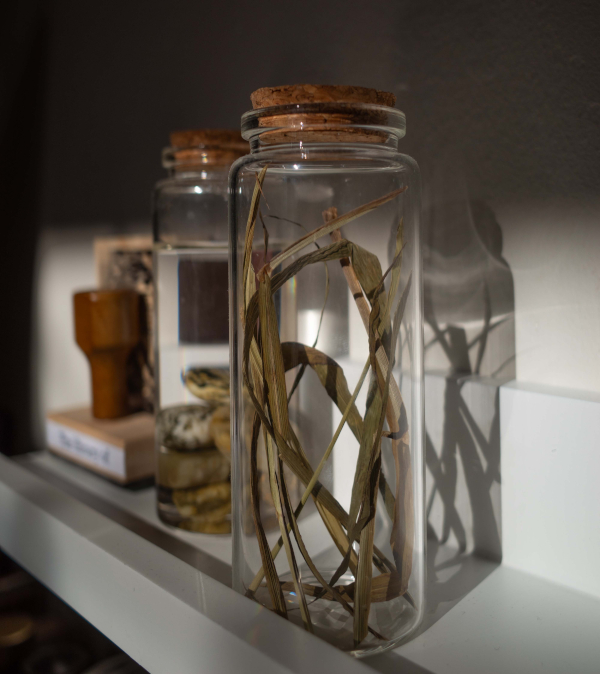
When I returned back home to New York City, I bought myself a cylindrical glass bottle with a cork stopper. I took the weeds that I plucked from Lynch’s gravesite and placed them inside, like sparse stalks of grass suspended in a vacuum. I put the vial on my desk, where it will stay; a mysterious and slowly decomposing memorial which for me holds great inspiration and beauty. They are here now as I write my next film.
As Lynch himself said, “Some things we forget. But many things we remember on the mental screen, which is the biggest screen of all.”