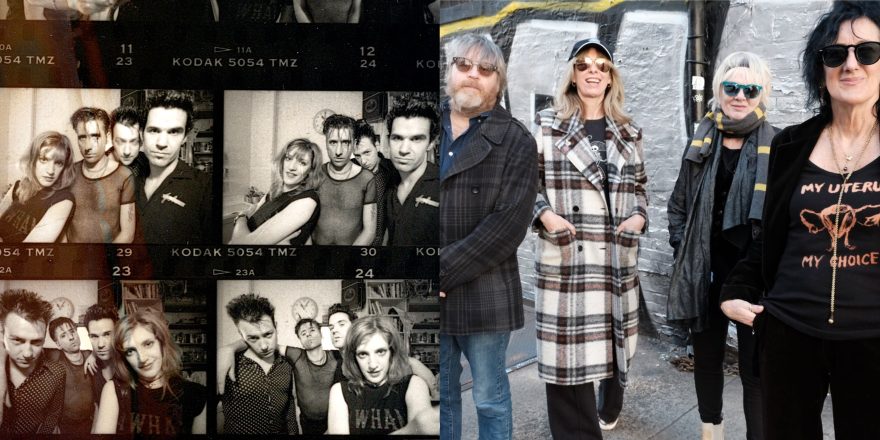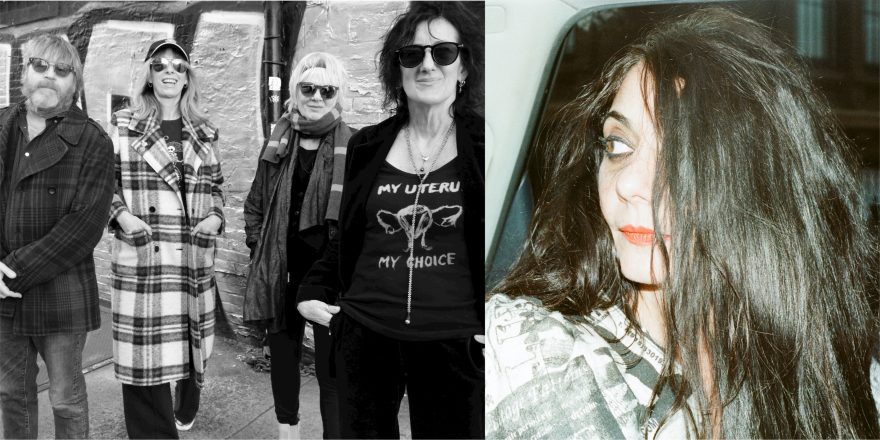


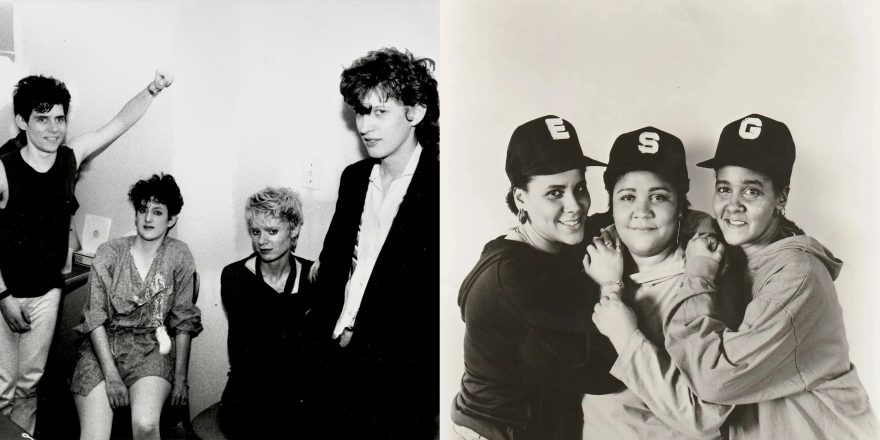
As lead vocalist of the Bush Tetras, a seminal post-punk band in New York City, Cynthia Sley produced some of the most distinctive aspects of the Tetras sounds. Sley’s vocals were half spoken, half sung and in songs like “Too Many Creeps” and “You Can’t Be Funky” she repeated simple phrases creating a hypnotic monotony similar to Pat Place’s guitar rhythms. “Too Many Creeps” was a mainstay of the infamous early ’80s New York “No Wave” club scene.
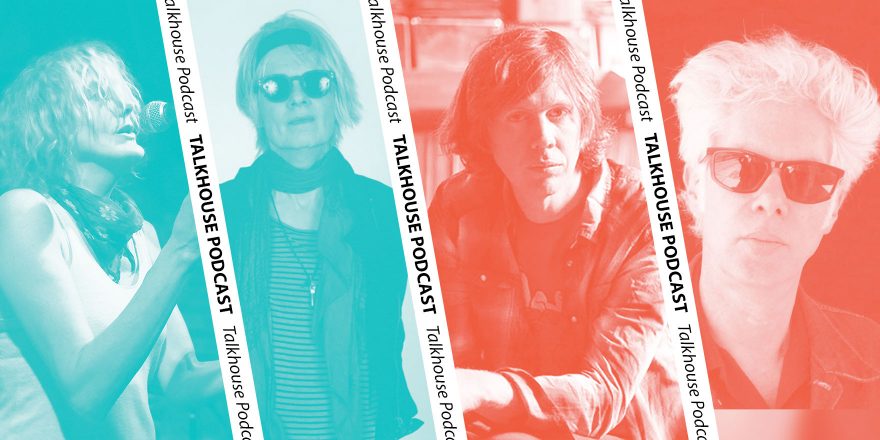
Cynthia Sley fronts the legendary NYC band Bush Tetras; Renee Scroggins also fronts a legendary NYC band, ESG, which she started with her sisters Valerie, Deborah, and Marie. ESG are about to embark on their last tour, The Final Dance, and Bush Tetras will be joining them for the first date of it, at the Great American Music Hall in San Francisco next Friday January 30. To celebrate, the former 99 Records labelmates got on a Zoom call to catch up.
— Annie Fell, Editor-in-chief, Talkhouse Music
Cynthia Sley: Hey, Renee!
Renee Scroggins: Hi, Cynthia!
Cynthia: Oh, my god. It’s a blast from the past!
Renee: Yes, it is.
Cynthia: I saw you recently, and I thought, God, we haven’t talked in a while. I came to see you play, and I think we had a chat backstage, at Le Poisson Rouge or something. You guys were great.
Renee: Thank you.
Cynthia: You have to catch me up — I know that it’s your son, right, who’s in the band?
Renee: Yes, my son and my daughter. My daughter plays the bass.
Cynthia: She’s great.
Renee: Thank you. And my son plays percussion. He’s an alien. He does all kinds of dancing…
Cynthia: He’s amazing. So when did that happen?
Renee: Well, you know, as people went in and out, be it illness, pains, and aches… Let’s see, where are we? We’re at 49 years this year!
Cynthia: It’s crazy, isn’t it? We started in ‘80, so we’re at 46. And we’ve had a lot of changes now, so I can relate. We’ve had some death.
Renee: I knew about Laura [Kennedy], but I didn’t know about Dee [Pop] until [recently]. I’m so sorry. He was so cool.
Cynthia: He loved you guys.
Renee: Thank you. I mean, all you guys were cool. Y’all were always really good to us, because I remember in the beginning, we didn’t have jack in regard to equipment, and you guys would always lend us your amps.
Cynthia: Yeah. And Dee loved — Marie, right? Marie was your drummer?
Renee: No, Valerie!
Cynthia: Valerie, right! I remember when we played at Nuits Sonores in Lyon, and [Valerie] was hitting the bass drum pedal so hard the whole thing was moving. There were bricks that were supposed to keep the kit in place, and she just kept pushing it forward. It was really funny. And Dee was like, “She kicks ass!”
Renee: What happened in the beginning was, the sound guy kept saying to her, “Can you play any harder?” And she says, “You want me to play hard?” They had those little bricks, and she said, “That’s not going to be enough.” And he says, “That’s not going to be enough? It’ll be enough.” So she said, “Do you want me to go for it?” I said, “Go for it. Bang the shit out of it.” [Laughs.] And then the stage started to split and [the sound guy] said “No, no, no, no, no!” Man, he nailed down everything… It was a good night.
Cynthia: It was a fun night. I always feel like those sound guys, when you’re women in a band, they just don’t take you seriously. I mean, not always. Now there’s a lot of girls that are sound people — I love that. But back in those days, Pat [Place] got a lot of flack for being guitar player. I’m sure you experienced that.
Renee: Well, I plucked a few notes. I played “U.F.O.”
Cynthia: Yeah, I know! But very important notes, Renee…
Renee: That is right. The notes, they’re still going today. It’s really interesting. I mean, if you were to ask me when we first met in the ‘80s, would I think in 2026 we’d still be here banging? Uh, no. But every time, we get all these young kids. And they’re thinking you’re a new band — you’re like, “No, honey, I’ve been around forever.” [Laughs.]
Cynthia: Yeah, we had a whole new group that just discovered us. You know, they go on the deep dive and find music, and it’s still relatable. It’s exciting.
Renee: It is, to relate to the new kids out there. It’s really interesting to me that we have been able to go across all kinds of boundaries of music. And it wasn’t something we looked out to do. We just did what we did.
Cynthia: I know. How did your mom feel about all that? Was she supportive?
Renee: She was proud. She was very happy that we were out there… You know, it’s funny, because I was thinking about all the clubs, like Hurrah — my favorite club — and I always tell people the story: One time, we were playing in Hurrah, headlining, and it was a snowy night in New York. I kept telling the band, “Look, don’t be surprised if you walk out there and it’s just a couple of people.” And then when we went out there, it was packed from wall to wall. Recently in Chicago, I had the same experience — when we came in, there was no snow, and when we went out, it was, like, three inches of snow. But they were there for the session!
Cynthia: It’s important to go out, man. I hope no one ever loses that.
Renee: Yeah. I mean, myself, I don’t know if I would have went out. Even in my youth, snow was not my thing… But it’s getting busy again. When I moved out of New York, I wanted not busy. My kids were young then, and at that time — we’re talking about the ‘80s — New York wasn’t the best place. Now I come back and I hardly recognize it.
Cynthia: It’s crazy.
Renee: Especially the Bronx!
Cynthia: Yeah, I know. Gentrification. I live in Queens, and I moved during COVID. I’d spent some time in Los Angeles, but I really didn’t like it. It’s a polar opposite of New York. I didn’t really do that much music when I was there, I didn’t go out that much. My tribe is here. So, I only lasted three years. And people would say to me, “Stay 10 years!” I’m like, “Who knows if I’ve got 10 years?” [Laughs.] So I’m here in Queens, walking around the graveyards. It’s really great out here. Lots of graveyards in Queens.
Renee: There were a lot of graveyards in the Bronx, too, but I didn’t go in that area. I remember when the Bronx was a graveyard itself.
Cynthia: Well, when you started, it was rough. The late ‘70s. I remember you three, your mom saying, “Just make sure nobody bothers them.” They had Dee and I looking out for you. It was just so sweet. It’s great to have parents that are supportive and let you go out. How old were you? Sixteen?
Renee: No, I was 18. My sister’s the youngest one. So when we first came on to the scene, we opened for a band called The Necessaries — but I tell people, in the late ‘70s, early ‘80s, a line up at a club would be like a line up at a festival. It would be all kinds of music. I mean, my god, I can’t forget when we opened for The Clash at Bond’s.
Cynthia: Yeah, that was wild.
Renee: That was crazy because it was us and then Grandmaster Flash and the Furious Five, and then The Clash. And what I remember — again, we had very little equipment, and we just got these new little amps. They left our equipment on the stage, because they were trying to move in and just put the mics up, and then the crowd started throwing beer at them.
Cynthia: Oh, Jesus Christ. I heard there was some hostile stuff. We played three nights and it’s a blur. I don’t even remember who was playing. I remember that was a huge stage — it was one of the biggest stages we had played — and the audience was kind of straight for The Clash. They weren’t really into the New York scene, per se. They just came from Jersey and all over the place.
Renee: That was one of the hardest things I had to learn: When you’re playing with various bands, sometimes they’re there for you and sometimes they’re not. The thing of it is, your job is to go out there and do your set and try to entertain people the best way you can. I mean, me personally, I just want to see ‘em dancing. If they’re dancing, then I know we did our job.
Cynthia: That’s right. I think that’s what 99 Records saw.
Renee: Now, 99 Records was an interesting thing. Ed [Bahlman] ran it with Gina Franklyn, and it was an interesting place. Coming from the Bronx, it was a whole different scene for me. I remember when I first saw somebody with spiked hair and I was like, Woah. [Laughs.]
Cynthia: [Laughs.] Yeah, it was great. It was a mixed group.
Renee: But I was just thinking of all the clubs we played — Hurrah, TR3, the Peppermint Lounge, the Mudd Club. Do you remember the Mudd Club? It had this weird elevator that would bring you up on stage.
Cynthia: And then that spiral staircase. We played Irving Plaza, too, together.
Renee: Oh, right. And oh, my god, we played this club in New York called Club USA. Did you get a chance to play that?
Cynthia: No, we didn’t play there, but I heard of it.
Renee: It was like you walked into a dominatrix thing. It was wild.
Cynthia: Did you go to Area? You didn’t go to the after hours…
Renee: No, no. My mom said, “Do the show and come straight home.” So we never hung out.
Cynthia: Well, that was smart of mom. I remember that show at Irving Plaza because it was in 1980 — like, December 1980, so we hadn’t been together that long. That was a really big show. It was so much fun.
Renee: Yes, yes. And I know there was a newspaper clip in the Times that talked about “woman bands,” and it was the Bush Tetras and ESG.
Cynthia: Yeah. Do you think it’s shifted and there’s more women in bands now?
Renee: Yeah, of course.
Cynthia: But, you know, I’m surprised it isn’t even more so. It’s still kind of male-dominated. Mind you, there’s a lot of women singers, like solo people. But bands that are mostly women, there’s not that many, really. Maybe that’s what we should focus on in San Francisco — “Come on, girls, start some bands!” Because I feel like it’s an important point of view. I think women should express themselves in music. It’s a lot of fun, and it’s a great creative thing to do..
Renee: Did you ever play Lady Fest?
Cynthia: I know Lady Fest, but we never played it.
Renee: Well, I played a couple of them, maybe three in the United States and a couple over in Spain. And the next thing I know, there were no more Lady Fests! I’m like, Um…?
Cynthia: There’s still ladies!
Renee: But we’re getting ready to play a new festival that they’re starting in Chicago, called Ragbagalia.
Cynthia: Oh, that’s good! … We’re slowing down. We do about a show a year now. I feel like since Dee passed — which, in October, it’s going to be five years, which is crazy… We put out a record on Wharf Cat [in 2023] and it was really good. We got Steve Shelley on drums and he was really a good catalyst. It was fun recording with him. But to keep up the pace of touring is hard. Pat’s the oldest in the band, and she’s winding down a little bit. Once she gets on stage, she’s fucking awesome. But just our lifestyle is… I mean, how do you feel about that? This is your last show in San Francisco?
Renee: Look, I have wanted to get to 50 years, which would be next year. But, you know, here we go in 49 years. And you know what? It’s not because of the fans. I love the fans. I love the kids. It’s the damn promoters, OK? They don’t give the artists the respect of… I’ve been out here 49 years beating the drum, and then you got these kids that come in and they haven’t even paid their dues. It’s like American Idol bullshit. You know what I mean? So when you’ve been on that road and you paid your dues and you see what the business is really like — hey, give me that respect.
Cynthia: Yeah, absolutely.
Renee: Have you played the great American Music Hall before?
Cynthia: No, but I hear it’s great.
Renee: I’ve played there several times and it’s a great place. You’re going to have a fun crowd.
Cynthia: People are going to be dancing, right, Renee?
Renee: Oh, my gosh, yeah. They’re gonna have a 99 blast from the past.
Cynthia: I’m glad I got to talk to you about being women in bands, because I think it’s a special thing. It shouldn’t be a boy’s club. It’s for everybody. And there’s something about collaborating — I mean, you as sisters must have been amazing. I feel like Pat Place, she’s my sister. We are very close. We’re still close, 47 years later.
Renee: That’s excellent. But, you know, sometimes when you’re a family of sisters… [Laughs.]
Cynthia: [Laughs.] Sure.
Renee: Currently, like I said, I’m playing with my daughter, Nicole Nicholas, and my son, Nicholas Nicholas. We’ll have Cat Doersch on percussion. That’s going to be pretty much the line up. Marie’s currently not well.
Cynthia: Oh, I’m sorry.
Renee: You know, these are the times. You cut with it. And you know what? To me, music is life, man. Music is energy. It’s such a positive vibe. It’s something I really enjoy. I enjoy giving it out and getting it in from the crowd. I think it keeps me healthy and keeps me going.
Cynthia: Absolutely. I feel the same way, Renee. I’ll never stop doing music.