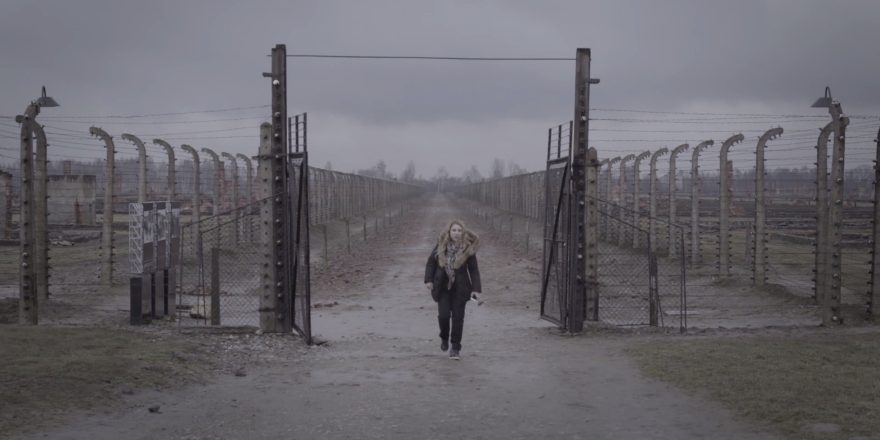


Serena Dykman is a New York–based filmmaker and self-described “culture-clasher” who uses storytelling to connect people through humor, heart, and humanity. A proud third-culture kid, she was born in Paris and raised across Brussels, the French Antilles, London, and New York. A graduate from NYU’s Tisch School of the Arts, she has made films which range from comedy to drama and documentary, and earned more than 25 awards, including a Webby Award and a Humanitas Prize nomation. At just 23, Serena directed her debut feature documentary, Nana, about her grandmother’s survival of Auschwitz. The film was theatrically released by First Run Features and led her to speak internationally at institutions such as the European Commission and Amnesty International. She recently completed three films Babka, At See and M.U.B., and is developing several scripted and unscripted projects. She works between New York, Los Angeles, Europe, and wherever a good story takes her. Find out more about her at her official site.
A few years ago, when my family was visiting me in New York City, we found ourselves taking a walk through Hasidic Williamsburg. My dog Nolita was with us. Little did I know that this little “touristic” stroll would lead me to four movies, a Humanitas Prize nomination, unexpected friendships, inclusivity advocacy, and a renewed love for filmmaking.
Let me tell you the story …
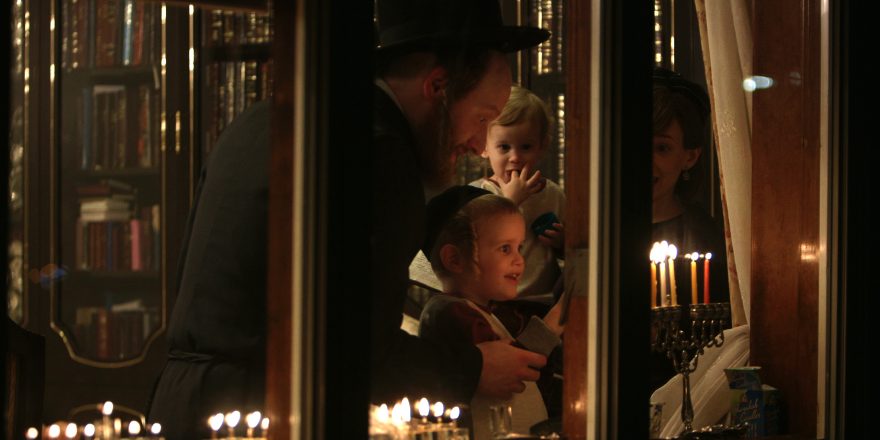
On that lovely fall afternoon, I quickly noticed that the residents of Hasidic Brooklyn were actively avoiding my just-walked-out-of-a-Disney-movie-looking dog. We entered a hole-in-the-wall bakery. There again, local customers were scared of her. The Hasidic baker noticed and said: “Sorry about that. People in the community aren’t used to dogs.” This was news to me! I’m Jewish, the granddaughter of three Holocaust survivors, but had no knowledge of Orthodox Jews’ aversion to dogs.
I walked out of the bakery, and while eating the best double-chocolate babka New York has to offer, I wondered; “What if a dog had to live in this community? What type of dog is unarguably necessary? Guide dogs! What if a blind Hassidic man had to get a guide dog … and what if the guide dog trainer came from another minority and through the dog, the two people developed an unlikely friendship?”
I call myself a “culture-clasher.” In my stories, I put people from contrasting worlds together in an unusual set of circumstances, and show that we have more in common than what society would have us believe. Often peppered with humor and levity. Doing this with a [Jewish] dog, Jewish humor, and a Queer Latino Catholic guide dog trainer … all smeared with succulent chocolate … felt right in my wheelhouse. This was going to be a short film titled Babka. Movie #1.
But a voice in my head – and some people I shall not name – kept telling me that no one would care …
I fought those voices. I hadn’t been so excited about an idea for a looooong time. After all, what did I have to lose?
I started doing the research. I reached out to guide dog schools, and to religious scholars, trying to understand the reasons behind fear of canines; I spoke to a dozen Jewish Orthodox blind & low vision individuals who had guide dogs. I quickly realized that there was a bigger story to be told, one that intersects faith and disability. This needed to be a feature. Movie #2.
For the purpose of the short film script, I wanted to focus on the first day that the fictional guide dog – a German Shepherd named Bear – arrives in the community.
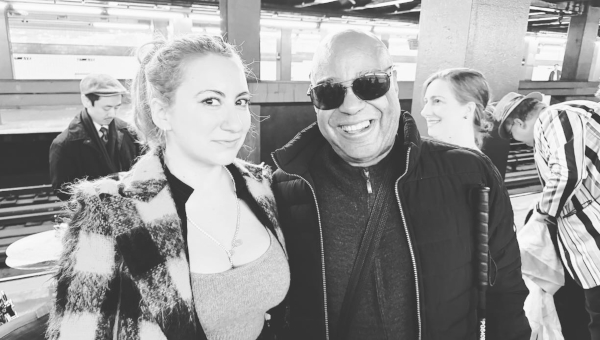
Thanks to a Facebook post, and a photographer I’d met at the Anchorage International Film Festival where my feature documentary Nana had screened years prior, I was connected with a guide dog user named Frank Senior, a true guide dog veteran, as he was on his seventh. To thank him for his time, I bought tickets to see him perform a jazz concert at Birdland. I happen to be a huge jazz lover.
Frank and I immediately hit it off. He had such a compelling stage presence – he hypnotized the audience for the entire set. A stage artist pursuing the spotlight he’d never be able to see, with humor, talent, and good vibes all around … A Black man born and raised in 1950s Harlem who made blindness his superpower. A senior citizen who was actively pursuing his dream, singing on all the NYC stages. There was a documentary there. Looking at the Spotlight. Movie #3.
Meeting Frank reminded me why I make films in the first place: the people I meet along the way. If not through film, how would a 30-something Jewish European filmmaker become friends with a 70-something blind Black jazz singer? On paper, Frank and I have little in common. But in life, we are both New York-, dog- and jazz-loving humans who are always down to hang at a jazz club.
Culture-clasher here.
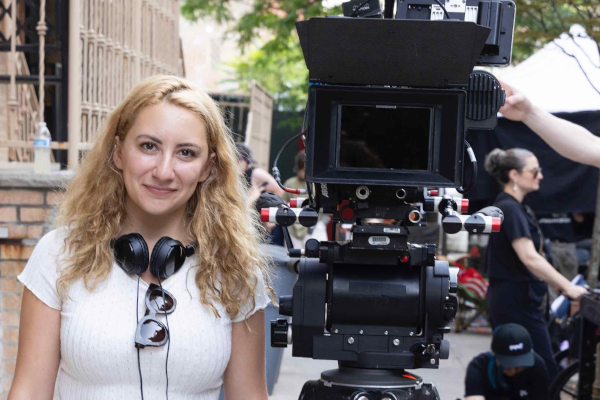
As I was developing Babka, both as a short film and a feature screenplay, Frank invited me to join him on a commercial cruise he was taking with a group of blind travelers and their guide dogs.
He said it would help my research, and deepen my understanding of the bond between a guide dog and its handler.
I said, “Frank, a group of 70 blind travelers on a commercial cruise amongst 5,500 sighted passengers traveling with their dogs … that sounds like a movie!” Thus started movie #4.
At See is a documentary short which features Open Audio Description (Google it if you don’t know what it means – it’s important), making it one of the first films to integrate AD as part of its narrative, thus making it accessible to BLV (blind and low-vision) audiences. The narration is performed by blind Latina voiceover artist and accessibility consultant Nefertit Matos Olivares, another trailblazer I am humbled to call a friend. At See has been on the festival circuit for the past few months, including at the BFI We Crip Film Festival and 5 Oscar qualifiers. My team and I have learned so much about accessibility and accessible filmmaking on both sides of the camera.
Babka (the fiction short) allowed me to work with legends like Saul Rubinek and Tony award-nominated Betsy Aidem. The film has been on the festival circuit too, sparking curiosity, conversations and laughs (it’s a comedy) from Birmingham to Telluride, Cannes and Hollywood.
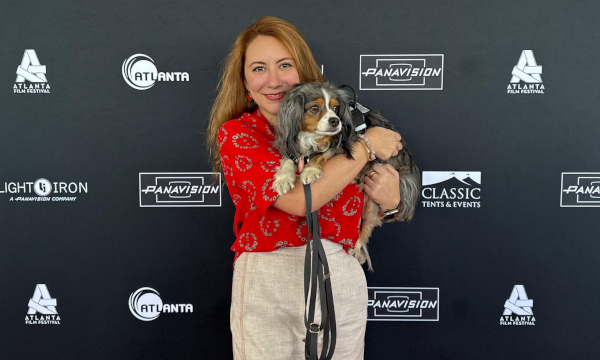
I am writing this piece on a flight to L.A., my dog on my lap, heading to the Humanitas Prize Awards Ceremony, where Babka is one of the four short films nominated. Humanitas celebrates stories that explore the human experience, because they believe that the act of acknowledging our common humanity is transformational. Past and present nominees are my heroes, my role models, the reason I fell in love with screenwriting in the first place. Full circle moment.
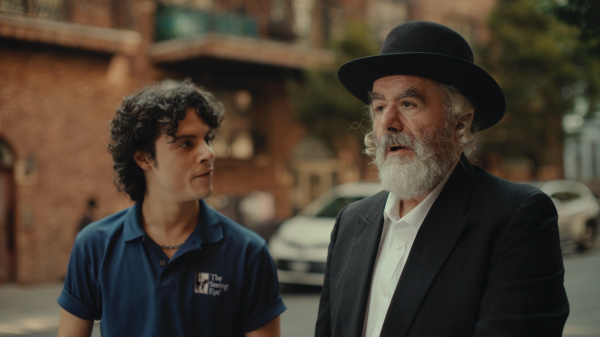
Babka, the feature screenplay, has been through writer’s labs, a finalist in several prestigious competitions, and we are actively working toward making the film next year.
As I continue to work, develop and promote movies #1, #2, #3 and #4, I see how these projects form a chain. A walk led to a thought, which led to an idea, which led to research, which led to a friendship, which led to a cruise, which circled back to another film. Each project opened the door to the next.
If I had listened to the voice in my head – the one we all know as filmmakers, as artists – I might have shut the door before it opened. No one will care about this. Too niche. Too small. That voice is loud, and it’s reinforced by an industry that too often avoids taking risks on stories that ultimately have the potential to resonate. Loudly. Commercially. Beautifully. Stories that have the power to connect our humanity.
I’ve relearned to love the process – the walk, the research, the conversations, the unexpected detours, the melting chocolate, the furry friends. The work is the reward. Cheesy indeed, but …the point is the journey, not the destination.
It started with a walk with my dog. And it reminded me that the best stories come from noticing what’s right in front of you, and having the courage to blindly (pun-intended) follow it wherever it takes you.
P.S. Though too many to cite, I want to thank the extraordinary people, sighted, low vision, and blind, who have trusted me with their personal stories, the filmmakers, artists and technicians who gave me their time, talent and expertise, The Seeing Eye, the experts in accessibility, service dogs and religion who shared the knowledge I lacked, my mentors, my family who introduced me to a new neighborhood in my own city and, of course … my dog, Nolita.
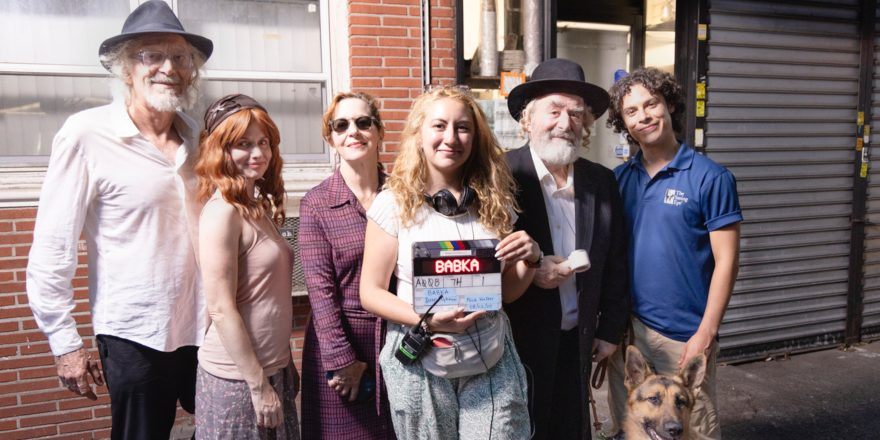
Featured image shows Serena Dykman on the set of Babka with actors Ronald Guttman, Hani Furstenberg, Betsy Aidem, Saul Rubinek, Barkley the dog and Jonny Beauchamp; all images courtesy Serena Dykman.