


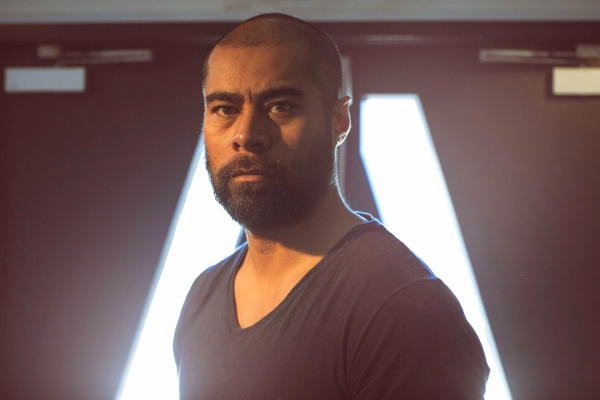
Miki Magasiva is the director, writer and producer of the new crowd-pleasing New Zealand drama Tinā, which is out now in theaters. Born in Lefagaoali’i, Samoa, Magasiva resides in New Zealand. Directing his first project in 2003, a set of award-winning ads, he continues to direct spots for major brands worldwide. In 2005, Magasiva was selected as a Breakthrough Young Director, representing Australasia at the AFEST film section, culminating in his first short film, Rites of Courage. He completed his second short film, Uso, the following year, when he was nominated for Best Script at the NZ Television Film Awards and won the Digital Dream Award at the Hawai’i International Film Festival. His short film Sina & Tuna, included in the Teine Sa (2021) television anthology, won Best Narrative Feature at the Philadelphia Asian American Film Festival. That same year, his work with The Panthers, New Zealand’s first-ever drama series to screen at the Toronto International Film Festival (TIFF), earned him Best Director: Drama/ Comedy at the NZ Television Awards. He collaborated with Indigenous filmmakers from New Zealand and Australia with the We Are Still Here (2022) feature film, opened the Sydney International Film Festival, screened at TIFF and won Best Dramatic Feature at imagineNATIVE. (Photo by Ryan Alexander Lloyd.)
I was 25 years old when I first saw Giuseppe Tornatore’s Cinema Paradiso, about 15 years after its 1988 release. It was my first overseas trip on my employer’s payroll, maybe even my first time staying in a hotel room. More accustomed to being surrounded by the disarray of student life, I felt uneasy in the sparkling, well-organized space.
I flicked on the TV to alleviate the unsettling feeling of clean sheets on my skin. Whatever flickered on the screen first, I was going to use it to say bye-bye aroma of opulence; dreamland awaits. It could have been anything: daytime television, another reality show, or even a news channel.
But, as if by divine influence, up popped that distinctive opening shot – looking out over the shimmering sea beyond a dancing curtain, a pot plant centered in the frame. A nostalgic score that used my ears to reach into my soul, sinking me deeper into the soft bed and holding me there for two hours.
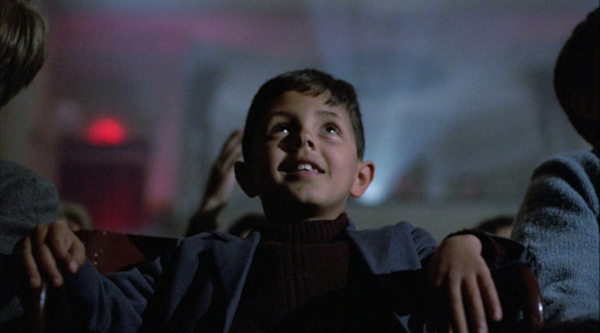
As I finish rewatching Cinema Paradiso for this piece, I couldn’t help but recall the catchphrase of one of my all-time favourite characters, Sergeant Schultz of Hogan’s Heroes: “I know nothing … NOTHING!”
It reinforces a reality that is dawning on me as I release my first feature film, Tinā: I am but a baby in a land brimming with masters. There is so much to learn by even attempting to create a film as special as Cinema Paradiso.
Back in that hotel room 20-odd years ago, I didn’t care much for foreign films. It’s not that I disliked them. I was, and still am, a slow reader. I look up to the sky too often, I have to backtrack a lot, and I have childhood reading trauma. So, I spend the entire time fixated on the subtitles at the bottom of the screen. That’s hardly the way to watch a movie.
But something about this Italian masterpiece gripped me so profoundly, I felt like Neo, at one with the Matrix, reading and seeing all at the same time. In fact, I didn’t feel like I was reading at all; I was part of the story.
So, how then can a film draw you in so deeply, without any obvious action, like that opening shot does? It makes you feel so much a part of its world that somehow you yourself are Italian! Perhaps it’s Ennio Morricone’s sweeping, layered, immersive score or the stunning, rich and nostalgic innocence articulated through Blasco Giurato’s cinematography. With no previous reputation, advertisement, name, or history, those filmmakers dressed me up in the fabric of that story, so I experienced it as if I were one of their own.
As a Pacific storyteller, I’m curious about what that level of cultural specificity might look like in my own work, and I have always been interested in exploring it. What is it to tell stories that feel Pacific? And is that even possible, being an immigrant raised in another country? Are there too many mixed, crossed lines of a confused grey identity? One thing I do know is, we Pacific people need to make more films if we want to find out.
And what a story Cinema Paradiso is — funny, heartwarming and inspiring! I notice these are the same words used to describe my own film. Coincidence, or perhaps not? The writer Genevieve Verdigel says, “To watch Cinema Paradiso is to consider how our own narrative can be told through the movies that we have impressed upon us.”
Over the years, many movies have influenced my journey. But this one felt as if it was guided by a higher power. Firstly, I discovered it by chance before my career began and before I knew the film even existed, and started delving into these classics. How often does this happen now, in the age of on-demand streaming? As I turned on the TV, this incredible film was starting up right at that moment. Zero minutes in, first frame of the movie, as if waiting just for me. I can only call it spiritual – divine. I haven’t come across a film like that since.
There was an unspoken, unexplainable quality to it that made this fresh-faced hotel novice, who knew nothing about filmmaking yet, fall so head over heels in love that he had to call home and talk to someone about the film immediately. It felt like being amazed by a view, being lost in a flickering fire or mesmerized by trees dancing in the wind.
I now believe works of art can have a spirit. I’ve experienced it firsthand. Making your first film is challenging; all you want to do is deliver it intact. But everything is working to remove the craft from your process. Little time, little money, little being taken seriously. The fact that we’ve managed even to deliver the film, let alone one that is successful, is a miracle. And perhaps that’s why I believe in miracles now. Despite all these challenges working against us, by pure luck, we’ve created art that has moved people.
I don’t want to try to explain it; I’m just happy to let the frog live. Trying to cater to an audience, attaching a big-name actor, or observing market forces can kill the magic. And there is so little magic these days.
That magic can take many different forms.
Consider Cinema Paradiso’s commentary on the power of the shared experience. Sure, it captivated me while I was alone in a hotel room, but what if I had been in a cinema? We have seen the impact in audiences who have been to see our film Tinā, which tells the story of a grieving Samoan mother who starts a school choir to help her students and, unexpectedly, herself. Those who have taken the time to go to the movies have experienced it on a deeper level than those who have watched it at home.
It’s a current and relevant conversation about cinema versus various video-on-demand platforms. Are we prioritizing a climate of viewing that is not healthy for humanity? It reminds me of one of my favorites, Wall-E, and its comments on the state of the world. We have reached the pinnacle of being carted around in our hover chairs, watching little screens and drinking our required daily nutrients. How forward-thinking was that when it was made 17 years ago?
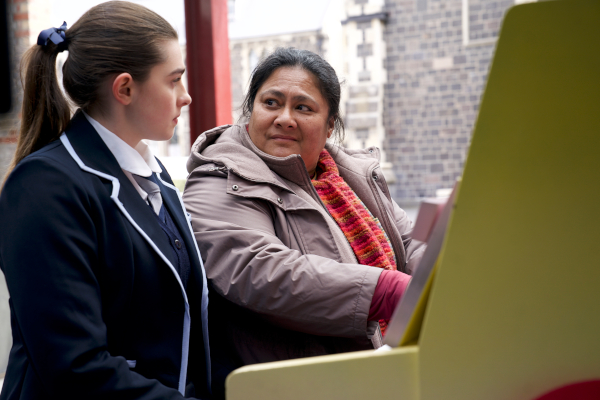
Because of the power of shared experience, Tinā is no longer just mine. It belongs to everyone: whether they see it alone, with a parent, or with a group, that experience is theirs to hold dear.
Going to the cinema, you feel and hear those around you, and you pick up on the overall vibe of the room. The unconscious collective vote of confidence or not. This is the shared experience. It’s not just that you are forming your own opinions, being swayed by your own prejudices; in the cinema, you get swept along with the consensus of the viewing group. That’s what I love.
If I’ve come to one realization, it’s this: we create films for people. If we keep that in mind throughout the entire process, maybe we stand a better chance of making a difference in this world. That is the power of what I do.
Perhaps, after all this, none of us knows anything. Perhaps we’re just supposed to begin and let the magic unfold along an uncharted path. Every film needs a little magic.
And who knows, maybe one day another 25-year-old will turn on the TV in their hotel room and Tinā’s opening sounds of the Choir of Western Samoa Teachers’ Training College will reverberate, echoing the sounds of Samoa and dragging them into our story.