

Craig Heed is a musician from New York who plays in the bands Miracle Sweepstakes and Hit. Hit’s latest record, Bestseller, is out now on One Weird Trick.
(Photo Credit: Sam Blieden)
People like to blame the death of the album on streaming, but I think my attention span got fried by the iPod. The album still reigns supreme for me, but that may be more about what the format represents than its utility at this point. I think almost exclusively in full-length terms when writing and recording my own music: Is this enough songs for the next album batch? Do they fit together as a cohesive whole? And as a listener and fan, I find it hard to get fully onboard with anyone who doesn’t have at least a good album or two to their name. Or, well, the odd non-canonical greatest hits can do the trick sometimes.
Yet, because I manually shuffled my way through even my favorite bands’ rich discographies back when my brain was still malleable, the idea of “desert island discs” — one, five, ten, however many — feels viscerally stifling. I’d probably get sick of anything! But if I had to pick just one — even if I’d still long for my favorite non-album singles, B-sides, and outtakes from their five-volume Complete Studio Recordings collection, some of which comprise the grossly underrated lost album R.I.P., which I’d also miss — I think I’d have to go with the Zombies’ Odessey and Oracle.
It’s one I have that quintessential, bygone-era, formative album experience with: I remember buying the 30th anniversary edition two-disc CD reissue at Other Music (along with The Art of the Armenian Duduk by Djivan Gasparyan, which I got on a lark because my grandpa gifted me the titular double reed woodwind instrument; one outta two ain’t bad). I remember driving to and from my shitty retail job every day listening to O&O front to back, the way you’re supposed to. And above all, it’s just a perfect album — for my money, more cohesive than any Beatles record, and song-for-song better than anything the Beach Boys ever did. To even lump it into a de facto trilogy with Sgt. Pepper and Pet Sounds does it a disservice. Odyssey and Oracle is singular, with its own melodic and harmonic palette, memorably distinct lyrical conceits, and a chic, mysterious allure. As I take stock now, I’ve been unconsciously inspired by these songs many times over the years in my own work, and they’re so deeply embedded in my mind that I think that’ll be the case for many more to come.
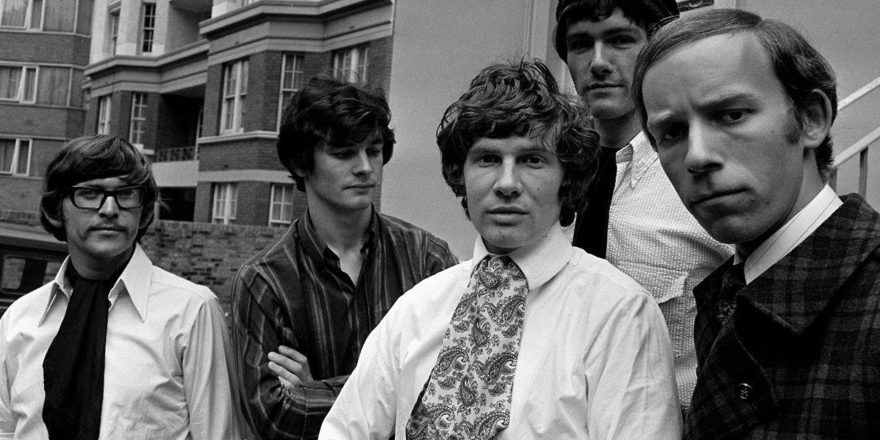
In the interview below, lead singer Colin Blunstone says that even well before the record was reappraised as a classic, the band felt it was “absolutely the best that we could do.” Forget ‘60s music, psych pop, whatever. For any music listeners out there looking for an album of just great music, period: you can’t do better than Odessey and Oracle.
Craig Heed: I know you and the other members of the Zombies have spoken before about how with Odessey and Oracle, the impetus was to make a record on your own terms, which you felt that you previously hadn’t been given the opportunity to do. Now as it’s reassessed as the classic it is, it’s kind of viewed side by side with Pet Sounds and Sgt. Pepper, which are these famously expensive productions, and the artists were at their peak commercial success. Whereas you’ve spoken about how you guys were really on a tight budget, you parted ways with your manager and your label, and you’ve talked about how you felt morale was low at the time. I’m curious, just for the goal of making a great record, what was the band’s attitude going into making Odessey and Oracle?
Colin Blunstone: Well, I can only speak for myself — because I’ve heard some of the other guys put it in a slightly different way — but, yes, we had lost our manager and we decided we didn’t want to work with our longtime producer anymore, which kind of put Rod Argent and Chris White in the producer’s chair. They very much wanted to hear their songs produced in a way that they envisaged from the beginning, the way that they’d conceived the songs. They didn’t know if they could produce, because they’d never produced before, but we managed to. Also we’d been dropped by our label, but we managed to get a deal with CBS — although, as you rightly say, it was with a very limited recording budget. It was for £1,000. We’d also managed to get time booked in what became known as Abbey Road; I think at this point, I think it was still called EMI Studios.
So there we were, recording in Studio Three in Abbey Road Studios with wonderful engineers Peter Vince and Geoff Emerick, who were at the peak of their careers. They’d just been recording on Sgt. Pepper with the Beatles — and although The Beatles normally recorded in Studio Two, they did record in Studio Three as well. So when we arrived there, we’re picking up percussion instruments off the floor that the Beatles had left there. We were huge Beatles fans, so it was very exciting to be treading in their footsteps.
Craig: That’s awesome. I think Sgt. Pepper would have maybe come out right before you guys started recording?
Colin: I’m not sure, I think it only had just been finished. As I remember it, they’d left the studio about two days before we started. So I would have thought that it probably came out about six weeks after we started the album. There’s no way that we could have been influenced by Sgt. Pepper, because we were recording before it came out. We might have been influenced a bit by Pet Sounds, but in all honesty, I don’t think the Zombies were — certainly not at this point — particularly influenced by anyone. We admired people, of course, and the Beatles and the Beach Boys would be two of the bands that we admired the most. But for the most part, I think we just tried to write the best songs we could — on Odessey and Oracle, it’s all Rod Argent and Chris White — and record them to the best of our ability. It was as simple as that.
Craig: Was there anything daunting, given the budget? Because if these artists are making these big budget records, and you’re trying to do something very ambitious, did it feel like, “We really are shooting for something sophisticated, but we’re going to have to be really judicious about getting it done efficiently”? Was that a challenge?
Colin: Well, we did think along those lines, but not because of other bands, be it the Beatles or the Beach Boys or anybody else. We knew that £1,000 was not going to last long in Abbey Road. So what we did — and I don’t know why we didn’t do it more often, and why other bands don’t do it — we hired a little village hall out in the country and took our own equipment in there. It wasn’t like a rehearsal studio — I don’t even know if those places existed in those days. The music business was very underdeveloped. And we lived 25 or 30 miles outside of London, so there were no facilities like rehearsal studios. Anyway, I think it was for about two weeks, we played nearly all the songs that we were going to record in the album, and we played them over and over so that we knew the songs we were going to record, knew the arrangements, and knew what key we were going to record them in, so all we’re looking for is the performance. Which meant that we could record really quickly, because we knew we were going to be up against it from a point of view of studio time.
Craig: I’m curious about that too, because I’ve also read that famous story of the Mellotron almost being this serendipitous addition, because of John Lennon’s Mellotron being leftover.
Colin: I was just thinking about that while I was talking. Yes, I can remember when we first went into Studio Three, we could see this Mellotron — I can see it now in the far left hand corner — it’s John Lennon’s Mellotron and he left it behind, as well as all the percussion, tambourines and maracas and things like that. Rod started playing it, and if you listen to Odessey and Oracle, Mellotron is all over it. And we didn’t own a Mellotron, we just borrowed John Lennon’s. So, yeah, that was just a chance thing. We were really fortunate. I don’t know if you’ve seen — we’ve done a documentary [Hung Up on a Dream: The Zombies Documentary].
Craig: Oh, yeah, I recently watched it.
Colin: Well, it’s my voice right at the beginning saying, “I’ve never worked out whether the Zombies were a lucky band or an unlucky band.” Because there were instances like that when that Mellotron was there. It’s extremely fortunate; there were lots of instances where we were lucky. But also — maybe this is the same with all bands — there were lots of instances where we were a bit unlucky. For instance, “Time of the Season” being number one in Cashbox in the States, when we’re all involved in other projects. It wasn’t really practical for the band, and there wasn’t really any will for the band to get back together. So there was a rather unfortunate timing sequence there that happened to us. So sometimes we were really lucky and sometimes things went against us. But the Mellotron, it’s just phenomenal. It was just there, and we used it.
Craig: Do you remember how seamless was it to be like, “Alright, we’ve got these arrangements without Mellotron, we’ll just wing it and see what we can come up with incorporating it”? Was that stressful at all to try out new ideas when you know you’re on a time constraint?
Colin: Yeah, I think — I mean, taking into account this is about 50 years ago now — it was fairly seamless. I think Rod played on Mellotron what he was going to play on other keyboards. My understanding is that, particularly because Pet Sounds had been recording on an 8-track machine, the Beatles had asked the Abbey Road engineers to get an 8-track machine, and the answer was there wasn’t one in the country. They managed to get two 4-track machines working together, but in the process, you lost one track, so in effect you’re recording on seven tracks. So it was actually possible for Rod to very often do two keyboard tracks, so it may have been quite possible that he would put a piano track down or a Hammond organ track, and then put a Mellotron on top of it. That was one of the liberating things about recording in Abbey Road at that time. We could put two keyboards down, and we could double track the vocal harmonies as well, which we’d never been able to do before.
Craig: Yeah, I remember reading that you guys did more overdubs than before, and there’s a lot of very prominent ones. I think Rod has that lead at the end of “Hung Up on a Dream” on piano, and I love when that comes in. Do you remember the workflow? Because if you guys had been rehearsing, essentially you’re almost doubling the parts anyone can do, so was there any kind of, “What do we do?” kind of moment with the extra tracks?
Colin: It was very spontaneous. I can give you two examples: On “Time of the Season,” there’s two organs playing there, which isn’t always obvious, but if you know that, then you can hear it. There’s actually two completely separate takes going on the outro of “Time of the Season.” And the other thing, on the same song — and this wasn’t written in the song — we’d gotten a basic track, and it may even have been that I’d gotten a vocal on it, but Rod said, “You know, I can hear a [mimes the song’s clap and “Ah” hook]. And everyone said, “Well, go out and do it!” And it was one take. Dun-dun-dun — tsk-ah! Dun-dun-dun. And of course, it’s become synonymous with that song, but it wasn’t written that way.
Craig: That’s amazing. Another question I had is, when I was looking at the dates, I don’t know how accurate this is, but even though you guys were on limited time, it was over the course of several months? It looked like it was from June ‘67, and then I think you guys wrapped up the last song session in November ‘67. Do you remember it being kind of a fits-and-starts process?
Colin: I think it was. It was hard to get time in Abbey Road, that’s the thing. And, in fact, we started two tracks in Olympic Studios, although we finished them in Abbey Road. “Beechwood Park” might have started at Olympic Studios, and maybe “I Want Her She Wants Me.” I’m not absolutely sure. I can remember at the time feeling distinctly uneasy, because the sound in Olympic Studios was so different — and I didn’t say anything, but I was thinking, These tracks are just going to sound so separate to what we’re doing at Abbey Road. But it’s just part of the genius of the engineers we were using there, that you would never know now that two tracks were started somewhere else.
Craig: Say you do a session, you finish part of a song or get a general idea down for the basics — would you get a rough print to then sit with and listen to for x amount of time until the next session? Would it be easy to listen back and second guess something?
Colin: I don’t remember a lot of that happening. We’d done that in our rehearsals, in our village hall. I think that I should also mention, Abbey Road — it started to relax shortly afterwards, but at that time, they were very precise with a band like us. I think maybe the Beatles were a bit different, but with a band like us, you had to record at very strict times. So you started at 10 AM and you had to finish at 1 PM. And then people could have lunch. Then you started at 2 PM and you finished at 5 PM, and then you started at 7 PM and you finished at 10 PM. And in particular in Studio Three, you had to finish at 10 PM, because the soundproofing wasn’t that sophisticated, and Studio Three is right next to a block of flats.
Famously on a song called “Changes” — which on the actual album is the first track on side two — it’s the only time everyone in the band was singing harmonies, and we were all round the piano, because that enabled us to get our starting note. So Hugh Grundy, our drummer, and Paul Atkinson, our guitarist, were singing a harmony which is quite unusual. Usually it’s just Rod, Chris and myself. But it came to one ‘o clock, and the clock went over, and even though the red light was on and we were recording, the guys that moved the gear around walked in, and while we were singing, moved that piano out of the studio and took it I know not where — to another studio! And I think because we were so conscious of the fact that our recording budget was very tight, we just kept singing while they were moving the piano. [Laughs.] They were very strict.
Craig: Now I want to listen back and see if you can hear something off in the distance. [Laughs.]
Colin: [Laughs.] I like to think that there’s a sound of them moving the piano. And in my imagination, I’m thinking I can hear them talking to one another — “This way, Harry! Come on, Fred, over here!” I don’t think you can hear it, but it would make a great story if you could.
Craig: One thing that’s always been really impressive to me about Odessey and Oracle is how, despite having two principal songwriters — who, it always seemed like [a song] was either only credited to Chris or only credited to Rod — it sounds so cohesive song to song. Do you remember what their writing processes were like and how different they were in writing their songs for the record?
Colin: Certainly up to the end of Odessey and Oracle, they were credited separately. After that, they decided to have a co-credit when Argent started; it would be credited as “Argent/White.” But still, to a large extent, they wrote completely separately. Rod certainly wrote on his own, but he would sometimes, perhaps polish up a little bit on Chris’s songs. Not lyrically, but musically. He would sometimes alter chords on Chris’s songs. But not the other way around. To my knowledge, anyway, I don’t think Chris ever altered one of Rod’s songs.
Personally, I thought that at this period they were both in such a rich vein of writing. Because, though there’s 12 songs on Odessey in Oracle — and nowadays, there’s usually there’s only 10 — all of the songs are wonderful. They weren’t consciously written to be of a piece; that is just good fortune that it sounds as though the songs were written to be recorded in that order. All we ever did was try and write the songs to the best of our ability, and to record them to the best of our ability.
Craig: I remember you almost said the exact same thing about the record in the documentary, that you heard the final playback and you felt, This is our best effort that we could possibly do. I’m curious, when there was the initial response to the album, was your own assessment colored at all? What has been your relationship to the music itself, as the album has gone from being underappreciated to reappraised as a classic over the years?
Colin: My feeling when I heard the album, I thought it was absolutely the best that we could do. So it was incredibly disappointing when, to a large extent, the album was — really, it was ignored. And I’m obviously more aware of what happened in the States, but it was all a little bit later. And in the UK, it came out and there was one famous DJ called Kenny Everett who loved it, but one DJ is not enough. Also, there was a famous reviewer called Penny Valentine who wrote for a musical paper called Disc, and she gave it a wonderful review as well. But apart from that, the music industry and the media pretty much ignored it, and it was incredibly disappointing, and I think it probably was a factor in why the band finished.
We released a single first — it was probably the end of the time period where singles were still all important — by the end of the ‘60s, albums were far more important than they were when this came out in the UK. That first single in the UK was “Care of Cell 44,” and it just wasn’t a commercial success. And I’ll be honest — I mean, this is a story against myself, because I was wrong — I thought “Care of Cell 44” was probably the most commercial track on the album. The only thing I wasn’t really happy with was that the title of the song is not actually in the song. I think the title could have been taken from the song. But otherwise, it’s a really jaunty song with an incredibly clever lyric, and there’s some good harmonies. I just thought it was really commercial, but nothing happened.
At that point, that there was a meeting and it was decided that we would go our separate ways. And that, famously, was before the album was even released. There’s a recorded interview on the Zombies boxset with the DJ I mentioned, Kenny Everett, talking to Rod and Chris, and he said, “So, the band’s finished?” And they said, “Yes.” And he said, “When does the album come out?” And they said, “Well, it hasn’t come out yet.” And Kenny Everett famously said, “Well, wouldn’t it have been better to have waited until the album was released?” And with hindsight, you think, Well, of course it would have. We’d been three years on the road, we’d been working all the time, and I just think we were depleted. We were tired and we hadn’t been managed very well. The writers had a very different income stream — it came straight from an honest publisher to them — but the band was not well-managed and the three non-writers had absolutely no money. And when we had this final meeting, Paul Atkinson had just got married, and he said, “Guys, I can’t live on nothing having just got married.” And that’s when Rod said, “Well, look, if Paul’s leaving” — which was obviously what he was doing — he said, “I think we should end the band.” I didn’t particularly want the band to end; I would always say the same thing, I didn’t have a plan B. I was driving home from that meeting in my car, and I was probably 22 or something like that, and I thought, What am I going to do with the rest of my life? I wasn’t qualified for anything, and my life force had just been taken away from me. It was a very sobering experience.
Craig: Well luckily, it all worked out. [Laughs.]
Colin: In the end, I think we took the scenic route. It took rather a long time. There were lots of ups and downs, but the music business is like that. You never know what’s going to happen. But eventually we did get recognition as a band in general, and Odessey and Oracle in particular, and that culminated in us being inducted into the Rock & Roll Hall of Fame in 2019 — which was a breathtaking experience. It was a validation of what we had done all those years ago. And, in a way, a validation of the second incarnation of the band as well, which started much later — in 1999, when Rod and I got back together again and started playing.
Craig: So, I know the Odessey and Oracle remaster’s coming out soon.
Colin: Yes, I’ve got it written down here — it’s a worldwide release on the 26th of September, and it’s coming out on Beechwood Park Records, which is our record company. And it’s going to be distributed by Q Prime, who are the company who manage Metallica. There’s going to actually be four Zombie albums released in the next 12 months: The first one is Odessey and Oracle, the second one is Begin Here — which was actually the first album we released — the third one is going to be all the A-sides and various other recordings, and then the fourth one, I believe, is going to be the recordings that were put together after the Zombies had finished.
Craig: R.I.P.?
Colin: I’m not sure what it’s going to be called, but it’s going to be along the lines of the album that was R.I.P., which was a mixture of tracks. Often it was demos of songs that we never finished, but we finished them when “Time of the Season” was a hit. I can remember there’s a song called… let’s see… “Walking on the Beach”?
Craig: “Walking in the Sun”?
Colin: “Walking in the Sun”!
Craig: I love that song. I was listening to it the other day.
Colin: Yeah! We demoed that early on and never finished it. It’s a shame that we didn’t, with the benefit of hindsight. And so we finished that for R.I.P. and there were lots of others as well. But also drifting into those sessions, drifting in and out, was Rod’s new band, Argent. So some of those tracks will feature performances by some of Argent as well. It’s kind of that period in between the end of the Zombies and the beginning of Argent, and the beginning of my solo career, where you could say we were tidying up what had been left over.
Craig: Yeah, because on R.I.P., I think the first song is the same first song — though obviously a different recording and performance — as One Year, right? “She Loves the Way They Love Her”?
Colin: Yes! Now, on R.I.P. that would be Argent, but Argent were never going to put it out. So, yeah, I recorded that song. I’m not terribly familiar with R.I.P. — obviously I was involved in the sessions, but I’m not really familiar with the running order of everything. There were two or three songs that I got that were first presented to Argent. One would be “She Loves the Way They Love Her.” And then on my second album, there was a song called “Andorra,” and that was presented to Argent and they decided not to record it. So I got that one.
Craig: One thing I’m curious about, in terms of you as a singer: going back to when you were talking about how things would serendipitously happen, and you almost serendipitously became the lead singer — the way that story is told makes it seem it was something that you just happened to be really adept at. I know you’ve talked about being untrained as a singer. Do you remember what your experiences were like recording vocals? Were you someone who would do a lot of takes?
Colin: I know I didn’t practice, and it was just a gift I was given. And when we recorded, usually I recorded very quickly. It changed as I got older. I’ve never really quite understood — I don’t think it’s necessarily a part of your voice aging, but there have been times when I’ve taken a long, long time to get a lead vocal together. But in those days, from ‘64 to ‘67, it could well be one take. It probably wouldn’t be more than four or five.
Craig: Wow. Do you think maybe that’s partially just the technology now versus then? Like, now you can do a billion takes digitally, you have so many options that it almost leads you to want to be more perfectionist?
Colin: I think that could be part of the reason. I think also then I didn’t know that you could take options. You know, if you don’t know that you can take as many vocals as you want, then you don’t do it. As you start to realize what your options are, of course you take more. And also, I didn’t know what success meant, and I didn’t know what failure meant to start with. But as years go by, you start to realize how important what you’re doing is. It’s going to govern how you’re going to live for — maybe for the rest of your life, but certainly for the next couple of years. And so there’s a pressure there as you get older that’s not there when you first start. Because you don’t understand what’s at stake. I mean, really, you should put that out of your mind. But your subconscious plays tricks on you, and I suppose you start to worry about failure more than success, and that can affect your performance. And then maybe the other thing is it’s just getting old and you might not have the vocal control that you had when you were younger. All sorts of things come into play. But still, sometimes I can record really quickly, but there are other times when you have to dig your heels in and make it happen.
Craig: Yeah, I feel like also listener expectations have changed. Like, to some extent — at least in America — it feels like once American Idol got big, people started judging vocals in this inhumanely perfectionist way. It used to be, the human voice was the human voice, and nothing should be perfect. And now, at least for top 40 type stuff, it’s all about almost inhumane perfection.
Colin: Well, of course, and on records they work on the vocal and all sorts of processes goes on. And of course the instruments are all perfectly in tune as well. When you’re playing real instruments — real guitars, real basses — especially back in the ‘60s, sometimes they weren’t absolutely in tune, and if you listen to it really closely, often you’ll find there can be inconsistencies in the tuning. Certainly in vocals as well, there’ll be inconsistencies. But it was just accepted in that time in a way that probably it wouldn’t be accepted now. And some people think that’s a shame, because you can sacrifice performance for vocal perfection. You can go ‘round and ‘round in circles with all this stuff. I come back to what the Zombies used to do: just do your best, you know? That’s it, really.
Craig: Definitely. I remember reading Genesis P-Orridge from the band Psychic TV praising your vocals, saying that you had a magic, resonant hiss to your voice that took really well to tape recording, and that recording with engineers, they’d be like, “Yeah, you know, Colin Blunstone just has that magic hiss.” Was that ever something you were conscious of, or anything you attribute to your technique?
Colin: Other people commented on it, particularly our first producer, Ken Jones — on “She’s Not There,” there probably is a bit of hiss coming from my voice, but also the vocal is very compressed. He liked that, and you can hear the breaths. I’m not sure if he hadn’t compressed it, whether you would hear it so much. Having compressed the vocal, and had commercial success, our feeling was that Ken Jones was always trying to recreate “She’s Not There” in all our later recordings. And to some extent, I think that that acted against us, because bands grow and the songs change and performances change. You can’t keep on trying to recreate an old performance. But I think just naturally, there is a little bit of breath in my voice, and I think in some of those early recordings, I was encouraged to exploit that. I probably wouldn’t do that now, but it’s there naturally, to an extent, yes.
Craig: Is there anything looking back on the legacy of your career with the Zombies that you feel like maybe people get wrong? Is there anything that you’ll read about your work or your career that feels reductive or like it got lost in the context of history?
Colin: Just on a personal note, when the band finished, after a few weeks I realized that there didn’t seem to be a road ahead for me in the music industry, so I took a very ordinary office job. And sometimes people have said, “Why did you choose to take an office job rather than to be in the music industry?” But I didn’t. It wasn’t that. It was just that there were no opportunities being offered to me. The Zombies were quite a close band, and at the end of three years on the road, I realized I didn’t have a lot of contacts outside of the band. And so there weren’t a lot of people I could call about career moves, and certainly no one contacted me. So I was forced to, for about a year, work outside the business. And sometimes people think that I made a choice to do that, but I didn’t have any choice. And all three of the non-writers — Hugh Grundy, Paul Atkinson, and myself — we all, for about a year, took other jobs outside of the music industry industry. Paul worked for a computer firm and Hugh sold cars and I worked for this company in London. In a way, it was good for me, because I was devastated when the band finished and this company was very busy where I worked, so I didn’t have time to dwell on it at all. From the minute you got there, the phones were ringing.
But in terms of the band being misunderstood… I will tell you one thing. Certainly in England, I think there was a general feeling that the band came from a rather upper class background. I don’t really know why people thought we came from rather upper stratas of British society. Nothing could be further from the truth. We all came from lovely families, but we were very working class. Except, there was one — I won’t say — but one of the families in our terminology was possibly a bit middle class. But the rest of them, we just came from very loving but ordinary families. So that was a misconception.
Craig: Maybe it’s just that they attribute the sophistication of the music somehow? I mean, I guess it’s a lazy assumption someone could make…
Colin: You know, it could be. Decca Records came out with a terrible — in some ways, I don’t like telling this story, because in telling it puts it out in the media again and it was an absolute disaster. When we recorded “She’s Not There,” Rod and I were 18, and we went into the press office at Decca. The conversation went along the lines of, “We have to find an image for you.” This was, like, a 20 minute conversation, and in some ways our fate was sealed as a result of this conversation. They said, “What have you been up to? What have you been doing?” And someone in our band said, “Well, you know, really we’ve only just left school.” Meaning, we haven’t done anything, we’re literally just out of school. And then the conversation somehow got around to how many exams we passed at school — like, at 15 or 16. We’re not talking about degree courses or anything like that. And that became our image, that we had these exams.
So people started to think of us as brainy geeks. Where, really, what people want with bands — they want bands to be dangerous. They want bands to be pirates and brigands. [Laughs.] And we were presented in a completely opposite way. And in the UK, I’m not sure we ever recovered in that initial period in ‘64 to ‘67. “Time of the Season” wasn’t a hit in the UK, and I think that’s one of the reasons why, because the image of the band had been handled so poorly. I think we were as wild and crazy as all the other bands, but in the mind of the media, that wasn’t the case.
Craig: It almost seems like another instance where you guys were maybe ahead of your time, because I feel like in the subsequent decades, college rock was very big, and in alternative music being a little brainy or being a band that formed at art school or something — those were trends that became cool.
Colin: I know, and that is true. We would have been very ordinary [in] a few years’ time. And actually in fact, Chris White had just finished art school, and I wanted to go to art school. If the band hadn’t become a professional band, I wanted to go to art school.
Craig: What discipline?
Colin: The exam I took — it’s an exam you take at 18 — I did two paintings, one drawing, and a sculpture. I was OK. I don’t know if I could have ever had a career or not. To be absolutely honest, my father said to me, “You’re not going to art school, because all they do there is drink beer and chase women.” I’m not sure if he was trying to put me off, but it certainly didn’t put me off. [Laughs.] And it’s always amazed me because a year later, we were offered the recording contract with Decca, and because we were so young, our parents had to co-sign the contract. So what he thought bands did when they’re out on the road, if they weren’t drinking beer and chasing women, I have no idea. But he co-signed the initial Decca contract, and my parents were very supportive of me doing that. But he wasn’t very happy with the thought of me going to art school. And he was probably right — I was quite good at art, but I wasn’t driven. It wasn’t something that I had to do.
The remaster of Odessey and Oracle is out now on Beechwood Park Records.
(Photo Credit: The Rocks Management)