

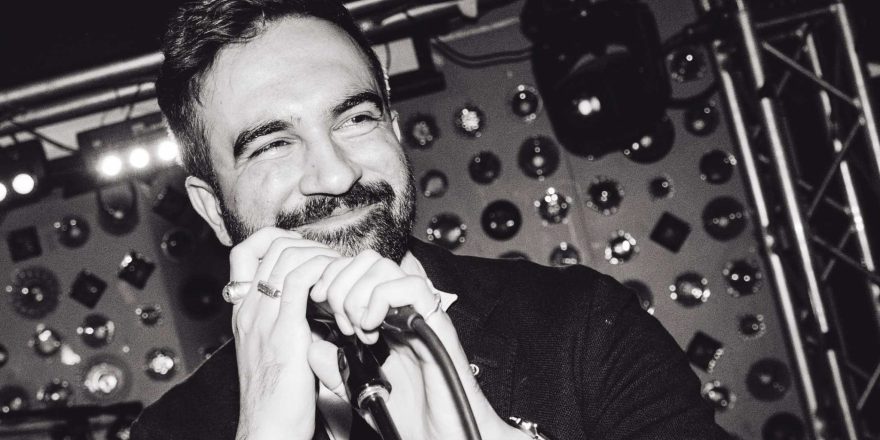

country girl’s upbringing was steeped in orchestral tradition and solitude. As a home schooled teenager, he enrolled in Juiliard’s Precollege program to study flute. At the age of 16, he discovered contemporary genres, now citing minimalist composers such as Steve Reich and slick projects in the vein of Air as key influences.
country girl is based in Brooklyn, and his latest EP, patience, is out now on FADER Label.
I.
On January 8, 2025, a 33-year-old socialist former rapper holds a fundraiser for his long shot mayoral bid at Baby’s All Right, a decade-old Williamsburg venue that’s become a fixture of the city’s alternative music scene. Now a state assembly member, only six years earlier he had been releasing tongue-in-cheek music videos under the name “Mr. Cardamom” while tutoring SATs to support himself. This sounds like a story destined to flicker briefly at the periphery of New Yorkers’ attention, a shimmer of hope that fades into the dim oblivion of, “Remember that guy?” But as we all know, that’s not what happened. In a reshaping of New York’s political imagination that will live forever in our city’s history, Zohran Mamdani swept the Democratic primary, and we are now on the precipice of electing not only our first Democratic Socialist mayor, but someone who was once himself a working musician.
While Mamdani’s past life as Mr. Cardamom is now staple B-roll on CNN and Fox News — seemingly both to his chagrin and bemusement — his lived connection to the difficult task of making art while toughing it out in New York should not be underestimated. A Mamdani administration would be uniquely positioned to deliver tangible gains for musicians and artists, leveraging city government to truly sustain New York’s music ecosystem. And this support can’t come soon enough: Over the past two decades, conditions for working musicians and small venues have grown increasingly dire, as the cost of living skyrockets while embattled DIY spaces close their doors.
II.
“One knew in advance that life in New York would not be easy,” wrote David Byrne of Talking Heads in The Guardian in 2013. “But there were cheap rents in cold-water lofts without heat, and the excitement of being here made up for those hardships.” That creative possibility remains, but the affordability is gone. A 2017 study by the city on the state of the local music industry found artists spending on average 65 percent of their income on rent. By 2022, more than half reported earning under $25,000 a year and nearly two-thirds had no savings. And under Mayor Eric Adams’ Rent Guidelines Board, rent-stabilized thresholds have continued to climb, with median asking rents up 15 to 25 percent across much of the city.
Venue turnover has always been part of the fabric of New York’s alternative music scene, but in recent years, it’s become harder for new spaces to emerge and survive long enough to become lasting institutions. In that same 2017 study, the report found that nearly a quarter of New York’s sub-500-capacity music venues have closed over the last 15 years. Anyone who’s attended DIY shows in the city over that time knows the names of treasured venues come and gone, homespun, scrappy spaces where some of today’s most beloved bands first cut their teeth: 285 Kent, Elvis Guesthouse, Glasslands Gallery, Silent Barn, Shea Stadium, Secret Project Robot, Saint Vitus, and many more. And for every industrious indie darling that has managed to break through and sustain a long-term career, there were thousands of bands and basement shows that, for the many who witnessed them, were no less meaningful, memories of sticky floors preserved in scattered Web1.0 archives.
Most of these closures trace back to the same familiar pressures: rising rents, a death by a thousand cuts of fines from draconian noise and code restrictions, and a tangle of zoning and permitting processes that make it nearly impossible for small venues to stay legal, let alone afloat. These rules, designed for the large-scale commercial operators far more likely to actually bother residents, impose costs and liabilities that small cultural spaces simply can’t absorb, effectively working to regulate community-scale music out of existence.
III.
It doesn’t have to be this way. If City Hall’s treatment of New York’s alternative music scenes over the past two decades has been primarily defined by neglect, Zohran Mamdani’s platform offers the first serious blueprint in years for how city policy could actually make life more sustainable for working artists and their communities. (Full disclosure: I’m not writing in any official capacity for Mamdani’s campaign, just as a musician and New Yorker who’s lived through the same pressures his platform speaks to.)
Zohran’s plan to support small businesses is one of the most effective ways he can use the levers of city government to assist a beleaguered small venue ecosystem. His proposal to halve fines and simplify compliance would ease the constant pressure of licensing upgrades and DOB violations that have long strangled small venues with razor-thin margins. Currently, restrictive zoning prevents music studios and rehearsal spaces from operating outside “commercial and manufacturing” districts, limiting where artists can create, inflating rents, and driving up the literal cost of making art in the city. His commitment to streamlining permitting, reforming zoning, and providing one-on-one support through a “Mom & Pop Czar” would help music venues, studios, and rehearsal spaces navigate the city’s Kafka-esque maze of regulations and expand the supply of creative space, ultimately making it more affordable for music to be recorded, rehearsed, and performed.
For musicians in rent-stabilized apartments, Zohran’s rent-freeze will be a lifeline, a respite from the annual dystopian game of musical chairs renters face every summer, praying that their landlords by the mercy of God spare them from untenable rent increases that throw their lives into disarray. And regardless of who ends up living in the 200K affordable housing units he wants to build — they should go to New Yorkers in the very greatest of need — that initiative coupled with better zoning and empowered housing agencies can help drive down the collective rental price of apartments everywhere.
And if simply staying afloat as an artist in New York has become a herculean effort, raising a family as an artist often sits firmly outside the realm of possibility. The average cost of childcare in New York is around $25K a year, roughly the same amount that half of musicians reported as their entire annual income in 2022. A Mamdani universal childcare program — something Governor Kathy Hochul is now throwing her full support behind — would cover children up to age 5, saving the average New York family up to $125K per child. Zohran’s plan to invest in after school programs could play a role here as well, with after school music programs often serving as incubators for the city’s next generation of musicians, producers, and cultural workers. Taken together as a suite of policies, alongside cheaper groceries and free buses, Zohran’s platform is a blueprint for building a city where creative work becomes more than just decoration but a necessary part of our civic infrastructure.
IV.
But that blueprint should just be the starting point. Zohran’s mayoralty could open the door to a more direct, robust investment in New York’s cultural life, the type of governance necessary to revive the material conditions David Byrne spoke of and the only way back to the more affordable, artist-friendly New York that gave us The Velvet Underground, The Ramones, Television, Patti Smith, Blondie, Talking Heads, Suicide, Sonic Youth, and the rest of the restless vanguard of the city’s cultural golden years. To achieve this, City Hall will need to take cues from other forward-thinking housing and nightlife policies pioneered in London, Melbourne, Austin, and Berlin, places where targeted interventions in the arts sector have risen to meet the pressures of the 21st century late-capitalist urban landscape.
Berlin’s €1 million Club Commission and the “Agent of Change” planning laws in London and Melbourne currently fund soundproofing for venues and require new housing near them to insulate for noise, drastically reducing complaints and preventing venue closures. Austin’s Live Music Fund, financed by its hotel occupancy tax, dedicates a small share of tourism revenue to venue and musician grants, creating a stable funding stream for local music ecosystems. Berlin’s heritage-district rent caps for arts tenants in designated corridors preserve long-standing creative spaces from displacement. London’s Night Czar consolidates permits into a single nightlife license, mediating disputes before fines, cutting through red tape, lowering compliance costs, and reducing the number of spaces closing down.
These policies aren’t simply based on social democratic ideological priors but results-based, effective governance that, when executed successfully, benefits an area’s entire economy. Arts Council England’s Arts Events Related Spend National Survey found that for every £1 England subsidizes the arts and culture sector, it delivers roughly £7 in GDP contribution. In San Francisco, the results are even more dramatic, with city expenditures of roughly $95 million in arts support generating more than $1.7 billion in economic output, a multiplier of nearly 17 to 1. These are not just ideas; these are hard numbers, and the story they tell is that public investment in culture yields returns that far exceed its cost.
V.
But first things first: it’s essential that Zohran wins on November 4 with a decisive fifty-percent mandate that forces lawmakers in Albany to work with him to enact his agenda. (This is the alternative…) If you have time before the election, canvass. It’s fun as hell, you meet all sorts of people, you hear cool stories from old heads, you engage with your fellow New Yorkers. There are many people in this city in a great deal of need, people in situations far more desperate than the already unsustainable conditions many working artists live under. To speak with your neighbors across differences and find the ways your material interests intersect is beautiful, connective, real. Housing, transit, childcare, a thriving arts sector: these are all the same fight.
As Zohran himself said to the AFM Local 802 Musician’s Union after receiving their endorsement, “Art must not be a luxury for the few.” If we get this right, the night Zohran took the stage at Baby’s in January might be remembered as more than just an early stop on his campaign circuit, but the beginning of a new era of City Hall governing with, rather than against, the underground currents that drive the indomitable tide of the greatest city in the world.
(Photo Credit: Emilio Herce)
country girl’s patience EP is out now on FADER Label.