

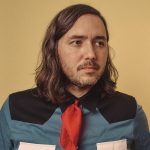
Bruce Driscoll is a producer, songwriter, guitarist, and vocalist. He is one-half of the duo Freedom Fry, and plays in the band Ivy.
The list of songwriters whose work was only discovered or truly appreciated after their death is long. The fact of the matter is, we don’t tend to treat the artists around us very well when they’re alive. Like cruel economics, once the supply is cut off, the allure and demand goes through the roof. I’ve long been fascinated with the things we leave behind and the journeys they take.
Over the past few years, I’ve been working with a dear friend and a grieving mother to let someone we all thought the world of live on through his music. It was too good to die with him. But let’s go back to the beginning.
There were strange, repetitive sounds starting to come out of teenage Drew’s bedroom non-stop. His mom, Connie, and his stepdad, George, initially wondered what it was all about. After getting kicked out of his North Carolina high school for smoking pot, Drew was spending more and more time in his room with his keyboard and guitar. Eventually, he’d come out and play the song he wrote to his parents and blow their minds. There had never been a musician in the family before, so they weren’t sure where it came from. But it soon became all he lived for. Like a nun with her scriptures, Drew was devoted to his music.
Eventually that music found its way to me via Andy Chase, of the band Ivy, who Drew had hit up on MySpace, sharing his demos. Andy couldn’t get them out of his head — the strange, slightly off-beat hand-played drum loops, the atmospheric synths and guitars, and that layered quirky voice that, despite being buried in the mix, always seemed to sing a catchy melody. The music was ragged and off, but it was also charming and beautiful.
At the urging of his wife, Dominique — Ivy’s singer — Andy asked 19-year-old Drew if he would sign to his label, Unfiltered Records. “Yes! And I’m going to be the biggest thing to ever happen to you!” replied the paradoxically huge ego-ed and low self-esteemed kid.
But Drew being Drew, he had deleted all his original tracks — the individual files like guitars, keyboards and vocals that allow you to alter and improve the mix. There could be no correcting the poorly timed drum beats or turning up the vocals. That’s where I came in.
“What do you think about me flying Drew here to New York City so you can re-create his demos with him on weekends until we have an album?” was Andy’s pitch. I was into the demos but not sure how it would go starting from scratch. One of Andy’s greatest gifts is that he can hear potential from a mile away. He heard it in Drew Stroik.
I first met Drew in 2010 for dinner at a Chinese restaurant in West Chelsea the first weekend Andy flew him up. He was short, a little shy, and his hair was thinning — miles away from having the typical persona of a rock star.
The next morning, Drew walked up the six flights of stairs to my tiny studio apartment at 65th Street and York Avenue, carrying his plastic Yamaha keyboard under his arm, and we got to work. Andy anxiously waited for a text from me to either confirm that this kid had the goods or that it was a trainwreck. Stroik had the goods.
Weekend after weekend we worked. Saturday mornings, Drew would ascend those steep stairs to my apartment, we’d work all day on one song, never stopping, then send it off to Andy for comments. Sunday morning, he’d come back, we’d address Andy’s changes, then start a new song. In the evening Drew, would head off to LaGuardia Airport to fly back to North Carolina where he worked all week at a vending machine factory.
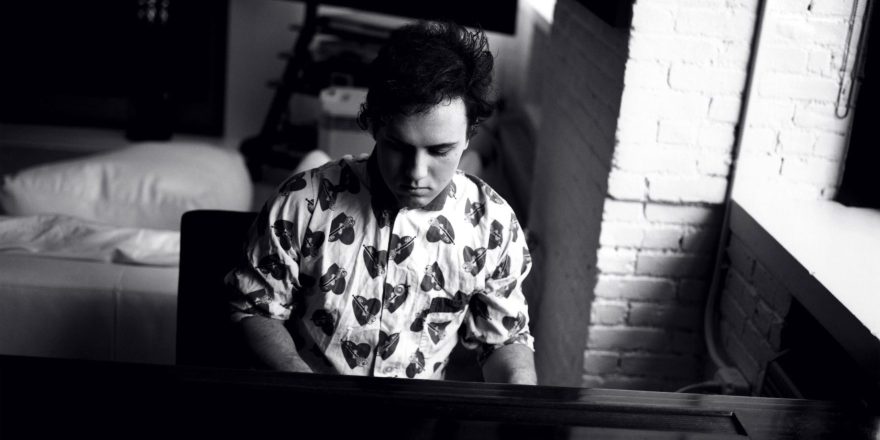
My “studio” was my bedroom, so Drew would sit cross-legged on my bed, keyboard in front of him, replaying the magic from his demos. Sometimes we’d sample a part of the original demo like a rapper would and build a new track around that. When we worked on “La La La” (one of the songs that’s been getting a lot of attention on TikTok lately), that’s exactly how it went. He sang the chorus in such a specific, maniacal way that instead of trying to re-create it, we just chopped that bit in and built everything around it.
Along the way, if a lyric or section was missing, Drew would stare off up at my ceiling, then quickly jot something down, like it wasn’t the slightest challenge for him. Music was easy for Drew, but life, it turned out, was hard.
One puzzle about Drew’s growing darkness was that he came from a loving family. He’d often talk about his mom. “This song is my mom’s favorite,” or, “my mom says this is my best one yet.” It was clear that his social circle consisted of his songs and his mother. He loved her, and she believed in him.
Eventually, we finished the album, and that was when Drew was forced to do something he hadn’t factored into his dreams of becoming a famous artist: he had to put himself out there. He had to shoot media content, meet people, and he had to get up onstage and play shows.
At the time, “content” wasn’t even the demanding beast it is now. There was no TikTok or Instagram. Andy tried repeatedly to get Drew to film things they could use for the album release, but it was the one piece Drew couldn’t bring himself to do. Drew would promise to enlist a friend to help him film… and then weeks would go by with nothing.
One live show was reluctantly booked in North Carolina, and Andy sent a documentarian named Josh Stoddard down to capture it. Drew drank a bottle of 100-proof vodka and the show was a complete mess. Afterward, heading home, Drew fell down the venue’s stairs clutching his keyboard.
The following day, Drew played the same songs for Josh in his bedroom, and Josh captured them on video. His singing, his playing — it was beautiful. In the video, we see Josh urging Drew to drink less before his shows. “But that’s what I have to do to play live,” Drew replies.
Months went by, and the emails from Drew to Andy grew more hostile: “Get my music out there! When the world hears, they’ll understand!!” But for Andy, releasing an unknown artist’s music without live shows or other media content was setting Drew’s album up for failure.
Drew’s emails grew more toxic. He threatened reprisals. He threatened to release the album himself. Eventually, for his sanity and the safety of his family, Andy had no choice but to break off the relationship. He gave Stroik back his master recordings with no strings attached. It was a heartbreaking decision for someone who loved him and, in his heart, believed Stroik was the best songwriter he’d ever met.
Andy and I fully expected Drew to release the music on his own, but he didn’t. At least not in any meaningful way. Years went by and, every so often, a song would go up on YouTube and then get pulled down by Drew if there was a negative comment. Eventually, it was like the songs had disappeared from existence. Yet there they sat on our hard drives — and for over a decade Andy and I would listen to them, over and over. We never tired of them.
Drew kept quietly doing what he did best: write songs. After working his shifts at the factory, he’d come home and make music all night, eventually creating over 200 songs.
Andy and I wouldn’t hear from him for months, and then suddenly we’d each get a flurry of emails. Sometimes they were kind, reminiscing. Other times, they were threatening and accusatory. We would often get rambling lists of songs or movies he loved or confessions about the drugs he was taking.
Andy and I would check in with each other after a new flurry of emails: “Did you just hear from Drew?” When they weren’t threatening, we’d happily reply with words of encouragement and career advice. But too often they were psychotic and scary.
Many times, I urged Drew to give up drinking and drugs and told him it was a cancer in his life. Easier said than done, I know.
“Send my music to Jimmy Iovine and Scooter Braun!!” he’d urge. And the hardest part was, I did have people I could send his music to. But how could I, in good conscience, introduce someone so unhinged to my friends? I just couldn’t unleash that unpredictability on the industry people I knew.
Then, in 2023, I received a message on Instagram that gutted me, though the news wasn’t unexpected. It was Drew’s mother Connie letting me know that Drew had overdosed on fentanyl the year before, all alone in his apartment in Pueblo, Colorado. Some time had passed, and she had begun sharing his songs on TikTok so he wouldn’t be forgotten. The response was beyond anything she had expected but had long known in her heart — people loved it. “Where can I download this?” “I want to add the song to my playlist,” were the many comments that followed her postings.
Here was his mother, not a social media person, putting herself out there with his songs, willing to do what Drew could not, would not.
Connie asked Andy and I if we would help her release the songs after all this time. Of course we agreed to partner with her and all do it together. Feeling her passion for her son’s music, we began sending these long-lost songs around to people in the music industry, and the responses were all glowing. Within a few months, a top publicist had come on board, a sync team was enlisted to pitch Drew’s music to film and tv shows, and a professional editor volunteered to make a documentary about Drew’s life. The stars were finally aligning for Stroik. His dream was coming true, but not in the way any of us would have preferred.
Revisiting the music in this new context felt strangely full-circle. Andy and I had never stopped listening. We’d play the songs at dinner parties and watch people look at us like we were letting them in on a secret we’d been carrying for years. But going back into the old session files to make a cappella versions for the sync team floored me all over again. Hearing Drew’s voice stripped down like that, the choices he made, the harmonies, the sheer creativity, reminded me how ahead of his time he was. Even back then, recording in my bedroom, he was doing things that still catch me off guard.
There’s nothing quite as tragic as the unrequited love between a songwriter and the world. The tragedy increases exponentially if the songs they write are better than 99.9 percent of the other noise out there. And the final level of unfairness enters when that songwriter’s own brain chemistry sabotages his every move towards notoriety. That endless stream of divine inspiration and music keeps entering their mind, beamed-in from the universe, from god, from somewhere — and it just keeps accumulating, with no outlet, no audience.
The songs Stroik left behind were finally going to be heard, and it was both his passing coupled with the love of his mother, that made it a reality. No longer having to contend with TikToks, Instagrams, and the internet on his own, Drew’s music could now truly speak for itself and be heard. And it was, and is. What we leave behind isn’t just art — it’s a piece of us. Our thoughts. Our dreams. And sometimes it goes places we can’t.
(Photo Credit: Andreas Laszlo Konrath)