

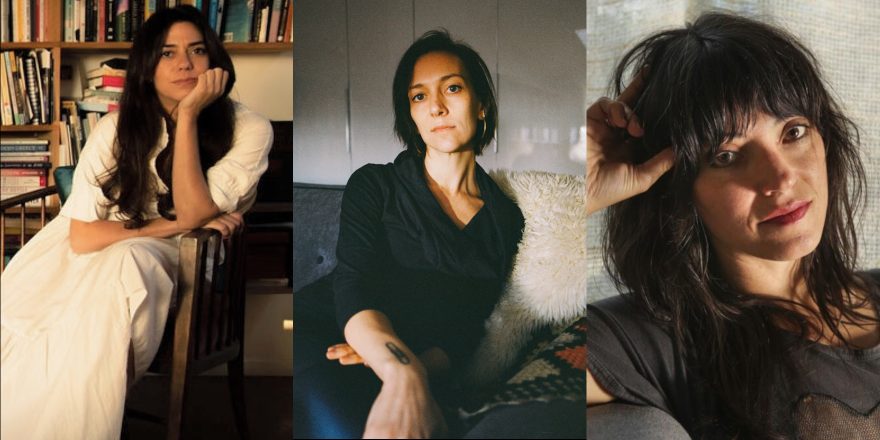

Haroula Rose is a filmmaker and performer from Chicago, now living in Los Angeles. In 2025, All Happy Families, her sophomore feature film as writer, director and producer, was released in theaters nationwide. The film was executive produced by Michael Shannon and stars Josh Radnor, Becky Ann Baker, Chandra Russell, Rob Huebel, John Ashton, David Pasquesi and Colleen Camp. Her debut feature as writer-director, Once Upon a River, an adaptation of the bestselling novel, won 19 awards at over 40 festivals worldwide. Haroula was selected to be part of Hello Sunshine’s short film series, for which she wrote and directed a romcom fable called Hound of Love. Other acclaimed short films and videos include As They Slept, Lost & Found, Wedding Dress, No Love Song and Baby Crazy. Rose received her BA and MA from the University of Chicago, and attended USC’s MFA program. As a producer she has worked on Ryan Coogler’s Fruitvale Station, David Sington’s The Fear of Thirteen, Heaven Adores You, Permanent and Saint Frances. Rose has released three LPs as well as remixes, singles and EP’s with Thirty Tigers and Tone Tree Music. Her latest collaboration is a group of compositions with Oliver Hill, released on Ba Da Bing Records in early 2025.
In the spirit of making things between things, films between films, stories beyond stories, that are at once personal and universal, my short film Your Own Good emerged from a visual inception. I had filmed some images of places in the rural Midwest that I found compelling in one way or another, or that stood out in their seeming ordinariness. I thought perhaps there could be a dreamy cohesion to them with some kind of essay-type voiceover.
I sent the initial images that I filmed to the writer Catherine Lacey, and she mulled them over. Soon after, she sent me a “Eureka!” type note, as she had written an evocative prose poem entitled Your Own Good, which we both felt was just right for the mood. It started to become clear that I would need some archival footage as well – to represent memories, going backwards, nostalgic images on old film, scenes or moments that could be threaded together to represent this fragmented sense of the past.
Sharon Van Etten is someone I have long admired since we first met in Athens, Georgia, after her first record came out in 2009. We’d talked about possibly collaborating at some point (I hope to do more with both of these women in the future!), and I could hear her voice saying these words and playing right into their mystery.
My husband Oliver Hill is also a musical collaborator of mine. He has scored films before, and one of them is the second feature I directed, All Happy Families. Oliver and I made an instrumental record called Cycles that came out last year with Ba Da Bing Records, the same label that put out Sharon’s much-beloved second record, Epic, which I love so much. One of the tracks from Cycles felt really right as score for this piece, with my layered vocals over Oliver’s mystical feeling string arrangements.
And what resulted from all of this, is the three-minute short found below. Your Own Good premiered as part of the Hammer Museum’s Flux series, with a performance-art element to it that involved the audience writing down their own memories that they wanted to forget, then reciting them back from the stage. More on this experience at my Substack.
Here is a conversation I had with Sharon and Catherine about this process, where they share some of their inspirations and experiences that informed Your Own Good.
Sharon, I was so excited to be able to have your vocal performance on this! What drew you in? Do you remember how you felt when you first read Catherine’s prose? Or saw the imagery?
The combination of prose and imagery made me feel many ways at once and then different emotions in succession as the visuals and narration evolved. How our memories play tricks on us. How and if our identities change over time. What memories are obscured by time. When accessing your memory there are missing slides in the slideshow of our lives. How reflecting on our past can feel fragmented. How a younger version of our selves can feel so distant. Is it possible for someone to control our own narrative of ourselves. What are we in control of. The music and visuals added a darkness to the prose. Light and curiosity turned into darkness and isolation. The inquisitive child more the meditative, guarded observer.
Catherine, do you recall how you were inspired to write this piece and what came to mind?
I wrote it for you, Haroula! I think I was responding to your first film and your presence and your approach in your art, as I understand it. But also I wrote it approximately three lifetimes ago, so I am probably not a reliable narrator of how this piece came to be. More recently, I’ve gotten a lot more consciously interested in working with memory in my writing, but back then I remember being more interested in the distorted memories of fiction.
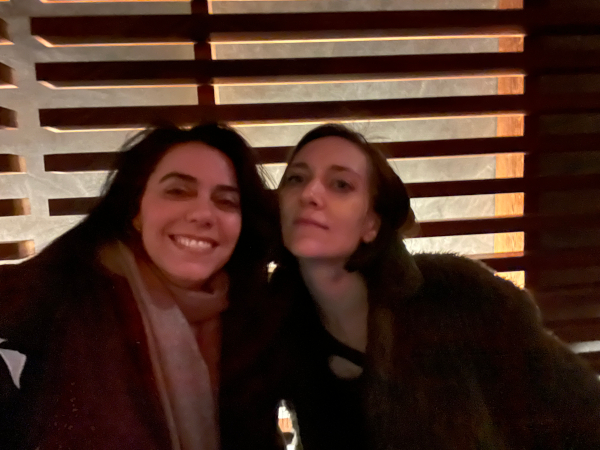
Sharon and Catherine, when you think of your own childhood, are you able to have memories from specific chapters come to mind? Or is it dreamlike and vague? I know I always wish I had more of a memory but things don’t come into focus for me until way later it seems like. Do you consider yourself to be someone who has vivid memories? Do they come in the form of images or sounds or…?
Sharon: I have gaps in my memory of my childhood. I have experienced trauma in my life and I have been told that out of protection, our minds delete too much information, even happy memories. So some memories pop up randomly. I recently got to visit the house I grew up in as a child in New Jersey. The owner was very kind and let me walk through it. I felt emotions so intensely for memories I couldn’t always find. Having siblings is interesting because we all tell the same story differently and some stories I don’t recall at all. Images come, places bring back deep feelings with no words.
Catherine: I totally have the thing with siblings who remember things differently. A few years ago, my brother asked me if I knew about this horrible thing that happened in our childhood and I was like, Um, duh, yes, and for some reason he didn’t remember it at all, even though I remember witnessing it with him. He had, he thought, just learned about it from our mom. And then he told me about this other horrible thing that happened around the same time that neither of us saw, but for some reason he knew about and I did not. I wrote this scene into my last book and before it was published, I gave it to my brother to make sure he was OK with how I was remembering this conversation, but when we spoke about it, he had forgotten it again, already, had even forgotten our mom telling him about it – everything. It had only been like a year since we had talked.
Sharon, your new record – as in all your work – digs deep on big questions. And I know you have studied toward a psych degree, so you must think on these things a lot. Themes of identity, memory, grief, mortality all intertwine when I hear your songs. What would you say is the predominant thing you think of when you look back on your own childhood? Or what you wish for in thinking about your son’s childhood, and our collective future? Do you wake up every day with a more optimistic view or does it fluctuate very much throughout a day?
When I look back on my childhood, what I wish for all children is a simpler time. I want to shelter my child. I yearn to simplify my own life, to be able to be an example for him. I feel grateful I have been able to live as a working musician, but now more than ever I feel the responsibility to be more involved with my community and be more active on a local level. I wouldn’t say I am optimistic, but I am realistic and believe in change and humanity.
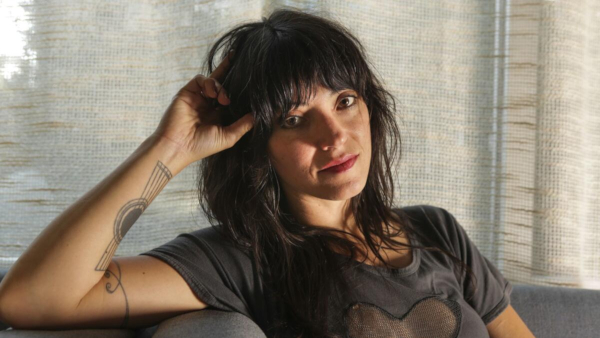
Catherine, any of these … how does it feel to have your latest personal work out there? I remember you starting it while you were with us in Los Angeles, and it started to take shape and go from there. How do you know when you’re finished? Does the voice in your fiction and nonfiction feel different? I guess I’m getting at “voice” especially, since this is a vocal performance. How much of you is in this piece, Your Own Good?
I think one very strange thing about publishing your writing is that there’s generally a gap between what you think you’re writing about and what you later realize you’ve written about, once the book comes out. I’ve mainly experienced this with writing fiction, because you write under this helpful delusion that it’s all “made up,” because these aren’t things that really happened in your life, but it always happens that when I’m interviewed later about a work, or when I read from it for an audience, I see how unbearably personal it all is, though it’s personal at a slant. It’s only been half a year since I put out this nonfiction book, my first and probably my last (at least for a long time) because the whole process was too straightforwardly naked to me. Readers and critics bring all kinds of baggage and anxiety to memoir, especially memoir written by their contemporaries. I mean, some of them bring a lot of generosity, too. My voice in nonfiction tends to just be pretty close to whoever I am at that moment. When I was in L.A. all those years ago, I was a wreck, writing from the wreckage. There’s probably only a few pages of that person in The Möbius Book, but she’s there! With fiction, it’s more like acting, like a one-woman show where I’m playing all the roles, but under extreme costumes and special effects. I don’t know if any of it is for my own good, exactly, but I do think that writing (or really making anything) is a group activity. I do it with and for and alongside others.
For both of you… What have you been watching or reading lately that you would recommend, and why?
Sharon: I loved the series Adolescence. The story was told so sensitively, with such compassion and delicacy. The acting is superior. Every parent should watch it, but even my friends that aren’t parents were deeply affected by the story. I also loved Hothouse Bloom by Austyn Wohlers, about an artist who inherits an orchard. Without giving anything away, I had these complex feelings toward the character. I envied her and I was worried about her and I would get mad at her. I wish I could call her right now.
Catherine: The last book that absolutely slayed me was A Truce That is Not Peace by Miriam Toews. Reading it reminded me of the feeling of seeing a very talented dancer improvise, how everything looks exactly right and somehow totally unpredictable. It’s a book about trying to find and keep the strength to live through unbearable losses. It’s a book about not understanding where the impulse to write even comes from, and suspecting that it might be a form of insanity, but continuing to write, anyway. It’s also so fucking funny. Miriam Toews is really one of my favorite minds on this planet. Also, I saw the most recent Sam Penn exhibition of photographs and I thought they were so gorgeous.
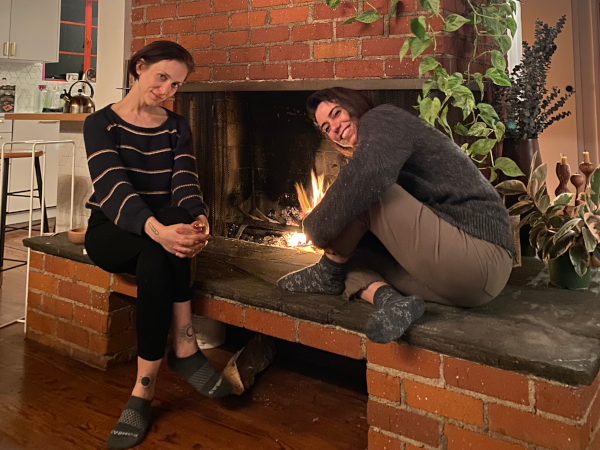
For both of you… When you hear the phrase “your own good,” what comes to mind? And how does it make you feel?
Sharon: It feels like a parental warning. Like someone knows something better than me and. immediately get inwardly defensive.
Catherine: Same! You know, now that I think of it, when I wrote this piece, I was in a relationship where my ex had totally convinced me he had my best interests at heart at all times because he knew me better than I knew myself. It reminds me of that – the fantasy of being able to displace self-knowledge or even personal culpability onto someone else. It’s a childish fantasy, but a common one.