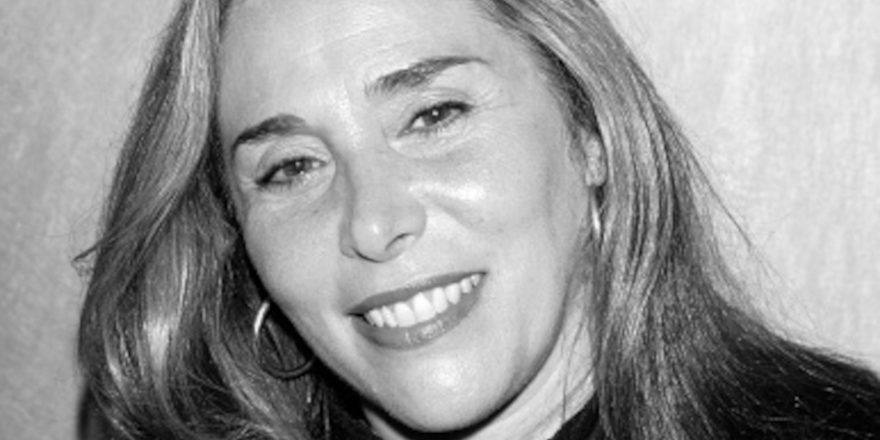



Lizzie Borden is an independent writer-director of films such as Born in Flames (1983) and Working Girls (1986). Born in Flames was re-released in a 35mm restoration print by the Anthology Film Archives in 2016 and shown worldwide, including the London and Edinburgh Film Festivals, MOMA and BAM. Working Girls has been restored by the Criterion Collection and written about extensively. Whorephobia, her anthology of stories written by strippers with interviews by them, published by Seven Stories Press, including pieces by Kathy Acker, Cookie Mueller, Chris Kraus, Antonia Crane, Lily Burana, Reese Piper and 18 additional writers, was published in December 2022. Her new film, Rialto – set in 1953, about a woman running a movie theater and attacked by the Legion of Decency for showing foreign films, but hiding a dark secret – is in pre-production. She also works as a script consultant and teach screenwriting.
Three Great Things is Talkhouse’s series in which artists tell us about three things they absolutely love. To mark the Criterion Collection’s release of Lizzie Borden’s seminal 1983 dystopian drama Born in Flames, the legendary writer-director shared some of the things she loves most. — N.D.
Pools
I’m obsessed with swimming pools. I’ve been in one almost every day for as long as I can remember. It’s not about laps or Olympic training – I don’t even like Olympic-sized pools. Give me a small pool, a slow lane and my breaststroke. For me, it’s about breathing, letting my mind wander and solving problems – writing problems, life problems, whatever needs untangling. Being in water feels like hitting reset, a kind of daily rebirth.
I’ve gone to ridiculous lengths to keep the ritual alive. When I was shooting Working Girls, I’d take a cab at lunch to the McBurney Y, swim 10 laps, then rush back to set. In Los Angeles, when my pool is closed on Christmas, I pretend I’m a guest and sneak into a Sunset Plaza hotel pool – outdoors, covered with almost-invisible plastic, music drifting through underwater speakers, the whole city spread out below. So far, no one’s busted me. The only time I was without a pool was at the start of Covid. I begged friends with pools to let me in, but fear won. Then I found a freezing, tiny pool around the corner – eight strokes from end to end. Heaven.
Travel means pool strategy. My one “diva” request when I’m asked to speak or show a film is a hotel with a pool, or at least one within walking distance. Tiny hotel pools, plunge pools, shallow four-footers – I don’t care. In Europe, they’re the cure for jet lag, and when I have to cross a city to find one, it’s like a free tour. In Barcelona, I learned my way through the Old City by walking to an athletic club every morning. I take photos of these pools – they’re better souvenirs than street shots.
And the culture of pools is its own soap opera. At my L.A. pool, there’s a mix: older women in bikinis, unapologetic and fabulous; Hasidic women swimming in their clothes; very old men in shockingly small briefs. I stick to a one-piece. The only thing I can’t stand are the guys who insist on doing a splashy butterfly, turning the whole pool into a tsunami. I love water – even chlorine – but not in my eyes.
Pools, for me, aren’t exercise. They’re ritual, meditation, obsession. They’re how I face the world.
Team Deakins
I never went to film school, so my film education has always been patchwork. With a few projects I’m hoping to direct soon – optimism never dies – I’ve treated Roger and James Deakins’s podcast Team Deakins as an ongoing masterclass. What makes it invaluable isn’t just the range of guests, both behind and in front of the camera, but the way Roger frames his questions. He always asks why: Why move the camera – or why not? Why use a zoom, as Ed Lachman does, when so many directors resist them? Why choose digital over film? (Deakins makes a convincing case for digital, though I perk up whenever someone like Lachman speaks about shooting on Super 16 for Carol or 35 mm for Far From Heaven, since that’s closer to the films I want to make.)
Deakins is relentless about process. He asks every director and D.P. whether they storyboard or rely on shot lists. The Coens – who have been on the show and whose films Deakins shoots – do. Most directors don’t. Barry Jenkins’ episode especially stayed with me. He spoke about learning from Darnell Martin (I Like It Like That) to “direct through her body,” and described how the final long scene of Moonlight wasn’t storyboarded but discovered on the day. His reliance on intuition, clearly shaped by Martin’s advice, is inspiring. Moonlight is the kind of daring, intimate indie film I aspire to make.
I love when Deakins breaks down specific films, especially his own. Listening to him dissect Sicario is like watching the film again with X-ray vision: why the original opening shot with Benicio Del Toro was dropped to preserve Emily Blunt’s point of view; why Denis Villeneuve chose not to shoot coverage on an early argument scene, holding it at a distance instead. Deakins reveres directors like the Coens who don’t waste time on master shots they’ll never use – just the pieces they need.
The podcast sprawls into every corner of filmmaking. I skip some of the technical episodes in favor of conversations with writers, playwrights, production designers, actors. What unites them all is a shared sense of wonder at being able to do the work – and Roger and James radiate that same wonder themselves. I usually listen while walking, which means I don’t take notes, but I often rent a film afterward – Sicario, Army of Shadows – and return to the episode a second time. For me, the show has been the closest thing to film school: generous, inspiring, and endlessly curious.
The Community of Sex Workers and the Trans Community in L.A.
When I moved to Los Angeles, I felt unmoored. The downtown New York community of the ’70s and ’80s world where I made my films – was gone, erased by gentrification. I knew a few people in L.A., but I didn’t feel connected. Then Antonia Crane walked into my life. Stripper, writer, activist – she wrote the introduction to my anthology Whorephobia – and she became my guide. Through her, I met young strippers who would later contribute to the book, and through them I found a community I hadn’t realized I was missing.
What struck me immediately was the way they held each other up, especially through Covid, when everything fell apart. SESTA/FOSTA had passed, and suddenly anything remotely “sexual” was scrubbed off the internet. Dancers lost their online presence, couldn’t vet clients, couldn’t pay rent. The ingenuity and solidarity were astonishing. One dancer would perform online in a makeshift set, and the proceeds went to her. The next night, another would take the stage. They staged pop-up strip clubs. They shared what little they had. Later, some of those same women unionized Star Garden in North Hollywood.
What I found in that community reminded me of the best parts of the world I lost in New York: artists turning their lives and bodies into art, refusing shame, refusing erasure. Their performances – stripping, readings, Busby Berkeley-style choreography with red umbrellas on International Whore Day – are in the lineage of Hannah Wilke, Joan Jonas, Carolee Schneemann. Except this time it’s not happening in a gallery; it’s happening in clubs, in the streets.
And they’re not just performers – they’re organizers. They show up. They scope out Home Depots for ICE raids. They’re present at every protest. In a time when democracy itself feels like it’s collapsing, they’ve become my compass. If the most criminalized and policed among us can bring that kind of energy, imagination, and joy to the fight, then what excuse do the rest of us have?
A few weeks ago, I went to , a show by Kayla Tange (aka. Coko Ono), a Korean stripper and artist who also has work in my anthology. She takes tools from her trade – stripper heels, rhinestoned costumes – and transforms them into sculpture. I lingered there for hours. Unlike the airless art-world openings where I never know how to make conversation, this crowd was open, warm, funny. Queer, trans, straight – everyone was talking to everyone. I felt part of something.
I came to Los Angeles feeling alone, disconnected. The sex worker and trans community cracked that open. They gave me a place, and in their presence I feel inspired, recharged, connected to the world again.