Three Great Things is Talkhouse’s series in which artists tell us about three things they absolutely love. To mark the May 1 theatrical release of Arnaud Desplechin’s new drama Two Pianos, starring Charlotte Rampling, François Civil, Nadia Tereszkiewicz and Hippolyte Girardot, French directing great Desplechin shared some of the things he’s most passionate about in life. — N.D.
Contre
I often go see plays, because I want to learn. My concern is not theatre; when I go to see plays, I'm learning about films. I recently saw the first production of the play Contre, which is an adaptation of the life of John Cassavetes. It was wonderful. Marina Hands played the part of Gena Rowlands. It featured the incredible provocation by Cassavetes and Peter Falk, when they were drunk and ruined The Dick Cavett Show. Pauline Kael, who hated Cassavetes, was played by Dominique Blanc, who was so hilarious, so mean. It was a wonderful experience, and the play was so good.
I was reminded recently, when I went to the Criterion Collection offices, of the first time I watched Cassavetes’ Husbands, which was impossible to see in France at that time. I was 19 years old, I didn’t speak a word of English, and it was an American print without subtitles. The film is two-and-a-half hours long and I just focused on the faces of Peter Falk, Cassavetes and Ben Gazzara, all of them so shocking. At that time, I had difficulty appreciating French realist movies. At film school, everyone worshipped Maurice Pialat, but I struggled with his films, because they were bitter sometimes and I don't like bitterness. But when I saw Husbands, at last I was able to love Pialat. Through Cassavetes. I could understand what Pialat was trying to do. In Pialat’s films, the themes were perhaps too French for me, but when the action took place in America, I could embrace it.
I think of myself just as a film director, but that’s not really accurate, because I’ve worked twice as a stage director for the Comedie Française. This July, I will start work on a new production of a Marguerite Duras play. It's a big shift for me, because usually I'm making films, which is something I first wanted to do when I was seven years old. When I did plays before, I was somewhat resistant to them because they were on a stage, and what I want is a screen. For this new production I am directing this summer, I decided it should be bi-frontal: there will be spectators on two sides and the actors in the middle. This way, I will save the screen for the cinema and I will have the stage for theatre. That's what it took for me to buy into it!
Jogging in Paris
I love smoking, but I'm not allowed to smoke anymore because I quit, so what I do instead is go jogging in Paris. I started jogging when I made my first film, La vie des morts, about 35 years ago, and I love it! I'm so proud of myself, because – despite my age and the number of cigarettes that I’ve smoked – I’ve run a marathon and a half-marathon. I love to go jogging, on a sunny day or even on a rainy day, because I’m not competing against someone else, I’m just competing with myself. And it feels so good.
A friend who is a film director once tracked how many kilometers he walked a day when he was shooting. Just moving towards the actor to whisper a suggestion, and then walking over to speak with the sound recordist, and then going to see the D.P. – at the end of the day, he had walked 20 kilometers! That's what being a director is. Chris Marker directed a film about the making of Akira Kurosawa's Ran, and you see Kurosawa in the director's chair, wearing his baseball cap, with a towel around his neck. He calls “Cut!” and then jumps up to speak with the actors. It helps you see how physically demanding it is to make a film.
When I go jogging, the beauty of it is that I think about nothing. All I can think is, “OK, let me do a few more kilometers, please.” That is my only concern. It creates a real pause in my life. When I go for a jog, I'm running in parks, going through the streets of Paris, running around the Jardin du Luxembourg, and then back home. The whole route is 15 kilometers, and I run the same loop every time. It’s better when it’s monotonous – which is the opposite of making films, where things are more interesting when they are varied. If a jog is monotonous, it means that you can be very creative before and afterward. You have a real pause, and after that – boom, you work, and it's good.
Great Modern Painters
This choice feels snobbish, but I'm French, so I think I’m allowed! A few months ago, I saw a retrospective in Paris of the work of a German painter called Gerhard Richter. I always thought that Gerhard Richter was competing with American painters, with the Pop Art movement, but I thought American painters were better. However, when I saw the exhibition, the first room contained some of the early work of Gerhard Richter, and the first three landscapes he painted just blew my mind. They nourished me. So much for films, here were the paintings of mothers breastfeeding their kids, of images drawn from the news, like the incredible black-and-white images of the dead Baader-Meinhof terrorists. I could see all the eras I’d lived through, and I didn't know that my life had been so interesting before seeing it painted by Gerhard Richter.
As I was looking at this beautiful exhibit (and here's where I will be snobbish!), I thought, When will we get a full retrospective of Kara Walker in Paris? Because she's one of the American painters that I worship the most, and her work is so brutal. And also so beautiful. It's so interesting about American history, about all the paradoxes of America. She's a painter, but she provokes images that nourish me and help me understand the world I'm living in.
Earlier this year, I saw Marty Supreme at the Max Linder (named after the French actor-writer-director), which is the best movie theater in Paris. In that movie, you can see the influence of the American painter George Bellows on the camera work of Darius Khondji. And it struck me, because when I was watching Marty Supreme, it’s like I was 12. It was so brutal, so violent. It was too much. The close-ups were so close, much closer than they would usually be. And the film was carried along by the music, the energy – the everything! And I could see how George Bellows influenced the work of Khondji in what I think is one of the best movies of 2025, and one of the most visually powerful things I’ve seen this year.
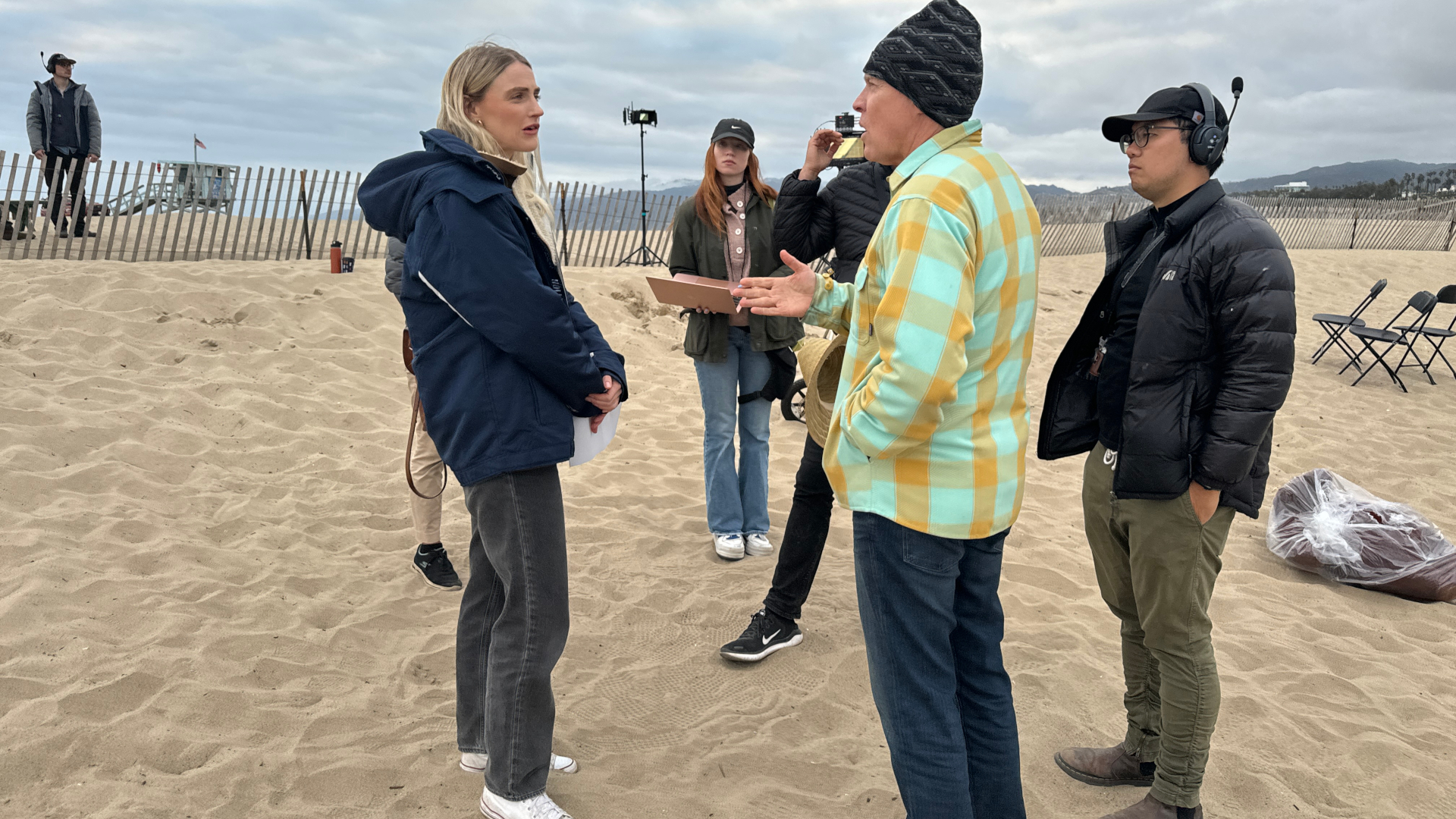
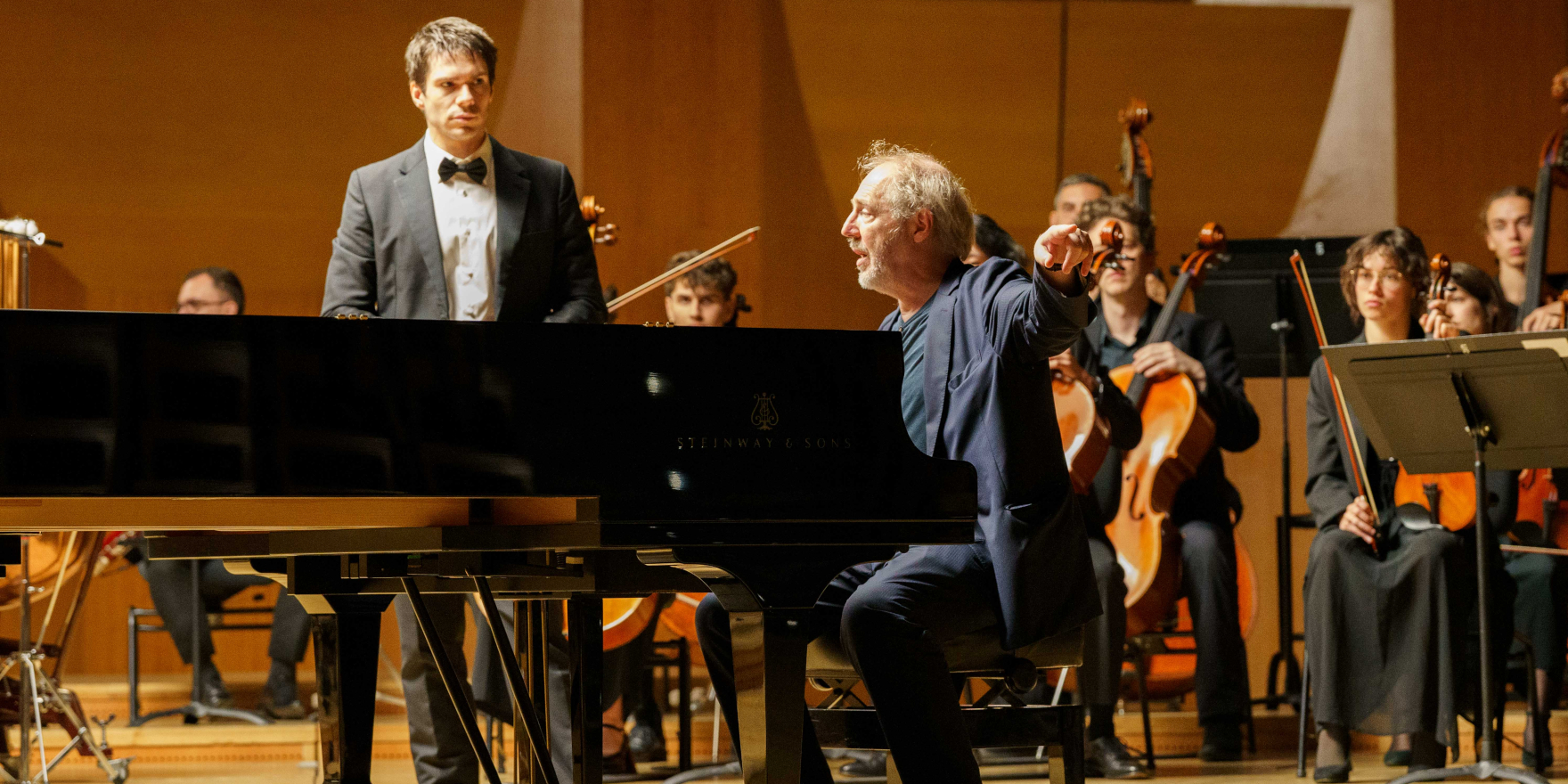
Featured image, showing Arnaud Desplechin with actor François Civil during the making of Two Pianos, by Emmanuelle Firman.