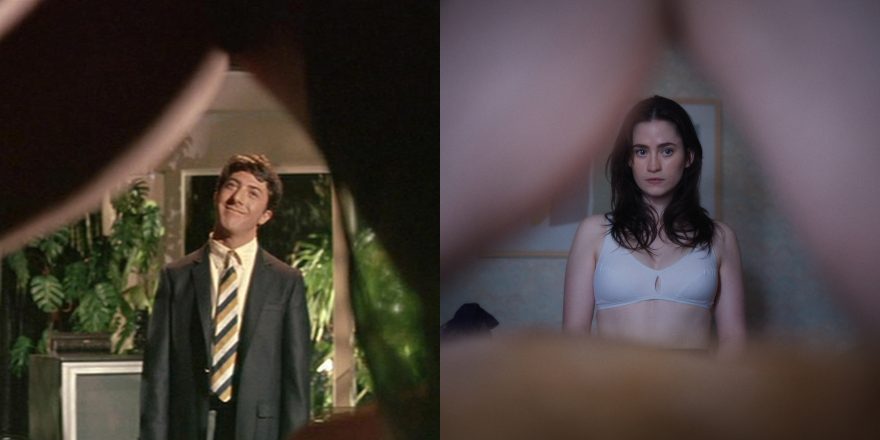



Zoë Eisenberg is a novelist and filmmaker living in Kalapana, Hawai’i. Her work has been supported by Tribeca Studios and Netflix, and has played on PBS, Hawaiian Airlines, and theatrically across Hawai’i. Zoë’s debut novel, Significant Others, was published in February 2024 by HarperCollins/MIRA. Her solo feature-length directorial debut, Chaperone, premiered at Slamdance in 2024 and took home the Grand Jury Award for Breakouts. It is currently streaming. Learn more at her official website.
“You’ll never be young again,” says Mr. Robinson to Benjamin Braddock just moments after his wife’s first problematic attempt at seduction.
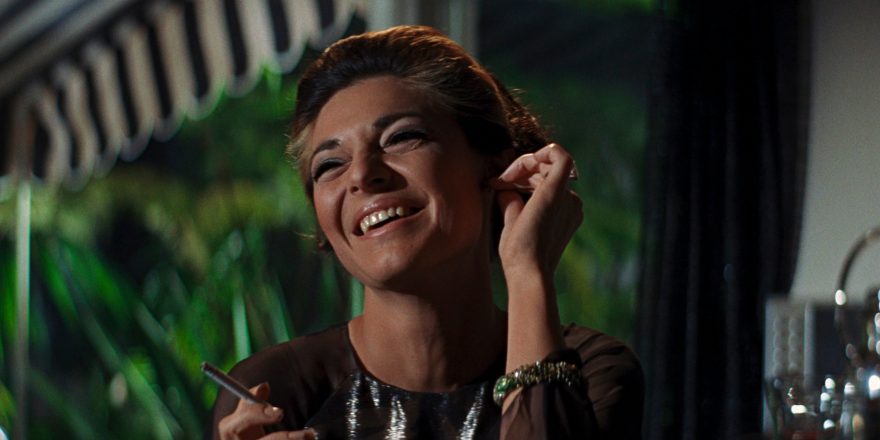
I do not remember how old I was the first time I watched the Mike Nichols adaptation of The Graduate, but I know I was young – 18 or 19 at most. Despite this, even before viewing the film, Mrs. Robinson was synonymous in my brain with cougardom, a rare representation of an older woman pursuing a younger man. At the time, it felt almost singular.
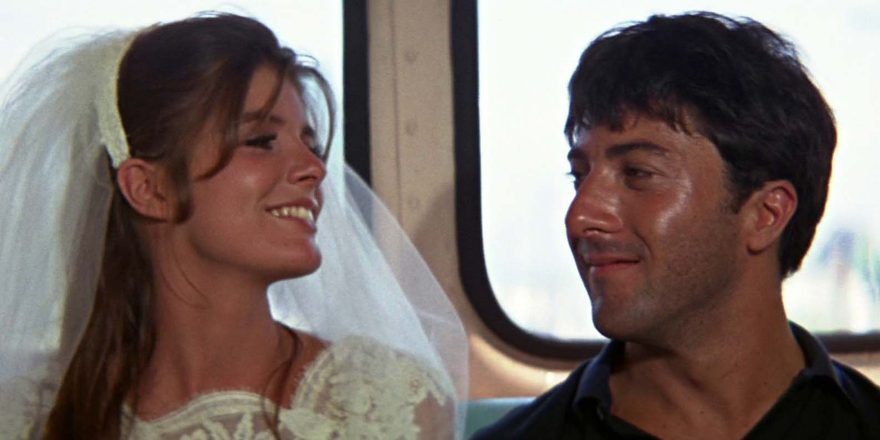
What I do remember: reaching the end of the film, I was wildly confused. Benjamin interrupts Elaine’s wedding, they escape via bus, and in those final frames they both look … profoundly unhappy.
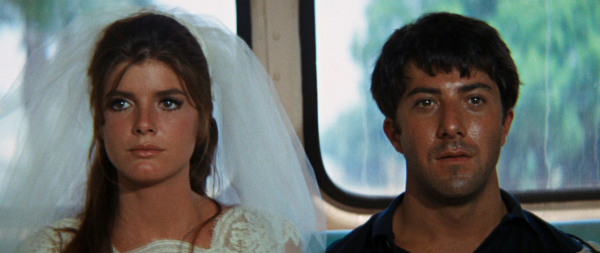
Here is a young man who has spent an hour and 46 minutes making flailing, impulsive choices that devastate everyone around him. Here is a young woman whose rushed engagement is broken by someone falsely accused of raping her deviously philandering mother. But wasn’t this marketed to me as a romance? To date, the film is listed as a romantic comedy, but for me, and considering his execution of those final frames, likely for Nichols, calling The Graduate a romance is parallel to closing out Lolita and doing the same.
But what bothered me more than the skewed marketing of the romantic narrative between Benjamin and Elaine, was the representation of her mother.
Posited as “a bored housewife,” Mrs. Robinson is depicted in the film as less bored and more clinically depressed – trapped and, like Benjamin, flailing. A self-professed alcoholic who admits to being forced into marriage by pregnancy, she boldly “seduces” the petulant, self-destructive son of her husband’s business partner. The term “seduction” deserves those quotes, because her initial methods are downright Weinsteinian: despite Braddock’s repeated refusals, she bullies him into her home, gaslights him for his discomfort, shuffles him into her child’s bedroom on false pretenses, then disappears and returns entirely nude. Benjamin escapes, but later reconsiders, and returns.
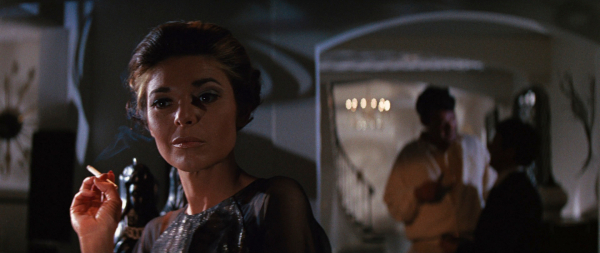
Later still, Mrs. Robinson, desperate to save her daughter from the same self-involved, reckless young man, frames the entire affair as rape – not his, but her own.
This portrayal vilifies her beyond any hope of compassion, and the false rape accusation pushes dangerous narratives. Even so, watching that film for the first time made me think: what we have here is a woman shoved into a corner, scratching her way out – and no one seems to be asking why.
Though Mrs. Robinson is very much the story’s catalyst, why is she the only one portrayed as irredeemably problematic? Benjamin is entitled, self-satisfied, and cruel to his supportive if out-of-touch parents. After initially shirking her advances, he ultimately pursues his father’s best friend’s wife. Later, he takes out his lover’s daughter despite her first asking, then begging him not to. After a single date, he moves cities and stalks the daughter for weeks despite her repeated pleas to leave her alone.
Yet he gets the girl in the end. Their house of cards collapses, and often throughout, the audience laughs.
This is not a love story, I thought. It’s a cautionary tale.
For answers, I turned to the book.
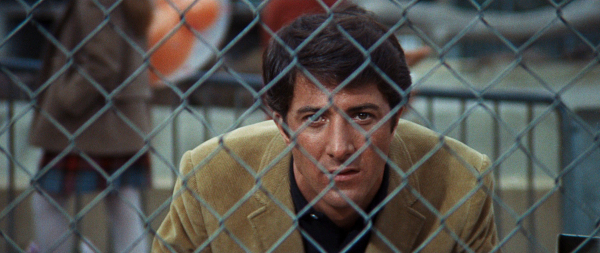
In Charles Webb’s 1963 novel, I found Braddock far less sympathetic than Dustin Hoffman’s on-screen portrayal of the character. In the adaptation, he initially appears spoiled, lost and resentful of his parent’s expectations, his behavior unraveling only after the affair begins. The book, however, takes him on a pre-affair road trip during which he supposedly fought a wildfire, commingled with “queers, tramps, drunks and Indians” (his words), and slept with a handful of sex workers, whom he verbally degrades.
In a memorable scene where he successfully antagonizes his father, Webb’s Braddock cuts: “It’s not too likely I’d spend the night with a stinking whore in a field full of frozen manure if I was stone cold sober, now is it?”
This scene is notably absent from the adaptation, allowing Hoffman’s Braddock to remain if not wholly likable, then at least somewhat sympathetic.
“Are you disillusioned,” his father asks at the close of this conversation in the book, “or are you just tired?”
But why, I wanted to know both then and now, was the same question never asked of Mrs. Robinson?
I understand that in this story she is the antagonist, not the protagonist, and we’re following things from Benjamin’s perspective.
Yet despite this, her character in both book and film felt irresponsibly underdeveloped. In an effort to cement her status as predator – and she is one – Nichols dresses her in animal prints in every scene, the patterns growing bolder as we progress, from subtle shimmering zebra stripes at first meeting to bold leopard as she undresses. The sunroom where she first gaslights Benjamin is stacked with lush jungle palms, and she stalks through them like a big cat, cocktail in hand.
But as to who this woman is or why she became this way, we get only the pregnancy-induced marriage, an abandoned art degree, a love of martinis, and a large empty house.
Attempting to pull flesh from this pile of bones, I can imagine that at Benjamin’s fateful graduation party, Mrs. Robinson witnessed this depressed, privileged, floundering young man –someone suffering beneath others’ expectations – and saw herself in him, as well as a potential escape. Later, these are the very qualities Mrs. Robinson, whose first name is never revealed, wants to protect Elaine from, likely because they are qualities she recognizes and knows very well to be dooming.
“She is thoroughly honest, Benjamin,” Mrs Robinson says of her daughter in the novel, though not the film. “She is thoroughly sincere. And Benjamin? You are none of these things.”
The summer before my 30th birthday, an 18-year-old kid approached me at the gym, mistook me for a teenager, and asked me out. While I said no immediately and awkwardly, afterward I couldn’t stop asking myself: what kind of woman would have said yes? What kind of corner would she have to be backed into?

Immediately, my thoughts jumped to Mrs. Robinson, who at that point had been stalking around my mind in leopard prints for a decade.
What would she look like today? How would contemporary societal pressures forge her into the same unlikely villain? The droll alcoholism, absent work-obsessed husband and innocent wide-eyed daughter felt tired, as did her scant backstory of a shotgun wedding.
Who would she be, and why? Like Benjamin’s off-limits fixation on Elaine, these thoughts would not stop rattling in my head.
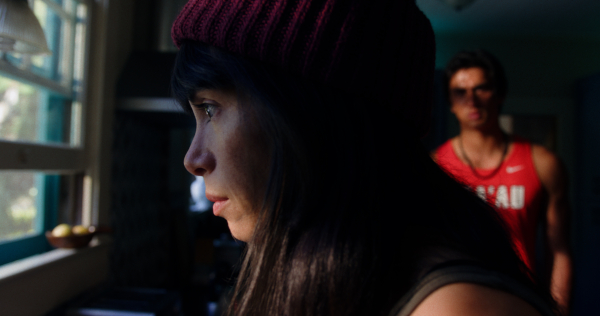
They planted the seeds of Chaperone, my indie age-gap drama about a 29-year-old who gets mistaken for a teenager by a teenager, and begins a duplicitous – and disastrous – relationship with him.
At the time, 2019, the term “age-gap drama” was not yet colloquial, and certainly not with an older woman and younger man. Older man-younger woman stories were ubiquitous of course, from Woody Allen’s soon-to-be-damning Manhattan (1979) to Sam Mendes’ American Beauty (1999) and Lone Scherfig’s An Education (2009) – ample opportunities were available to watch older men seduce younger women, stories where the audience is asked to understand them as they behave terribly. Even Lolita begs us to sympathize with Humbert Humbert.
This scarcity was nothing new. As parity improves in film and television, we’re finally getting more problematic women helming their own stories – for only when we understand something can we truly use it to learn. Yet for on-screen older women-younger men narratives, in 2019 I had precious little to draw from: Michael Haneke’s The Piano Teacher and Hannah Fidell’s A Teacher, but both centered around power dynamics problematic for more than just a chasm in age. There’s The Lifeguard or Laggies (Lynn Shelton’s portrait of Keira Knightley hanging out with high schoolers to escape twenty-something pressures), but neither contained the savage downward spiral of Braddock-Robinson.

Though not centered on an age gap, I found myself watching and rewatching the Jason Reitman-Diablo Cody hit Young Adult, with an unhinged and brilliant Charlize Theron forcing us to understand and even root for her as we watch her attempt to destroy the happy marriage of her high-school sweetheart.
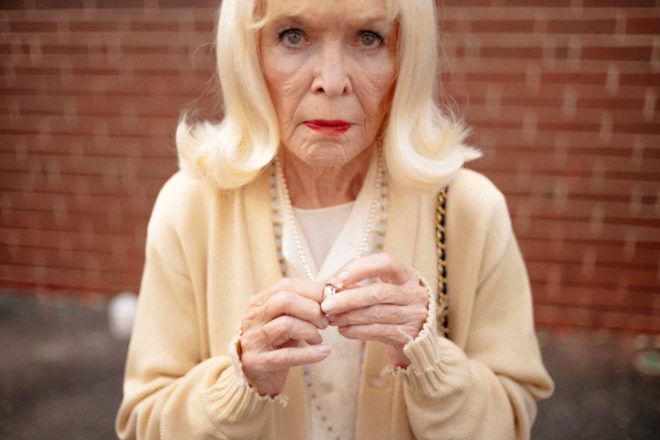
Fitting the general millennial malaise, the Mrs. Robinson remix I settled on came to possess more than a few qualities of Benjamin himself: privileged, craving complacent simplicity, isolated, frustrated. She works at a movie theater, the same job she’s held since her teens, and refuses promotion to avoid additional stress and responsibility. Like Benjamin’s parents, her peers don’t understand this. These pressures and her hunger to outrun them transform her into an unlikely predator, while her love interest – an 18-year-old student and track star – shares more with Mrs. Robinson’s sweet, sincere daughter than with Benjamin Braddock.
From my protagonist’s costume design (pops of animal print) to the complacency that exasperates her friends and family, Mrs. Robinson and Benjamin haunted my process. The final result, like The Graduate, is a romance that is not really a romance at all.
Since 2019, when I first began Chaperone‘s script, we’ve been gifted several on-screen portrayals of morally skewed older women pursuing younger men: May/December, Babygirl, and the less nefarious but equally thrashing leads in Empire of Light, Licorice Pizza and The Worst Person in the World (the latter similarly following a woman struggling to get her needs met, devastating audiences and damning those who love her in the process). For once, those antiheroes come fully formed, and we’re given the opportunity to understand them.
When comparing the adaptation of The Graduate to Charles Webb’s novel, I noticed another glaring discrepancy. In the novel, Benjamin Braddock “rescues” Elaine from her wedding before she says “I do.”
In the film, the marriage has already been completed, the final kiss made, and as Elaine makes her escape, her mother tries to stop her with the words: “It’s too late.”
Elaine barks back a response which results in a brutal double-smack to her face, and perhaps give us the greatest insight into her mother’s characterization: “Not for me.”