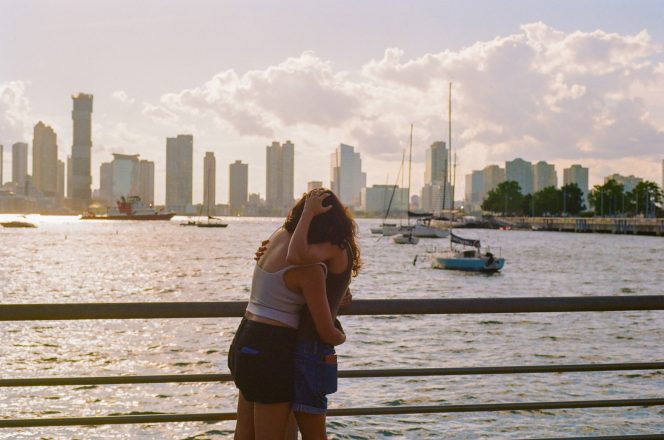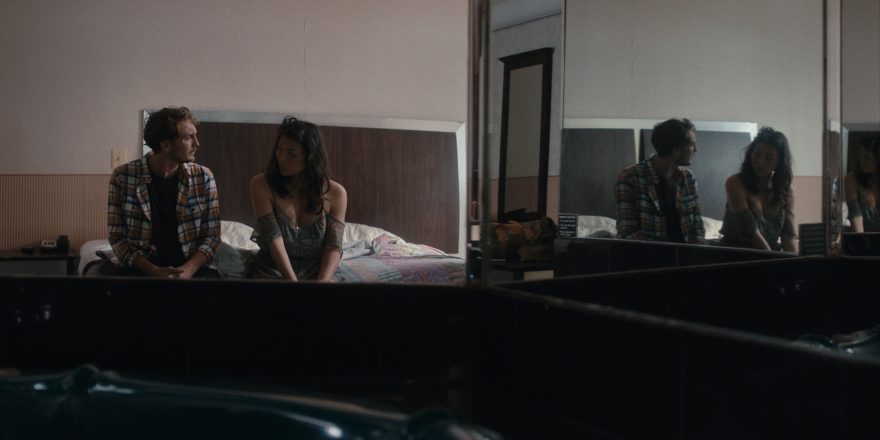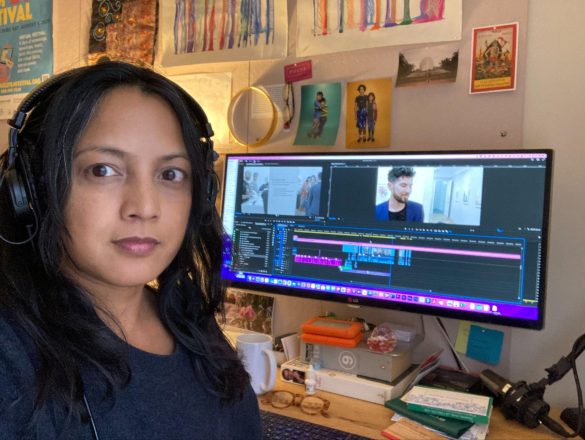


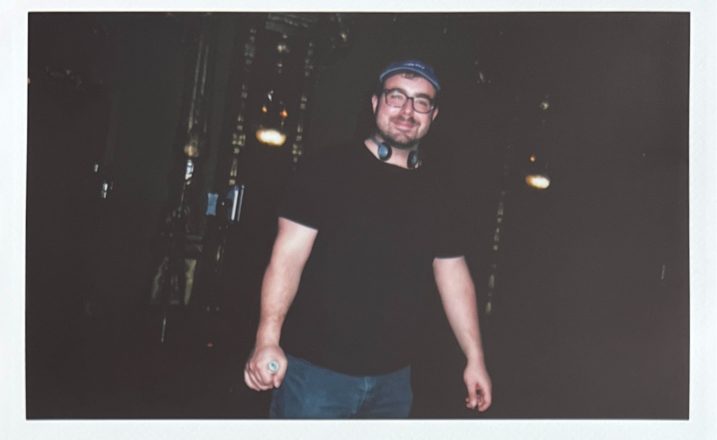

Writer-director Carmen Emmi’s award-winning debut feature, Plainclothes, starring Tom Blyth, Russell Tovey, Maria Dizzia and Amy Forsyth, premiered at Sundance in 2025, was released theatrically by Magnolia and is out now on digital. Set in 1997, the film follows a promising undercover officer assigned to entrap gay men, who defies professional orders when he falls in love with one of his targets. Emmi is a filmmaker with deep roots in Syracuse, New York, where he grew up in a family of farmers. After graduating from USC’s School of Cinematic Arts, Carmen began his career as an independent Director of Photography, contributing to a range of projects, including short films, commercials, and feature-length productions. (Photo by Lindsy Avritch.)
Music plays a huge role in my first feature, Plainclothes. It was my entry point into feeling my way into the characters, their world and their inner desires. A wise professor once told me, “Story comes from character and character comes from emotion.” For me, music is what gets me closer to the emotions I wish to explore.
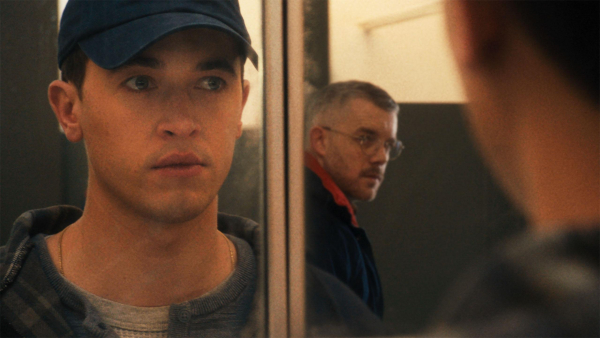
Plainclothes is about what happens when you police your feelings. It’s set in the 1990s in my hometown of Syracuse, New York, and told through the lens of Lucas (Tom Blyth), an undercover police officer whose job is to lure and arrest men in a public bathroom by flirting with them and silently signaling for them to expose themselves. It’s about what happens when he falls in love with Andrew (Russell Tovey), a man he is supposed to arrest.
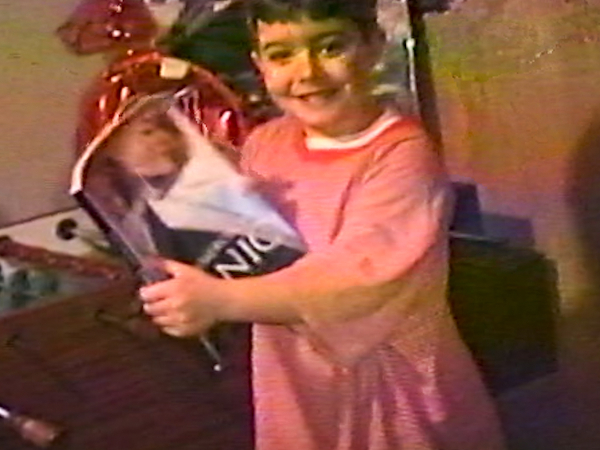
My work in therapy often involves tracing a feeling back to the first time I experienced it. I’ve traced my anxiety – especially the kind surrounding my sexuality – back to a grocery store checkout line in 1997, when I watched a mother angrily flip magazines around to hide their covers. When we moved forward in line, I peeked behind one and saw Ellen DeGeneres with the headline “Yep, I’m gay.” From that moment, “gay” equaled bad. “Gay” equaled disgusting. In the movie version of this scene that plays in my mind, No Doubt’s “Don’t Speak” softly echoes in the background.
Looking back, I think it was through music that my dad communicated that he saw and understood me. When he picked up my brother and me from school, he’d play my favorite albums; ABBA Gold (which, I’ve since learned, is a very popular album among us gays) and The Very Best of Elton John. One birthday, he gifted me the Japanese version of Britney’s first album, and I was overjoyed, especially because it had tracks not released in America.
When kids said that listening to Britney Spears was “gay,” I remember burying my Walkman at the bottom of my book bag, leaving just enough of a gap in the zipper to feed my headphones through. Older kids could snatch Walkmans from us younger ones, and the last thing I needed was for them to pop mine open and find my pink …Baby One More Time CD inside. Britney released different colors for each CD (way ahead of her time, as always) and I wanted so badly to get a blue one, because maybe that was a little closer to being socially acceptable. I’m glad I got a pink one.
I rationalized listening to the Titanic soundtrack because it wasn’t just a romance, it was an action movie that grownups liked, too. Phantom of the Opera was “scary,” so that made it permissible. Shania Twain’s Come On Over I couldn’t justify, so it had to stay at home. I bought Eminem’s album as a cover, but really only liked the track with Dido; the album itself was a prop.
It wasn’t until college, after I came out, that I could safely listen to Britney Spears openly. I remember driving down the Pacific Coast Highway with my friend Alex, blasting “How I Roll” (underrated) from Femme Fatale, right after I came out. It was the freest I’d ever felt listening to a song.
In 2018, when I began really diving into the world of Plainclothes, I made a playlist of tracks that reminded me of the characters, scenes, and feelings I wanted the film to evoke. The playlist, aptly titled “pc by ce” (Plainclothes by Carmen Emmi), became a wild sonic mosaic – a reflection of the phases and shifts in my life as I wrote the movie. It included songs I once would have hidden in my backpack, like “Fade Into You” by Mazzy Star and “A&W” and “Beautiful” by Lana Del Rey, alongside tracks I could have played freely, like “Surrender” by Cheap Trick, “Politik” by Coldplay and “When I Come Around” by Green Day.
Some of these songs found me organically through friends or family, while others came from conversations with my dad. He loves live music, and we can spend hours showing each other performances on YouTube … it’s how I learned about R.E.M., and how he discovered My Chemical Romance.
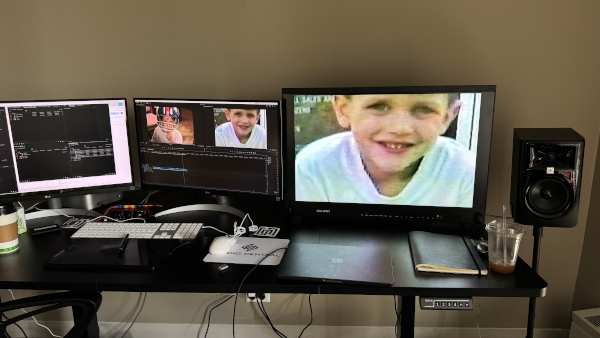
When it came time to shoot Plainclothes, my main goal, besides protecting the story, was to create a safe environment for my cast and crew to express themselves freely. My only rule on set was “no yelling” (unless it was for safety reasons), and I think that helped foster a calm space. I also played the “pc by ce” playlist as we loaded into new locations, set up shots, and rehearsed. Usually DJ-ing, whether in a friend’s car or on a third date, is stressful; you never know if your music is too “cringe.” But for once, I felt excited to play the songs that had lived in my head for years leading up to the shoot. It was like I had designed the playlist not only to help me write the film, but to direct it.
Playing music on set helped the actors feel their way into scenes. I discovered this with Russell on his first day, during a pivotal scene in Lucas’ police station. From my small but mighty Bose Soundlink speaker, I played an instrumental version of Lana Del Rey’s “American” for a moment when Lucas imagines Andrew, his love interest, in the room with him. I was filming Russell on my Hi8 camera – a device that became crucial to the film’s language, the home-video style represents what Lucas thinks he sees or what he feels. The track’s eerie, ghostlike instrumentals guided my slow zoom toward Russell’s face, almost to the beat, and as I did, I saw a subtle shift in his expression … as if the music were painting pictures in his mind. In that moment, me, Russell, my camera and the music were all connected. And it’s in those fleeting moments that I believe our movie was made.
I made playlists for each shooting day, curating songs that spoke to the scenes ahead. When Lucas first sees Andrew in the mall, I played “About You” by The 1975. For the end of Lucas’ panic attack in his mom’s basement, I used “An Ending (Ascent)” by Brian Eno. When filming Amy Forsyth alone in her character Emily’s apartment, I played “Lost in the Light” by Bahamas and “A World Alone” by Lorde.
I found that playing the playlist softly after staging the scene with the actors helped the entire crew feel their way into the tone of the scene as they set it up. On a particularly stressful day near the end of the shoot, I played Ella Fitzgerald’s “Bewitched, Bothered and Bewildered” to calm the room, and because it mirrored the emotion of the scene: Lucas and Andrew’s first real conversation inside the historic Landmark Theatre. In the scene, they hide between two pillars as the grand golden theater stretches behind them. Two P.A.s (my heroes Anderson Appleby and Rachel Baldigo) stood in as we lit the space, and I watched as Ethan Palmer (cinematographer) and Aaron Fuoco (gaffer) adjusted the lighting. Ella’s voice echoed: “I’ll sing to him, each spring to him …” just as Aaron flipped on a golden backlight outlining their silhouettes … “and long for the day I’ll cling to him.” I glanced at First A.D. Julia Zsolnay swaying to the music at the monitor. “Wow,” she whispered. I felt the same. I looked around and saw others swaying to the music as well.
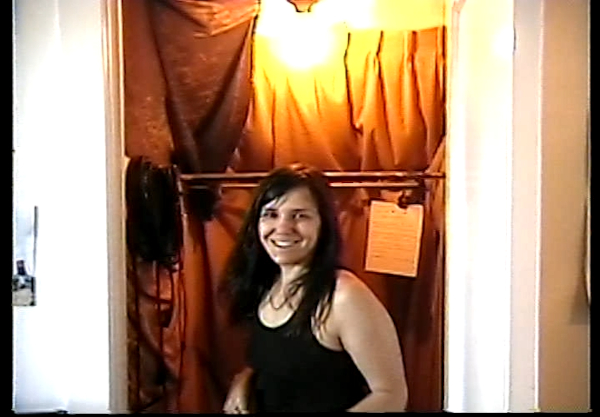
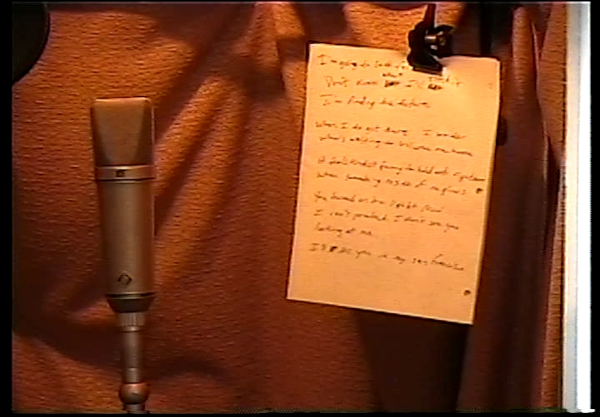
As we moved into post-production, the playlist tracks gave way to original music by our composer, Emily Wells. Building the score with her was transformative, and we were lucky to receive thoughtful input from Lorne Balfe along the way. What’s beautiful about filmmaking is that you make several films: the one you write, the one you shoot and the one you edit. As the edit evolved, it became clear that Plainclothes was, at its core, a romance and that I myself am something of a romantic. Emily captured that perfectly, creating a love theme that eventually became the end-credits song, “My San Francisco.”
Now, weeks after my premieres in New York City and London, I find myself returning to that original 2019 playlist. Even though I’m not the same person I was when I started this journey, the music remains a time capsule … a map of who I was becoming. And I’ll forever play it proudly alongside Emily’s score for the film.
Featured image shows Carmen Emmi during the making of Plainclothes; photo courtesy Carmen Emmi.