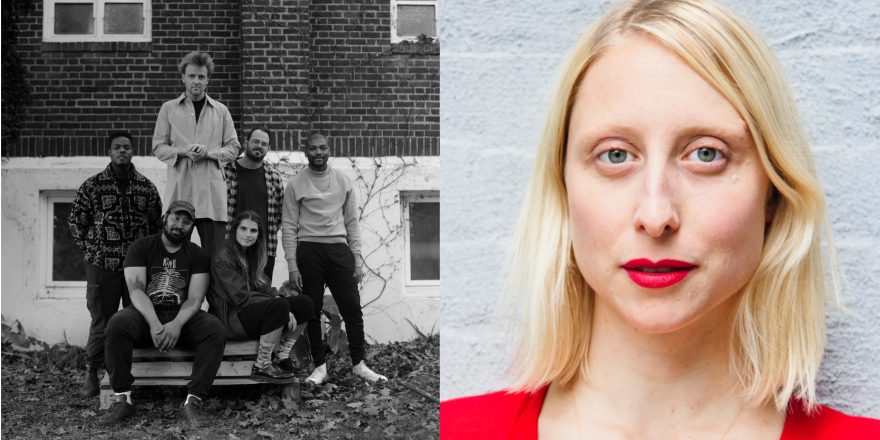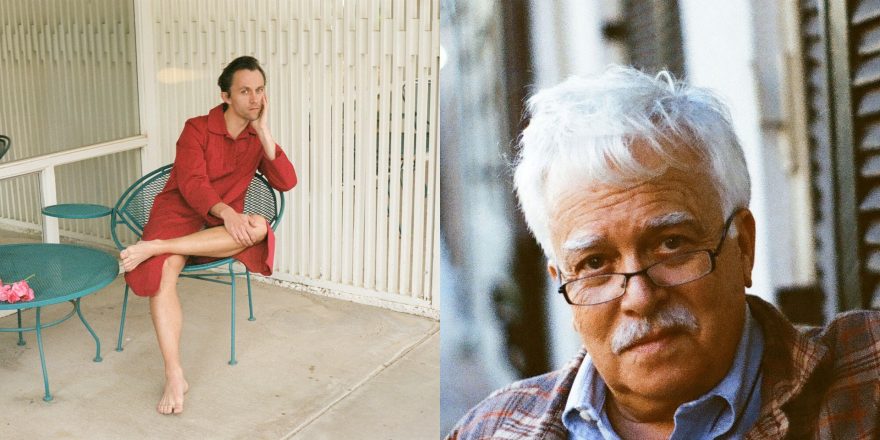




Xander Duell is a Brooklyn-based composer and songwriter. His latest record, Pegg, with the project Pegg, is out now.
When I was about 15, two things broke my mind in opposite ways.
At boarding school, we had a habit of spending weekend nights tripping on Robitussin. The disgusting cocktail infused those youthful nights with a magical energy — an energy that seemed to reveal the otherwise hidden dark and ugly aspects of the world around me.
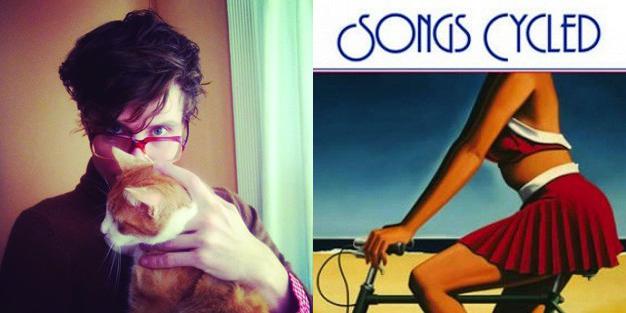
During the weekdays, I would listen to Van Dyke Parks’ Song Cycle on discman as I walked here and there. The off-white CD illuminated the bright crisp goodness of the world, turning it into a world of pathos and exciting possibility.
As it happens, this album was revolutionary, and not just to me. Starting his record with found audio some 50 or 60 years before Kanye attempted that trick, the album quickly moves into a song about the song that just faded out, creating an immediate semi-recursive loop that, I swear to god, made immediate sense to me.
As dislocating as it was, however, much of the record taught me how to make sense of music in new ways.
There are techniques that I now think might have been accidents. (But only because I now know how Van Dyke likes to work. In my experience, his preference is for sounds to be tight and clean, leaning heavily on the perfection of MIDI instruments. On Song Cycle, I believe, some of the eccentricities are actually failures of the technology of the time to capture what was in his imagination.) To me, many things were new. He links disparate sections of tracks in odd ways: Where a regular song might speed up or slow down in introducing a new section, the sections of songs on Song Cycle completely fall apart, and the subsequent section is set up by the crumbling remnants. Often these remnants come in the form of delays accelerated to a close; something of a Jamaican dub technique, but used to convey an extreme sense of order out of an extreme sense of madness.
The melodies and orchestrations are austere and traditional. But then there are samples of bird sounds, or horn sections fucking up on purpose.
The novelty of this thing he created doesn’t apply only to the music. Lyrically, most of the writing serves two simultaneous purposes, usually two of the following three: 1. A pun (the man loves a pun); 2. A play on, or straight invocation of, a piece of Americana; and 3. an emotional gut punch. The words tend to dovetail with what’s going on in the music.
While not any more a “song cycle” than a regular record album, the title hints at a looping tendency (although it fails to convey the loopiness). Another loop is track six being a traditional folk song whose author is listed as “public domain,” even though the song’s title is “Van Dyke Parks,” while track seven is credited to Van Dyke Parks and titled “Public Domain.”
I’ve always seen art as a digging process (sometimes disguised as a trip to outer space). Great pieces of art seem to dig away at the layers of dirt blocking our view of the Truth, or whatever lies beyond. Van Dyke’s recursive looping — that is loopy, but deep — is his method of digging on this album. Through the gaps he’s dug away, I was able to understand the ways music can astound in forms that seem contrary to one another. It can stress you out and calm you down. It can tickle your mind and your balls at the same time. A baroque harpsichord coexists easily with machines. Folk music and classical music can sit comfortably with weirdo experimental shit. Intellectual notions can be interspersed satisfactorily with outright absurdity.
Each of these lessons has remained essential to my music practice ever since my first listen. If I can’t blow my world and rock it at the same time, I go back to the drawing board. And maybe listen again to Song Cycle.
Van Dyke’s role on Earth is one of illumination — illuminating minds by illuminating nature. I will never again be the 15 year old getting his eyes opened. But I can still dig into art. With my life, I can try and try to develop and pursue my own method, and indeed, I do try. Van Dyke’s work remains a map and a compass, a pencil and a shovel for digging deeper in.
My hope is that one day I can illuminate the world for someone else even a tiny fraction as much as Van Dyke lit the way for me.
Xander Duell’s collaborative album with Van Dyke Parks, Presque Tout: Variations no. 435-514 “Baseball Season,” is out now. The organization behind Pegg, Is Not Music., will be throwing a party tonight, Oct 22, at Abraço in the East Village from 6 to 8 PM, with free zines and a cash bar.