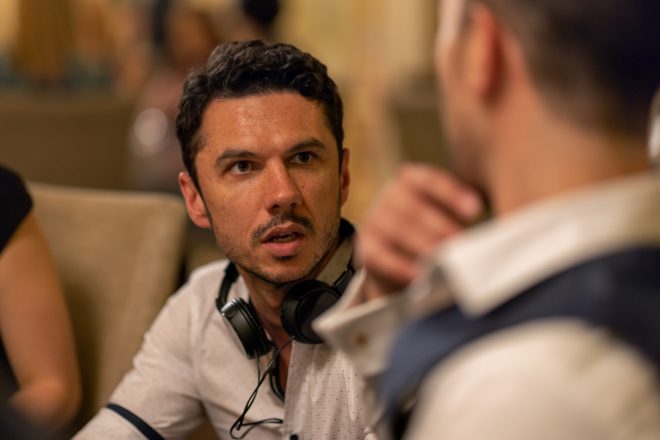


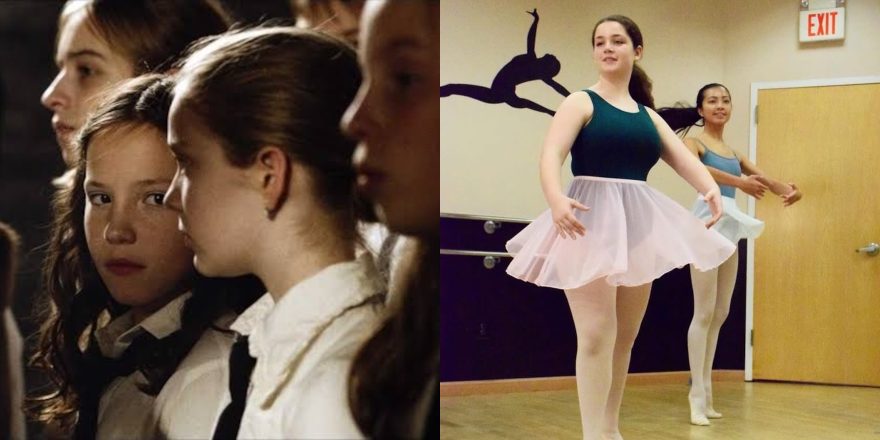

Nicola Rose is a film director and writer from New York City. Most recently she completed her second feature film, Magnetosphere, a coming-of-age comedy about growing up neurodivergent with synesthesia. The film, which is now available for rent or purchase throughout North America, stars Colin Mochrie, Patrick McKenna, Debra McGrath, Tara Strong, Steven He, and Shayelin Martin. In 2021, Nicola directed and wrote her first feature film, Goodbye, Petrushka, which premiered at Dances With Films in Los Angeles and is now streaming on many major platforms. Previously, Nicola directed, wrote and produced several short films. She is a graduate of Columbia University and the Université Sorbonne-Nouvelle in Paris. (Photo ©Kisha Peart.)
There’s a moment in Sing, the Oscar-winning short by Hungarian director Kristóf Deák, where everything pays off in a way that’s startling, funny and profoundly satisfying. The first time I saw it, I burst out crying. Looking back now, I think you see it coming. But what’s important isn’t that it pays off, it’s how it pays off.
Sing is about a little girl named Zsófi who tries out for her school choir, only to be told by the teacher that she can’t participate. It’s a story about friendship and solidarity, but it also deals with something icily painful: the first time you ever feel bad about yourself. Zsófi, who is probably 10, takes it for granted that because she loves singing, she must be good at it. But when the teacher tells her, “You’re just not good enough,” the world comes crashing down on Zsófi’s head, and the viewer’s. It’s something she hadn’t considered. And why would she? Hers is a season of life for enjoying things, not worrying about being bad or good at them.
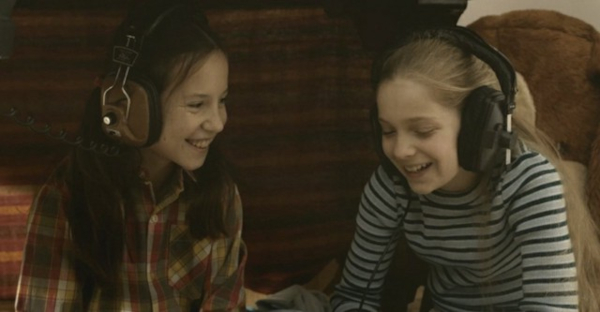
Seeing her shot down like that doesn’t have to echo our own experiences for it to make our hearts hurt, but for those who recognize it personally, it cuts extra deep.
I decided to try ballet back in 2001, when I was 13. You might wonder what took me so long: most girls take their first ballet steps while in preschool, in diapers, in utero, etc. The reason I waited so long was my lack of willingness, as a child, to do (follow me closely, now) things I didn’t want to do. This included ballet. Frankly, it probably included a lot of things that weren’t writing or doing vocal impressions of municipal toilets flushing. What can I say, we all have our strengths.
Let’s imagine you are a physically uncoordinated 13-year-old beginner with, you know, a body, with hips and thighs and other offensive things. Now you are placed in a class of nine-year-olds with twig-like frames, who immediately form a toxic girl-whisper-chain extending as far as Jupiter. Later, the teacher singles you out as the only student not allowed to participate in end-of-year exams, because, to quote her verbatim, “We have to consider how you’d make this school look.”
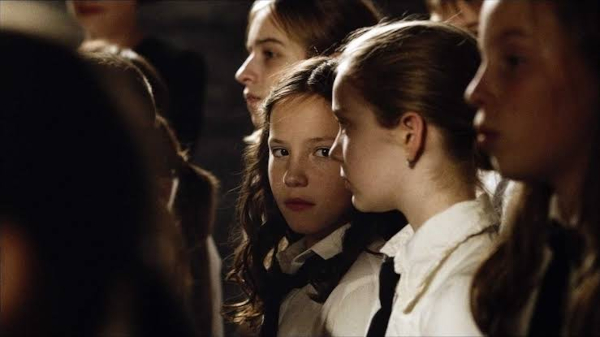
At the time, it was hurtful. Of course, life has a funny way of getting exponentially more hurtful, so it seems a little less important now. And after all, it was the teacher’s prerogative to choose which students to show off – and which to hide. Still, though: let’s return to you, that uncoordinated 13-year-old dance student. Let’s imagine you were working your uncoordinated tail off to perform the steps as best you could. What would it have mattered to let you perform, rather than keep you out of view? Would you have really made the school look bad? Especially when there were probably 100 other girls making it look great?
Much has been written about girls and perfection; how they’re under constant pressure to embody it. By my early teenage years, I already knew I ran no such risk. I was odd. My voice was loud. The words it said were weird. I tried to joke and talk my way through everything. Nowadays, we might apply the word “neurodivergent.” But back in the early aughts, people were a little more rigid – ruthless, even – about girls who “performed” girlhood in any way but the regulation one: pretty, easygoing, coordinated, quiet, boring. So many girls seemed identical, you had to wonder what they were really like. How many were writhing around in torment behind their Girl Masks?
Nowadays, it seems there’s more variation in how people are allowed to be. I hope this isn’t a false impression.
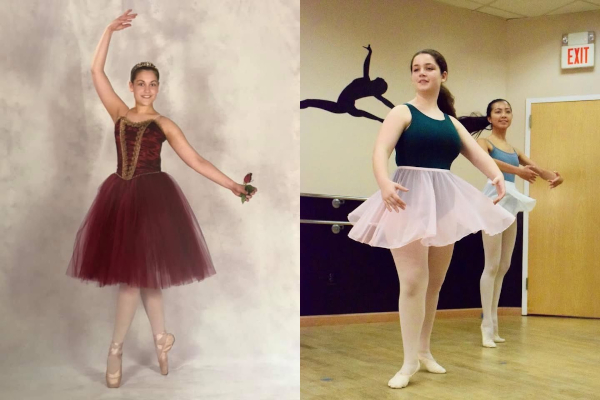
But back to Sing, which gave me something else, too. I am not a very prolific filmmaker. Film ideas hit me at the rate of about one per year. I don’t know where they spend the rest of their time; I think they hang out drinking at the Idea Bar, where I can’t find them. But shortly after seeing Sing, I had the idea for Gabrielle, a film about a girl who starts ballet at (you guessed it) age 13. Gabrielle has big ballet dreams. She is also a bigger girl, vaguely, which sets the ballet teacher out for blood. Lastly, she has a friend who helps her in an unlikely way. But that’s the beauty of film: you can edit real life to be as it isn’t. You can cobble catharsis and meaning from words and images, telling a story with the kind of timing that never quite happens in life.
Gabrielle wouldn’t have been made without Sing, nor my ballet days. Of course, the final product evolved. Details changed. Things got idealized. In the film, Gabrielle is a beautiful, eminently capable girl who rises to whatever is set in front of her. She has a terrific talent for drawing, unlike me. I know I worked hard in those days, but my main skills were being hyperverbal – not a noted plus in dance – and attempting to get laughs. Have you tried to get laughs at a ballet school? It’s like trying to get laughs out of the dead, only harder.
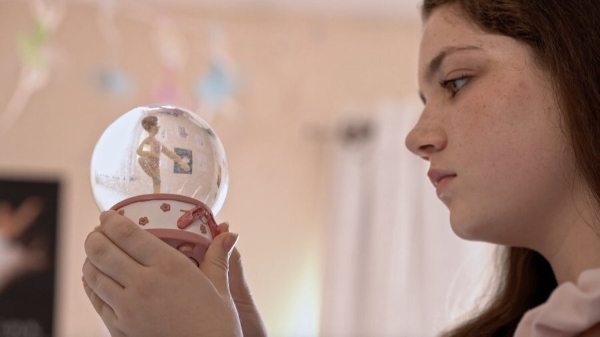
What I am saying is, unlike Gabrielle, I tried to get attention in ways that could have been distracting, probably off-putting, in a film. The story is simplified and restructured from what, in real life, was a situation without a plot. (And again, this also describes life itself.) Nevertheless, making the film was hugely cathartic, and I have Sing to thank for that. It provided that first, crucial dose of sheer, blubbering movie-theatre catharsis. It reconnected me to a memory I hadn’t thought of in ages, and allowed me to rewrite its ending.
And that is why I urge you to go watch Kristóf Deák’s Sing. Maybe you’ll find pieces of yourself in it, just as I did. Maybe you’ll cry at the end. And maybe, if you’re in a position of any sort of responsibility – especially over children – you’ll watch it and come away a kinder person.
I can’t think of a better outcome.
P.S. My short film Gabrielle — made in 2018, and now, many films ago — can be seen here.