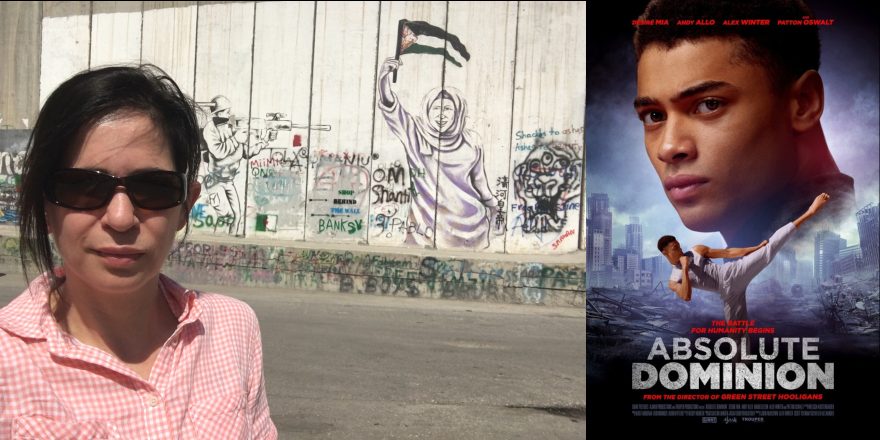


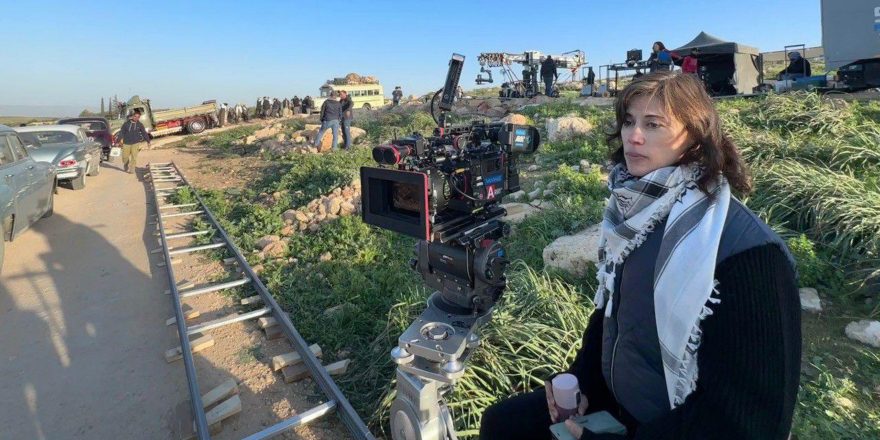
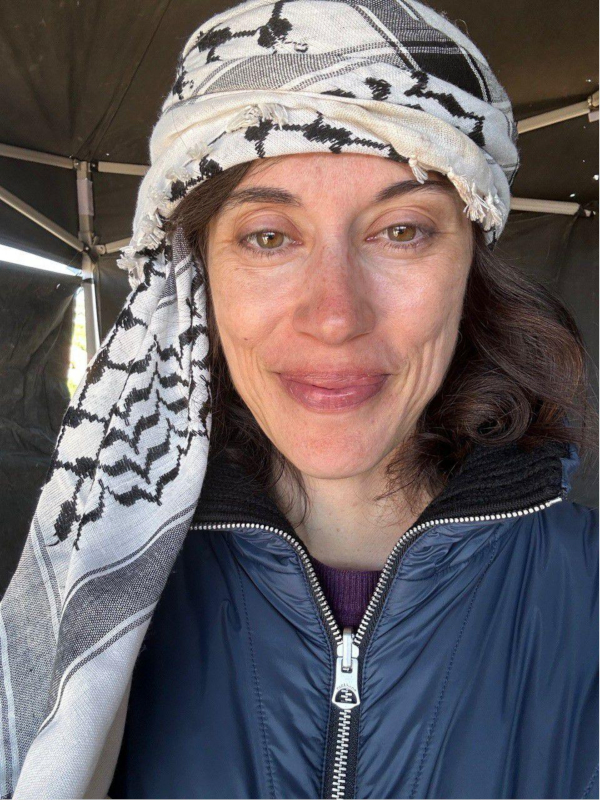
Cherien Dabis is a Palestinian-American filmmaker and actress whose new film, All That’s Left of You, is in theaters from January 9. Dabis’ 2009 debut feature Amreeka, which she wrote and directed, had its world premiere at Sundance, and went on to win the FIPRESCI International Critics Prize at Cannes, plus a dozen more international awards. It was also nominated for a Best Picture Gotham Award and three Independent Spirit Awards including Best Picture, Best First Screenplay and Best Actress. Dabis made her acting debut when she starred opposite Bill Pullman and Alia Shawkat in her second feature film, 2013 Sundance opener May in the Summer, which she also wrote and directed. On the small screen, Dabis has executive produced and directed standout episodes of Ozark, Only Murders in the Building and Golden Globe-winning Ramy and has guest-starred in the Gotham- and Peabody-winning Mo. In 2022, she was Emmy-nominated the groundbreaking, dialogue-free episode “The Boy From 6B” on Only Murders in the Building, which Variety hailed as “the episode of the year” and “a tour de force of directorial achievement.” Dabis resides in New York City. (Photo by Stephanie Diani.)
When I was 14 years old, I told my dad I wanted to become a filmmaker. He looked at me and said, “You can’t become a filmmaker. You’re Palestinian. No one will care what you have to say.” For years, I carried his words like a weight. Like a dare. It wasn’t about success. It was about whether I’d be allowed to take up space. I thought my mission was to prove him wrong.
For a while, it even felt like I had proven him wrong. I learned how to minimize what I was experiencing, to chalk up distributor disinterest to lack of talent, to brush off racist comments with an awkward laugh. I told myself no one was actively trying to stop me. Only I could limit myself. If I wanted mainstream crossover, I just had to work harder. I wasn’t exactly naive, I simply didn’t want to accept that people could actually believe the horrible things mass media has been saying about us for decades, the dangerous misrepresentations Hollywood has been forging for nearly a century. I resisted the idea that this level of dehumanization was outright deliberate. Accepting that would’ve changed everything.
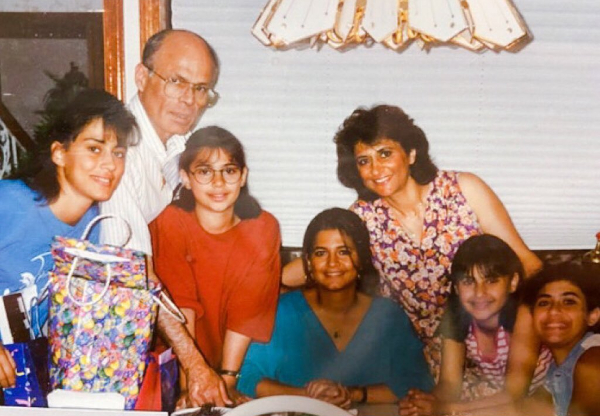
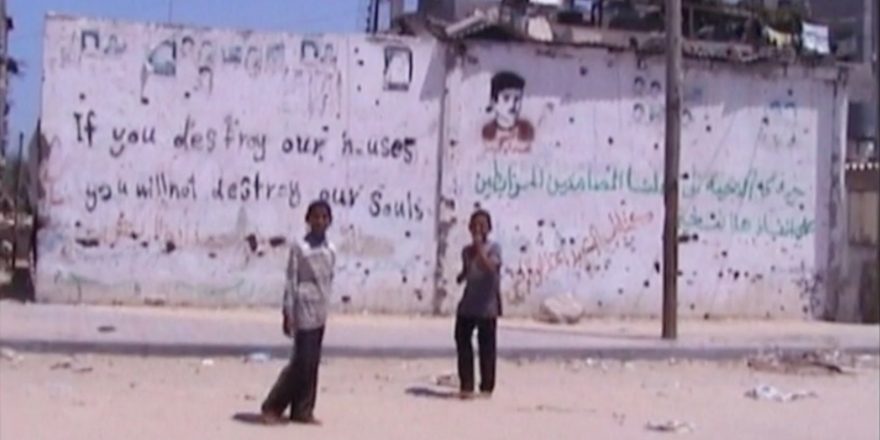
These last two years, making a Nakba film during an even bigger Nakba, and carrying it into the world during a full‑blown genocide, taught me something different. My dad wasn’t trying to discourage me. He was trying to prepare me. To protect me from a world that does silence us, erase us, discard us. A world that overlooks our lives, our losses and our deaths with total impunity.
Everything is harder when you’re Palestinian. And making movies is no different.
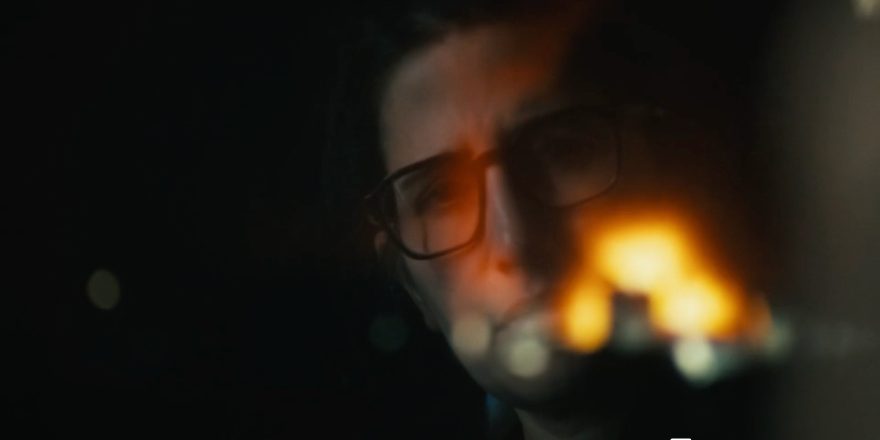
We prepped for five months under occupation, moving through checkpoints, being held and interrogated in the Tel Aviv airport – only to flee two weeks before shooting, because of October 2023. Then came 11 months of re‑prepping and rebuilding, starting and stopping, searching for Palestine everywhere but Palestine, recreating it outside our homeland the way every diaspora Palestinian does. We kept going not because it was practical, but because it was essential. The story felt more urgent than ever. We finally world premiered in the hottest slot at Sundance to audible sobs, standing ovations and critical acclaim – only to have American distributors say they were “afraid of the subject matter.”
Fear. That’s what our truth elicits.
The hypocrisy is hard to swallow. These same distributors who claim fear of our stories continue to finance films that rely on flattened, dangerous portrayals of Arabs and Muslims, narratives Hollywood has been exploiting and exporting for generations. The industry isn’t afraid of stories about us; it’s afraid of stories by us. Afraid of what happens when caricature gives way to context, when humanity interrupts a century of damage, when a mythology the industry itself helped create is finally challenged.
Our Nakba, our lived experience, is taboo, dangerous, impossible. Because if it’s true, it threatens another narrative.
That’s exactly why it needs to be told.
The New York Times branded All That’s Left of You a “conflict” film before even watching. Many didn’t bother to review it. Most mainstream distributors didn’t show up. They asked for links they could watch in the comfort of their condos. It was as if they knew it wasn’t for them. Multiple people told me: If this film were about any other group of people, it would’ve sold by now. Only weeks after the festival did we get any offers. One was so small, it felt like a burial. We knew the film deserved more.
In recent years, a few Palestinian films have publicly claimed that not a single North American distributor would pick them up. The truth is more revealing: not a single Palestinian film has ever received mainstream distribution, not even films that premiered at Cannes or went on to gain Oscar recognition. It wasn’t that these films got no offers. Like us, they didn’t get offers from the gatekeepers: Neon, A24, Sony Pictures Classics, Netflix, the ones that confer legitimacy and scale. They did receive boutique offers. In fact, some received better offers than we did. I know because distributors told me.
One boutique distributor told me he offered a minimum guarantee (MG) for No Other Land that was more than twice what he was offering us. I hadn’t asked. But now I had to understand. “Why would you offer more than twice the MG on a documentary, when documentaries typically don’t perform as well theatrically?” What stunned me wasn’t the answer, it was the absence of shame behind it. No apology. No acknowledgment that what he was saying was wrong or revealing. He simply looked at me and said, “That film had an Israeli filmmaker at the center of it.”
A Palestinian alone is worth much less.
Of course, this wasn’t news. When more than 70,000 Palestinians can be killed, an entire civilian population carpet-bombed and starved without our industry making so much as a peep, lives are made cheap and stories cheaper still.
“No one will care what you have to say,” my dad said. And yet that isn’t the whole truth. People do care. The ones who are awake, and the ones who are waking up. It’s the people with the power to change the system who don’t. In that way, my dad was both right and wrong.
Now, 26 international film festival awards later, including 10 audience awards and an Independent Spirit Award nomination for Best International Feature Film, I’ve launched my own distribution company. If the gatekeepers won’t let us in, we’ll build our own gate. One that doesn’t just grant access, but protects artists and our narrative sovereignty. The future of distribution is artist-to-audience, after all. Palestinian‑owned boutique label Watermelon Pictures, formed from this same gap in the marketplace, has been picking up and releasing the films gatekeepers won’t touch. I’ve partnered with them to co-distribute All That’s Left of You.
After Sundance, I realized this work was no longer sustainable. The cost of making films has skyrocketed, while their value has plummeted. Foreign-language films sit at the bottom of the hierarchy, Arabic-language films even lower, Palestinian films entirely untouchable. I had two choices: retire, or build my own business model. There’s no longer any in-between. For filmmakers like me, involvement in distribution isn’t ambition; it’s survival. And exhaustion and ambition start to look the same when survival is on the line.
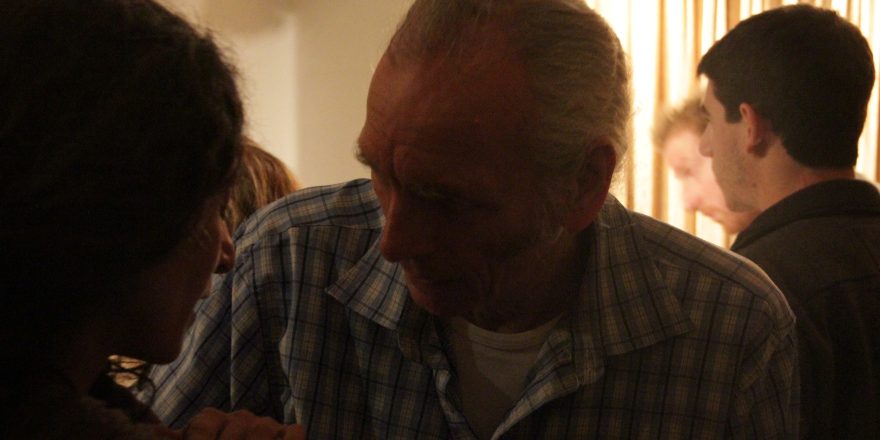
Recently, I asked my dad what he thought about what he told me all those years ago. He laughed and said, “I was wrong. I should’ve known you’d be successful — you’re stubborn, like your old man.” And I said, “No, Dad. I’m stubborn like every Palestinian I know. We don’t have the luxury of giving up.”
When stories are a matter of survival, silence isn’t an option.