

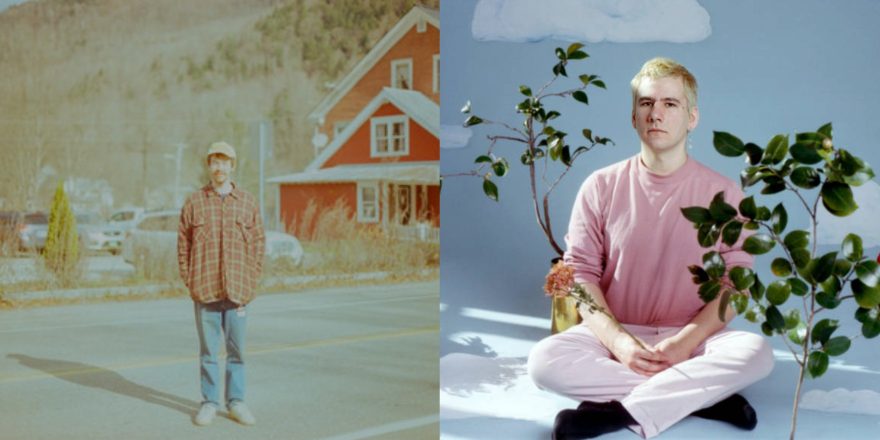
Nick Levine is a Chicago-based songwriter and multi-instrumentalist who performs as Jodi.
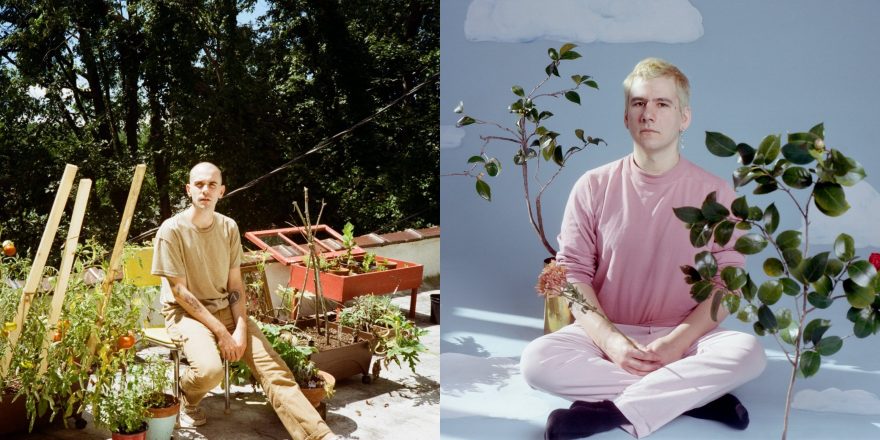
Nick Levine is a Chicago-based songwriter and multi-instrumentalist who performs as Jodi; Andy PK is a guitarist and pedal steel player who plays in the bands Free Range, hemlock, and Tobacco City, and records solo as Red PK. Nick contributed synth and guitar for a few of the tracks on the debut Red PK record, Horse Like Me, which will be out this Friday. To celebrate the release, the two got on a call to catch up about the making of the record, and more.
— Annie Fell, Editor-in-chief, Talkhouse Music
Nick Levine: Andy, where are you right now?
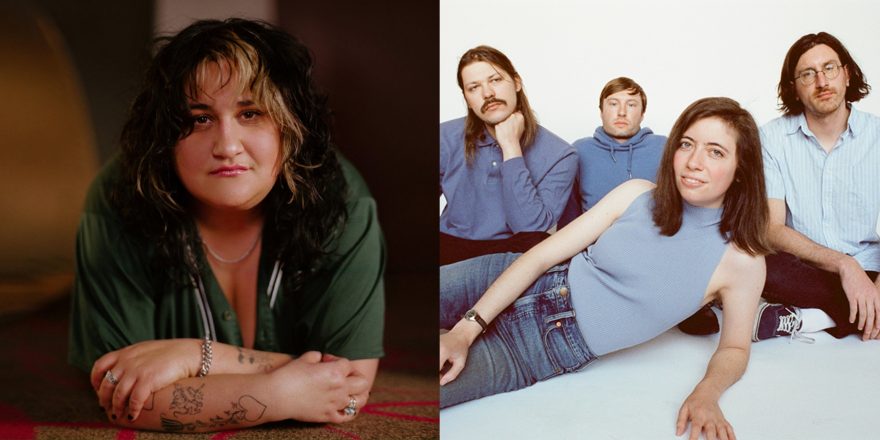
Andy PK: I’m in Philly. It’s the sixth day of tour with Ratboys. We’re at our Airbnb, and we’re having a nice little home cooked meal. Hopefully we don’t get interrupted by the smoke alarm, which has been going off like crazy for the last 30 minutes — not because of anyone’s doing, I think they must be faulty or something. Some of the alarms are not reachable, and there must have been 12 different alarms going off at once. They were all different pitches and in different rooms.
Nick: That sounds psychedelic… [Laughs.] Have the shows been good?
Andy: The shows have been so fun. So far we’ve done Detroit, Toronto, Montreal, Boston and Hamden, Connecticut, and they’ve all been great so far. The hangs have been really great. Florry is opening the shows and they’re just fucking awesome and really cool people. It’s been fun to have shared green room hangs and talk about goofy music. They showed us this Beach Boys song — I guess it’s some recently released demo from a box set, but it’s Carl Wilson, and it’s a very cleanly produced recording, but it doesn’t seem like he has any lyrics for the song. You know how when you’re writing a song and sometimes you go in your voice memos and you’re sort of making sounds and humming melodies?
Nick: You’re just vocalizing.
Andy: Yeah, that’s what he was doing over this song. But it’s very cleanly produced, and the melody is so catchy, so we’ve all just been singing this wordless song all week. But, yeah, it’s been a really fun time so far.
Nick: The record comes out in a couple of weeks. How are you feeling about it?
Andy: I’m feeling good. I mean, we’ve had many conversations about this in the past — just sort of getting wigged out showing anyone anything that you’ve worked on and the many conflicting feelings that come along with that. But I think especially just because this is my first album, and because it took close to three years to make, I’ve had a lot of back and forth… I just get so shy about this stuff, and I have to remind myself I was really stoked when we were working on these songs. And I still am stoked on them. It’s just trying to just stick with that feeling and not get caught up in what other people think. Which is kind of funny because, you know, why do you share music? I mean, that could be its own whole conversation.
But the closer it gets, the more excited I am. I’m really excited to have the record out and to just keep making stuff. And I think part of the complicated feeling that I’ve been grappling with is just putting music out that you made years ago. Some of these songs are some of the first songs I ever wrote, and your taste changes over time. Your style develops. In certain ways, I’ve thought of it as like tattoos: It’s like a journal of what your taste was at the time and what you had going on in your life. Some of my favorite tattoos that I have, for example, are ones that I think are kind of silly, but it reminds me of the age I was when I got them. Certain songs on the record feel deeply personal. I think it can feel almost scary to revisit that. I’m like, Wow, I was in this when I was recording this vocal take. Which can be a freaky feeling sometimes. But it’s also really cool to have that. At least in my life so far, it feels like a pretty unique experience, having such a tangible marker of that place and time.
Nick: Thinking about records like they are snapshots of moments in your life, I think, is a really healthy way to approach making solo music. I definitely have also had my own struggles. When you start thinking about, Does this thing have to be the most complete artist statement of what I’m interested in doing or communicating or interrogating? — when you go down that path, it’s very easy to lose yourself. It’s not even what other people think; it’s what you are imagining another person might think. And suddenly, you’re so far from what drew you to make music in the first place. That’s a really easy trap to fall into, and I’m certainly guilty of it too, and have to remind myself that that’s not what this is for. And the vulnerability and the discomfort of putting it out is what tells you that it’s worth doing.
Andy: Yeah, absolutely. I imagine everyone feels this way about some of the art they make. When you’re making it, you’re not necessarily even thinking about sharing it with someone. Maybe sometimes you are. But when you are making something without those thoughts, I feel like that is a very powerful place to be coming from, and it results in very vulnerable music or art. And I think especially making recordings of songs that, when you were writing it, they felt very in-the-moment, and then you start recording them and going through the mixing process and mastering, it takes so long and you hear the song maybe hundreds of times. I feel like the songs on Horse Like Me, I’ve heard maybe more than any other songs I’ve ever heard before. It’s so hard to zoom out like that. When I was writing it, I felt very in the moment and I wasn’t even sure if I was going to record them in a studio, let alone share them with anyone. And then next thing you know, you’ve heard them so many times and you know every single little detail that’s going on. No one’s going to be listening to the song the same way that you are. Not only that, but no one knows the context exactly in which the song was written.
Nick: Right. And if you did somehow come out of it with music that you felt was the best stuff you ever did and the perfect encapsulation of what you’re interested in, someone can’t get to know you by hearing it. And that’s a trap that I fall into.
Andy: I’m curious: I know Blue Heron was your first full length under Jodi, but did it feel much different putting that out versus Karaoke?
Nick: They were years apart. I think, honestly, these feelings are ones I’m having most intensely recently, or in the past couple years. That might just be total recency bias, but I remember feeling pretty excited about both of those, and feeling pretty proud. It’s solo music, but under not my name, and I felt like I had enough distance there that I wasn’t trying to, like, put me on wax and share it with the world. It was a project still. But at a certain point, the more you play under a name, the more it sort of does just become your name. I picked Jodi because it wasn’t my name, and then at a certain point, people I haven’t met call me that. That’s when it, I think, started to feel uncomfortable for me and bring up feelings about, OK, is there an expectation that this is autobiography here? And how do I clarify that that isn’t really my intention?
Andy: I really vibe with that. Sometimes you just write a song and it doesn’t feel fully autobiographical. I’m speaking for myself: a lot of the songs I write might have bits and pieces that do feel more autobiographical and are maybe based on experiences I’ve had, but sometimes you just have fun with words and are painting a picture that goes with the music. I like to stitch that in with lived experiences in my songs. There are certain songs that definitely are very personal to me and are about specific things. But I might just go into trusting the vision that I had when sitting down to write the song, and a bunch of these, I was just having fun. I think that is some of my favorite music to listen to, the stuff that there’s a lightheartedness to it, and the line is blurred of what is emotionally cutting and what’s lighthearted and kind of poking fun at serious topics.
The title track is a goofy song about horses that when we were living together, I went into my room after we talked about — do you remember the joke album title list?
Nick: I was trying to remember how this name came about. Do you remember?
Andy: I do, yeah. I still have the note. We were playing Rocket League or something, and I think that we were talking about how I wanted to record some songs, and we were just in a flow state, spitballing, “What are some funny album titles?” Actually, I’m so curious if I can find this right now…
Nick: I mean, that’s the best place to create from, in my opinion. You give yourself permission to say anything when it’s like, “Oh, we’re just goofing.” And so often that place of just letting your mind be free is when something interesting actually comes about. You almost just have to trick yourself into letting go.
Andy: Yeah. And I feel like that is when I write the most songs. I can be feeling things very intensely when I go to write a song, but it’s really easy for me to get a sense of paralysis when I have a goal going into it. I don’t know if I ever sit down like, “I need to write something profound here.”
Nick: No, I think that’s probably the worst way to write something profound. [Laughs.]
Andy: OK, I couldn’t find the list. But anyways, “Horse Like Me” was on there, and we found it really funny. And then I feel like five seconds passed and we were like, “That’s actually kind of sick.”
Nick: Right? There’s some sort of emotional resonance here.
Andy: Yeah. And then I went in my room, and that’s actually the only time that I’ve ever written a song starting with a title. It’s funny that became the title of the record. To me, that song is just about two horses that are friends.
Nick: It’s beautiful.
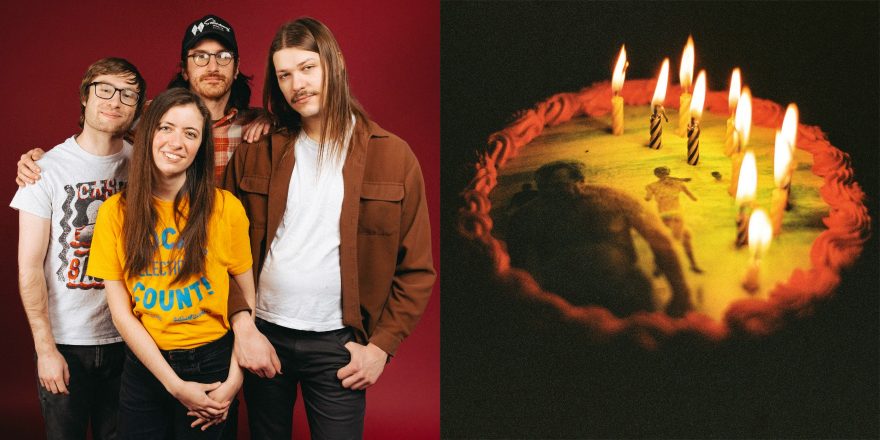
Andy: It feels almost cartoonish to me. This is a conversation that I had with Logan [Kruidenier], who did the artwork, and I feel like he captured that feeling so well. It’s very playful and silly and cartoonish, but it’s also very delicate. There’s a lot of meandering instrumental pieces going on. And I feel similarly about “Red,” also — especially the shorter songs on the record to me feel very much like fun sketches that I was just feeling very excited in the moment. “Red,” I think I wrote that whole song in under an hour.
It was similar with “Horse Like Me” too, and I think as I have written more songs since writing the songs for that record, I really try to just lean into staying excited while writing the song, however I can do that. And I feel like these days when I’m writing a song, I try to have it done in a couple of days, and if I can write a song in one sit-down session, that’s fucking awesome. I try to keep it three or less, write the song, record a demo and move on. You can always revise lyrics or chop things up in the Logic session and make it flow more nicely. But just getting the rough sketch down of a basically finished song for me has felt like the priority, even if it’s goofy.
I think I’ve just also gotten less afraid of writing a clunker. I think it’s important to write songs that you feel kind of embarrassed of, and you don’t have to share it with anyone.
Nick: Absolutely.
Andy: That keeps it fun, too. When you go to write a song and there’s not this expectation of, “This will be shared with someone,” it’s very freeing and it feels more journaling or drawing in a sketchbook or something like that.
Nick: I think that’s exactly right. I think it’s important to be able to work from a place where, yeah, it is a sketchbook and you’re not expecting to share every sketch that’s in there. That’s not why you make art in the first place. Not to be too much of a boomer about it, but it feels easier than ever to fall into that because of the way that we’re expected to use Instagram and whatever else, and just constantly be making content. I think the real cultivation has to happen in private, and without submitting to even your own analytical, critical brain. Just making.
Andy: Making and moving on to the next thing.
Nick: Yeah, and keeping it light. I think that’s really right. Certainly something I’m always trying to do, have fun and and keep things playful.
Andy: I remember we were texting about reading, and I feel very similarly about books. It can be hard for me to get through a book that is just so serious and emotionally cutting the whole way through.
Nick: Sure.
Andy: I feel similarly about movies and TV, too. There’s a lot of lightheartedness in life, and there’s also a lot of darkness basically everywhere. A lot of my favorite art, regardless of the medium, is the stuff that can make you feel a wide array of feelings. An album that can make you laugh and cry, that’s the best shit right there.
Nick: Absolutely agree. So this is your first solo record, but you’re obviously pretty active in a lot of other musical projects: playing in Ratboys and Free Range and with all sorts of other people in Chicago. Do you feel like it’s a different mode to be working in when you’re working on your own music? How do you navigate that?
Andy: So when I was writing for Horse Like Me — and, I mean, you were present for a lot of that, especially when we were recording — there was not really a Red PK band yet. I felt very new to writing songs, and I also felt pretty new to collaborating with people. When we started working on the record, I’m not sure I was playing with Free Range yet. I had started playing with Carolina from hemlock. But I felt much newer to just making stuff with people, and kind of every part of the process. So I’d make these demos, and then I remember getting into the studio and we would get basic tracking done, and it was time for overdubs. Seth [Engel] was really helpful to me not being attached to the way that I did the demos. I think I felt weirdly protective over those parts that I wrote and the vision that I had for the songs, which years later it feels almost silly to look back on. But I just felt so new to it and I hadn’t found myself and the ways in which I feel comfortable in a collaborative setting.
Now, a few years later, there’s a pretty set cast in the Red PK band, and I can bring in songs to them that are somewhat fleshed out — I make demos of all the shit, and I’ll bring it to the table — but I really want to encourage everyone to put their voice on the songs. I think that’s the biggest difference that a couple of years makes. I have much more trust in the process and the people. I don’t have to have control over every aspect, and it’s probably better if I don’t. I think it’s certainly more fun if I don’t. Because making music is my favorite thing in the world, and it’s made even better when I’m doing it with my friends, and my friends whose talents I admire so much and whose talents are different than mine. Everyone brings different things to the table. I feel like my experience playing in other bands has helped me learn what other people need in a band from me, as someone who wrote the songs, how I can be helpful to them to shape the song together. And my experiences playing in other bands have directly informed the way that I write songs and bring them to my friends and work on them together, and the room that you allow for other people to put their fingerprints on it.
Nick: Absolutely. To make a basketball metaphor, it’s like going from being a role player to running the offense. It’s a different skill set.
Andy: I mean, I would never, ever compare myself to Jalen Brunson, but that was kind of his story, right? He was a second round pick, and he was off the bench in Dallas.
Nick: That’s right. He broke out in the playoffs when Luka was injured.
Andy: Yeah. And, like I said, I’m not trying to compare myself to Jalen Brunson, but he understands what his teammates need because he’s had a variety of roles.
Nick: Not everyone can go back and forth between being an elite role player to running the show.
Andy: Jalen Brunson can.
Nick: Jalen Brunson can. And, Andy, so can you.