

Peel Dream Magazine is the Los Angeles-based indie pop project helmed by Joseph Stevens. Their latest album, Rose Main Reading Room, will be out September 4 on Topshelf Records.
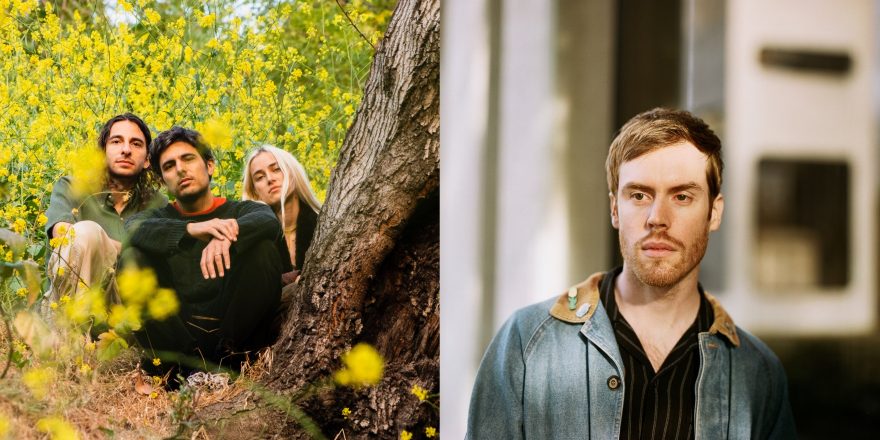
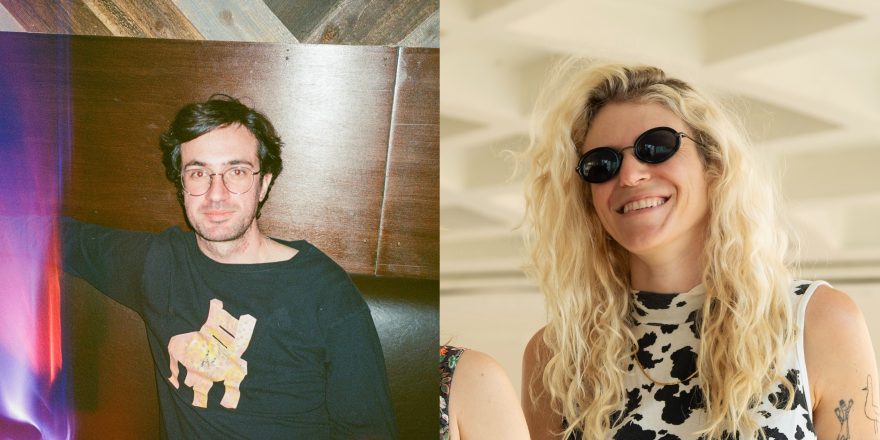
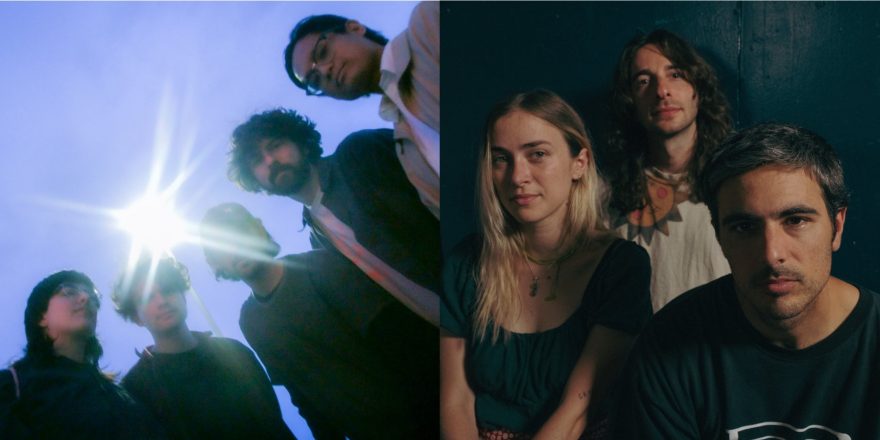
Joe Stevens fronts the LA indie rock band Peel Dream Magazine; Sam Sarty and Gil Carroll are members of the Winnipeg-based indie rock band Living Hour. Living Hour’s new record Internal Drone Infinity is out now on Keeled Scales, so to celebrate, the collaborators got on a Zoom call to catch up about it, and much more.
— Annie Fell, Editor-in-chief, Talkhouse Music
Sam Sarty: Where are you right now? What are you doing?
Joe Stevens: I’m sitting in a cafe in Denver. We played our last show of tour last night, and we’re just kind of milling about. We have an in-store at a record store at 1 PM. What about you guys?
Gil Carroll: We’re just chilling. Sam called in sick from work today, even though she’s not sick.
Joe: Nice.
Sam: Yeah, I’ve been really burnt out. I was working on my friend’s movie, and I’ve never worked on a movie before, but it was, like, 12 hour days for almost three weeks. But it was really fun
Joe: Was it just production stuff?
Sam: Yeah, I did props and set deck, and then I helped with special effects. It’s kind of like a sci-fi alien thing and we had to make fake intestines one day and a torso. It was a time for sure.
Joe: Julian [Ruiz], who currently plays drums, does that in Austin.
Gil: And you’ve done a lot of scoring stuff, right?
Joe: Yeah, I would say I have not done a whole lot of film scoring, but I did work on my first feature about a year ago. It’s that Stavros Halkias movie [Let’s Start a Cult]. It’s like a really dumb comedy — and I say “dumb” affectionately. It’s a really fun, kind of old fashioned style comedy. I do mainly actually more scoring for music agencies and ads and stuff like that, which is also really cool.
Gil: Is that a different approach to making your own music, presumably?
Joe: Yeah. I’m kind of pretending that I can do whatever a client needs. It’s not artistically driven in the same way, even though it is very artistically satisfying. Somebody will be like, “Hey, we’re looking for a hip hop thing,” or something that’s totally left field for me, and I just kind of try and make it happen.
Gil: We’ve done a bit of soundtrack and score work, Sam and I, and a bit with the other members of the band, and if it feels like harder work than writing a Living Hour song. Because it’s not necessarily what you want or what you like. You have to—
Sam: Fit a prompt.
Gil: Yeah, and it can actually feel kind of frustrating, I find. But once you get it, it’s really satisfying.
Joe: Yeah. Some people write pop music or band style music to fit into the library world, like, “I’m going to make something that ticks off these popular things and maybe it’ll get used in an ad or something like that.” But what I usually do is more like bespoke music for, like, a 15-second clip that has this very specific arc. It is like composing, but it’s also just kind of like sound design, too.
Sam: Yeah… I feel like lots of Winnipeg people love Peel Dream. Every time I go into a coffee shop, your song’s playing.
Joe: Really? That’s so crazy.
Gil: And it’s not just because you did a song with us. [Laughs.] But people did like that song. So that was fun.
Joe: That song was awesome. I’ve really only done one collab, I think. Just you guys.
Sam: It was so fun. I love the video, too. I rewatched that recently and I was like, Damn, this is so strange and good. [Laughs.]
Gil: We sort of managed to fit both of our bands’ visual aesthetic with it all. There was some good collaboration there. And my wife Andrea really loves that song, and from that she was exploring your catalog. One thing she was talking about that the reason she likes it so much is there’s, as she puts it, some healing frequencies in some of the sounds. I was wondering if you purposely inject that kind of atmosphere, or is it just the kind of sounds you like to make and it’s natural?
Joe: I don’t know. I definitely don’t purposely try to inject any sound that I know of. But I do a lot of organ drones, and I think that sort of fills up the frequency spectrum in a certain way. There’s a lot of just dense, warm melodic information in the music. I’ve always been drawn to that. I think some people think of that as soothing. I don’t think of it as soothing, but I think that’s it. I have a very low voice, so I think my voice is always kind of hushed. But again, that’s not me trying to do that, it’s just how it comes out. And I like when music is pretty. So I think there’s that — I like to try and make pretty music.
Sam: Yeah, we’re a huge fan of the drone on keyboards. We have our Casios…
Joe: There’s one song on your record that has a really prominent one note drone in the middle. I think it might be “Texting.”
Sam: Yeah, that’s one of my favorite parts of the record, when it comes in.
Joe: Yeah, I thought that it was one of the coolest moments, too. That’s my favorite song on your record.
Sam: Oh, sweet. Thank you.
Gil: I love the way that one turned out. And I must say, it felt very special. Not to make Sam feel weird, but I was in the room with her when she was writing it, and it was literally coming out of you in a way I’ve never really seen before. It was cool. You were on one.
Sam: Yeah, I was on one.
Joe: Yeah, it unfolds in a natural way that kind of breaks the cycle. Whenever I’m recording a record, it’s hard to capture organic stuff because I’m doing mostly myself as overdubs. So there’s kind of a raw, emotional, intuitive quality to that song that I aspire to channel at some point.
Sam: Thanks. Yeah, we actually ended up redoing all the vocals for that song because I heard it the first time and I was like, I feel too disconnected from what I want it to feel. I think it was because we were in a studio space, and you’re doing long days and you’re tired and you just have to get a take of it. So I was like, “Let’s just rerecord it and put it to the song.” So I sang it again in this room, just me alone, and it felt a lot better. When I heard it back, I was like, Oh yeah. I’m happy we did that.
Gil: I wanted to ask you, Joe, about moving to LA because, because we live in Winnipeg as you know. Do you feel like your music and your career have benefited specifically from that?
Joe: Maybe. I think specifically doing stuff outside of Magazine has benefited. I’ve really eagerly tried to connect myself to the “showbiz world,” quote-unquote. I’ve tried to meet music supervisors and directors and people who work at music agencies and things like that, and it actually has very little to nothing to do with Peel Dream Magazine. And it’s very LA specific — there’s a lot of, “Let’s get coffee,” and you drive to get coffee. No one does that in New York. No one has, like, meetings in New York, unless it’s really fancy. But people just network in LA. There’s an element to it that’s kind of corny, but it’s for me not Peel Dream Magazine related, so I love it. I mention Peel Dream Magazine as like, “Oh, by the way, I have an esoteric indie rock band/” Maybe that has some connection to some of it. But I get to do whatever I want in Peel Dream world and it’s very much my way, and it always has been, going back to New York as well. But LA gives me the freedom to do other music stuff that I really like.
And I have really enjoyed getting to know the LA music scene and all the people who live there. It’s got so many weird, cool, fun characters who are really musical and interested in melodic music and down to just make stuff happen. I really appreciate the music community in LA. They’ve been really kind to me and accepting ever since I moved out there, and I did not feel that way fully in New York. New York, everyone’s got a guard up or something.
Sam: That sounds really nice. I feel like also in LA, you’re closer to the ocean and the mountains and there’s a lot of sun and it’s a different vibe.
Gil: One of the most beautiful days I’ve had recently was when we were staying at your house, actually, when you were on tour. And then I can’t remember if you specifically recommended it, but I went to the Self-Actualization Center, and I just remember sitting there, and I was the only person there, and it was just such a beautiful day. All you could hear were birds chirping and wind blowing through trees. I was just like, I could hang out here all day, every day, happily. But then I realized — is one of your songs inspired by that?
Joe: You didn’t know that when you went? That’s so cool. That was kind of tongue-in-cheek, just making fun of people in LA a little bit. They’re very zenned out. However long I live in LA, I will never be an astrology person. I’m not new age-y. I just wanted to kind of poke fun at all that stuff, and that Self-Realization Center is chef’s kiss. Super, super new age-y California. It’s essentially a cult.
Sam: I could see that.
Gil: Yeah, when I got there, there was a woman standing by the front and she was like, “What brings you here?” And I was like, “Oh, I just heard it was a nice place to walk around.” And then she kind of paused, and she was like, [dramatically,] “It’s a very nice place to walk around.” [Laughs.] But I did love it. I must say, I was very zenned out.
Sam: Yeah. Whenever I go to LA, I always feel a bit out of sorts because it is so sunny and exactly the same every day, as far as weather goes. I do feel you kind of need to suffer a bit in the winter to have some of a differentiation of time. If you’re just in the sun every day, it’s going to just feel like the same thing.
Joe: Yeah, that’s a drawback for sure. I had a question: Did you guys record this record yourself?
Gil: No, we recorded in a two different studios in Winnipeg with Melina [Duterte] from Jay Som. And we got a grant, actually, to make that possible, which is one of the best parts about being a Canadian band for sure. So that was a really good experience. She was amazing to work with.
Sam: Yeah, it was so fun. It was a super tiny group, too, because Brett [Ticzon], our bass player, works at one of the studios. So he was helping with tech, and then Melina was doing it as well. So there wasn’t another studio person there. It was just the six of us the whole time.
Gil: Yeah, so it all felt like sort of a creative collaboration, even though she was technically engineering and producing. It still all felt very musical in a way.
Joe: You guys do some recording at a space though that you have, right? Or at least like demoing?
Gil: Yeah, we’re in it right now. It’s a pretty good setup. We put up some sound soundproofing and we’ve got one compressor and one preamp, and we actually got a bunch of nice mics recently. And we got our first ever pedal sponsorship, which we’ve been using lately, this Native Audio—
Sam: The Frybread Fuzz. It’s so sick. And there’s a recipe on the back.
Gil: It’s Indigenous owned. But, yeah, I feel like a lot of the songs on this new album we demoed and wrote here. But we do find sometimes, if we demo stuff too much, we kind of get demo-itis and then we have a difficult time when we try to recreate it for an album or in the studio. It never quite has that something special. It’s a tricky thing to navigate.
Sam: So I try to record really bad demos here, and have it force us to go to the studio to rerecord it, and then have that be the final one. Because if we keep going, it just becomes, “Oh, we should use a click at this part, and then we should bring in this.” We overthink it sometimes.
Gil: You kind of get sick of it, too. Sometimes you do need to get in there and break it all down, but yeah, you want to keep that magic alive.
Joe: Totally. I just do, the demo just becomes the recording. Which maybe there’s pitfalls to that, too, but that’s just how I do it. And I try to just let a song exist for a long time with no recordings, just on a guitar. It’s like a little mental demo. Getting too attached to a demo is the worst.
Gil: Oh, yeah. We’ve been there so many times. There’s some demos that I think might never actually become, quote-unquote, “real songs,” but maybe one day we’ll put them on Bandcamp or something.
Do you ever play unreleased songs live? Like, if you’re really excited about a new idea, will you just pull it out?
Joe: Yeah, we’ve been playing a bunch of new-new songs on this tour, like three or four in the set, which is a big chunk. I like making it feel exciting for myself, and it’s fun to test the waters and see if anybody feels like it. I basically want to know if people like it in real time, and it seems like people like the new-new stuff, which is cool.
Gil: That’s exciting.
Sam: Yeah, I always want to do that with the band. I feel like sometimes we do it, but sometimes we don’t. With this record, we played a lot of these songs for a year here and there sprinkled into the set.
Gil: I think it’s just if you have enough time to rehearse the new-new stuff and are feeling confident about it, then it feels good. But sometimes it feels just a little like…
Sam: Like free jazz.
Gil: Yeah, exactly.
Joe: I feel that. I had one other question I was going to ask. The first record that I was familiar with you guys was the 2019 record [Softer Faces], and I feel like since then, you guys have been — in a very natural way — pushing more toward a rock vibe. To me, this record feels faster and more straightforward. And that’s awesome. Because I remember when I first saw you guys at Pianos in 2018 or whatever, it felt it had a slightly different vibe. It was a little bit more organ-y, a little bit slower, and a little bit more maybe in the Broadcast world. And now it feels like it’s pushed more in this rock band territory. I’m having similar feelings about what I want to do musically, revisiting some more rock band moments from the Peel Dream catalog. We’re bringing some of that stuff back live. It sort of feels like that’s in the air, like the zeitgeist is kind of hurtling towards this more nostalgic pop rock ‘90s thing. I’m curious if you feel like that as well, and that’s kind of informing some of these musical shifts.
Sam: I definitely feel that, too, in the zeitgeist.
Joe: I kind of wanted to put down the organ and pick up the guitar. That’s what has felt exciting to me.
Sam: That’s literally what I was saying, because I was playing keyboards live for so long. And I love exploring that meditative, sensitive world of creating and building soundscapes on stage, and I still do that with my solo project. But I was like, “OK, we have five people over here who all play guitar, bass, drums. We can make a really big sound together.” And I was just really excited about playing guitar in a band — putting down the keyboard and picking up the guitar, picking up the bass, picking up the baritone and just embodying the sound. When you have a lower frequency with more distortion, overdrive, it just felt like way more of an expression of what I wanted to do and say. The band also felt on a similar wavelength, and we all came together for a couple of these songs like, “Hey, what if we made this the loudest we possibly could?”
Joe: Would you say the previous stuff was written to be a five person arrangement, whereas some of these songs were written more for you to belt out on a guitar? And then the other people have their instruments to play along with that.
Sam: [Laughs.] Yeah, I guess so. Because I guess with this record, I wrote a lot of the songs on guitar or bass first, and then Gil would play drums with me and I would have no words, no lyrics, and then I would bring it to the band and then they would build up their parts. And then words would come, and it would kind of be created that way.
Gil: I also feel like it happened sort of naturally too, for us, because we were on tour so much — we have always been a touring band — and we always had people who were into the set, but I feel like our slower, more meditative stuff, sometimes people were talking over us or leaving or whatever. And we were like, “We want to keep playing shows and we notice when we play heavier, louder, more upbeat stuff that people are responding to it in a live setting, and we can kind of just rock out and that’s fun.” So that was part of it, too.
Joe: Totally. It’s always cool to keep the live show fun and exciting, even if your record has more meditative moments. It doesn’t pigeonhole you as an artist to want to make your live show more exciting, because you can you can still do whatever you want in the studio. I’ve kind of felt the same way. We have all these sensitive acoustic guitar songs on Rose Main Reading Room, but if you go see Peel Dream Magazine live right now, it’s a rock band playing with distorted guitar and stuff like that. And I think people are into it. People have been really cool about it. They’re letting us rock out a little bit.
Sam: That’s great to hear. Yeah, I also just feel like the world is so noisy and it’s hard to come into these new spaces and different cities and just be like, “OK, you’ve never heard of me before, but we’re going to get super quiet.” I feel like that’s why we put “Texting” in the middle of our set, so it can be like, there’s lots of sound, we get people’s attention, and we’ve gained a bit of trust, and then have “Texting,” or “Half Can,” which is super slow core, like two notes on the bass. And then people are attentive at that point and ready to receive the song.
Gil: But, yeah, it’s interesting that you say the ‘90s rock stuff is coming back, because our record just came out and this review that I read yesterday was comparing comparing us to Dinosaur Jr and early Smashing Pumpkins. It was like, OK, that’s cool that people are hearing that.
Sam: It’s definitely back. I work at a record store and there were kids — they were maybe 16 — they came in and they were on FaceTime like, “They don’t even have a Sublime CD here…” Like, getting really upset that they didn’t have Sublime. I was like, “Have you looked? For sure we have one. There’s probably, like, 50 copies somewhere.” [Laughs.]
Joe: I almost think it’s a strange offshoot of poptimism. People were so into esoteric noise rock and shit, and then it was so hardcore into Taylor Swift. Then now, there’s kind of a middle ground where people want substantive rock music, but they want a beat and they want something exciting and fun and a melody. And I think it’s good. It’s fun to see that kind of music. It’s fun to listen to it in the car. I think it’s an interesting moment right now to play with that. I’ve been kind of playing with that guilty pleasure rock music thing, and with the next record, I want to do that in an elevated way. I think the way you guys are doing it is fucking awesome, and I want to similarly do some of that stuff.
Gil: Thank you, Joe. And thanks for having this chat! Good luck with the tour.
Joe: Thank you. I’ll talk to you guys later!