


PACKS is an indie rock band from Toronto led by Madeline Link. Their latest record, Melt the Honey, is out now on Fire Talk.
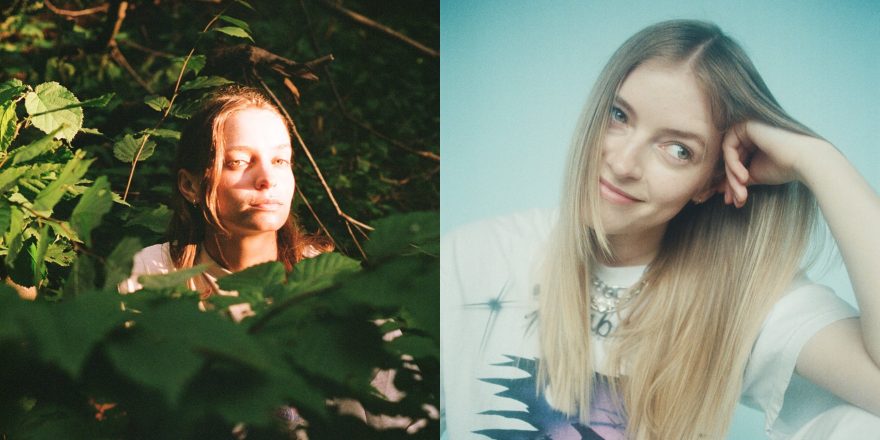
Eva Link is a Toronto-based singer-songwriter who performs as Triples; Madeline Link is a Toronto-based singer-songwriter who performs as PACKS, and happens to also be Eva’s sister. The debut Triples EP, Every Good Story, just came out last month on Bleak Enterprise, and to celebrate the release, Madeline called Eva from their grandparents’ house to catch up about it, and much more.
— Annie Fell, Editor-in-chief, Talkhouse Music
Eva Link: I’m so excited to get to chat with you, because it’s not like we don’t get to chat all the time anyways… Not!
Madeline Link: [Laughs.] I can’t wait to get to know you better.
Eva: [Laughs.] Are you getting excited about your recording in Chile?
Madeline: Yes, I really am. I wrote one song right before leaving for Calgary, and it might be my favorite one that I’ve written for the album.
Eva: That’s so exciting.
Madeline: Yeah, it made me feel really jazzed.
Eva: I have a question for you: I feel like that phenomenon happens with musicians where their last song is always their favorite. What do you think that is? And have you ever looked back on songs that you deemed to be your most recent favorite and thought, Well…
Madeline: Yes. Like, every song that I wrote for the album, when I wrote it I was like, Literally, this is incredible. And now that I listen to it, I’m like, Ugh, that’s going to be hard to sing. The main thing for me is, when you write a song, you write it in the key that your voice is in in that moment. And sometimes your voice is just reaching for higher notes. So when you’re not in that frame anymore and you can’t hit those notes, then the song isn’t as satisfying to sing.
Eva: Or you almost don’t remember how you initially demoed it.
Madeline: Yeah, how you hit those notes, how you were interchanging or if you were hitting a falsetto.
Eva: Some days are falsetto days. Other days are more of a baritone type of vibe.
Madeline: Yeah. Or kind of a Kurt Cobain scream.
Eva: [Laughs.] I do feel that, if I’m hungover, I’ll definitely have a little more rasp to the voice.
Madeline: Exactly. And actually, your third eye is more open when you’re hungover.
Eva: I love that. I do also always feel like I’ve been trying to get better at warming up, because when I’m nervous, my voice feels—
Madeline: It closes up.
Eva: Yes, it’s more clenched.
Madeline: Yeah. Whereas I guess if you practice every single day your warm ups, then when you’re doing it right before a show, it’s like a psychological trick to get you into the same mindset. It’s like a ritual.
Eva: Mhm. Starting off the year, I wanted to resolve to sing more, because obviously practicing singing just makes you better.
Madeline: But I have a question for you: Do you ever just really want to sing, but then you think of the people that live next door, on both sides and above and below you?
Eva: Yeah. I never sing at top volume at my house.
Madeline: But don’t you wish you could?
Eva: Yes. I mean, when we go home to our parents’ house, think of how much we’re singing at the top of our lungs.
Madeline: Yeah.
Eva: And how much happier we’d be if we could do that all the time…
Madeline: Sometimes when I’m recording a demo singing at top volume, I just imagine my upstairs neighbors looking at each other and being like, “OK.”
Eva: “OK, someone thinks she’s a singer.”
Madeline: Yeah, exactly.
Eva: Here’s the thing: I think that breaking the seal of just doing it more often—
Madeline: [Sings a note at top volume.]
Eva: [Laughs.] See, the thing is, you’re at grandma and grandpa’s house right now, so you can sing at top volume and they’ll only think that’s awesome.
Madeline: They might ask me what happened, but I’ll just be like, “I was practicing.”
Eva: That reminds me of when we were in Montreal a while back and you were singing Adele’s “Rolling in the Deep” really loud. And the next day, our aunt’s landlord was like, “Um, I was wondering if everything was OK. I was worried, there were people yelling…”
Madeline: Didn’t he say he thought someone was dying? [Laughs.] That was a fun time. Just yelling outside feels great. And it’s good for your circulatory system.
Eva: It’s good for your circadian rhythm.
Madeline: So, Eva: on the eve of your EP release, are you thinking more about the EP, or is your mind focused more on the LP that’s upcoming?
Eva: That’s a good question. It’s interesting because the work has to progress on the songs for the LP, so I’m in the mode of planning for that now. But I think there’s something really fun about the lead up to releasing music. I’ve done a couple interviews where it’s fun to reflect on the songs and remember what the songs mean to me. I think especially when something’s about to come out, you’ve had a little bit of space to let it simmer, and the clarity that I have about what these songs mean now feels pretty fun to talk about.
Madeline: And when you are performing these songs, do you have images that flash through your head? Or what happens when you’re singing these songs that allows you to access the same vibe?
Eva: I feel like there’s a lot of songs where I almost get emotional when I’m performing them. If we’re talking on stage performing, there’s definitely imagery that I will conjure to make myself not cry.
Madeline: Oh, OK. So you’re not thinking of the reason you wrote the song. You’re thinking of maybe more so a doo doo in the toilet?
Eva: [Laughs.] That’s exactly my visual that I think of when I’m performing, like, “Happy April.” Especially if you’re in the crowd, I’m like, Oh, my gosh, I have to think about a doo doo in the toilet so I don’t like crack up from tears.
Madeline: Is there any song that you are practicing for the EP release that you are extremely excited to play?
Eva: I’m extremely excited to play “Old Routine.” I feel like that was a song that we were even playing together when you were still in Triples. Like, that’s how long this song has been in the—
Madeline: [Sings,] “Never starting over again, again…”
Eva: Exactly.
Madeline: The harmonies in that song are gorgeous.
Eva: Thank you. What’s funny with the EP is those songs have been in the process of being recorded and written for so long at this point that I almost feel like, I can’t believe I wrote this stuff!
Madeline: Does that make you feel kind of like… not air in your tires, but—
Eva: Gas in my tank. I do feel like that for sure, and it gives me confidence to write more stuff.
Here’s a question for you: Do you ever feel scared or do you ever second guess yourself like, Does this song sound too much like this other song?
Madeline: Oh, yeah. Period.
Eva: Period. It’s so hard sometimes to be like, Wait a second, it doesn’t. Period.
Madeline: Well, sometimes it does.
Eva: And sometimes it does.
Madeline: Or sometimes I’ll start writing a song and I’ll be like, That just sounds like Wednesday. So I’ll stop playing it and I’ll be like, You gotta do something else.
Eva: It’s not that we don’t like Wednesday, but it’s just because you want to be unique.
Madeline: Well, yeah. I think there’s something that some songwriters do where they don’t listen to music for a while when they’re writing an album, because even I think in the collective subconscious or whatever, there’s new singing styles that come out and that you really like and you’re maybe singing along to the songs, and then all of a sudden you are singing your songs like that.
Eva: Like cursive singing.
Madeline: Exactly. We were in the car and we were listening to Parachutes by Coldplay, because that’s grandma’s favorite CD.
Eva: I love that album.
Madeline: And I was realizing that Chris Martin might be the original. Everyone says it was Amy Winehouse, Corinne Bailey Rae — I think it was Chris Martin.
Eva: Oh, my god. You’re clocking Chris Martin’s tea… That’s true, because I feel like the cursive singing really comes from Americans or non-British people copying that little lilt.
Madeline: I hope I don’t ever start singing like that. But watch me do it…
Eva: It’s interesting, those kind of singing trends. I feel like I tend to not listen to a lot of contemporary music [while I’m in a writing phase] because of that way of thinking. At least if I have references at my sleeve, even subconsciously, they’re going to be from a bygone era.
Madeline: Yeah. And it allows you to be more controlled. Not that being controlled is important for songwriting, but at the very least… If you say that you’re influenced by contemporary musicians, then that essentially means that you’re just copying. Whereas the picking and choosing from music history makes it more in the lineage of music history.
Eva: Well, it allows you to add more texture to your overall sound, versus if you’re an artist who’s inspired by Coldplay, Amy Winehouse, and Corinne Bailey Rae, then that Venn diagram is gonna look really weird.
Madeline: It’s going to be a circle… But there’s a lot of great musicians out there now that are making really cool music with all sorts of different mixtures of music. And I think that musicians referencing their influences allows kids and musicians that are just starting to be able to open up their listening horizons and understand music history more, instead of trying to hide your influences.
Eva: Yeah. I find when I’m asked about influences, it’s hard to choose. I feel like I give different answers every time.
Madeline: That’s good.
Eva: Because saying the same ones every time feels like, “Oh, I’m really trying to be like…” The one that always pops into my head is Guided By Voices, but I don’t want to say that all the time because… I don’t know, it’s just such a thing in the music industry to reference influences.
Madeline: I know. Do you think it’s problematic? Do you think we need to change the conversation?
Eva: [Laughs.] Just only say, “I’m my own influence.”
Madeline: You have to have almost a little notebook of — you could circle five seconds of one song and be like, “I was influenced by that.” You could circle tiny little time spans throughout your entire songs and say, “That’s influenced by this, that’s influenced by this, by this…”
Eva: What is your favorite thing to listen to now to feel calm?
Madeline: That’s a good question…
Eva: What was your most listened to artist of 2025, do you think?
Madeline: Well, I left Spotify last year, so I didn’t get the Wrapped.
Eva: Shout out to Apple Music.
Madeline: Yeah, and down with Daniel Ek for sure… I think probably Spanish guitar music. Or I really like listening to “Hammer” by Bob Marley and the Wailers. It’s a beautiful song. I’m also listening now to this song — I can’t stop listening to it — called “Romance y Tango.” It is one of the most beautiful songs I’ve ever heard. It’s just like Spanish guitar and beautiful lyrics. What about you?
Eva: I’m making a playlist of songs that are my absolute favorite songs of all time. I heard “Cranes in the Sky” [by Solange] today, and I was at work and I was like, I’m tearing up. This song just never ceases to affect me.
Madeline: Yes. I think that entire album is timeless. “Rise” is also a gorgeous song from that album that makes me cry too. What she was harnessing in that record and with her collaborators — I think she collaborated with Raphael Saadiq.
Eva: Yes. I was thinking about that, and they just had the production down so beautifully, that kind of restraint in the percussion and the background singing. It’s just so incredibly beautiful.
Madeline: It’s so interesting listening to a song like that and then, like, a Nirvana song, because they both draw out raw human emotions, but one of them is so restrained and calculated and you can tell it was deeply thought out, and then the other one is emotive, just primal…
Eva: Yeah. If I had to choose, I would connect more with Solange’s way of conveying emotions.
Madeline: And do you think now that any of that has influenced you in your songwriting or your production?
Eva: Yeah. I realized, too, talking about the songs on the EP, [about] using music as a therapy in the way that you are parsing out what you want to say to yourself by explaining an experience you’ve had, but also treating it as an opportunity to reflect for yourself. And I feel like “Cranes in the Sky,” that’s how I interpret it, where she’s reflecting on her life in a depression and trying to make sense of it.
Madeline: Yeah. I love how it’s talking about a depression, but then you have a choir in the background being like, “Don’t you cry, baby…” Adding those accents, dramatizing it, but kind of beautifying it and edifying it.
Eva: Yes, and finding the hope in it through the instrumentation and production choices. What makes it such a beautiful piece of art is the way it’s contextualized and the way she adds that hopeful glimmer to it. I feel like making music, my obsession in the past couple of years has been about almost creating mantras for myself in my own life. But I feel this shift happening a little bit away from, say, more of an anthemic reminder of how to be, into finally being able to reflect on things that have happened in the past five years in a more tangible way.
Madeline: Are you noticing that with the songs from the LP?
Eva: Yes.
Madeline: I can’t wait to hear them.