

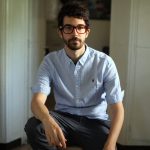
Ido Fluk‘s latest feature, Köln 75 starring Mala Emde, John Magaro and Michael Chernus, is out now in theaters. Described by Variety as “a talent to be watched”, he was previously co-writer and director of the Tribeca competition title The Ticket (2017) and the Edinburgh title Never Too Late (2011), which also won the Regard D’Or at FIFF. He is currently working on the HBO series Empty Mansions in collaboration with Joe Wright and the legal thriller 24 Hours in June with James Schamus. Fluk is a graduate of NYU’s Tisch School of the Arts and lives in New York, where he used to play in bands but no longer does.
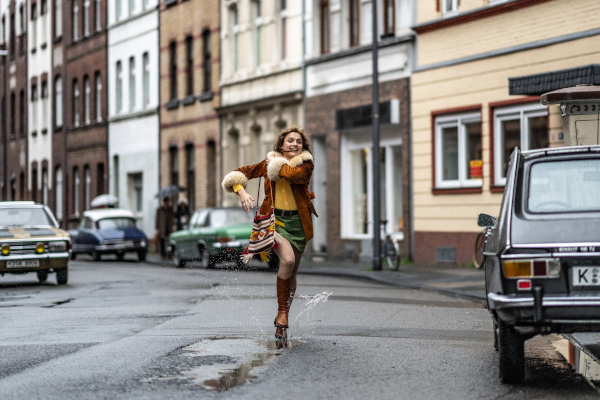
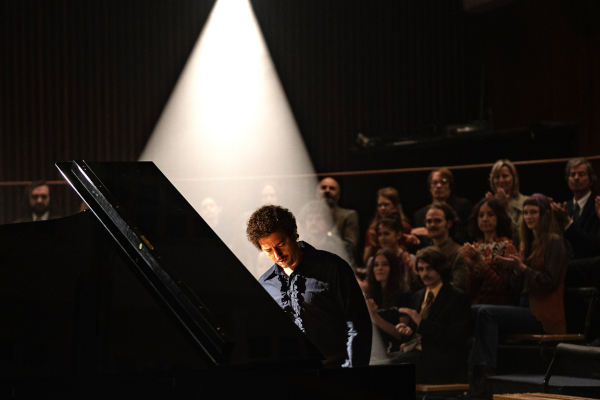
I started writing my new film, Köln 75, when another film I had set up in America collapsed. Films collapse all the time; it’s something filmmakers are used to. But this one especially hurt. I resigned myself to writing something new, and decided it should be free and unburdened and unconstrained. I found all that in the story of Keith Jarrett’s famous concert in Cologne, a concert organized by a teenager pretending to know what she was doing, a concert played on a broken piano. It was a punk rock story and it was about jazz and it was steeped in music. I decided it should be written like music, not like a screenplay. Forget the beat sheet and the outline and the cards and all the planning we usually do when writing something. I was going to improvise.
I fell in love with Geoff Dyer’s book But Beautiful, which sort of does the same. Sure, it’s about jazz, or jazz musicianship, or jazz legends, but the book itself is jazz. It starts with a night drive, with Duke Ellington sitting in a car, touring. It spills over into a scene with Lester Young in a hotel room, waiting for a show. It doesn’t matter what type of music you play: if you play music, and you do so on the road, you’ve sat in a hotel room feeling the same way. The space between sound check and show time. An empty space to fill.
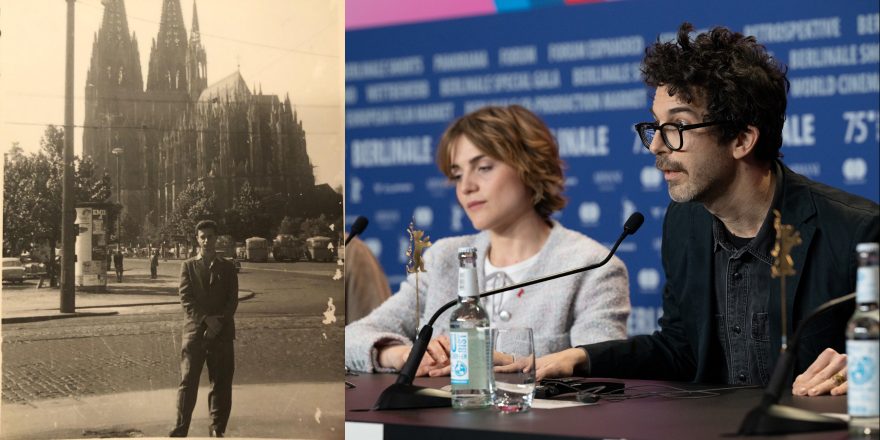
Fast forward in time, and I’m sitting in a really nice hotel in Berlin, waiting to do the press conference for Köln 75. As a filmmaker, it’s one of the moments we relish. So much of the job is doing things like standing in a puddle in the middle of the night, or in a snowstorm, eating terrible catering and waking up at ungodly hours. It’s almost never easy and there’s nothing glamorous about it. But then there are those rare moments of being at big film festivals, and everyone’s in clean, sharp suits, the carpets are bright red, there are chauffeurs and fruit baskets. There’s a foreignness to the experience, but also a comfort: you’ve made it. You’ve swum through the dark ocean of making something and you’ve washed up on a shore and now there is a film and it is about to be shown to the world.
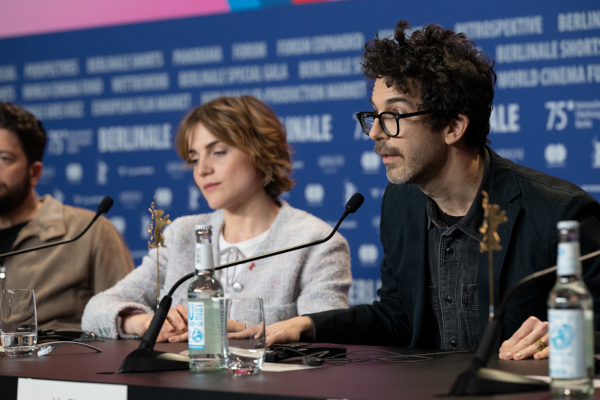
And just at this moment, as I’m about to do the press conference, I get a call that my father – who was already not doing well before I came to Berlin – is in decline. Up until that moment, he’s an 88-year-old man whose body is failing but has an extremely sharp mind. Now, all of a sudden, he’s lost it. We do a video call and I tell him the press conference is being live streamed, so he’ll be able to watch it. Look, Dad, this whole filmmaking thing, it’s real and working out. But he’s no longer there. I can tell he’s not getting it. He’s about to die.
My sister is with me in Berlin, and after the press conference, we sit in a hotel room and have video calls with the rest of my family, discussing whether we should all leave or not. It’s very dramatic and everyone is crying. It’s decided I should stay, so I embark on two days of press commitments, where I go from a junket room to a TV interview room to a print interview room, spending 15 or 20 minutes talking to each reporter, being asked the same exact questions every time. I keep repeating my mantras and workshopping them, trying to be authentic, but also trying to say the right things, things that will make people interested in the film. Because Köln 75 is a punk rock film with a lot of light and comedy and music, I also have to convey that tone. I need to be cheerful. Energetic. Excited. I do this while being at one of the lowest places I’ve ever been.
I start to disassociate, but I fight it. I really want to be in these rooms. As a filmmaker, I know the importance of being there. It’s something we tell actors all the time: the most crucial thing is to be authentically in the room. “Don’t pretend to be the person, be the person.” So here I am, directing myself while speaking to reporters, trying to keep myself engaged, trying to trust that I’ve made the right decision to be here. If it had been definite that he would die that day, I would have left. But it wasn’t. It was unclear. There were many previous false alarms. Questions incessantly bounce around in my head: Am I doing the right thing? Am I doing the wrong thing? Am I in the room right now? Am I authentically in the room? In the moment, though, I cope – frighteningly well, in fact.
My dad passes away a few weeks later. We sit shiva for him and on the last day, I fly off again for the German-speaking press tour. We travel between cities in Germany, Austria and Switzerland, a different theater every night, another Q&A, another audience to hang out with afterwards. It’s a joyful experience and then it becomes painful in those moments between shows. I keep asking myself: How are you able to do this? Should you be doing this? Are you a bad person for doing this? And I think of the marvel that is our ability to compartmentalize.
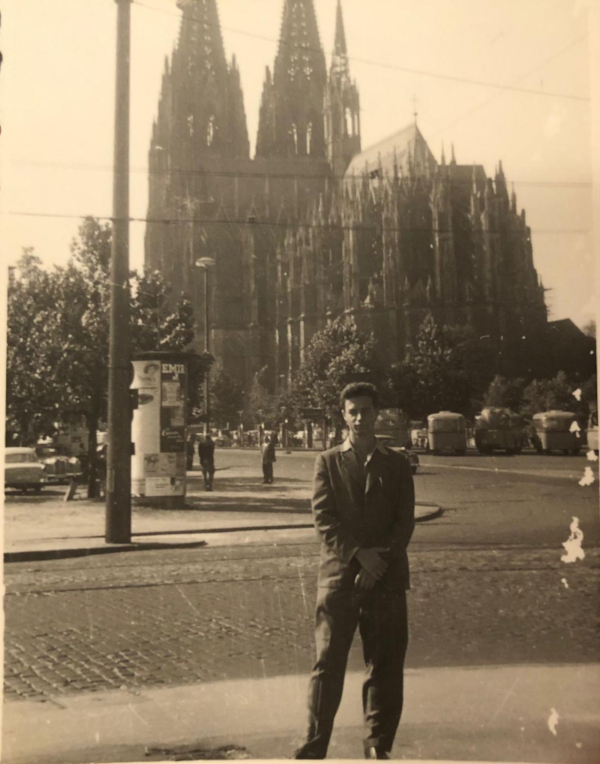
I’m thinking about all of this now, as Köln 75 is about to have its U.S. theatrical release. Another big moment. Another moment my father will never get to see. So much of what I’ve done was fueled by an attempt to make him proud. And now it’s too late. He’s linked, through his death, with this film. They’re connected, even if they’re polar opposites: the film Köln 75 is filled with light and energy and humor – it’s completely at odds with the death of your father. But they’re one.
My father never got to properly see Köln 75 before he died. I had a copy, but it didn’t have subtitles and half of the film is in German, so he couldn’t really get it. If he had seen the whole thing, I honestly don’t know what he would have thought. His favorite film was The Hunt for Red October, so I don’t know whether he’d have connected to the story of a teenage concert organizer in 1970s Germany. But honestly, because I made it, he would have probably said it was great.